Ingredients
Equipment
Method
- Soak the rye berries. The night before, cover the rye berries with cold water and soak overnight. In the morning, bring them to a boil — if they're still hard after that, let them simmer for 5–10 minutes until tender. Drain and cool before mixing.
- Mix the dough. In a stand mixer fitted with the paddle, combine the rye flour, water, sourdough starter, malt, salt and drained rye berries. Mix on low for a minute or two until evenly combined — this is a wet, sticky dough, closer to a thick batter than a kneadable one. That's exactly right for rye. (No mixer? A Danish dough whisk does the job by hand.) If you're adding seeds, stir them in during the last minute of mixing.
- Into the pan. Scrape the dough into a greased or lined loaf pan (a Pullman pan is ideal). Wet the back of a spoon or your hand and smooth the top. Cover with a damp towel or plastic wrap.
- Proof. Leave at room temperature for 4–8 hours, until roughly doubled and the surface looks domed and dotted with small holes. For a tangier crumb, proof in the fridge overnight instead.
- Preheat. About 30 minutes before the loaf is ready, heat the oven to 350°F (180°C).
- Bake. Bake for 1 hour 20 minutes. It's done when the internal temperature reaches about 208°F (98°C) and the loaf sounds hollow when tapped underneath.
- Cool and rest. Turn out onto a wire rack and cool completely — then wrap it and wait before slicing (see notes).
Notes
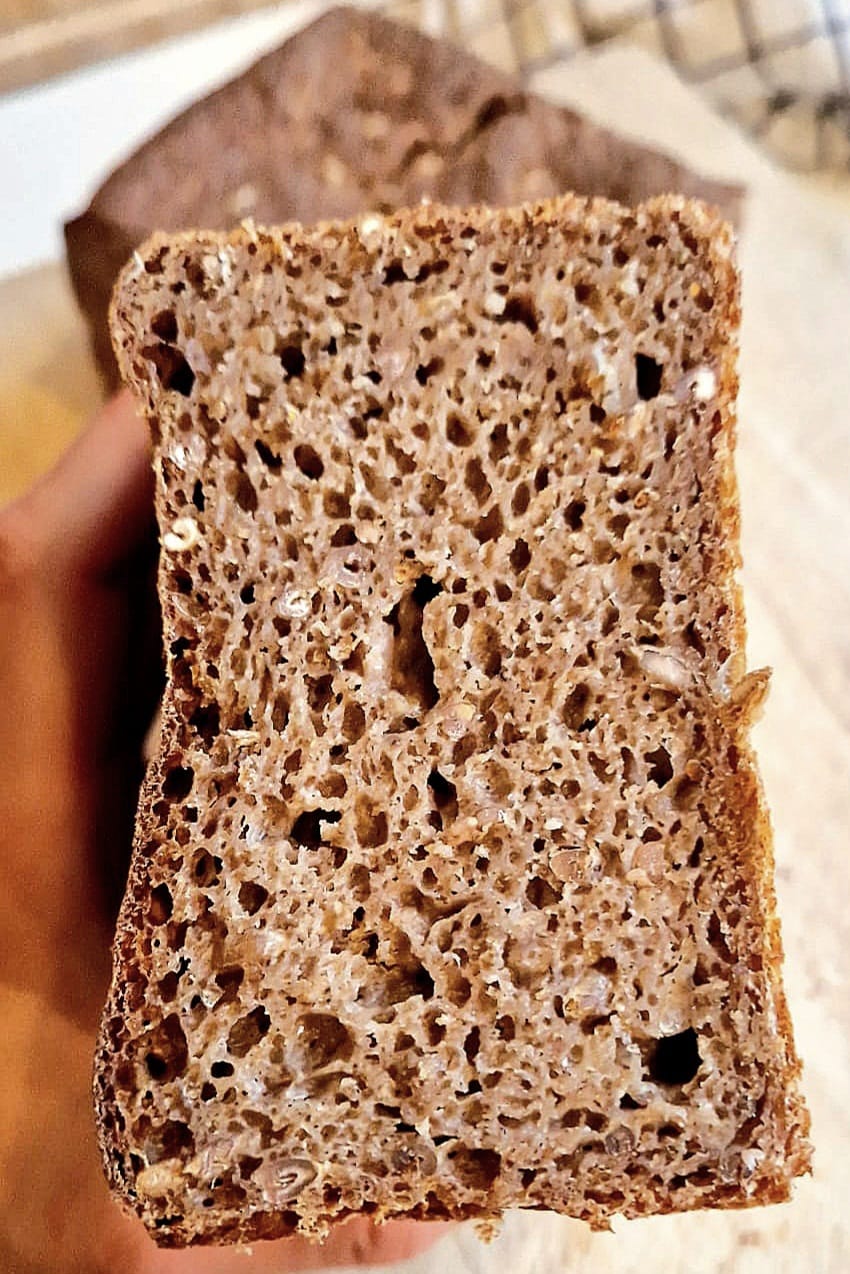
Chef's tip — don't slice it warm. Rye needs time for its starch to set. Cool the loaf fully, wrap it, and rest it at least 12 hours, ideally a full day, before cutting. Sliced too early, rye turns gummy; rested, it slices thin and clean, and the flavor deepens over 2–3 days.
- Bake by weight. Rye dough is unforgiving of guesswork.
- Rye is thirsty. The dough should be wet and scoopable, not stiff. If it feels stiff, add a splash more water.
- Malt extract: in the US, look for barley malt syrup — not diastatic malt powder. They are not interchangeable. Diastatic malt is enzymatically active, and rye dough is already enzyme-rich; adding more gives you a gummy, sticky crumb. Non-diastatic barley malt syrup is what you want here. If you can't find it, dark molasses works, though the flavor is sharper and less malty.