Ingredients
Equipment
Method
- Whisk the eggs and sugar together until smooth and pale.
- Add the butter and water. Whisk in the melted butter — it should still be liquid but no longer hot — then the water.
- Add the dry ingredients. Add the flour and potato starch and whisk until completely smooth. The batter will be thin at this stage, and that's correct.
- Chill. Cover and chill for 1 hour. It thickens as the butter firms up, into a batter you spoon rather than pour.
- Heat and fill the iron. Heat the krumkake iron. Spoon a heaped tablespoon of batter onto the center of the lower plate and close the iron with light, even pressure — press just enough to spread the batter to the edge, no more.
- Bake. Bake for 1–1½ minutes, until pale gold with light browning at the edges. Lift the cookie off with an offset spatula.
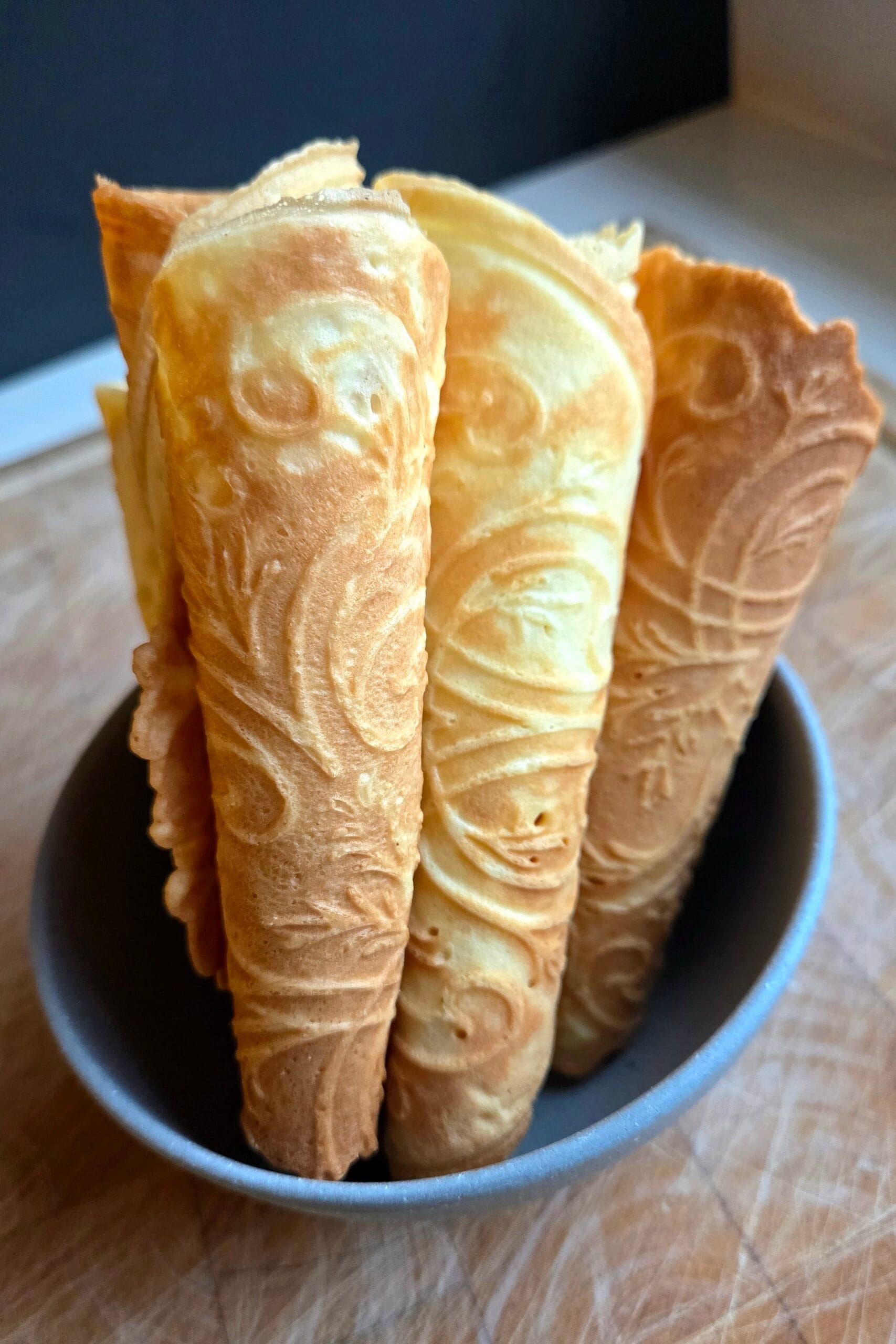
- Roll it hot. Working fast while it's still hot and pliable, roll it around the wooden cone. Hold for a few seconds until it sets, then slide it off. It crisps as it cools.
- Repeat with the remaining batter. Cool completely on a wire rack before storing.
Notes
Chef's tip — sacrifice the first two. Like pancakes, the first couple of krumkaker are calibration, not cookies. You're finding two things at once: how much batter your iron wants, and how hard to press. Too thin and they tear on the roller; too thick and you lose the crisp and the pattern goes soft. Even after twenty years we recalibrate every December, because it's been a year since the last batch.
- Potato starch, not potato flour. In Norway this is potetmel; the US equivalent is potato starch, sold beside cornstarch. American "potato flour" is made from whole dried potatoes and won't work. Can't find potato starch? Use the all-wheat version in the post rather than substituting.
- Have the roller in your hand before you open the iron. You have about five seconds of pliability.
- Storage. Airtight, at room temperature. They stay crisp for about a week and go soft in humidity — never refrigerate them.