Ingredients
Equipment
Method
- Preheat. Heat the oven to 350°F (180°C) and line a baking sheet with parchment paper.
- Froth the whites. Whisk the egg whites by hand in a heavy-bottomed saucepan until foamy and bubbly all over. You are not building a meringue — soft and frothy is exactly right.
- Add the rest. Stir in the sugar, vanilla and coconut until everything is evenly moistened.
- Cook the batter. Set the pan over medium heat and stir constantly with a wooden spoon, scraping along the bottom so the sugar never catches. Cook for about 10 minutes.
- Check the texture. The batter is ready when it thickens to the consistency of a thick rice pudding and holds a soft mound on the spoon. It will pull away from the sides of the pan as you stir.
- Shape. Using two spoons, drop rough mounds of the warm batter onto the lined sheet, about 2 inches (5 cm) apart. They spread a little as they bake, so give them room. You should get around 20.
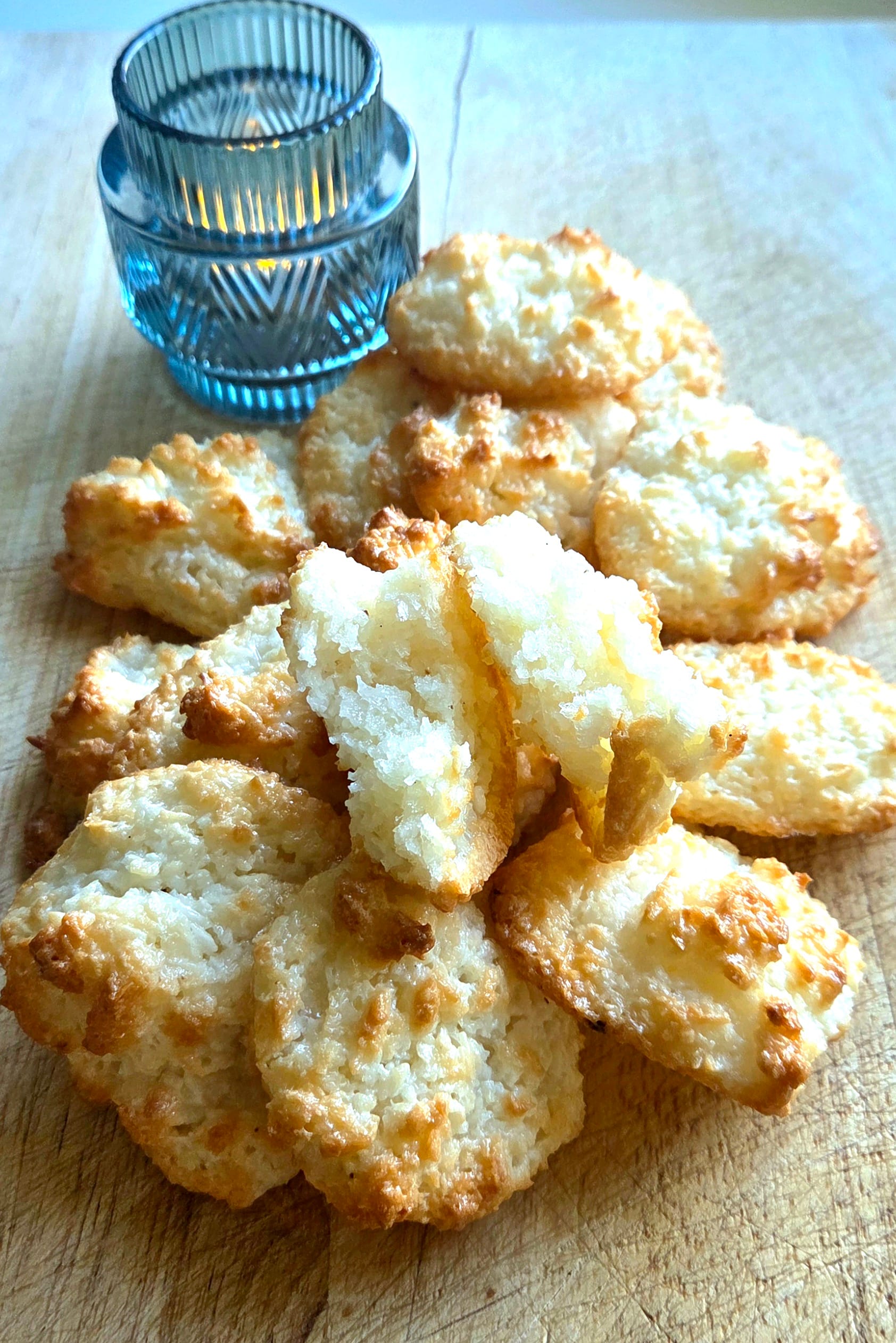
- Bake. Bake in the middle of the oven for about 10 minutes, until the ruffled edges and high points are golden and the centers are still pale.
- Cool. Cool on a wire rack. They are soft when they come out and firm up as they cool.
Notes
Chef's tip — trust the spoon, not the clock. The batter is done when it mounds like thick rice pudding and the track your spoon leaves in the pan closes up slowly. Undercooked, it spreads flat; overcooked, it turns dry and crumbly.
- Vanilla sugar is a Scandinavian pantry staple. Without it, use ½ teaspoon of vanilla extract.
- Storage: about a week in an airtight tin, or up to 3 months frozen — more in the post below.