Ingredients
Equipment
Method
- Preheat. Heat the oven to 400°F (200°C). Line a sheet pan with parchment.
- Dry ingredients. Whisk the all-purpose flour, oat flour, baking powder, salt and sugar together in a large bowl until evenly combined.
- Mix. Pour in the oil and milk. Stir with a spoon or your hand just until no dry flour is left — 20 to 30 seconds. The dough will be soft and sticky. That's correct. Stop mixing the moment it comes together.
- Pat out. Scrape the dough onto the middle of the lined pan. With wet hands, pat it into a rectangle roughly 10 × 6 inches (25 × 15 cm) and about 1 inch (2.5 cm) thick.
- Score. Score the slab into 8 squares — two across, four down — cutting about three-quarters of the way through. Do not cut all the way to the pan.
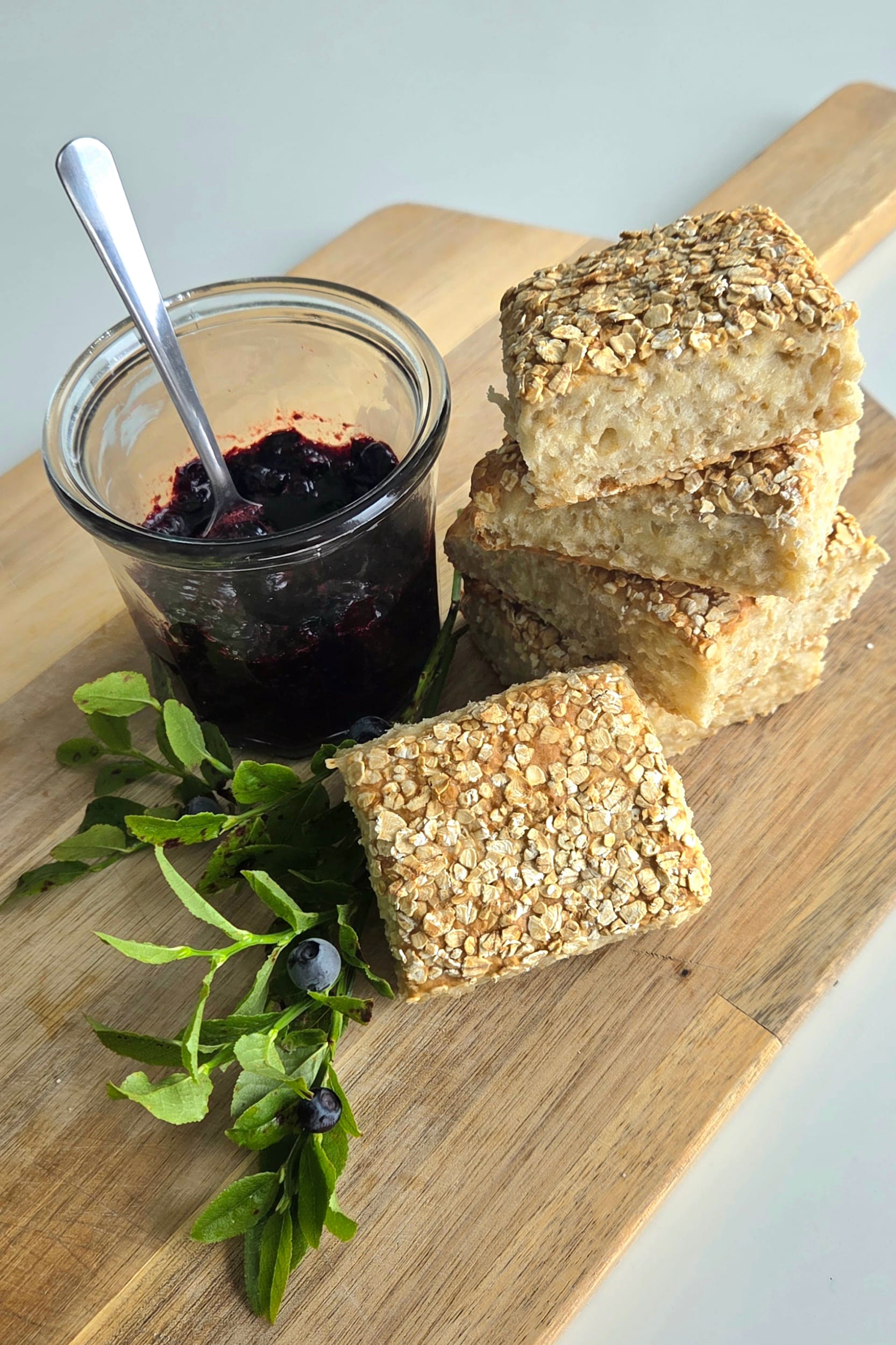
- Top. Brush the top with water and scatter the rolled oats over it.
- Bake. Bake in the middle of the oven for about 20 minutes, until the top is golden and the scores have opened. A skewer in the center should come out clean.
- Cool and break apart. Slide onto a wire rack and let cool for 10 minutes before breaking them apart along the scores. Best while still warm.
Notes
Chef's tip — score, don't cut. Cutting all the way through gives you eight small loaves that dry out. Scoring three-quarters deep lets the pieces rise into each other and steam as one slab: the outside crisps, the sides where they touch stay soft and pull apart cleanly. It's the whole reason this style of scone stays tender.
- No oat flour? Put rolled oats in a blender and run it until they're powder-fine — about a minute. 1¼ cups of rolled oats gives you roughly the 100 g you need.
- Storing. Best on the day they're baked. Keep in a paper bag at room temperature for up to 2 days, or freeze the squares individually and reheat from frozen at 350°F (175°C) for 8 minutes.