Ingredients
Equipment
Method
Day 1 — Make the dough
- Make the syrup. Combine the brown sugar, golden syrup and water in a large heavy saucepan. Bring to a boil, stirring until the sugar has dissolved completely. Take it off the heat.
- Mix the dry ingredients. Whisk the flour, ginger, pepper, cinnamon and cloves together in a separate bowl.
- Add the soda. Stir the baking soda into the cognac in a small glass until dissolved, then pour it into the hot syrup. It will foam up dramatically — this is exactly what should happen. Stir it down.
- Into the mixer. Pour the warm syrup into the bowl of a stand mixer fitted with the paddle. Add the dry ingredients and mix on low until combined. The mixture will be thick and dark.
- Add the butter. Pour in the melted butter and keep mixing on low until the dough has cooled to room temperature — this is what brings it together into a smooth, workable dough rather than a greasy one.
- Rest overnight. Cover the bowl and refrigerate at least 12 hours.
Day 2 — Roll and bake
- Preheat. Heat the oven to 400°F (200°C). Line your baking sheets with parchment.
- Work in small pieces. Cut off a piece of dough about the size of a fist and keep the rest in the fridge — cold dough rolls thin without tearing.
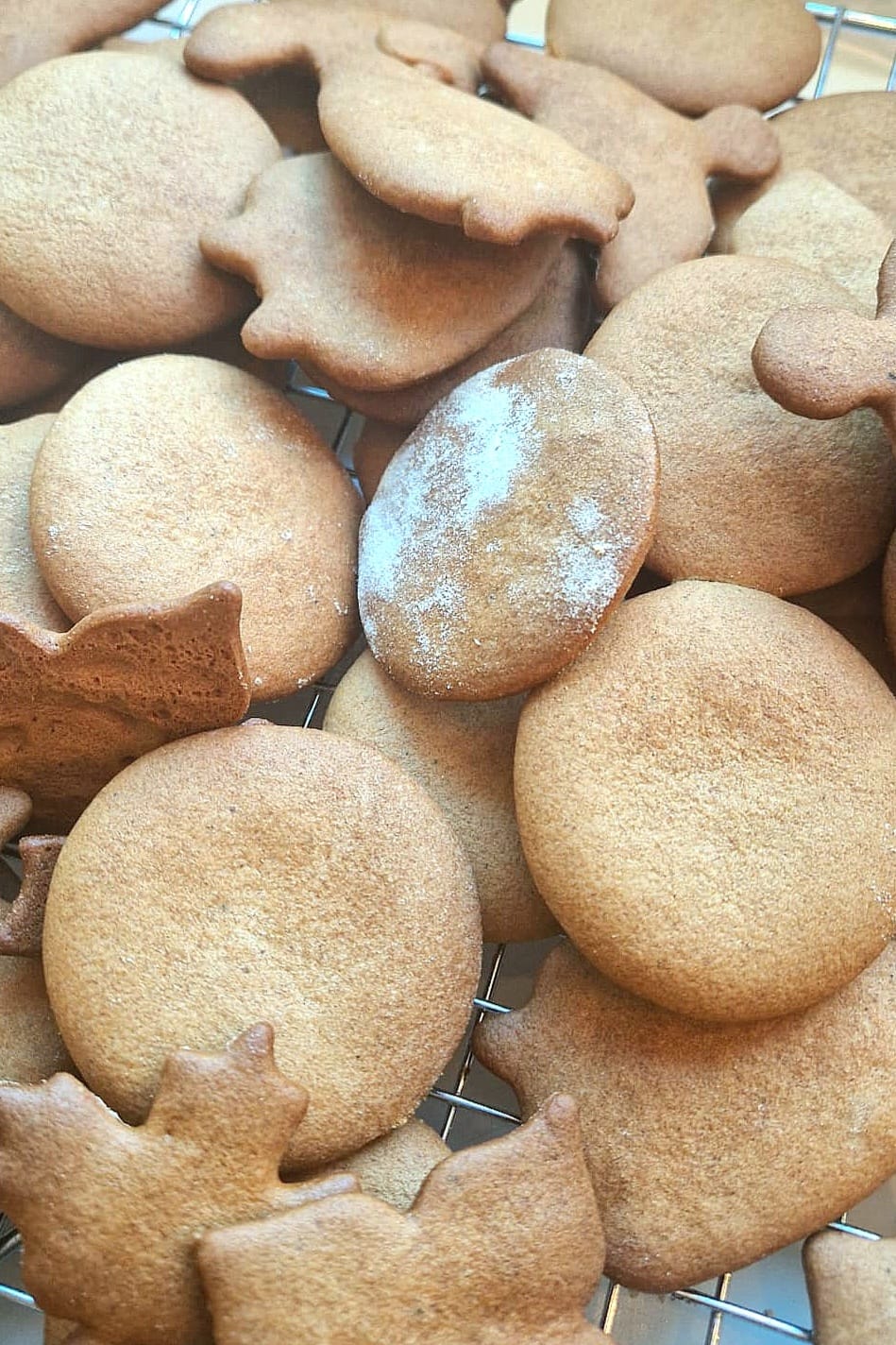
- Roll thin. Roll out on a lightly floured surface to 2–3 mm — thin enough that you can almost see the counter through it. This is what makes pepperkaker snap instead of bend.
- Cut. Cut out your shapes and transfer them to the lined sheets, leaving a little space between them.
- Bake a test sheet. Bake a test sheet first. Put four or five cookies on a sheet on their own and watch them closely from around 6 minutes. This is the step that saves the batch: 2 mm bakes noticeably faster than 3 mm, and home ovens run hot or cold by 20°F (10°C) without telling you. Let the test cookies cool completely before you judge them — they are meant to feel soft coming out of the oven and firm up on the rack. Snap one. If it bends, they need another minute; if the edges have gone bitter, pull them earlier.
- Bake the rest. Bake the rest in batches at the time your test sheet gave you, until the edges have darkened a shade and the surface looks dry and matte.
- Cool on a rack. Let them sit on the sheet for a minute, then move them to a wire rack. They crisp as they cool.
- Store. Store completely cool in an airtight tin.
Notes
Chef's tip — dissolve the baking soda in the cognac. It spreads evenly through the hot syrup and reacts all at once in the pot, instead of leaving soapy pockets in the dough. More on why in the post below.
- Substitutes for the cognac: brandy or dark rum work directly. For an alcohol-free version, use the same volume of strong brewed coffee or water.
- About the sugar: the Norwegian original is brun farin, which is darker than American light brown sugar. Dark brown sugar is the right substitute. Skip muscovado — it buries the cloves and pepper.
- About the syrup: Norwegian lys sirup is closest to golden syrup; light corn syrup works too. Dark syrup or molasses gives a much darker, more bitter cookie.
- Measure the spices level. A full teaspoon of black pepper is the right amount — heaped, it tips from warm to harsh.
- Half batch: 213 g dark brown sugar, 37 ml syrup, 75 ml water, 350 g flour, ½ tsp of each spice, 1 tsp baking soda, 25 ml cognac, 133 g butter.
- Make ahead: the dough keeps a week in the fridge and freezes well. Baked, they keep at least a month in an airtight tin.