Ingredients
Equipment
Method
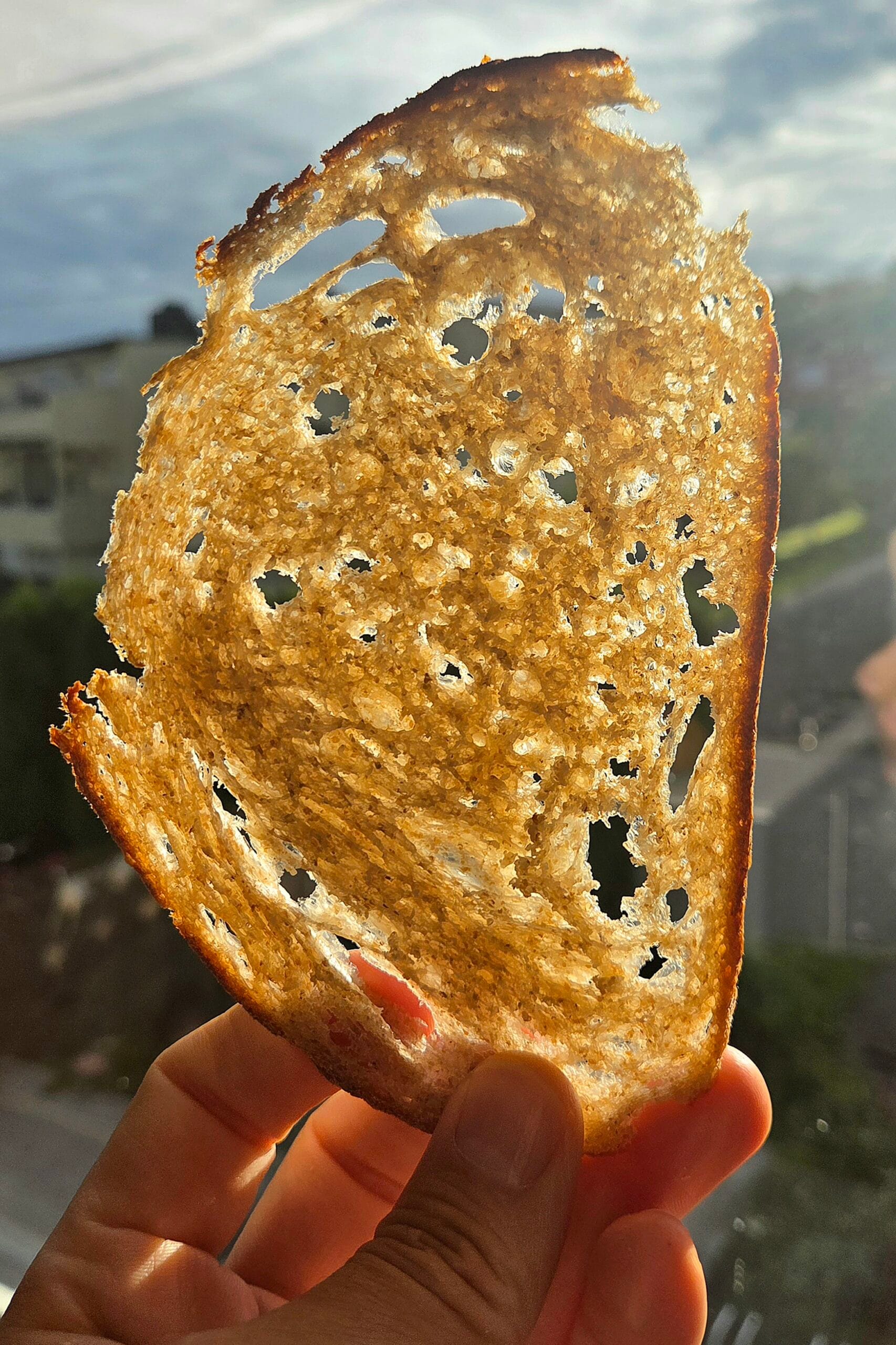
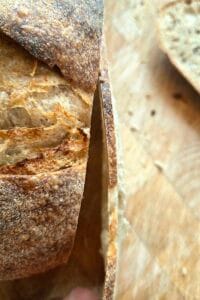
- Slice the bread thin. Cut 4 slices from a sourdough loaf that's at least two days old, as thin as you can manage — aim for ⅛ inch (3 mm) or less. Thinner is better. Set the crust ends aside for breadcrumbs.
- Match bread to fish. Cut the salmon into 4 even pieces. Place a piece on each slice of bread and trim the bread to match the fish, leaving no overhang.
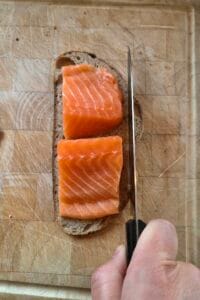
- Season. Season the top of the fish with flaky salt. There's no need to press the fish down — resting it on the bread is enough.
- Into the pan. Heat the oil in a skillet over medium-low heat. Add the pieces bread side down, without crowding the pan.
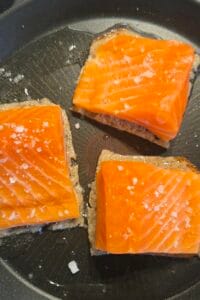
- Fry undisturbed. Fry for 4–5 minutes. The bread will darken to deep gold and the fish will turn opaque from the bottom up. Don't move them — the crust needs to set.
- Flip briefly. Flip and cook 1–2 minutes more. Go by the thickest part of the fish: take it as far as you like. We stop while the center is still translucent — past that it dries out.
- Drain and serve. Lift onto paper towel, crust side up, for a few seconds. Serve at once with sour cream, dill and a final pinch of flaky salt.
Notes
Chef's tip — the fish glues itself on. No batter, no egg wash, no pressing. As the salmon heats, its proteins set into the open crumb and bind the two into one piece — which is why the bread goes down first and stays put. More on why in the post below.
- How done should the salmon be? Up to you — anywhere from just warmed through to fully cooked. If you like the center translucent, buy salmon sold for raw use (often labeled sushi- or sashimi-grade), or salmon that has been frozen first.
- Scaling up or down: one slice of bread and one piece of fish makes one serving, so this scales however far you want. The only limit is the pan — fry in batches rather than crowding, or the bread steams instead of crisping.