Ingredients
Equipment
Method
Make the batter
- Whisk the liquids. Whisk the eggs in a large bowl until smooth, then whisk in the milk and the sourdough discard. Getting the liquids fully combined first is what keeps the batter lump-free later.
- Add the flour. Add both flours. Whisk just until smooth — a few seconds is enough. The batter should be thin, like heavy cream.
- Add the butter. Whisk in the melted butter.
- Rest. Cover and rest at room temperature for 30 minutes. Don't skip this (see Notes).
Cook the pancakes
- Heat the pan. Heat a 10-inch nonstick or carbon steel pan over medium heat and add a small knob of butter. The pan is ready when the butter foams but doesn't brown immediately.
- Pour and swirl. Stir the batter once — it separates a little as it rests. Pour in about ¼ cup (60 ml), lift the pan off the heat and swirl so the batter runs out to the edges in a thin, even layer.
- Cook and flip. Cook for 1 to 1½ minutes, until the edges lift and lace slightly and the underside is golden. Flip and cook 30 to 45 seconds more.
- Stack. Slide onto a plate and stack them as you go — the steam keeps them soft and pliable. Wipe a little more butter into the pan between pancakes.
Serve
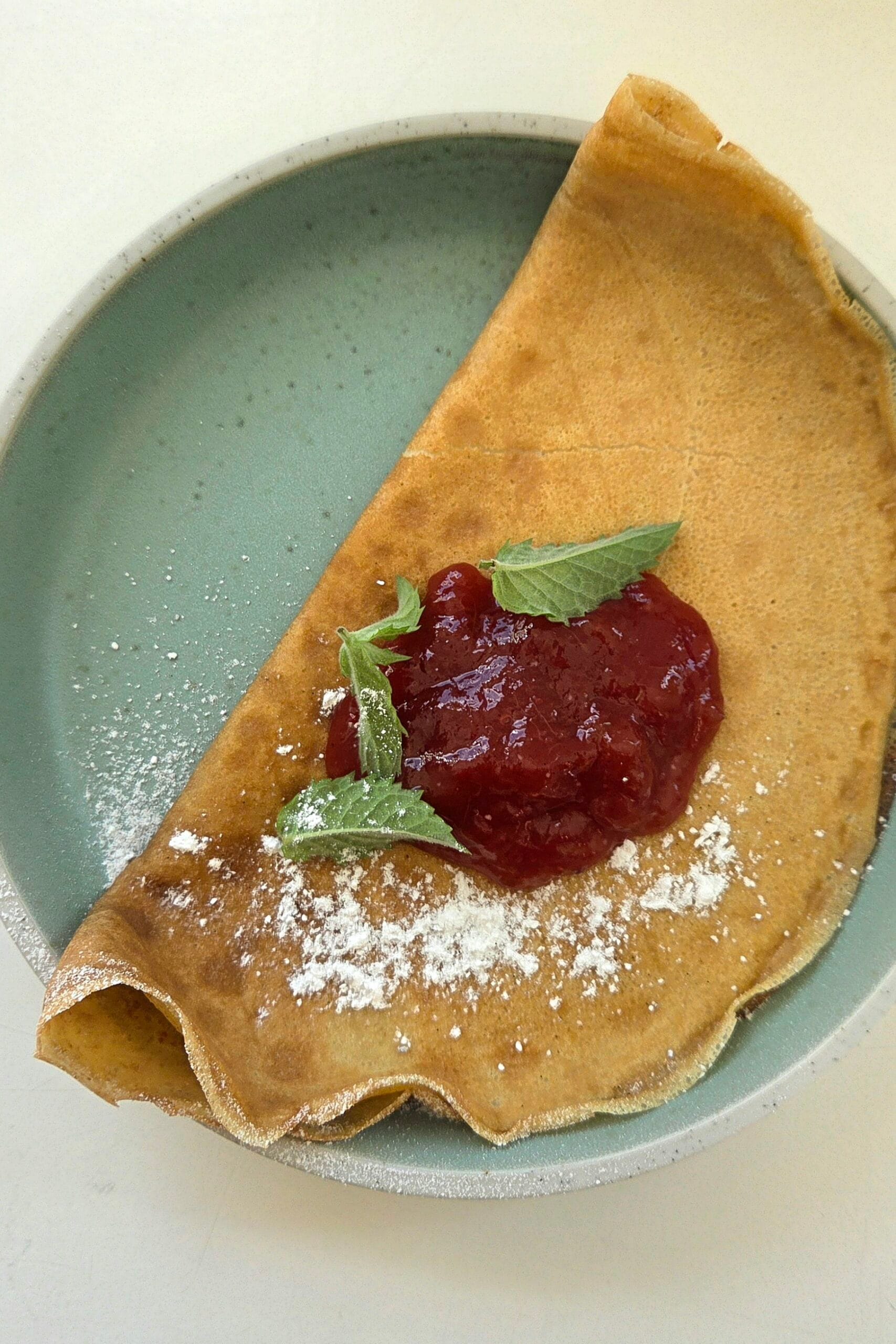
- Fill and roll. Fold each pancake into quarters, or spread with jam and roll it up. Dust with powdered sugar and add berries if you have them. Serve warm.
Notes
Chef's tip — the 30-minute rest is the whole recipe. It gives the flour time to hydrate fully and lets the gluten relax, which is the difference between pancakes that roll and pancakes that tear. It also lets the whole wheat soften, so you get the flavor without any grittiness.
- Discard browns faster. The acidity in sourdough discard speeds up browning, so keep the heat a touch lower than you would for a regular pancake batter — medium, not medium-high.
- Flour swap. Fine whole wheat flour (sammalt hvete, fin) is what we use. Regular whole wheat works; sift it and expect a slightly heartier pancake. You can also use all all-purpose flour for the palest, most delicate version.
- Discard hydration. This assumes a 100% hydration starter (equal flour and water by weight). A stiffer discard will make a thicker batter — thin it with a splash more milk until it coats the back of a spoon and runs off easily.
- Only unsalted butter? There's no salt in this batter beyond what's in the butter. With unsalted butter, add a pinch of fine salt — about ⅛ teaspoon.
- Make ahead. The batter keeps in the fridge for up to 2 days and actually improves — it gets a little tangier. Whisk and thin with milk before using. Cooked pancakes keep 3 days in the fridge, stacked and wrapped, or freeze with parchment between them.