Ingredients
Equipment
Method
- Preheat. Heat the oven to 425°F (220°C), conventional top and bottom heat. Line a baking sheet with parchment.
- Dry ingredients. Whisk the flours, sugar, baking powder and salt together in a large bowl.
- Rub in the butter. Cut the cold butter into small cubes and add them to the flour. Rub it in with your fingertips until the mix looks like coarse crumbs with flakes of butter still visible. Work quickly so the butter stays cold — those visible pieces are what give you flaky layers.
- Add the starter and milk. Stir the starter into the milk until loosened, then pour it into the flour. Mix with a spoon or your hand just until it comes together into a shaggy dough. It will feel soft and a little sticky — that's right. Stop mixing while it still looks rough.
- Pat out. Tip the dough straight onto the lined baking sheet and pat it into one round about 1 inch (2.5 cm) thick. No floured surface, no lifting — the less you move this dough, the better it rises.
- Cut. Divide the round into 12 wedges with a bench scraper, pressing straight down rather than dragging. Leave the wedges exactly where they are, sides just touching. Brush the tops with milk.
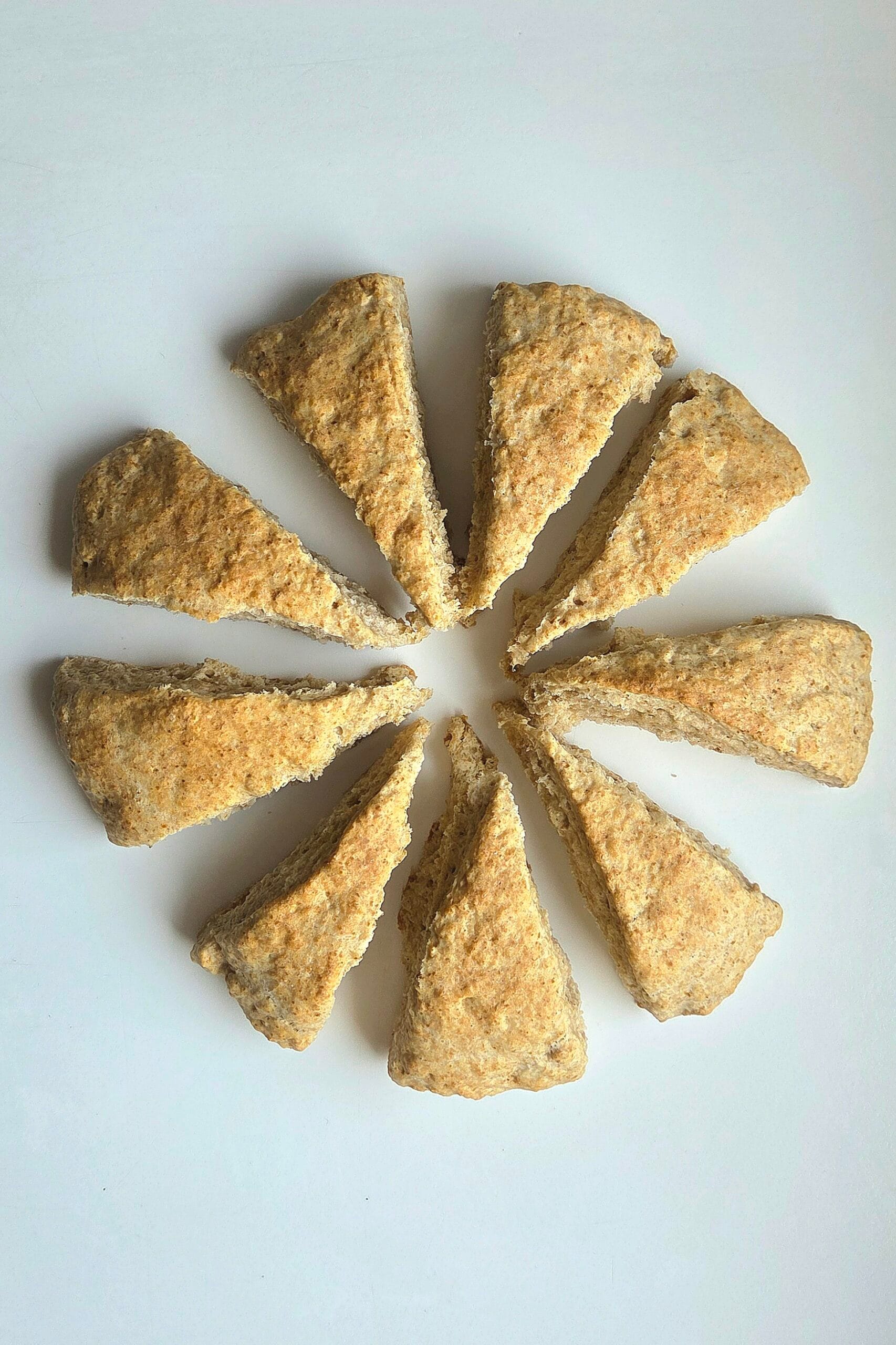
- Bake. Bake for 22 minutes, until risen and golden. Cool on the sheet for 10 minutes, then pull the wedges apart — they'll separate cleanly along the cuts. Best served barely warm.
Notes
Chef's tip: the baking powder does the lifting, so you don't wait for the starter. Mix, cut and bake straight away.
- Discard works too. Because the starter is here for flavor, not rise, unfed discard straight from the fridge works just as well. It gives a slightly tangier scone.
- Warm kitchen? Chill the cut wedges on the sheet for 20 minutes before baking. Cold butter hitting a hot oven is what pushes the layers apart.
- Storage: best on the day they're baked. Keep leftovers in a paper bag at room temperature and warm them for 5 minutes in a 350°F (175°C) oven to bring the crust back. They freeze well baked — reheat from frozen for 10 minutes.
- Serving: butter and jam is the obvious pairing, but a slice of brown cheese (brunost) on a warm scone is worth trying.