Ingredients
Equipment
Method
- Cook the potatoes. Boil the potatoes for the dough until tender, drain well and let the steam escape for a few minutes. Rice or mash them and let cool to lukewarm — hot potato will kill the yeast.
- Yeast and potato. Whisk the yeast into the lukewarm water. Add the mashed potato and stir until it breaks up.
- Mix the dough. Add the flour and salt and mix until no dry flour remains. There's no oil in this dough — the potato does that job. It will feel wet and sticky, and that's correct. Don't add more flour.
- First rise with folds. Cover and leave to rise until doubled, about 1 hour. Give it three sets of stretch-and-folds in the bowl during the first 45 minutes, using wet hands.
- Into the pan. Line the pan with parchment and oil it well. Tip the dough in, coat your fingertips in oil and gently press it out to the corners. Cover and proof until puffy and full of air, about 1 hour.
- Preheat. About 30 minutes before the dough is ready, heat the oven to 425°F (220°C), conventional.
- Prepare the topping. Slice the potatoes paper-thin on a mandoline and slice the red onion thin. Toss both with the olive oil, sage, a generous grind of black pepper and a pinch of salt
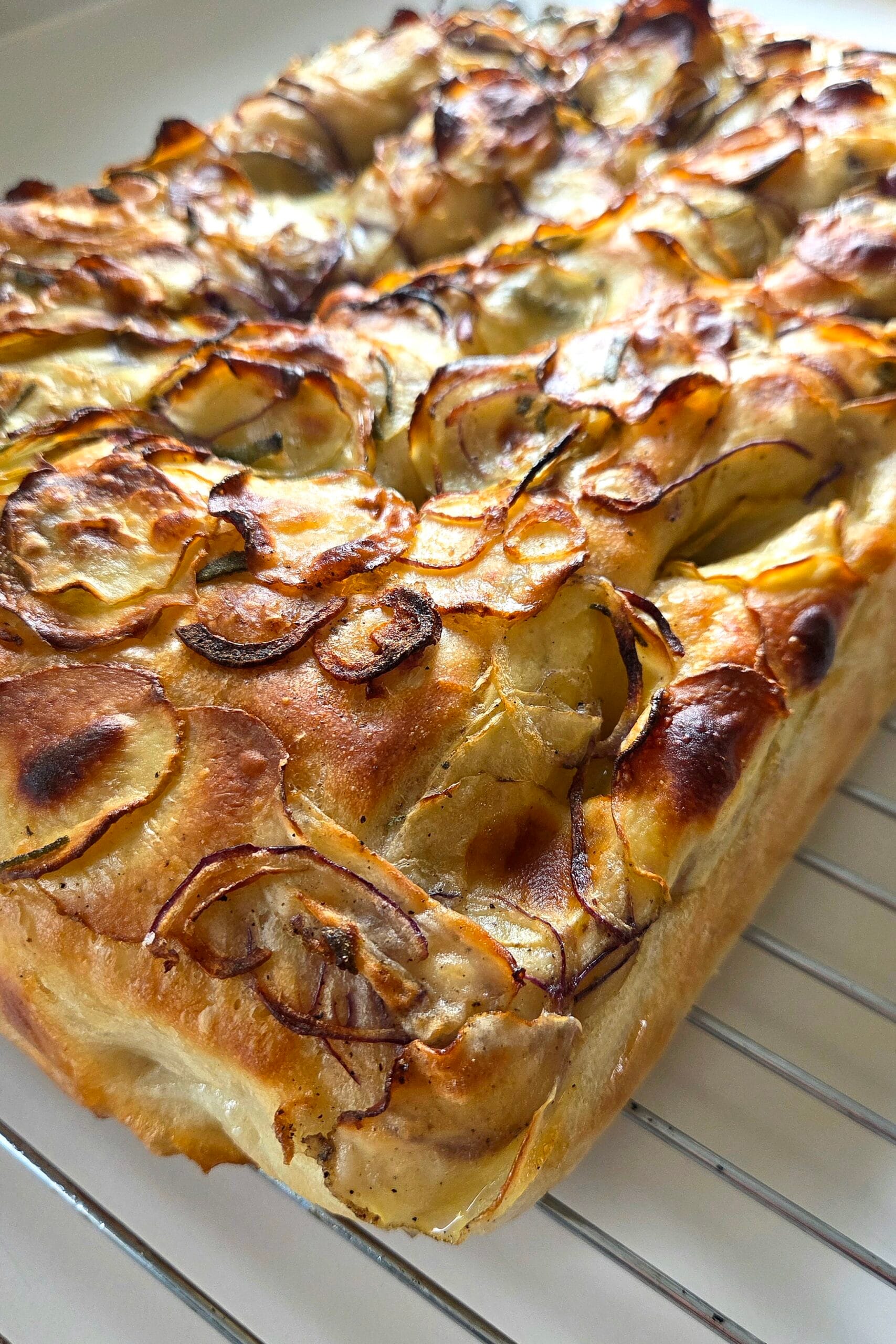
- Dimple and top. Dimple the dough all over with oiled fingertips, pressing right down to the bottom of the pan. Scatter the potato, onion and sage over the top in loose, overlapping layers — leave it uneven, the ruffled edges are what turn crisp.
- Bake. Finish with flaky salt and a last drizzle of oil. Bake for 30 minutes, until the potato edges are deep golden and the bread is baked through at the center.
- Cool on a rack. Lift the focaccia out on the parchment and cool on a wire rack for at least 15 minutes so the base stays crisp. Cut into 12 pieces.
Notes
Chef's tip — no oil in the dough. The cooked potato does the job olive oil would: it keeps the crumb soft and moist for days. Save the oil for where you can taste it — the pan, the dimples and the topping.
- On the potatoes. We bake this with Jacky, a small, yellow-fleshed Norwegian variety that's floury enough to mash beautifully. In the US, Yukon Gold does both jobs well. What matters more than the variety is that the topping slices are under 2 mm — thin enough to crisp before they fall apart.
- Slow rise option. Halve the yeast and leave the dough on the counter from breakfast until dinner, then shape, proof and bake. Longer fermentation, more flavor, same result.
- Cold proof. The dough also takes an overnight rest in the fridge after mixing, up to 12 hours. Let it come back to room temperature before pressing it into the pan.