Potato Focaccia with Red Onion and Sage
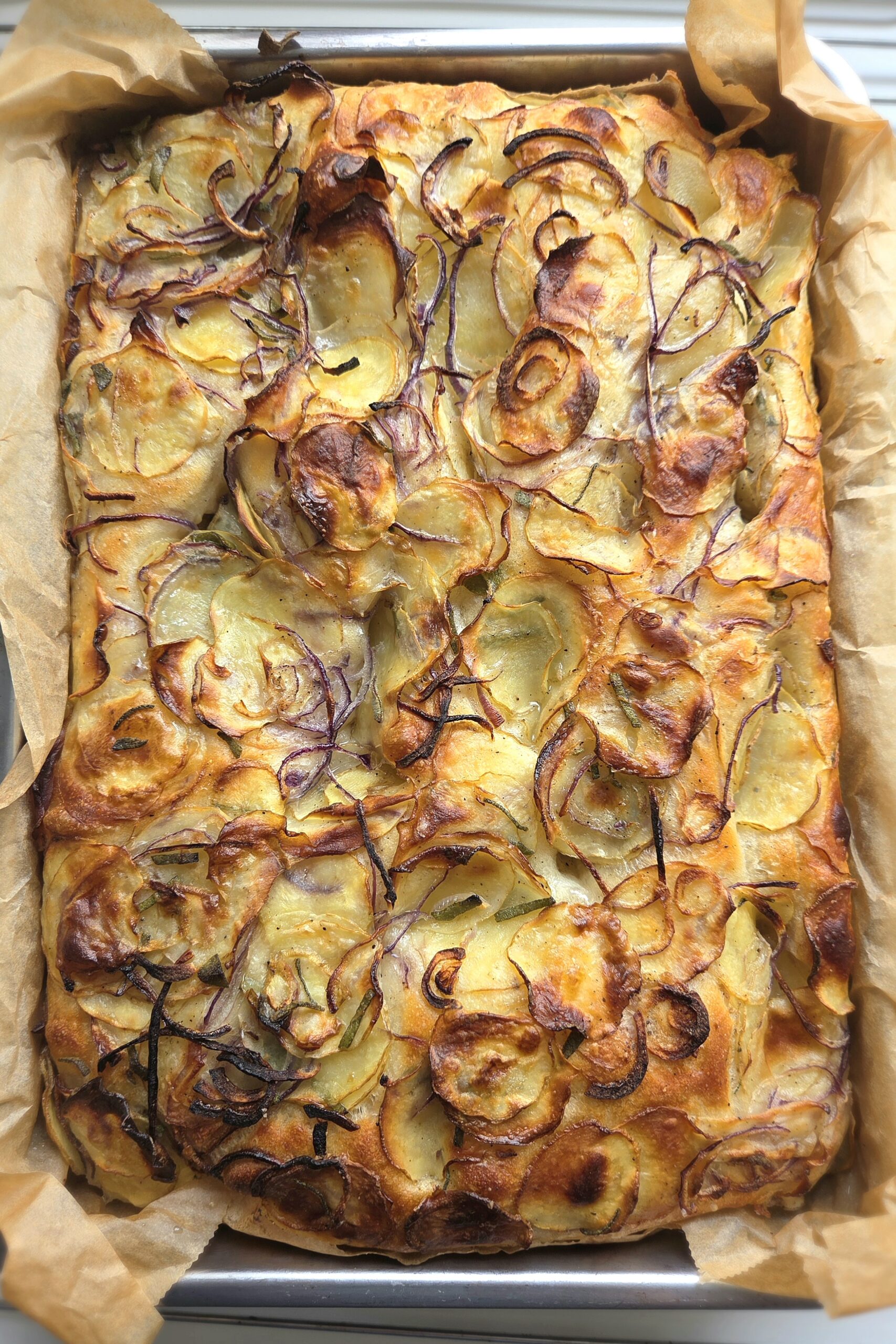
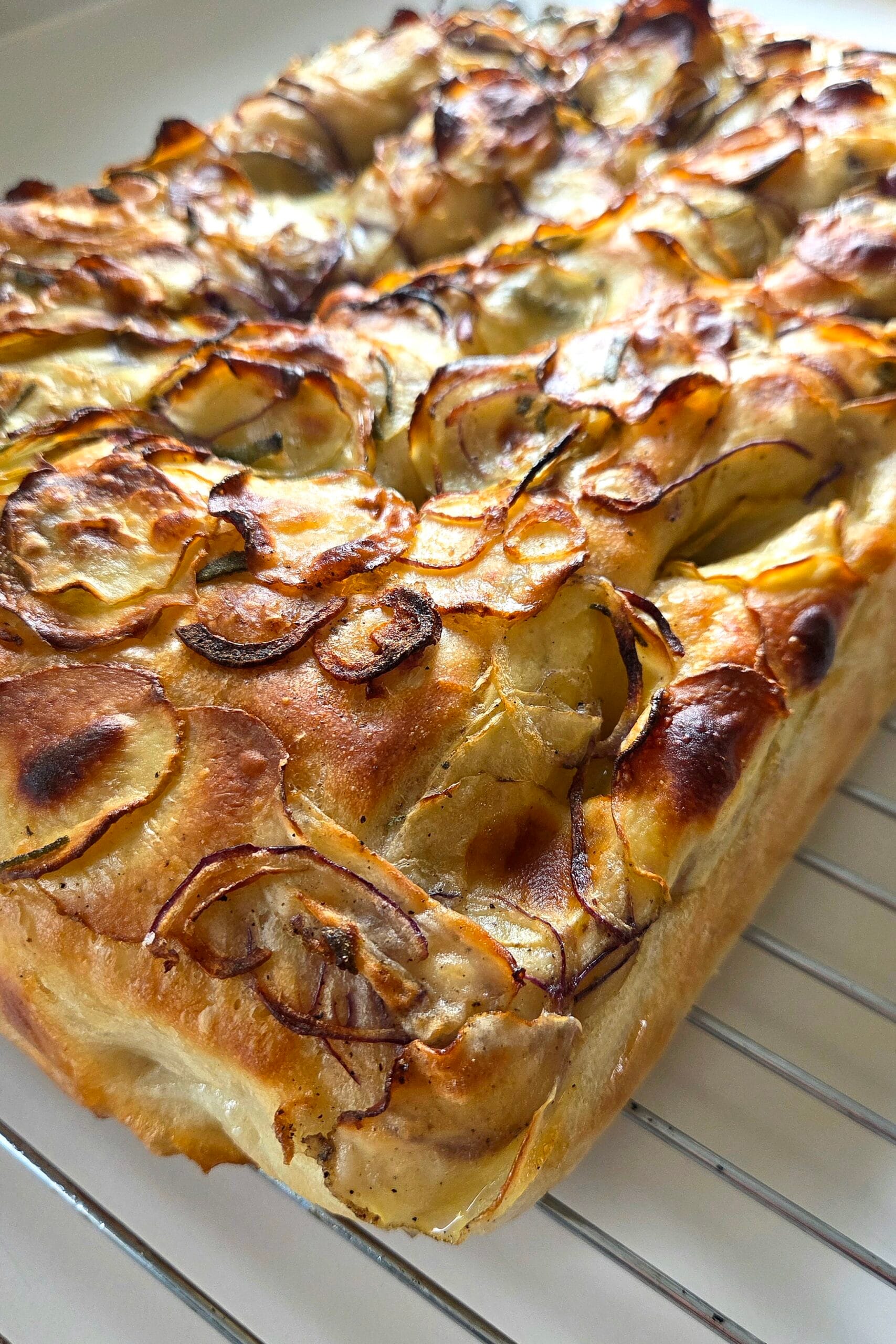
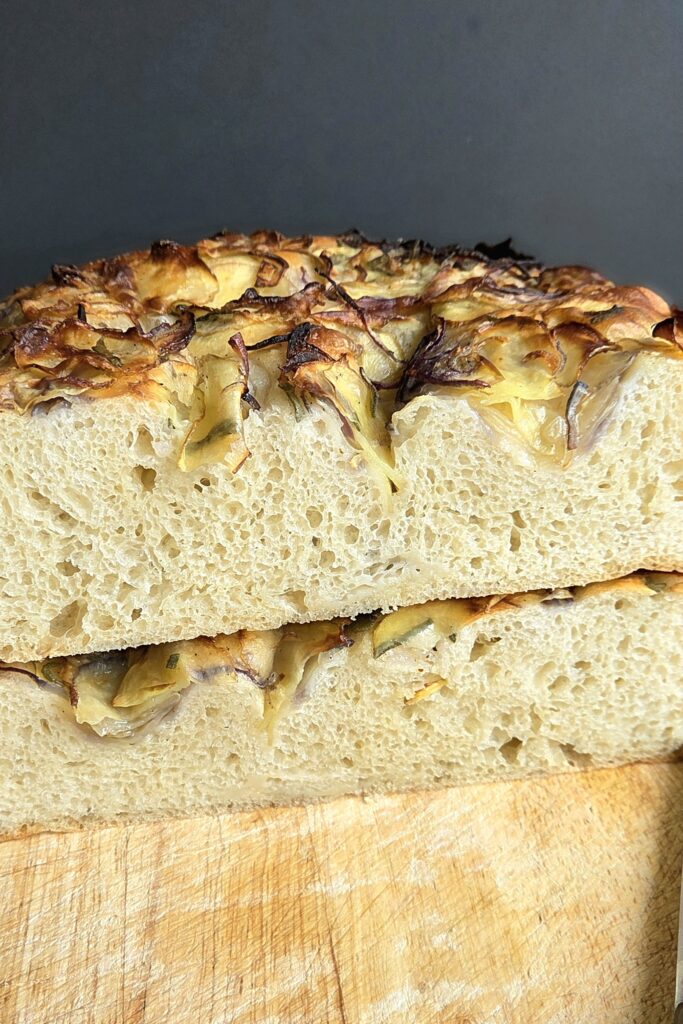
This potato focaccia has potato working in two places at once: mashed potato in the dough for a soft, long-keeping crumb, and paper-thin slices on top that bake into crisp, golden ruffles with red onion and sage. It’s a wet, forgiving dough that needs no kneading and no special skill — just a pan, a mandoline and a couple of hours. The kind of bread that disappears off the rack before it’s properly cool.
Potato Focaccia with Red Onion and Sage
Ingredients
Equipment
Method
- Cook the potatoes. Boil the potatoes for the dough until tender, drain well and let the steam escape for a few minutes. Rice or mash them and let cool to lukewarm — hot potato will kill the yeast.
- Yeast and potato. Whisk the yeast into the lukewarm water. Add the mashed potato and stir until it breaks up.
- Mix the dough. Add the flour and salt and mix until no dry flour remains. There's no oil in this dough — the potato does that job. It will feel wet and sticky, and that's correct. Don't add more flour.
- First rise with folds. Cover and leave to rise until doubled, about 1 hour. Give it three sets of stretch-and-folds in the bowl during the first 45 minutes, using wet hands.
- Into the pan. Line the pan with parchment and oil it well. Tip the dough in, coat your fingertips in oil and gently press it out to the corners. Cover and proof until puffy and full of air, about 1 hour.
- Preheat. About 30 minutes before the dough is ready, heat the oven to 425°F (220°C), conventional.
- Prepare the topping. Slice the potatoes paper-thin on a mandoline and slice the red onion thin. Toss both with the olive oil, sage, a generous grind of black pepper and a pinch of salt
- Dimple and top. Dimple the dough all over with oiled fingertips, pressing right down to the bottom of the pan. Scatter the potato, onion and sage over the top in loose, overlapping layers — leave it uneven, the ruffled edges are what turn crisp.
- Bake. Finish with flaky salt and a last drizzle of oil. Bake for 30 minutes, until the potato edges are deep golden and the bread is baked through at the center.
- Cool on a rack. Lift the focaccia out on the parchment and cool on a wire rack for at least 15 minutes so the base stays crisp. Cut into 12 pieces.
Notes
- On the potatoes. We bake this with Jacky, a small, yellow-fleshed Norwegian variety that’s floury enough to mash beautifully. In the US, Yukon Gold does both jobs well. What matters more than the variety is that the topping slices are under 2 mm — thin enough to crisp before they fall apart.
- Slow rise option. Halve the yeast and leave the dough on the counter from breakfast until dinner, then shape, proof and bake. Longer fermentation, more flavor, same result.
- Cold proof. The dough also takes an overnight rest in the fridge after mixing, up to 12 hours. Let it come back to room temperature before pressing it into the pan.
Why Potato Focaccia Stays Soft for Days
Most focaccia recipes stop at flour, water, salt and oil. Adding 250 g of cooked, mashed potato changes the crumb completely.
There’s no olive oil in this dough at all, which surprises people. It doesn’t need it — the potato is already doing what the oil would do, and it does it better. The oil goes on top, where you taste it.
When you boil a potato, its starch gelatinizes — it swells and locks in water. Fold that into a dough and you’re carrying far more moisture than flour alone could hold. You get a softer, more tender crumb, and a loaf that’s still good the next day instead of dry by evening. It’s the same logic behind the tangzhong in our Norwegian julekake, only the potato does the work for you.
There’s a Nordic precedent here too. Potato goes into plenty of Scandinavian doughs — lefse, potetkaker, lomper — for exactly this reason: it stretches the flour and keeps things soft.
Slice the potatoes paper-thin
This is the one step that decides whether the topping works. Paper-thin slices lose their moisture fast and crisp up at the edges while the bread bakes. Anything thicker stays raw in the middle and steams the crumb underneath it.
Use a mandoline and use the hand guard. No mandoline? A vegetable peeler gives wide ribbons, and a Scandinavian cheese slicer is surprisingly good at this — it’s what half the country already has in the drawer. Don’t rinse the slices afterwards; that surface starch helps them catch color.
Toss them straight into the oil with the onion and sage so nothing oxidizes while you dimple the dough.
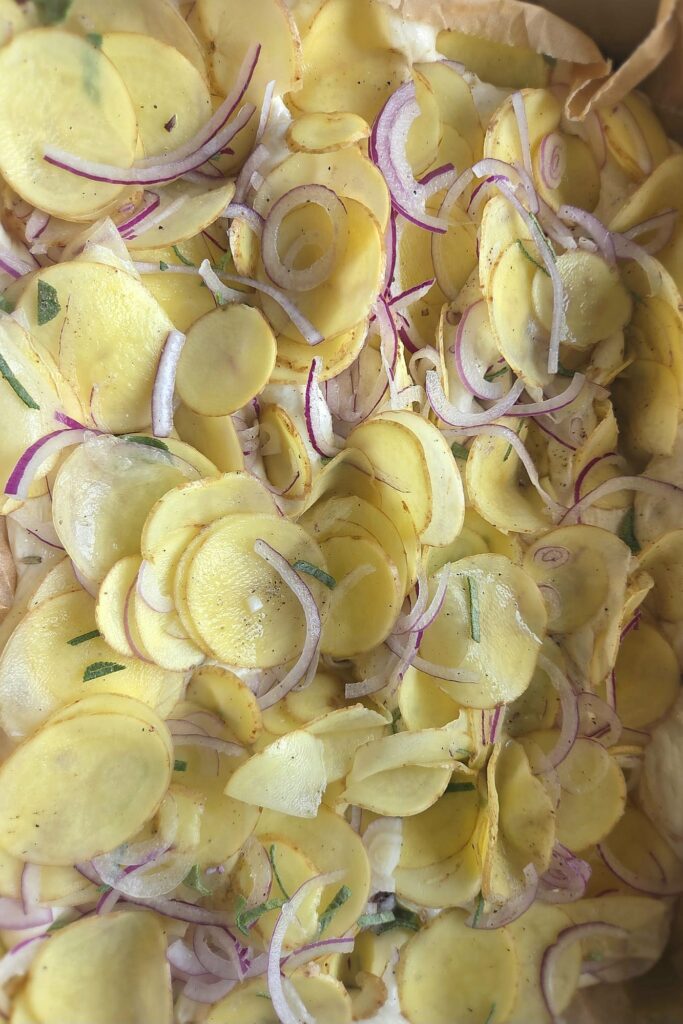
Let the topping look messy
Don’t arrange the potatoes in neat rows. Scatter them in loose, overlapping layers so some slices lie flat and others stand up on edge. The ones that stick up are the ones that go dark and crisp, and that contrast — crisp shards against soft bread — is the whole point of this bake.
Same with the onion: thin rings, spread thinly. Piled up they steam instead of browning.
Make it your own
- Rosemary instead of sage — more familiar, just as good. Use whole sprigs, not chopped.
- A sourdough version — swap the yeast for 150 g of active starter and stretch the bulk rise out over 4–5 hours. Or start from our sourdough focaccia and add the potato topping.
- Cheese — a handful of grated aged cheese over the potatoes for the last 10 minutes. Grate it yourself; pre-shredded is starch-coated and won’t brown properly.
- Leftovers — split a piece and toast it cut-side down in a dry pan. Better than fresh, arguably
More Nordic bakes you’ll love
- Sourdough Focaccia — the naturally leavened version, with one fold and a long rise in the pan
- Caramelized Onion Sourdough Bread with Jarlsberg — onion again, folded through a crusty loaf
- Cheese Scones with Jarlsberg — another quick, savory tray bake