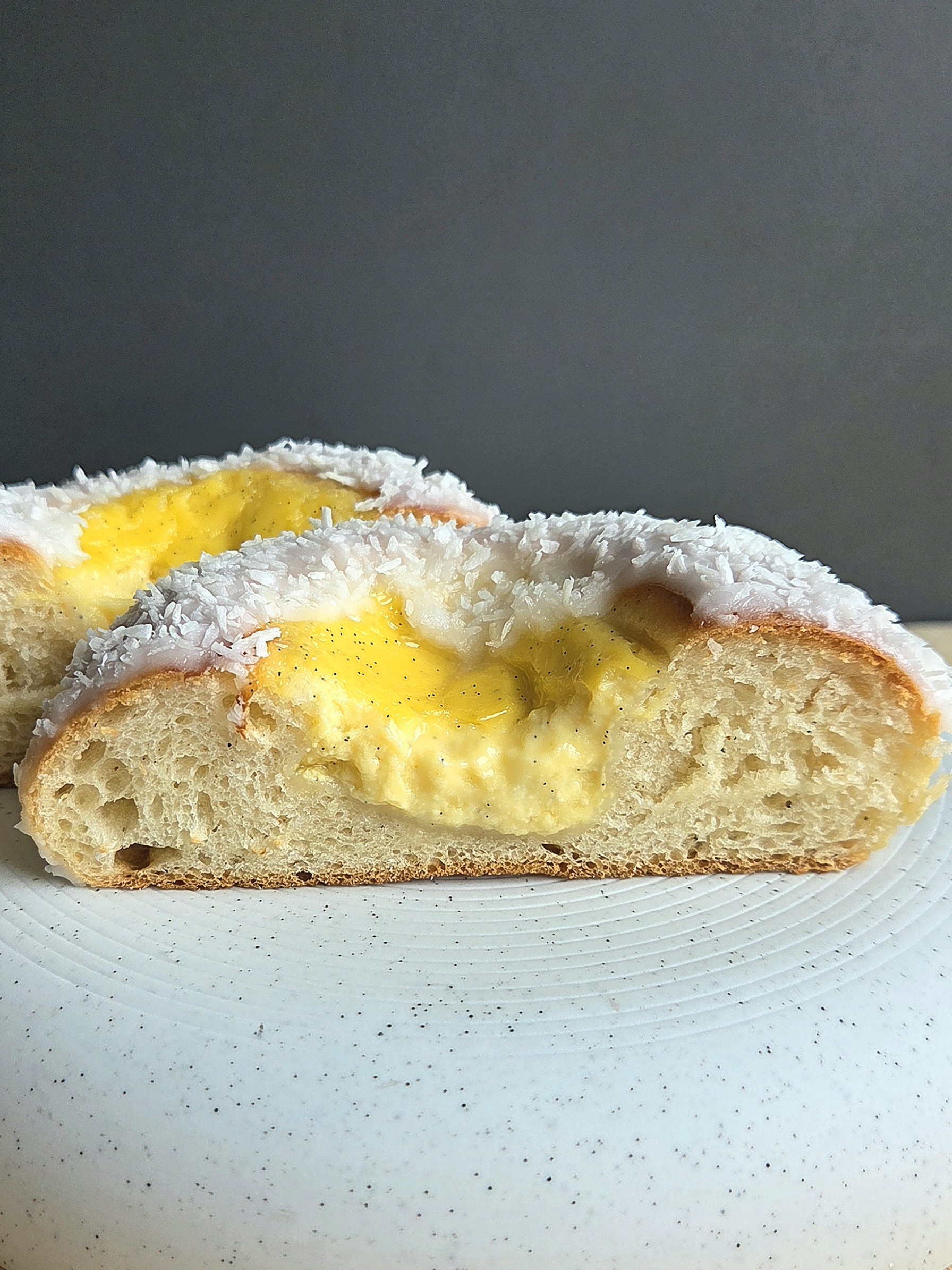
Ingredients
Equipment
Method
Make the custard first
- Combine. Split the vanilla bean and scrape the seeds into a heavy saucepan. Add the milk, egg yolks, sugar and cornstarch and whisk until smooth.
- Cook. Cook over medium heat, whisking constantly, until the custard thickens enough to coat the back of a spoon. Do not let it boil.
- Chill. Pour into a cold bowl, press plastic wrap onto the surface and chill completely. It needs to be cold and set before it goes on the buns — make it the night before if you can.
Dough
- Mix. Combine the flour, sugar, cardamom, salt and yeast in the bowl of a stand mixer. Add the cold milk and mix on low until the dough comes together.
- Knead. Knead 10 minutes on medium-low, then add the butter a few cubes at a time and knead another 10 minutes, until the dough is smooth, elastic and pulls away from the bowl.
- Rise. Cover and let rise until doubled, about 45 minutes.
Shape and fill
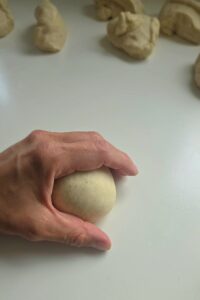
- Divide and roll. Divide the dough into 80 g pieces — about 15 — and roll each into a tight, smooth ball.
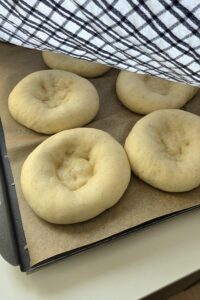
- Press the well. Place on a parchment-lined baking sheet with room between them. Press a wide well into the center of each bun with your fingers, leaving a raised rim all the way around.
- Proof. Cover and proof until puffy, about 20 minutes.
- Fill. Whisk the cold custard smooth and spoon a generous amount into each well.
Bake
- Bake. Bake at 425°F (220°C), conventional top-and-bottom heat only, for 10–12 minutes, until golden. See the note below on why the fan stays off.
- Cool. Cool completely on a wire rack. Glazing a warm bun melts the glaze straight off.
Glaze and coat
- Glaze and coat. Whisk the powdered sugar with 2 tbsp water and the rum extract. Add more water a little at a time until the glaze is thick and spreadable — it should hold its shape on the spoon, not run off it. Spread it around the custard on each bun, then press the glazed rim into a bowl of coconut. Let set before serving.
Notes
Chef's tip: turn the fan off. Bake skolebrød with conventional top-and-bottom heat, never convection — moving air drives the exposed custard to a boil before the dough is set, and it climbs out of the well. More on why in the post below.
- Cold milk, not warm. If you knead 20 minutes in a stand mixer, friction alone brings the dough up to temperature. Start with warm milk and you can push the dough past the point where the yeast is happy. Knead by hand and warm milk is fine.
- Yeast: one standard packet of instant yeast (7 g / 2¼ tsp) is what you need here. If you bake with fresh yeast, use 25 g and crumble it straight into the flour.
- Weigh the dough. 80 g pieces are what give you a tray of buns that bake evenly and look like a bakery made them.
- Go slow with the water. Powdered sugar turns from paste to liquid in a splash. Start with 2 tablespoons and add a few drops at a time until the glaze is thick enough to spread and stay put.
- Buy unsweetened desiccated coconut. The sweetened shredded coconut sold in most American supermarkets is too coarse and too sweet here.
- Loaf version: give it a few minutes longer than the buns, and watch the color rather than the clock.
- Storage: best the day they're baked. The custard means they don't keep well — store leftovers in the fridge and eat within two days.