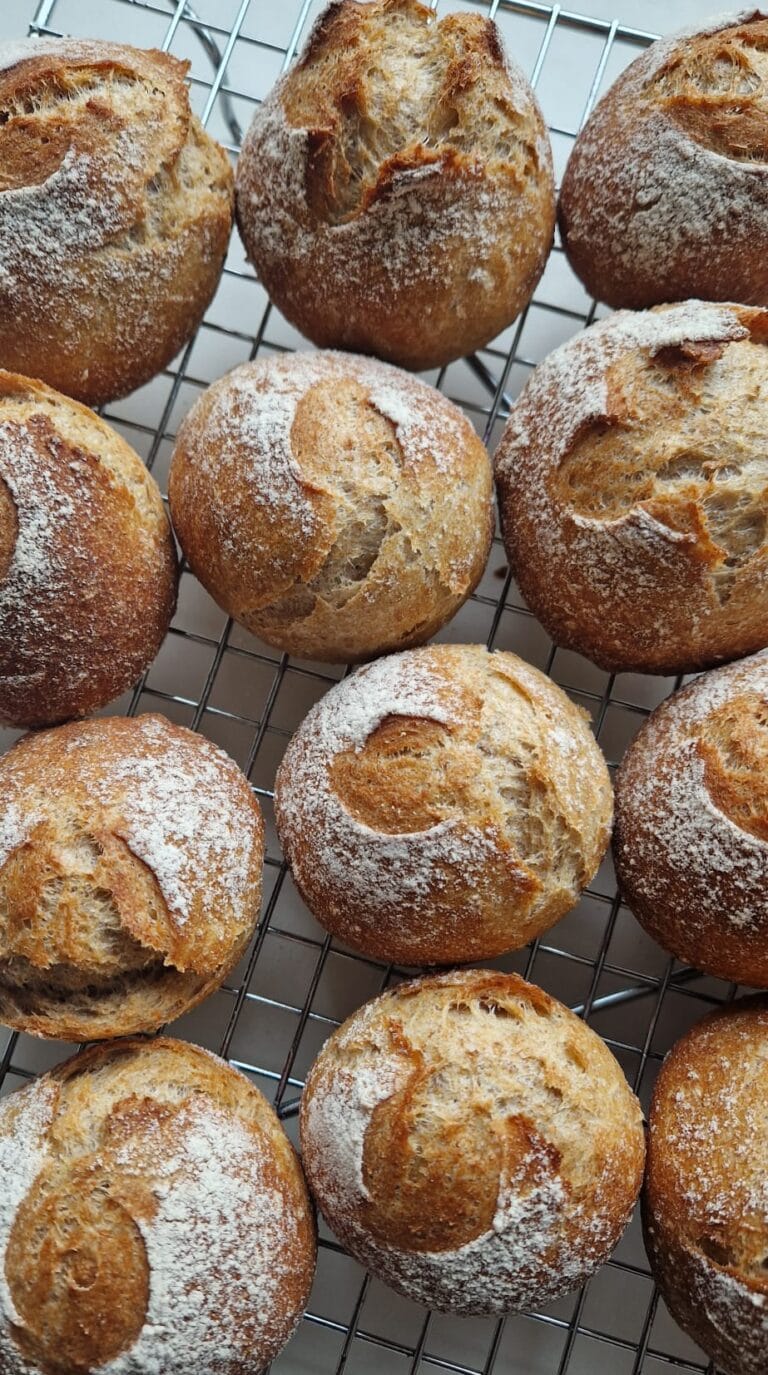
Skolebrød — Norwegian School Buns with Custard and Coconut
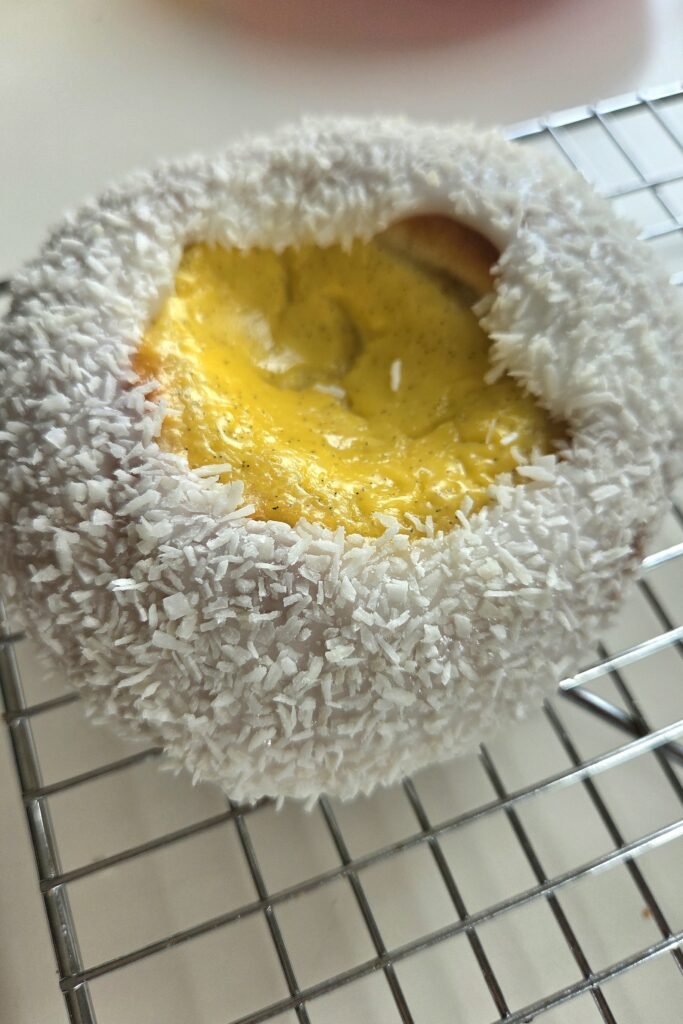
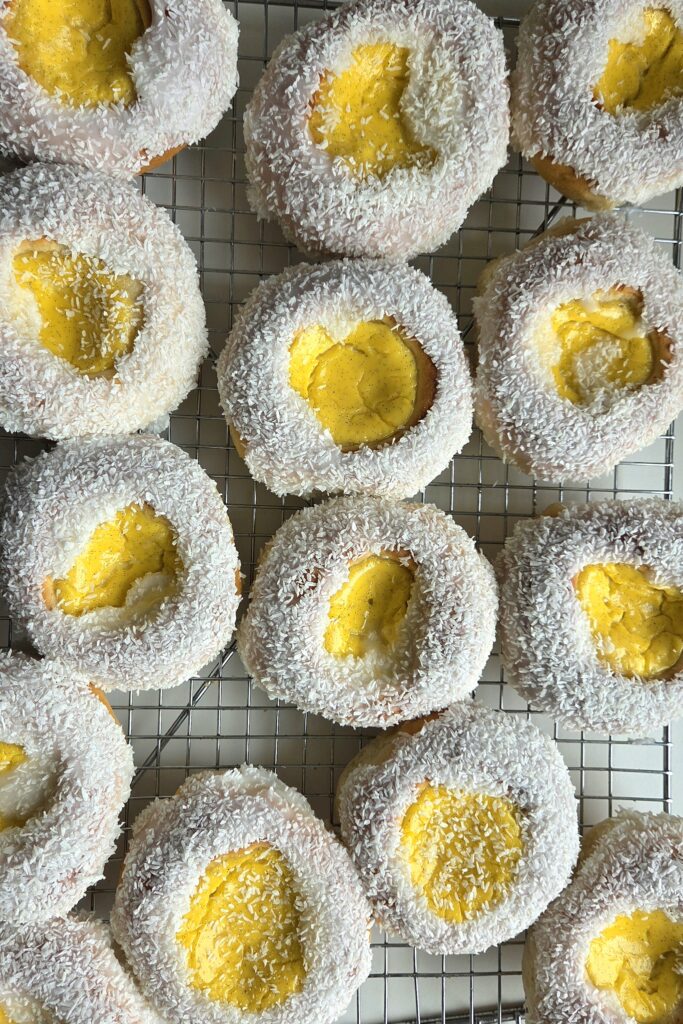
Skolebrød — also called skoleboller — are the buns every Norwegian kid knows from the bakery counter. Soft cardamom dough with a pocket of vanilla custard, a white glaze and a thick ring of coconut. The name means “school bread,” and they’ve been a lunchbox and coffee-table staple for generations. They take an afternoon, but nothing about them is difficult.
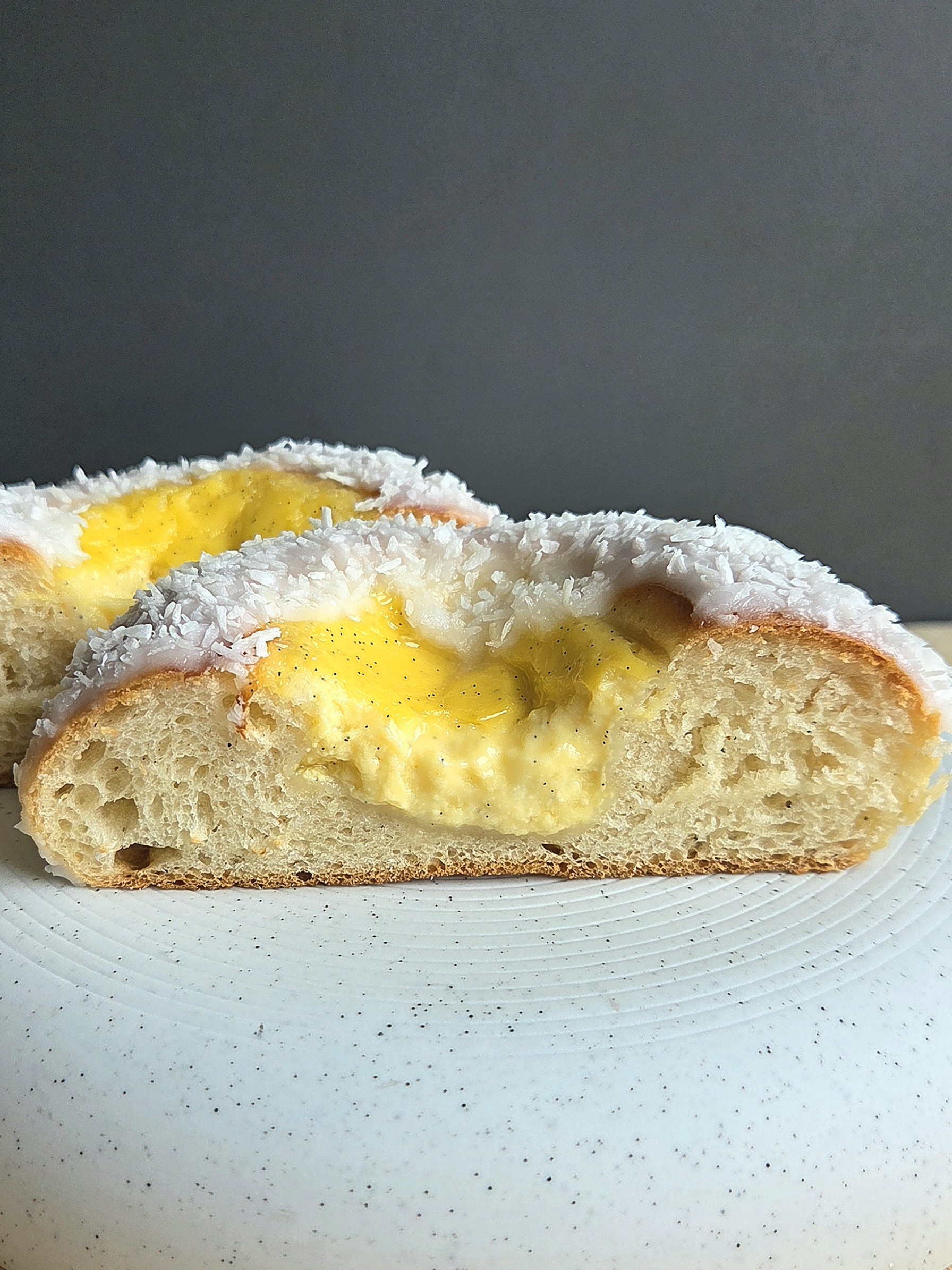
Skolebrød — Norwegian School Buns with Custard and Coconut
Ingredients
Equipment
Method
- Combine. Split the vanilla bean and scrape the seeds into a heavy saucepan. Add the milk, egg yolks, sugar and cornstarch and whisk until smooth.
- Cook. Cook over medium heat, whisking constantly, until the custard thickens enough to coat the back of a spoon. Do not let it boil.
- Chill. Pour into a cold bowl, press plastic wrap onto the surface and chill completely. It needs to be cold and set before it goes on the buns — make it the night before if you can.
- Mix. Combine the flour, sugar, cardamom, salt and yeast in the bowl of a stand mixer. Add the cold milk and mix on low until the dough comes together.
- Knead. Knead 10 minutes on medium-low, then add the butter a few cubes at a time and knead another 10 minutes, until the dough is smooth, elastic and pulls away from the bowl.
- Rise. Cover and let rise until doubled, about 45 minutes.
- Divide and roll. Divide the dough into 80 g pieces — about 15 — and roll each into a tight, smooth ball.
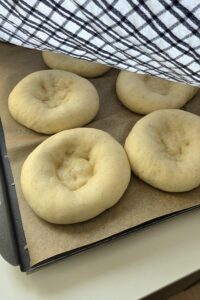
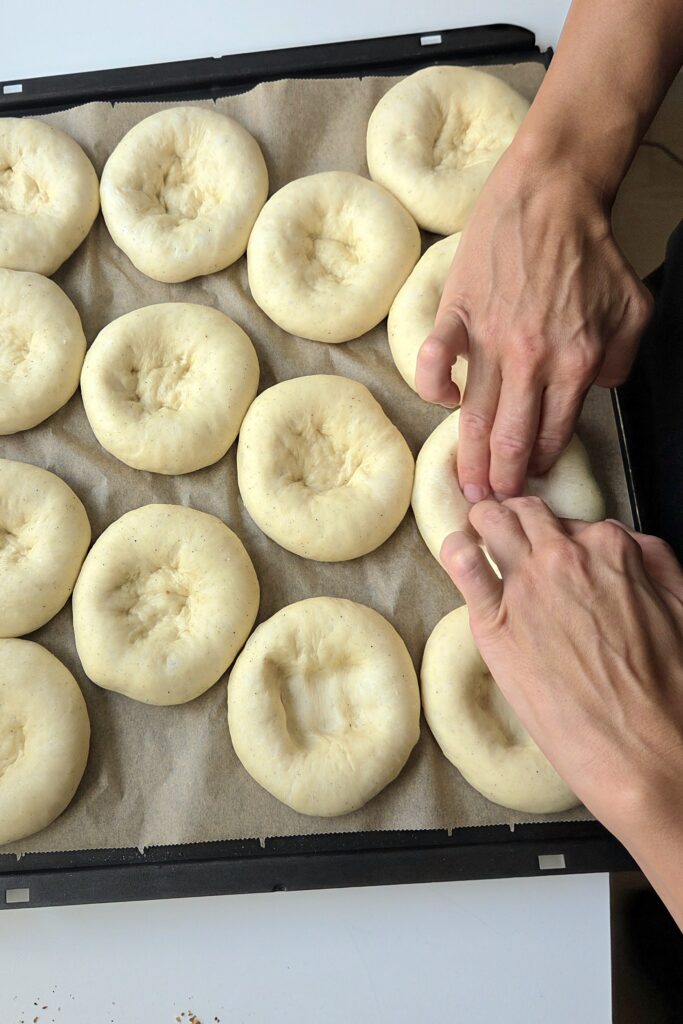
- Press the well. Place on a parchment-lined baking sheet with room between them. Press a wide well into the center of each bun with your fingers, leaving a raised rim all the way around.
- Proof. Cover and proof until puffy, about 20 minutes.
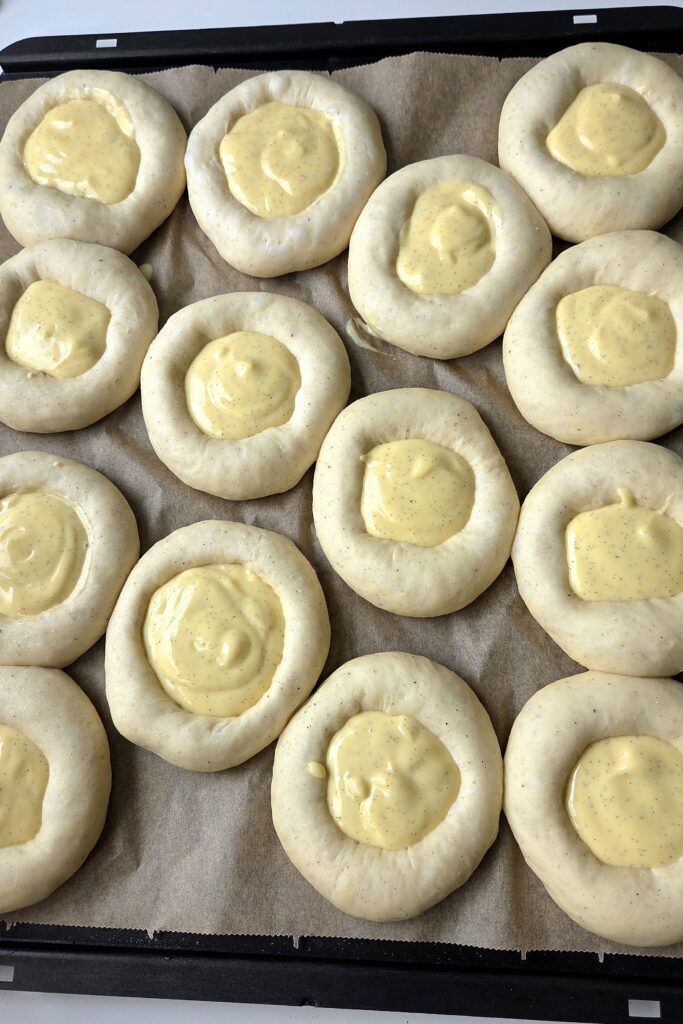
- Fill. Whisk the cold custard smooth and spoon a generous amount into each well.
- Bake. Bake at 425°F (220°C), conventional top-and-bottom heat only, for 10–12 minutes, until golden. See the note below on why the fan stays off.
- Cool. Cool completely on a wire rack. Glazing a warm bun melts the glaze straight off.
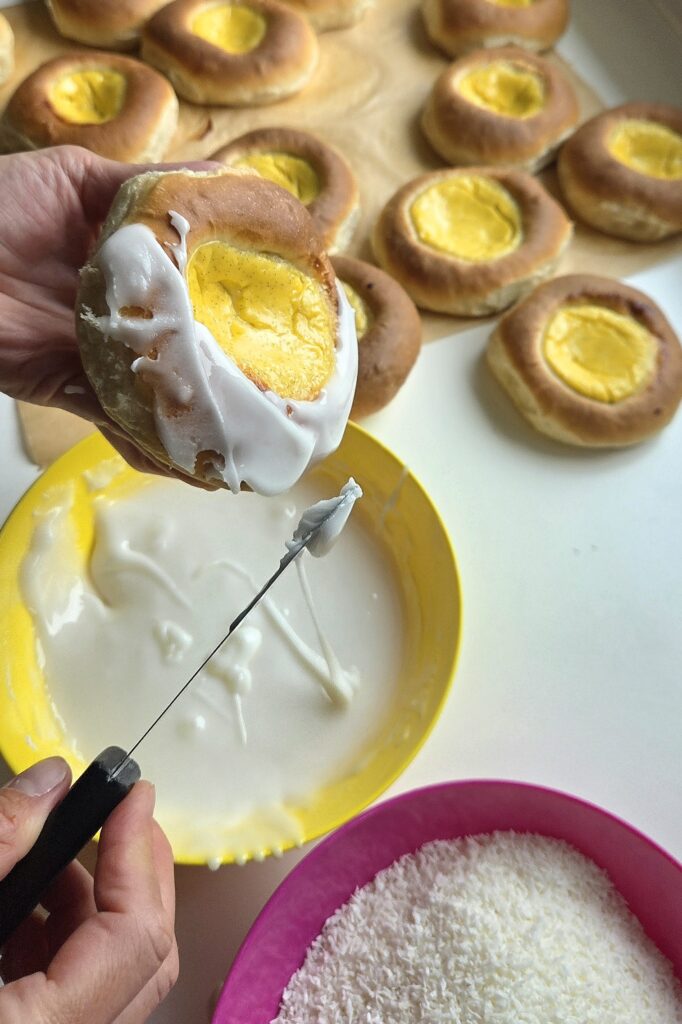
- Glaze and coat. Whisk the powdered sugar with 2 tbsp water and the rum extract. Add more water a little at a time until the glaze is thick and spreadable — it should hold its shape on the spoon, not run off it. Spread it around the custard on each bun, then press the glazed rim into a bowl of coconut. Let set before serving.
Notes
- Cold milk, not warm. If you knead 20 minutes in a stand mixer, friction alone brings the dough up to temperature. Start with warm milk and you can push the dough past the point where the yeast is happy. Knead by hand and warm milk is fine.
- Yeast: one standard packet of instant yeast (7 g / 2¼ tsp) is what you need here. If you bake with fresh yeast, use 25 g and crumble it straight into the flour.
- Weigh the dough. 80 g pieces are what give you a tray of buns that bake evenly and look like a bakery made them.
- Go slow with the water. Powdered sugar turns from paste to liquid in a splash. Start with 2 tablespoons and add a few drops at a time until the glaze is thick enough to spread and stay put.
- Buy unsweetened desiccated coconut. The sweetened shredded coconut sold in most American supermarkets is too coarse and too sweet here.
- Loaf version: give it a few minutes longer than the buns, and watch the color rather than the clock.
- Storage: best the day they’re baked. The custard means they don’t keep well — store leftovers in the fridge and eat within two days.
One bun, a dozen names
Norwegians can’t agree on what to call these. Skolebrød — school bread — is standard in the north and east, while the west says skolebolle, school bun. Head to the south coast and it gets stranger: in Kristiansand they’re tolvøres, “twelve øre,” after what they once cost, pronounced roughly “tållårs” in the local dialect. In the towns of Arendal, Lillesand and Grimstad they’re purke — a sow — because the bun is plump and rich. Elsewhere you’ll hear olabolle, skillingsbolle or eggemelisbolle.
The bun itself is younger than you’d think, dating to the 1950s. The name most likely comes from it being packed in school lunches or sold at school. In the 1970s it briefly became controversial: as Norway started worrying about how much sugar children ate, some argued that calling a rich, glazed bun bread made it too easy to treat as everyday food. Skolebolle was coined as the honest alternative. Both names stuck, and Norwegians have been mildly disagreeing ever since.
There’s even a day for it — the last Friday before the summer holidays, bakeries across Norway mark skolebrødets dag.
A little salt in the dough
Many Norwegian skolebrød recipes leave salt out entirely. We put a teaspoon in, and it’s the difference between a bun that tastes sweet and a bun that tastes of cardamom and butter. Salt doesn’t make enriched dough salty — it gives the other flavors somewhere to land, and it tightens the gluten slightly, which helps the dough hold that raised rim around the custard.
Why the Fan Stays Off When You Bake Skolebrød
This is the one thing that separates a clean skolebrød from a messy one. Convection heat blows across the exposed custard and brings it to a boil before the dough around it has set — the custard swells, climbs over the rim and runs down the side of the bun. Bake with conventional top-and-bottom heat instead and the custard bakes gently, stays glossy and stays in its well.
Getting the custard right
Make it the night before if you can. It has to be properly cold and set before it goes into the buns, or it will spread out across the surface instead of holding in the center. Whisk it smooth again just before you fill — it firms up in the fridge and needs loosening.
Keep the heat moderate while it cooks and keep whisking. Six yolks to 400 ml of milk gives you a rich custard with real vanilla flecks through it, and it sets further in the oven.
How to Shape Skolebrød
Roll each ball tight first, then press the well in with your fingertips after the buns have relaxed on the tray, before the short final proof. You want a wide, shallow crater with a clear raised rim — that rim is what holds the custard and later carries the glaze and coconut. Press too deep and you’ll go through the base.
That’s the opposite of our jam filled buns, where the well goes in after proofing. The difference is the shape you’re after: a jam bun needs a deep, narrow pocket that would close up during the rise, while skolebrød want a wide, open crater, and the 20-minute proof lifts the rim around it.
The loaf version
There’s a second way to shape these. Instead of dividing the dough, roll it into a long, slightly flattened log the length of your baking sheet and press a channel down the center with the side of your hand. Proof it, fill the channel with cold custard and bake.
Once it’s completely cool, glaze along both long sides of the channel and press each glazed edge into coconut, leaving the custard stripe bare down the middle. Cut into 1¼-inch (3 cm) slices to serve.
It’s faster than shaping fifteen buns, it slices beautifully for a coffee table, and the ratio of soft crumb to custard is a little more generous. Same dough, same custard, same rule about the fan
Make it your own
The custard is where this recipe opens up. Infuse the milk with cardamom, lemon zest or a cinnamon stick before you cook it, or stir a spoonful of almond paste into the finished custard while it’s still warm.
For fruit, press berries or thin slices of apple or pear halfway into the custard just before the buns go in the oven — don’t stir them through it. Fruit releases water as it bakes, and mixed in it will make the custard weep. Sitting on top, it bakes into the surface and holds.
Fresh raspberries pressed into the custard after baking are the simplest upgrade of all, and the red against the white glaze is the best-looking version of this bun we make.
Play with the shape too. The loaf above slices for a coffee table; small buns suit a lunchbox. And the finish is wide open — tint the glaze for a birthday or a holiday, or swap the coconut for colored sugar, chopped nuts or sprinkles. Coconut is traditional, but nothing about it is sacred — and if you have a bag of desiccated coconut open, our Norwegian coconut macaroons use it up.
More Nordic bakes you’ll love
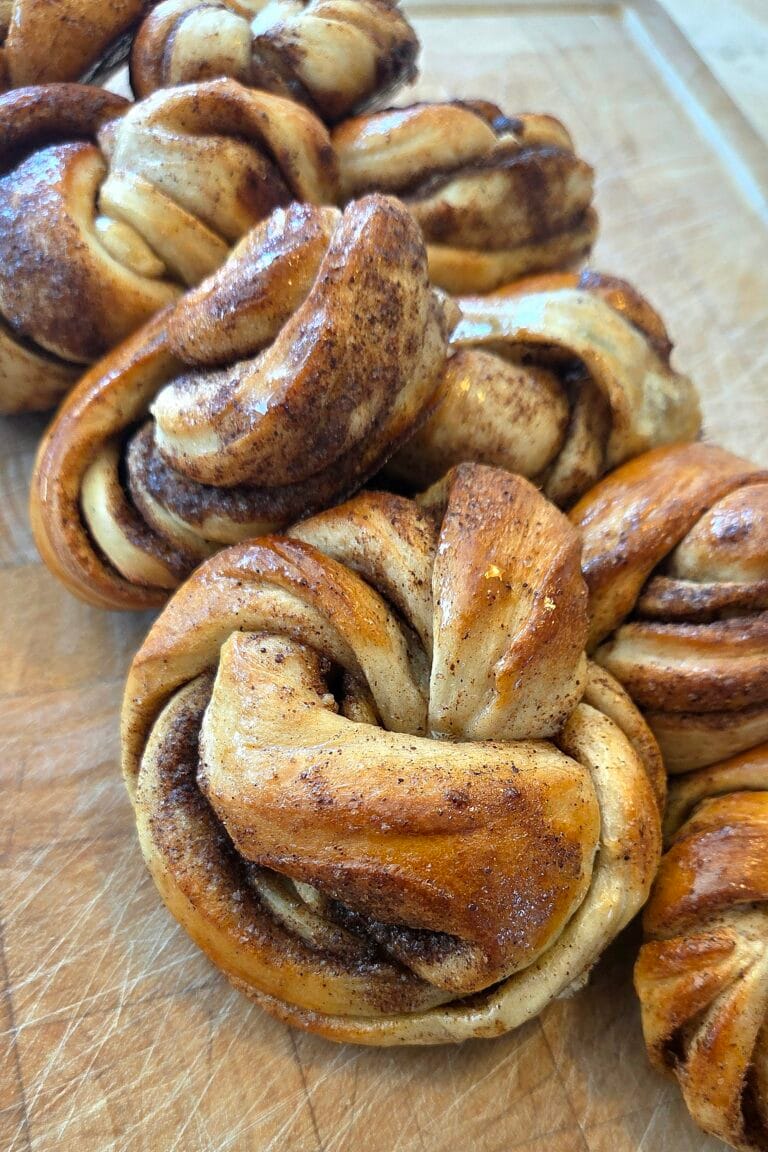
- Cinnamon Knots with Cardamom — the same cardamom-forward dough, twisted with cinnamon and sugar
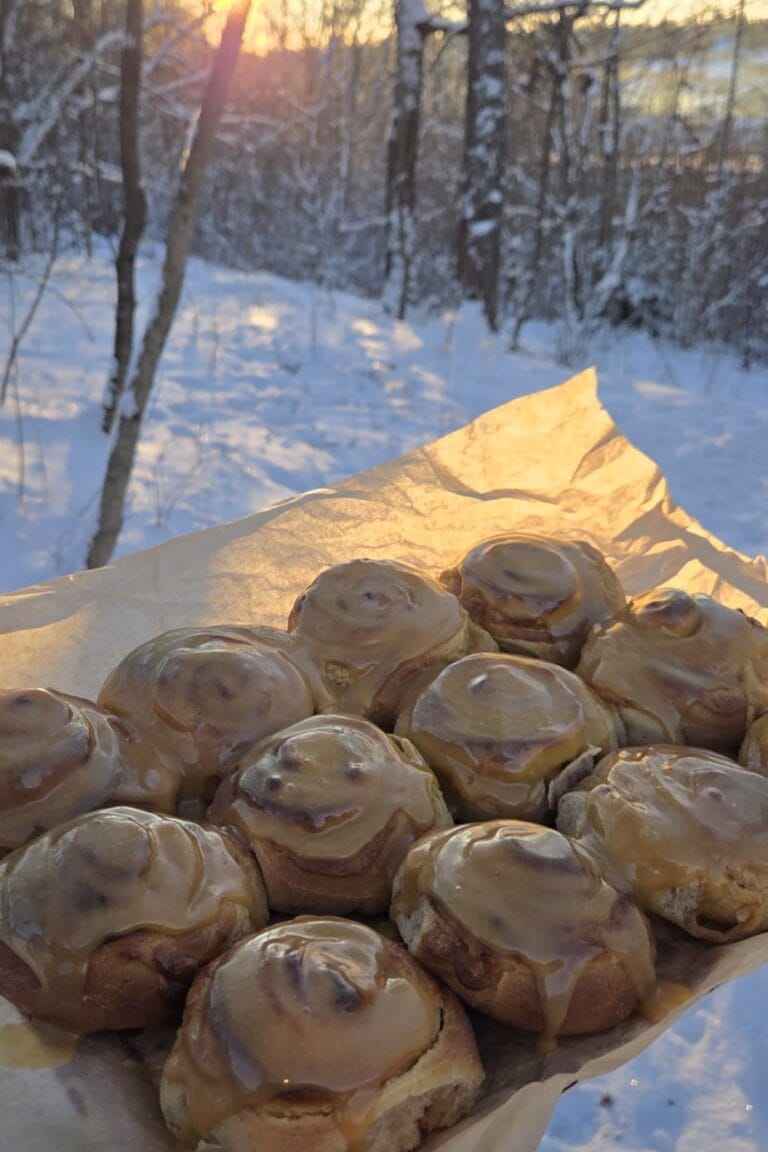
- Cardamom Cinnamon Rolls with Cream Cheese Frosting — another long-kneaded cardamom dough, baked close together in a pan
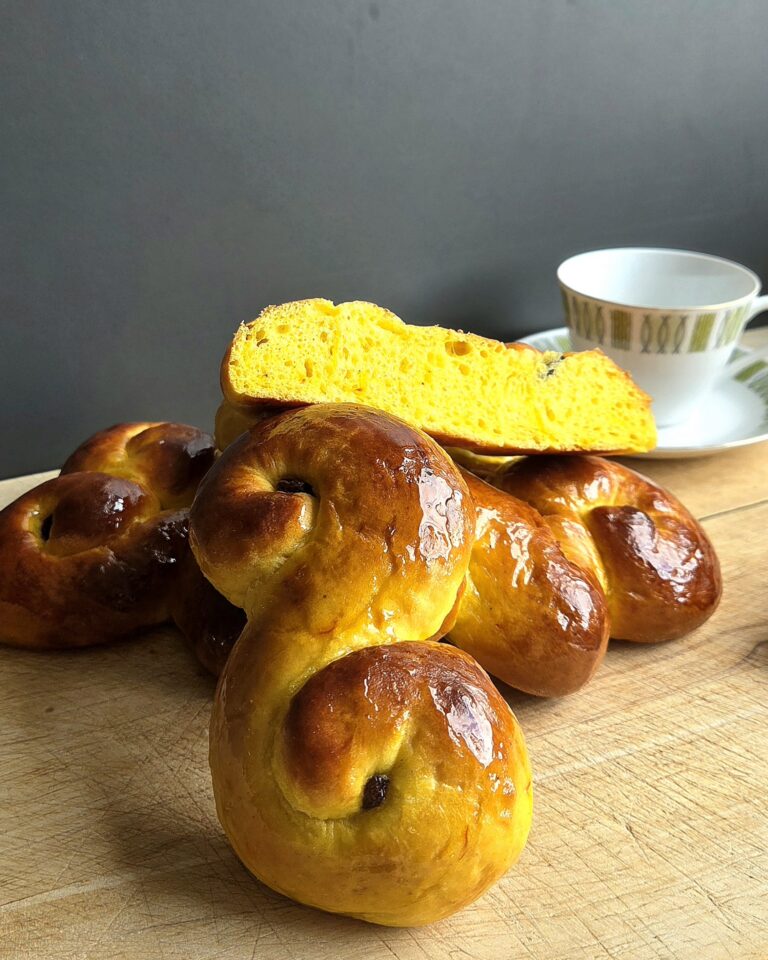
- Lussekatter — Swedish Saffron Buns — the other great Scandinavian bakery bun