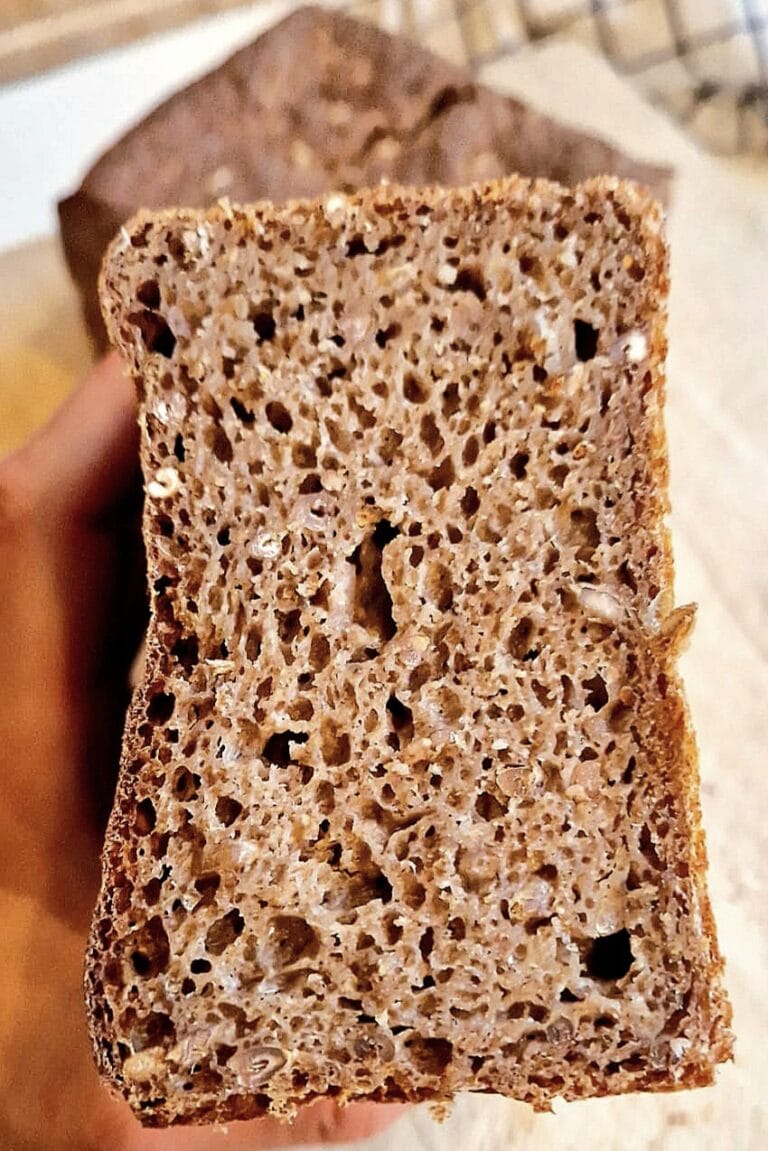
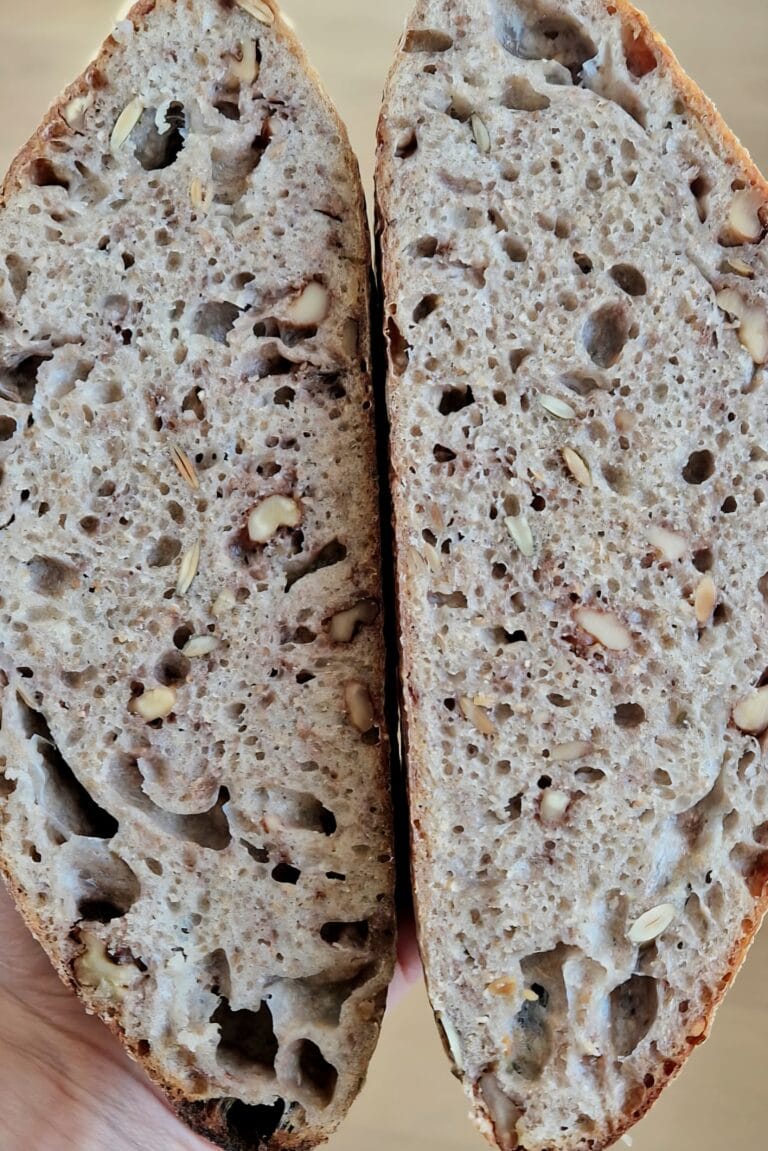
Sourdough Discard Naan
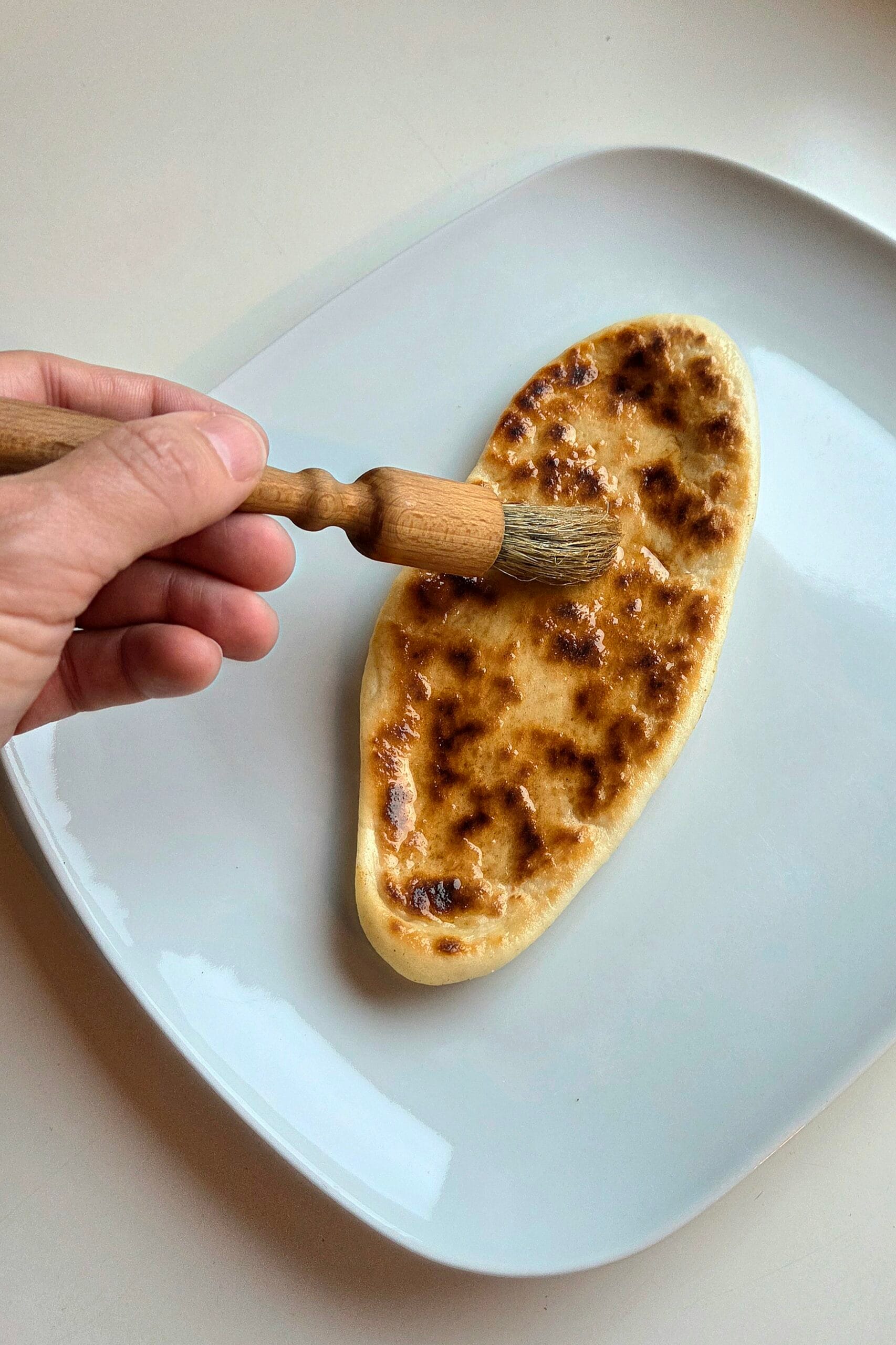
Sourdough discard naan is the recipe we make when the discard jar is full and dinner needs bread — the starter you take out every time you feed your starter. Soft, chewy, blistered from a hot dry pan and brushed with garlic-cumin butter. And the dough is a pleasure to work with — enriched enough that it rolls out thin without a speck of flour on the counter.
Sourdough Discard Naan
Ingredients
Equipment
Method
- Wake the yeast. Add the warm water (100°F / 38°C) and instant yeast to the bowl of a stand mixer. Let it sit for a minute or two, until the yeast starts to bubble and clump up slightly.
- Add the wet ingredients. Add the sourdough discard, Greek yogurt, olive oil and salt
- Add the flour and knead. With the dough hook on low, add the flour gradually until the dough pulls away from the sides of the bowl. It should feel tacky but not overly sticky. Knead for 5–7 minutes, until the dough is smooth and cohesive.
- First rise. Transfer the dough to a container, cover, and set it somewhere warm to rise for about 1 hour, until doubled.
- Divide and proof. Turn the dough out onto the counter and divide it into 12 equal pieces, about 80 g each. Roll each piece into a tight ball, set them on a baking sheet, cover with a kitchen towel and proof for 20–30 minutes.
- Make the garlic-cumin butter. Melt the butter in a small pan with the grated garlic and cumin. Warm it gently for a minute — you want the garlic softened, not browned. Set aside.
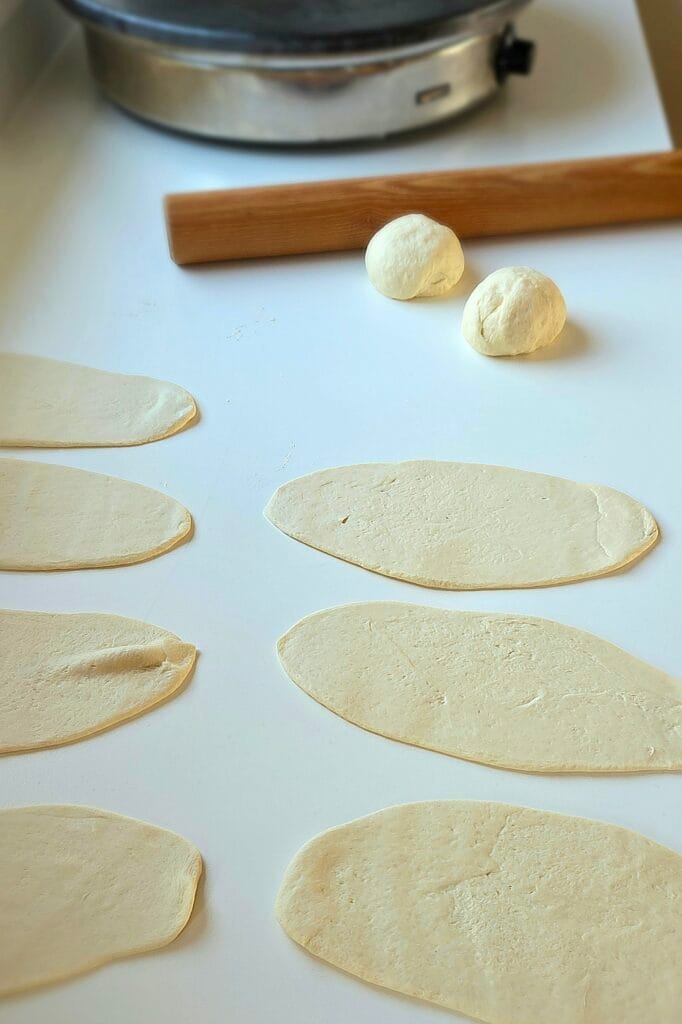
- Roll out. Roll each ball into an oval, 2–3 mm thick. The dough is enriched enough that you shouldn't need any flour on the counter. Keep the rolled ovals covered while you work through the rest.
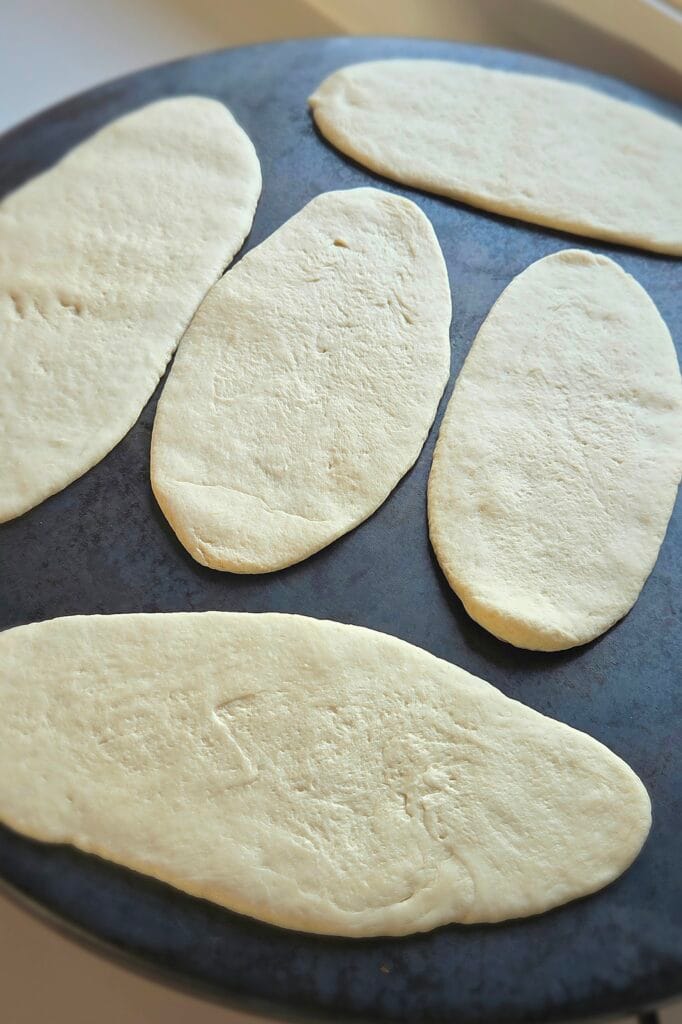
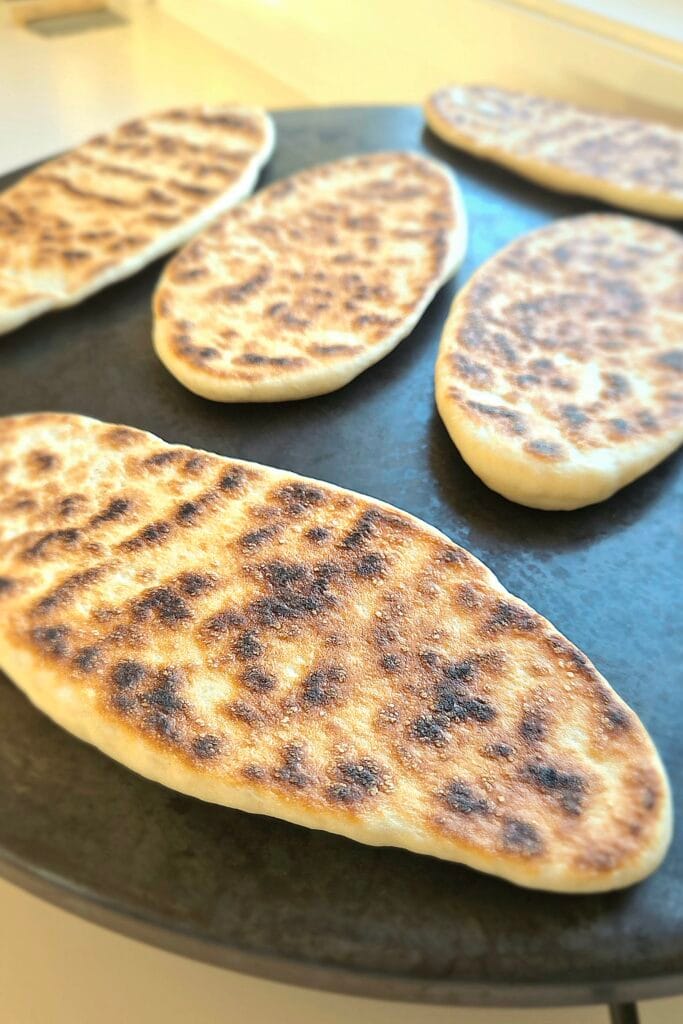
- Cook dry. Heat a dry griddle or heavy skillet over medium-high heat. No oil. Cook one naan at a time for 1–2 minutes, until it puffs, bubbles across the surface and the underside is spotted deep brown. Flip and cook 1 minute more.
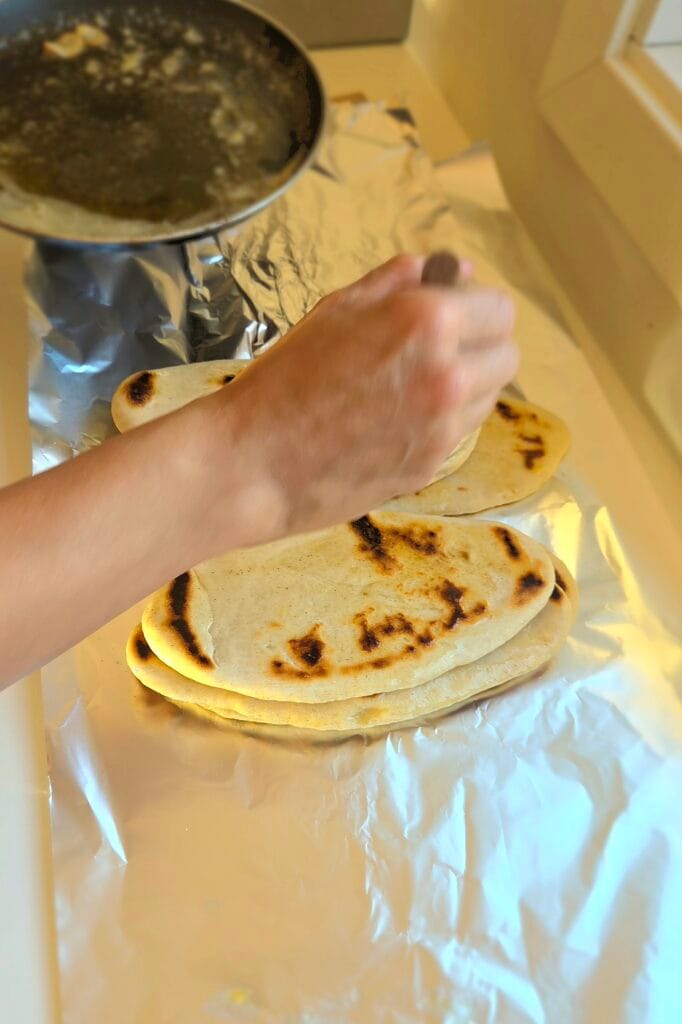
- Butter and keep warm. Stack the cooked naan on a sheet of foil and brush generously with the garlic-cumin butter while still hot. Fold the foil over to keep them soft and steamy until serving.
Notes
- Discard straight from the fridge. The yeast does the lifting, so unfed, sluggish discard is fine. If it smells sour and pleasant, use it.
- Storing: stack them, wrap in foil and keep at room temperature for up to 2 days. Reheat for 20 seconds in a dry pan. They also freeze well — layer with parchment and freeze flat.
Why discard works so well in naan
Naan isn’t a long-fermented bread. It’s leavened with commercial yeast, rolled thin and cooked in minutes. That means the discard isn’t here to do the lifting — the yeast handles that. The discard brings the flavor: a faint tang and a depth that plain flour and water can’t give you on a one-hour rise.
It also means you can use discard straight from the fridge, unfed and sluggish. There’s no window of peak activity to hit. If it smells sour and pleasant, it’s fine.
The yogurt matters more than you’d think
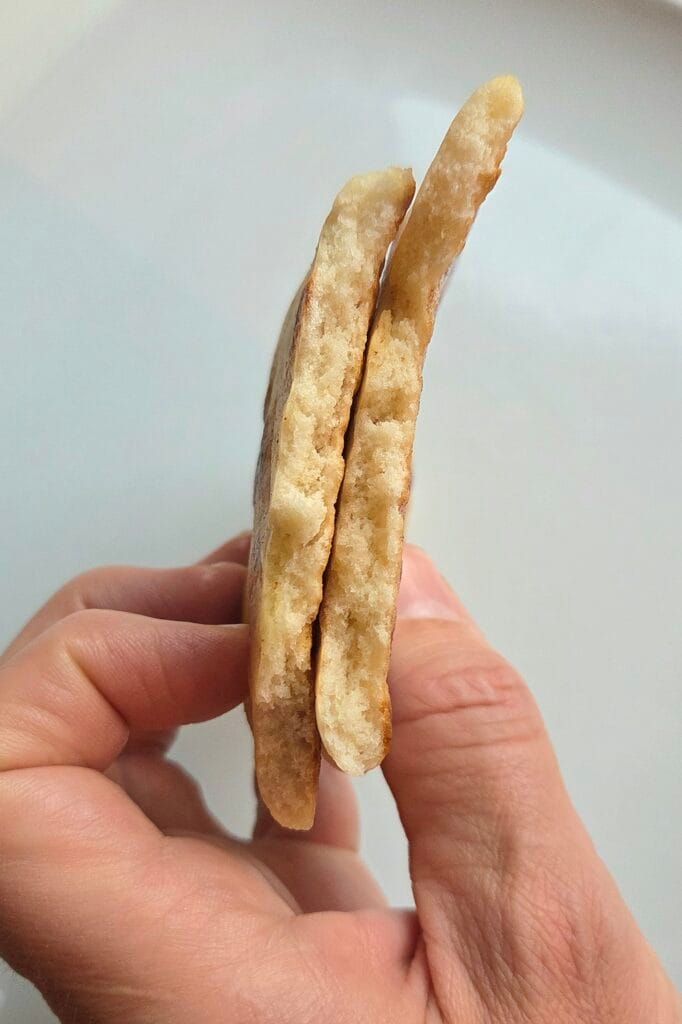
Greek yogurt is the difference between naan and a plain flatbread. The fat tenderizes the crumb, and the acidity softens the gluten just enough that the dough rolls out thin without fighting back. Skip it and you get something closer to pita — perfectly good, but not naan. It also keeps them soft for hours rather than turning leathery the way a lean flatbread does.
Use full-fat if you have it. Low-fat works, but the bread firms up faster.
A dough that rolls without flour
This is the detail that makes the recipe worth keeping. Between the yogurt and
the olive oil, the dough is enriched enough that it doesn’t stick to the
counter or to the pin — you roll straight onto a bare surface, no dusting
flour at all.
That matters for more than tidiness. Dusting flour gets rolled into the
surface of the dough, and on a flatbread cooked this fast it never hydrates
properly. You end up with a dry, powdery finish and a bread that scorches in
patches instead of blistering evenly. Skip the flour and the surface stays
supple, which is exactly what you want when it hits the hot pan.
If the dough does feel tacky, it’s under-kneaded rather than under-floured.
Give it another minute in the mixer.
How to Cook Sourdough Discard Naan
Roll the ovals to 2–3 mm. Thinner than that and they won’t puff properly; thicker and you get bread rather than flatbread. Keep the rolled ovals covered while you work through the batch so the surface doesn’t dry out.
Then cook them dry. This is the part most home recipes get wrong. A hot, dry surface drives the moisture in the dough to steam almost instantly, and that steam is what inflates the bread and gives you the blistered, charred spots. Add oil to the pan and you fry the surface before the puff happens.
We cook ours on a takke — the flat cast-iron griddle Norwegian kitchens use for flatbread, lefse and our sveler. It’s an odd pairing on paper, but it’s exactly the right tool: a wide, heavy, evenly heated surface with nowhere for the dough to slump. A cast iron skillet does the same job on a smaller scale.
The butter is not optional
Brush the naan the moment it comes off the heat, while it’s still steaming.
Warm the butter gently with grated garlic and cumin — you want the garlic
softened and fragrant, not browned. Brown garlic turns bitter and you’ll taste
it.
Stack them on foil as you go and fold it over. The trapped steam keeps them
soft, and the butter works its way into the surface rather than sitting on top.
Make it your own
This dough is a base, not a destination. A few directions we come back to:
Flavored butters. The garlic-cumin version is our default, but the same method works with almost anything warmed gently into melted butter — coriander seed, chili flakes, black pepper and lemon zest, or brown butter on its own with flaky salt. Warm it, don’t fry it.
Fresh herbs. Cilantro is the classic, stirred into the butter or scattered
over the moment it’s brushed. Parsley, dill or chives all work if cilantro
isn’t your thing.
Cheese-stuffed. Flatten a dough ball, put a spoonful of grated cheese in
the middle, pinch it closed and roll it out gently. Roll slowly so it doesn’t
tear.
Seeds. Press nigella, sesame or cumin seeds into the surface before the
final roll so they’re embedded rather than sitting loose.
Naan pizza. Cook the naan through as usual, add toppings, and finish it
under a hot broiler for a few minutes until the cheese melts. The bread is
already cooked, so you’re only melting and browning — and because you control
the toppings entirely, it’s the most flexible thing you can do with a batch.
Worth making a few extra naan for this alone.
More ways to use your sourdough discard
- Thin Norwegian pancakes from unfed discard — same fridge-cold starter, cooked on the same pan
- A blueberry loaf with lemon glaze — when the discard should go sweet
- Redcurrant mini loaves with yogurt glaze — small, sharp and barely sweetened