Sveler — Norwegian Griddle Pancakes
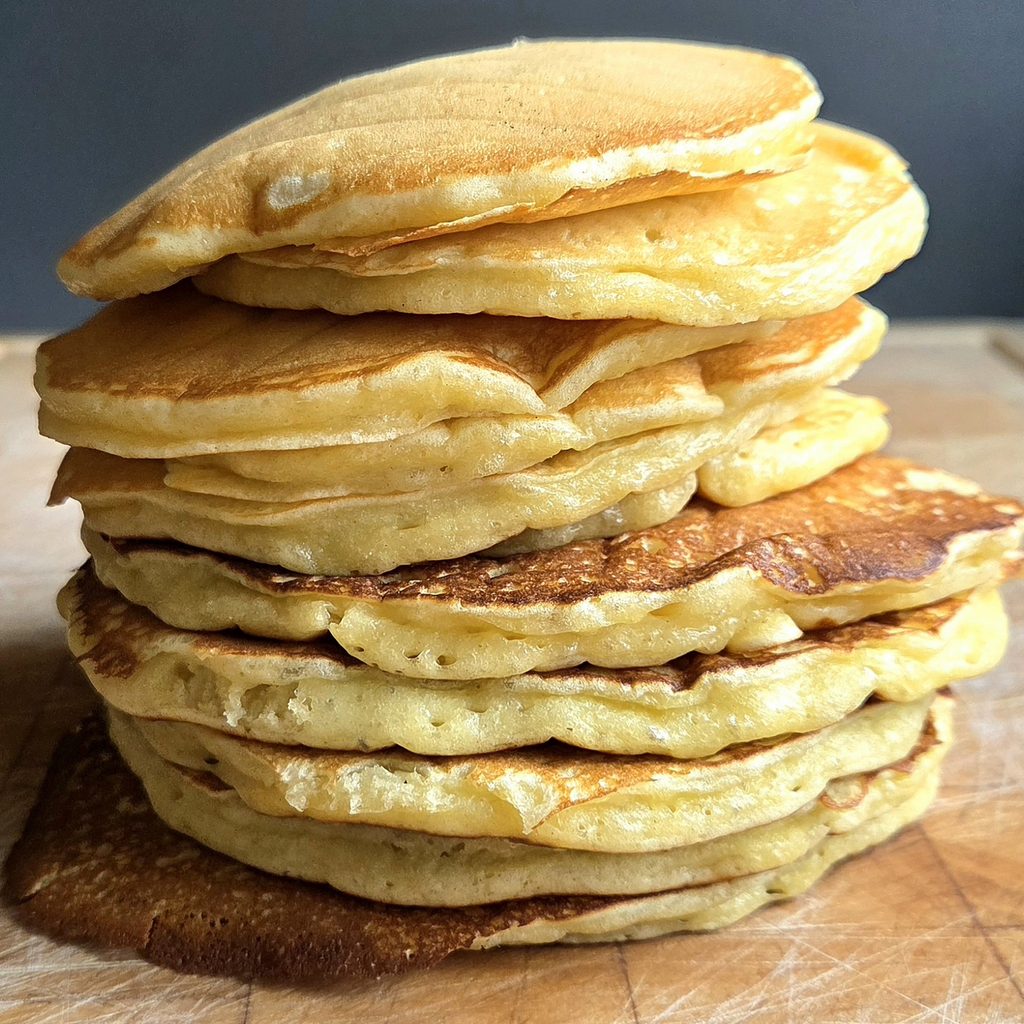
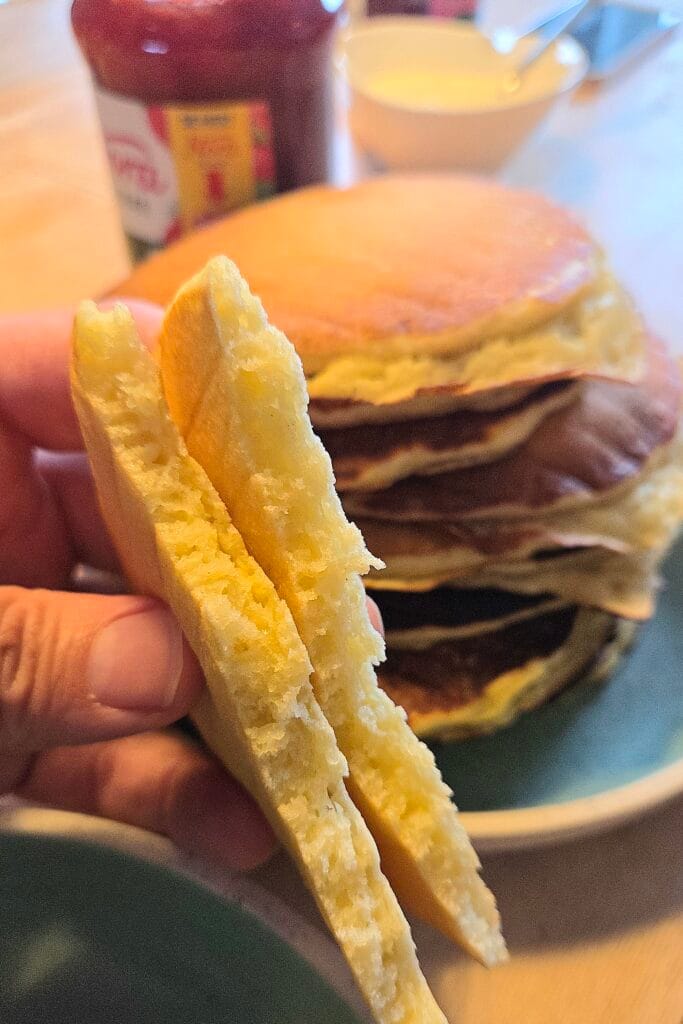
Sveler are thick, soft Norwegian griddle pancakes from the west coast of Norway — somewhere between an American pancake and a small, tender cake. This is the version made famous on the fjord ferries, eaten warm and folded around butter and sugar. If you’ve never had one, the texture is the surprise: light and dry rather than dense, thanks to an old-fashioned leavener most kitchens have forgotten.
Sveler — Norwegian Griddle Pancakes
Ingredients
Equipment
Method
- Whisk the eggs, sugar, baking soda and baker's ammonia together until pale, thick and airy — about 3 minutes in a stand mixer. Don't rush this; the volume you build here is part of the lift.
- Whisk in the buttermilk until smooth.
- Add the flour and whisk until you have a smooth, lump-free batter.
- Stir in the melted butter last.
- Let the batter rest for 15 minutes. It will thicken noticeably as the flour swells — that’s what you want.
- Heat a cast iron griddle or heavy flat pan over medium heat. Grease lightly with melted butter or oil, and wipe off the excess.
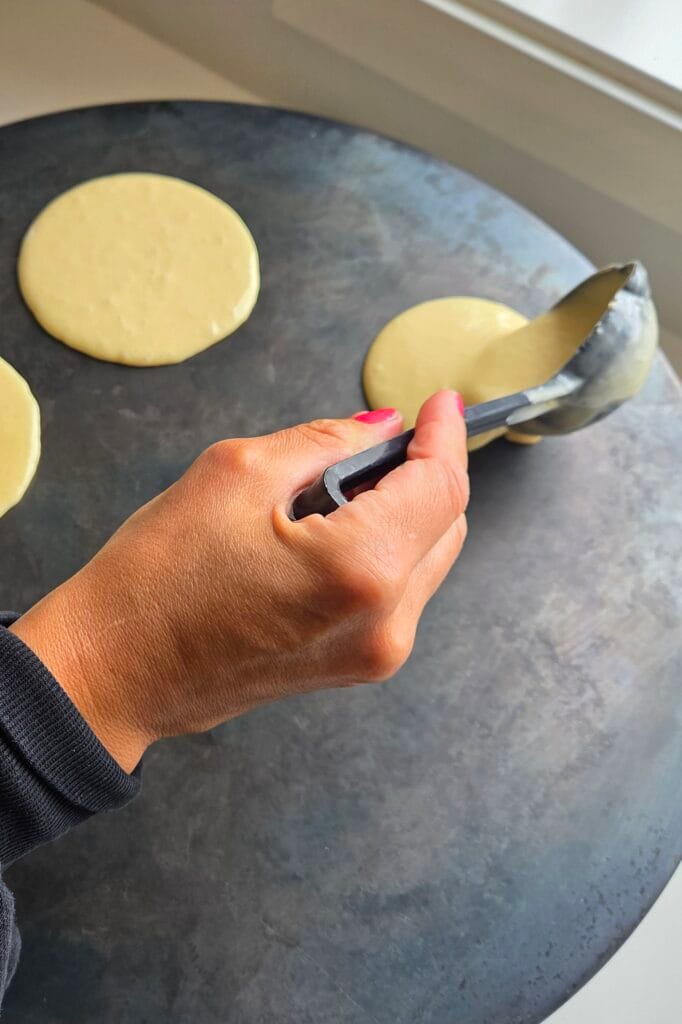
- Ladle roughly 3 tablespoons of batter per svele, leaving space between them. They should spread to about 4 inches across.
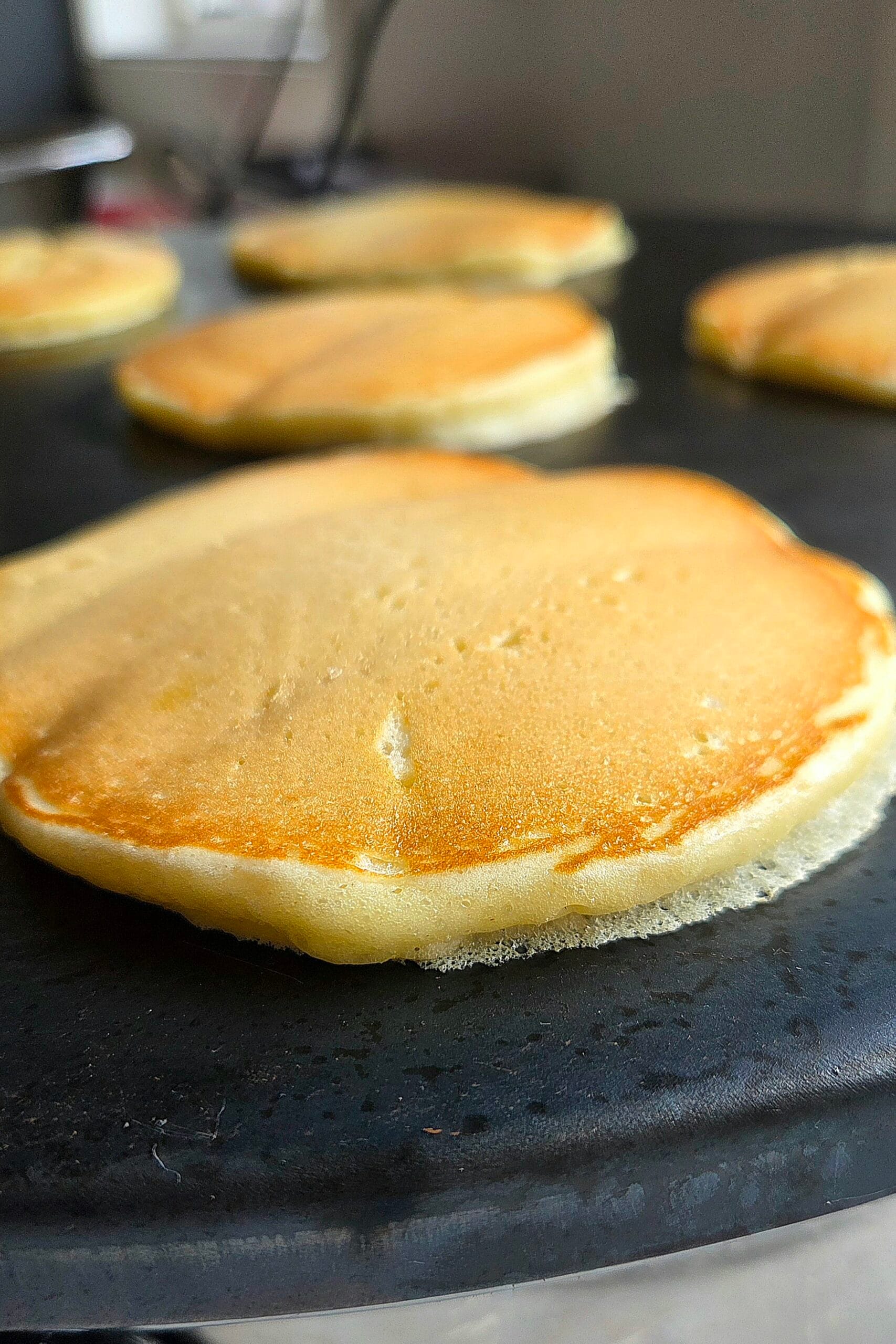
- Cook until bubbles come up across the whole surface and the edges look set and dry — about 2 minutes. Flip and cook another 1–2 minutes until golden.
- Stack them on a plate under a clean kitchen towel as they come off the pan. The trapped steam keeps them soft.
- Serve warm, with salted butter and sugar.
Notes
The ferry recipe
Sveler belong to Nordvestlandet, the northwest coast, and they’re genuinely traditional there — every family has a version. But the most famous one of all came from a boat.
MRF, short for Møre og Romsdal Fylkesbåtar, was founded in 1920 and ran the ferries and passenger boats that stitch together the coastline of Møre og Romsdal. As the story goes, it was the long-serving MRF cook Steinar Slettestøl from Sunnmøre who first served sveler on board, working the galley of the MF Romsdal on the Romsdalsfjord in the late 1960s. The recipe spread with the ferries, and the “ferjesvele” became a thing you plan a crossing around.
It’s now printed on souvenir coffee mugs sold on board. That’s a level of recipe fame most cookbooks never reach.
What makes a svele different
Two leaveners do the work here, and they do different jobs.
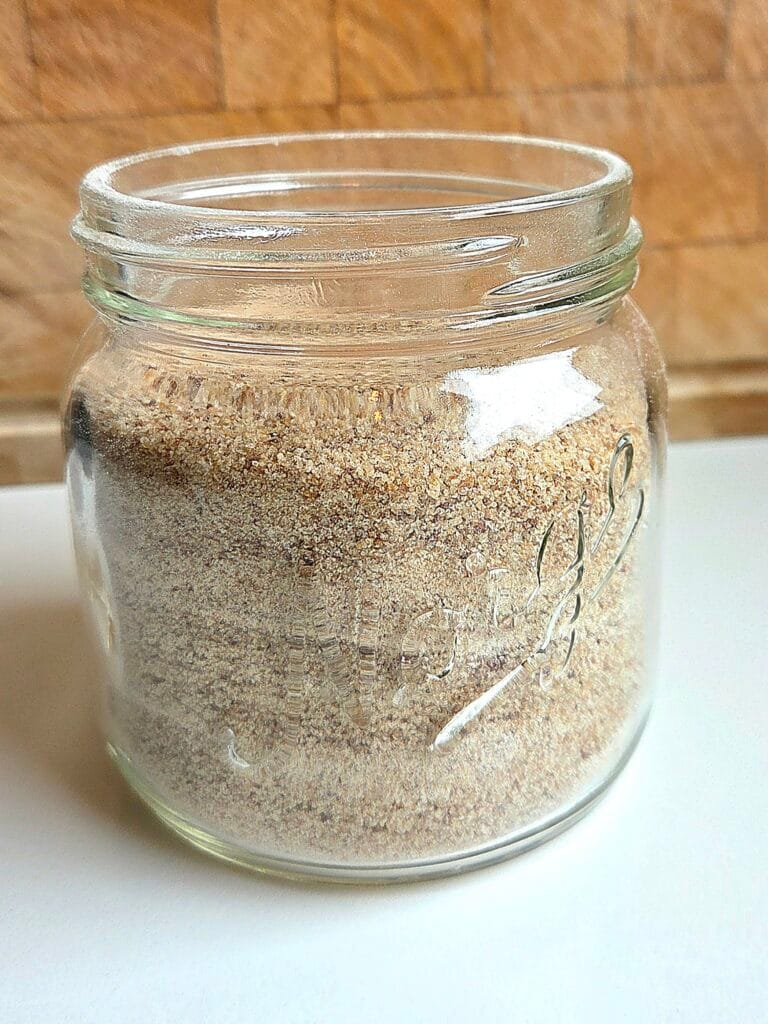
Baking soda reacts with the acid in the cultured buttermilk and gives you the rise. Baker’s ammonia — hornsalt — gives you the texture: dry, light and tender, with a clean bite instead of a soft, damp crumb.
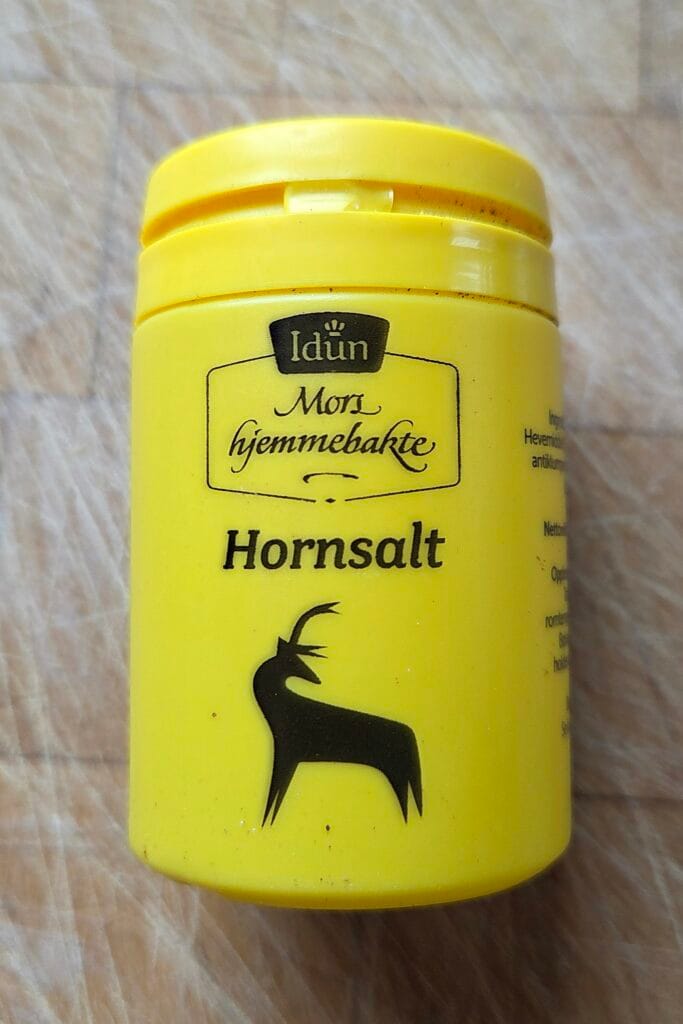
Baker’s ammonia releases ammonia gas as it heats, and that gas has to escape while the bake cooks. In a deep cake it would stay trapped and taste of it. On an open griddle, cooking fast with one side always exposed, it leaves completely and takes the moisture with it. That’s why it’s the classic leavener for crisp cookies — and why a svele made with it doesn’t taste like a pancake.
You will smell ammonia at the griddle. It’s normal, it’s gone by the time they’re plated, and it’s the single best sign you’re doing this right.
Sveler vs. American pancakes
If you’re American, this is the Norwegian bake you’ll recognize fastest. Sveler and pancakes are close cousins — same griddle, same thick round shape, same cultured buttermilk, same chemical leavening. It’s everything after that which diverges.
- The sugar is in the batter, not on top. A svele tastes finished on its own. No syrup required, and none traditionally offered.
- They’re drier and lighter. Baker’s ammonia leaves as gas and takes moisture with it. A pancake is moist and cakey; a svele is closer to a soft, tender biscuit.
- They aren’t breakfast. Sveler are kaffemat — something eaten with coffee in the afternoon, or standing on a ferry deck watching the fjord go by. No stack, no bacon, no plate of eggs alongside.
- You fold, not stack. One svele, butter, sugar, fold, eat. Then another.
Think of them less as a pancake and more as what a pancake might have become if it had been designed from the start to go with coffee.
If it’s the thin, rolled kind you came looking for, that’s pannekaker — a different bake entirely.
How to cook sveler
We cook ours on a takke — the flat, round Norwegian griddle that sits over a burner and holds even heat right across the surface. If you don’t have one, don’t go looking. A cast iron griddle does the same job, and an ordinary heavy frying pan works perfectly well. You’ll just cook two or three at a time instead of six.
Three things matter at the pan:
- Medium heat, and give it time to come up. Cast iron rewards patience. A pan that’s too hot browns the outside before the middle sets, and sveler are thick enough that this happens easily.
- Grease lightly, then wipe. You want a film, not a pool. Too much fat and the edges fry instead of setting.
- Wait for the bubbles to reach the edge. When the whole surface has come up and the rim looks dry, flip. Go early and you’ll lose the shape.
Stack them under a kitchen towel as they come off. The steam keeps them soft, and sveler are meant to be soft.
How to serve them
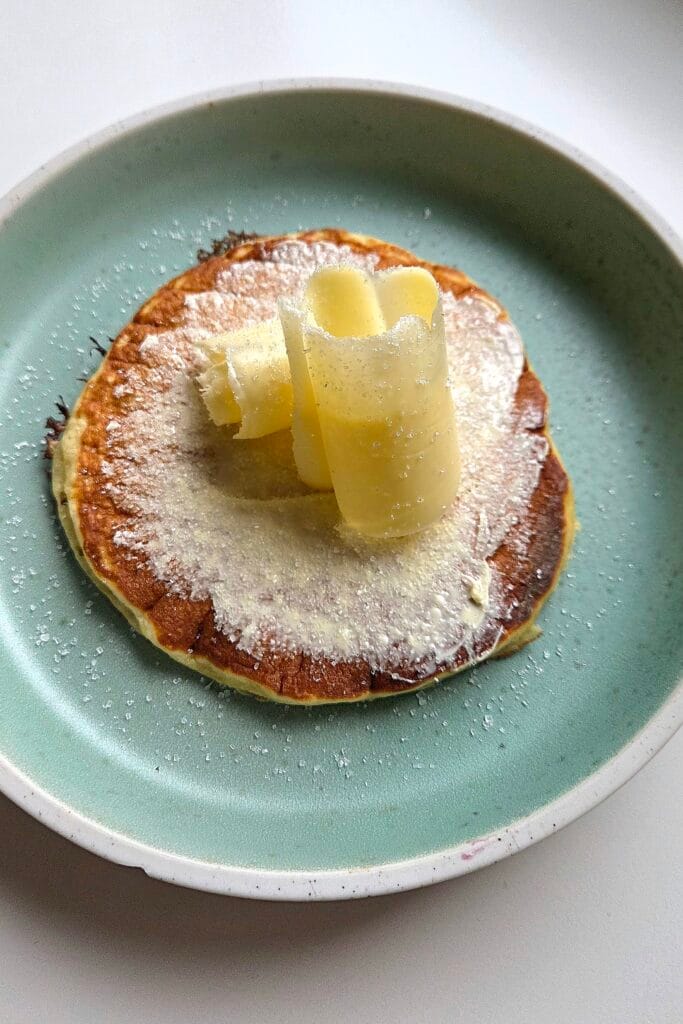
The classic way is the simplest: a warm svele, salted butter, and a scattering of sugar. In Norway you’d reach for setersmør — a saltier farmhouse butter — and any good cultured salted butter does the same job here.
One detail worth stealing: Norwegians don’t spread the butter, they shave it. A cheese slicer — the ostehøvel, a Norwegian invention — takes off thin curls that sit on top of a hot svele and melt down into it as you eat. It’s faster than spreading, it uses less butter, and it looks far better on the plate.
From there:
- Brown sugar syrup or golden syrup, poured on while warm
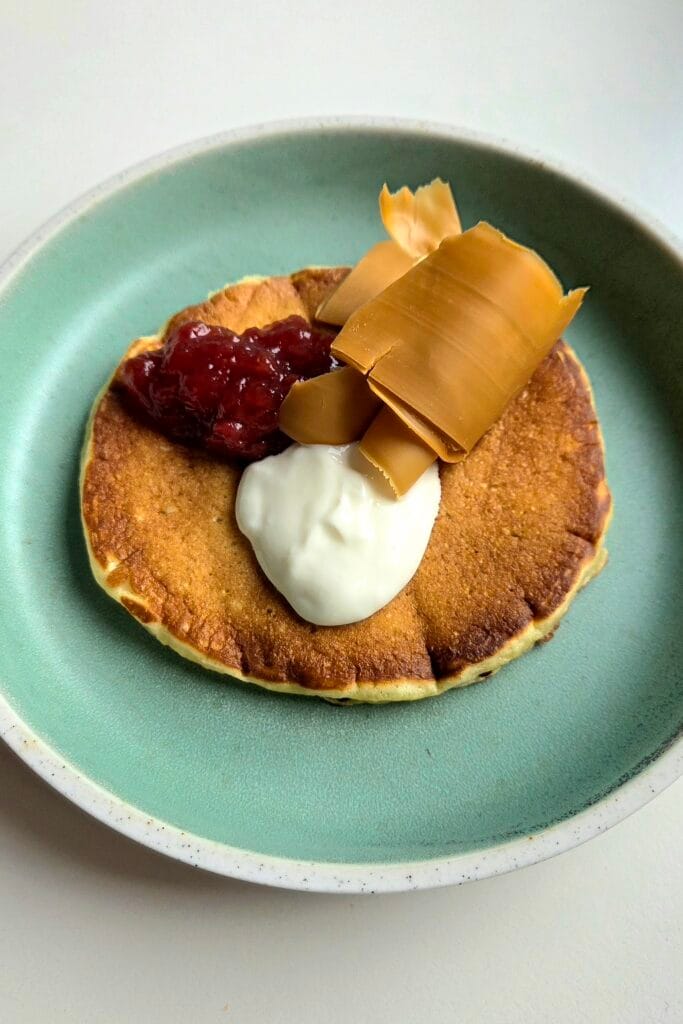
- Jam — strawberry, raspberry or cloudberry if you can find it
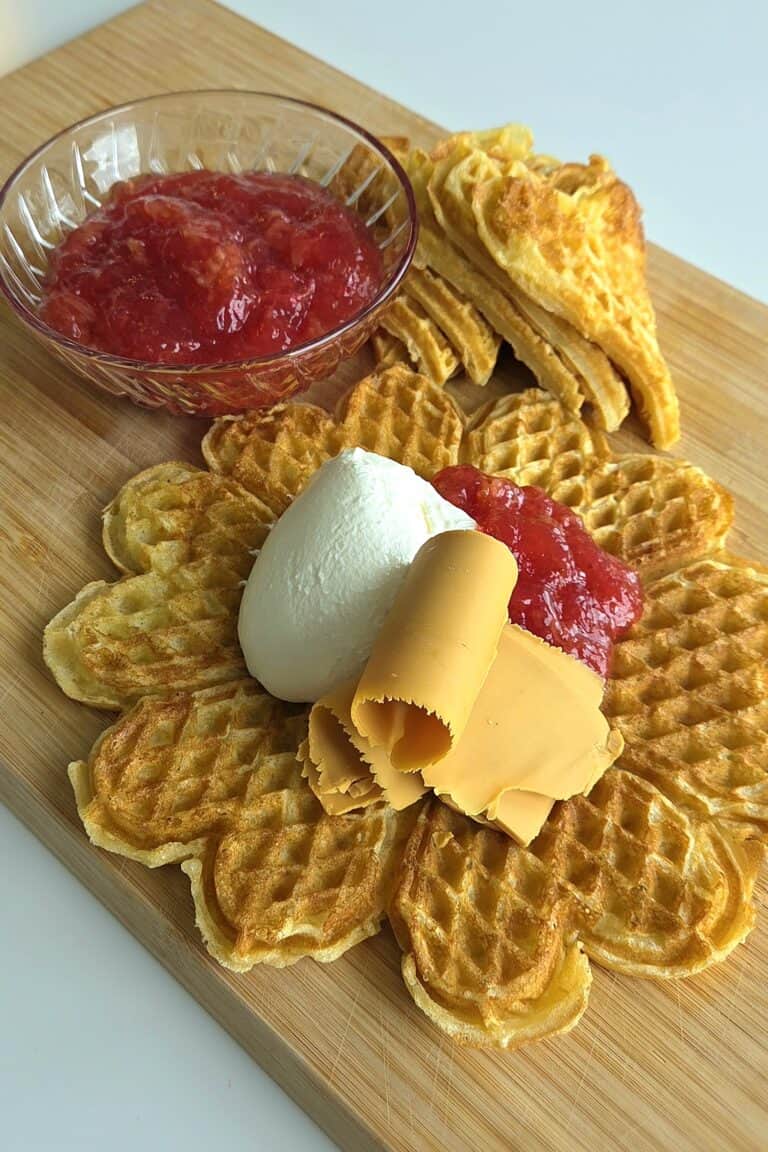
- Brunost, Norway’s caramelized brown cheese, sliced thin so it softens against the heat. This is the most Norwegian option on the list and worth trying at least once — it’s sweet, dense and closer to caramel than to cheese, and it’s what we put on our Norwegian heart waffles too.
- Rhubarb syrup — the leftover syrup from our easy rhubarb cake, spooned over while the svele is still warm
Fold, don’t roll. A svele is too thick to roll and too good to complicate.
More Nordic bakes you’ll love
- Baking Weight Converter — this recipe was written in deciliters; here’s how we got to cups and grams
- Crispy Norwegian Waffles with Chocolate and Blackcurrant Cream — the other great Norwegian griddle bake
- Cinnamon Knots with Cardamom — more Norwegian kaffemat for the afternoon coffee table