
Leftover sourdough bread still has plenty of work left in it. After a day or two the crumb firms up and the crust softens, but the flavor holds, and a good loaf stays useful for the better part of a week. This page collects everything we do with the last slices in our kitchen, from reviving a whole loaf in the oven to bread chips, breadcrumbs and a set of recipes that taste better with older bread.
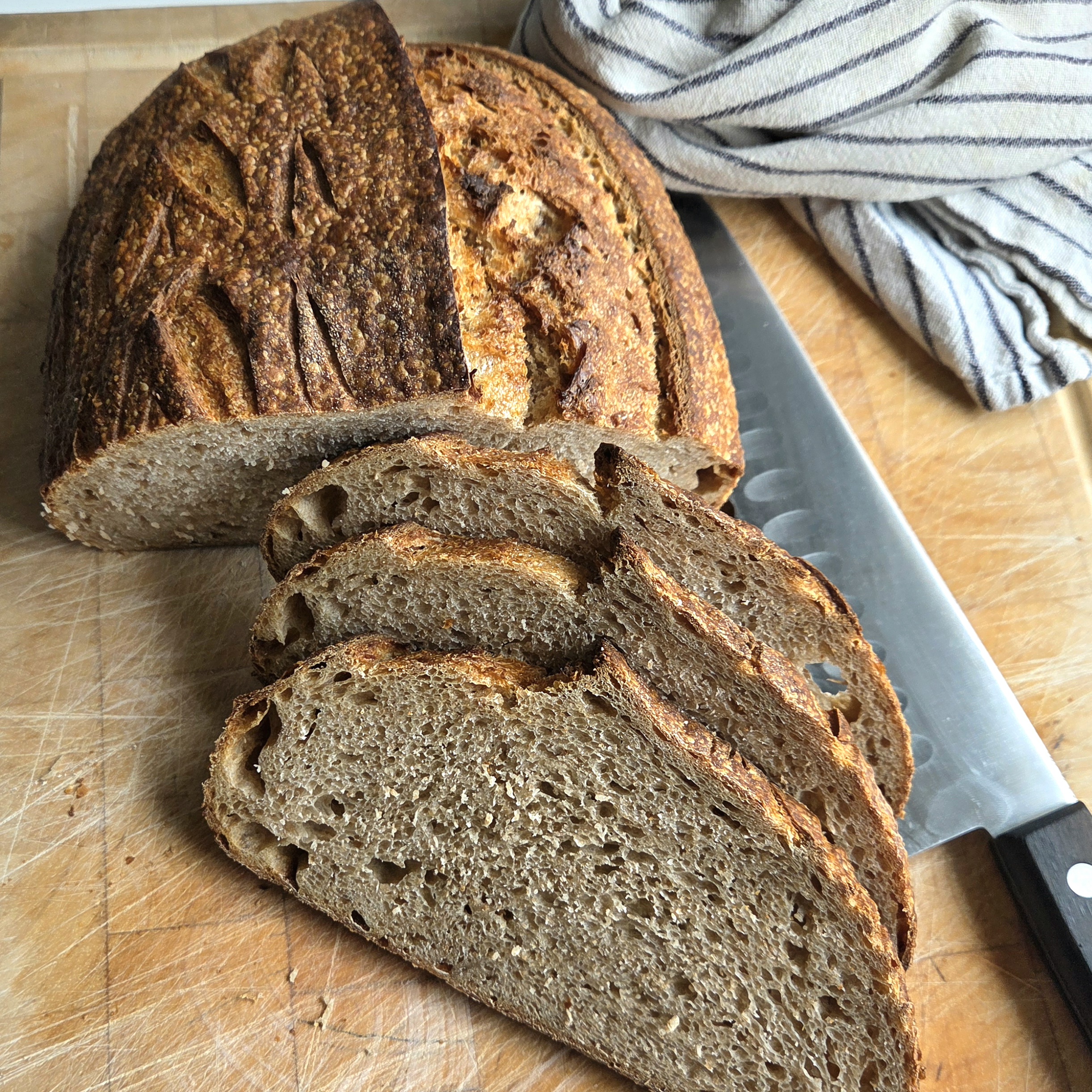
Why sourdough goes stale (and why that’s fixable)
A stale loaf has usually lost very little water. As it cools and sits, the starches that gelatinized during baking slowly recrystallize and push moisture out of the crumb toward the crust, so the crumb turns firm and the crust turns leathery. Most of the water is still in the loaf, just in the wrong place.
Heat reverses it. Warm the loaf back up past around 140°F (60°C) and the starches soften again, which brings the bread back close to fresh. Sourdough also stales more slowly than a plain yeasted loaf, because the long fermentation and the acidity hold the process back. That is why a good loaf is still worth eating on day four.
The stale bread ladder
Not all leftover bread is at the same stage, and matching the bread to the job is most of the skill:
Day 1: fresh. Use it for sandwiches and toast; nothing needs rescuing yet.
Day 2–3: firm crumb, softening crust. This is the sweet spot for most of the recipes below, from grilled ham and cheese to arme riddere. You can also revive the whole loaf in the oven, or cut off the crust and grate the crumb into panko.
Day 3–5: properly firm. The bread now slices thinner and soaks without collapsing, which suits bread chips, croutons, bread pudding and sourdough-crusted salmon.
Day 5+: hard and dry. Dry it out completely for breadcrumbs, and it keeps for months.
How to revive a stale sourdough loaf
It takes about twenty minutes, and a loaf two or three days old comes back to the table with a crackling crust.
- Heat the oven to 400°F (200°C).
- Rinse the crust well under cold running water, all over. The crust should be properly wet, but keep the water out of the crumb.
- Bake for 15–20 minutes, depending on the size of the loaf. A whole loaf goes straight onto a perforated baking tray or a rack, so the air circulates all the way around it. A half loaf goes cut side down on a tray, which protects the one surface that has no crust to hold it.
- The loaf is ready when the crust crackles again and the bread smells like it just came out of the oven. Let it cool for five minutes before slicing.
Chef’s tip: this works once. The revived loaf is excellent for an hour or two, then it stales again faster than it did the first time. Revive the bread you’re about to eat, not the bread you’re saving, and toast single slices instead.
Turning sourdough into breadcrumbs
Dry breadcrumbs earn their place in our kitchen more than almost anything else, and they cost nothing.
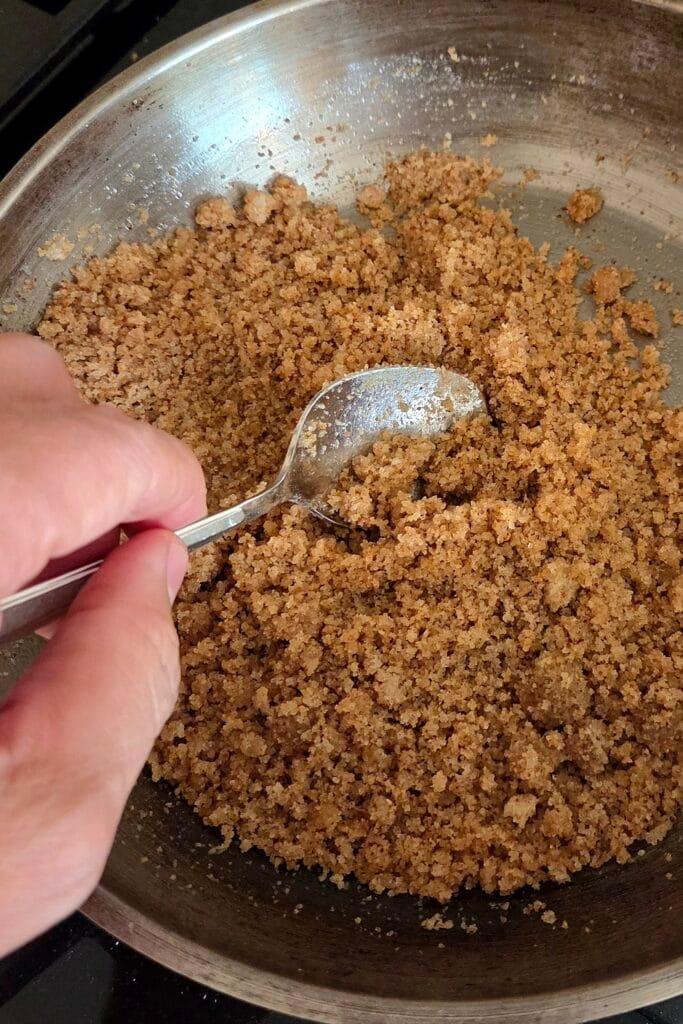
Cut the bread into rough cubes, spread them on a tray and dry them at 210°F (100°C) until they have no give left in the middle. Blitz them coarse or fine depending on what they’re for; a food processor works, and so does a small grinder cup on a stick blender. Cooled and stored airtight, they keep for months. The full method, including the snap test that tells you they’re dry enough, is in our sourdough breadcrumbs recipe.
For a lighter, flakier crumb that fries up crisper, grate the bread instead of blitzing it. That is sourdough panko, and it has its own method in our sourdough panko guide.
Coarse dried crumbs fried in butter until golden make a crisp topping anywhere you want texture. Layered with stewed apples and whipped cream, they become tilslørte bondepiker, our Norwegian apple trifle.
Recipes for leftover sourdough
Savory
- Grilled ham and cheese — Dijon, ham and thinly sliced Jarlsberg on leftover sourdough, turned back and forth in foaming butter until the cheese melts through.
- Chanterelle toast — a thick slice fried in butter under a pile of golden mushrooms. Two days old is exactly right: dry enough to crisp, sturdy enough to hold the topping.
- Toast Skagen — the Swedish shrimp toast. A two-day-old slice fried in butter, shrimp and crayfish in a dill dressing, salmon roe on top.
- Sourdough-crusted salmon — a paper-thin slice fried onto the fish until it shatters like glass. It only gets easier as the loaf dries.
- Bread salad — toasted crisp, cooled, then dressed with the water the salted tomatoes release. The croutons stay crunchy right to the table.
- Sourdough bread chips with sour cream, dill and roe — thin, crisp and salty, and the closest thing to a proper Scandinavian appetizer you can make from the end of a loaf.
Sweet
- Arme riddere — Norwegian French toast. Firm bread soaks better than fresh, so this is a recipe that genuinely wants leftovers.
- Sourdough bread pudding — half a loaf, cubed and soaked in vanilla custard, baked under a thick layer of blueberries. Uses more bread than anything else here.
- Tilslørte bondepiker — the Norwegian apple trifle where the breadcrumbs aren’t a filler. Fried in butter with sugar and cinnamon, layered with apple compote and cream.
For the pantry
- Sourdough panko — crustless bread, grated coarse. Lighter and crisper than anything in a box.
- Sourdough breadcrumbs — dried low and slow, then blitzed. The crust stays on, and that’s where the flavor is.
How to keep bread fresh in the first place
Most bread goes stale because of how it is stored, and a few habits keep a sourdough loaf good for days:
- Stand it cut side down on a board for the first day or two. It is the simplest method there is, and the crust stays crisp.
- Move it to a linen bread bag from day two. Linen lets the loaf breathe, so the crust stays dry while the crumb keeps its moisture.
- Keep it out of the fridge. Cold makes bread stale faster than anything else, because the starches recrystallize several times quicker at fridge temperature than on the counter.
- Skip plastic for crusty loaves. It softens the crust completely, which suits sandwich bread but not a sourdough with a proper crust.
- Freeze what you won’t finish. Slice it the day it’s baked, freeze the slices and toast them straight from frozen.
Leftover bread is not the same as sourdough discard
The two get mixed up all the time. Discard is unfed starter: the wet, sour batter you remove when you feed your starter and stir into discard pancakes, discard naan or a blueberry loaf cake. Leftovers are finished, baked bread, and they call for a different set of recipes.
More sourdough guides
- Sourdough for Beginners — the full step-by-step guide, from starter to first loaf
- Beginner Sourdough Bread — the loaf to bake so you have leftovers in the first place