Sourdough Waffles — Soft, Savory, No Resting Needed
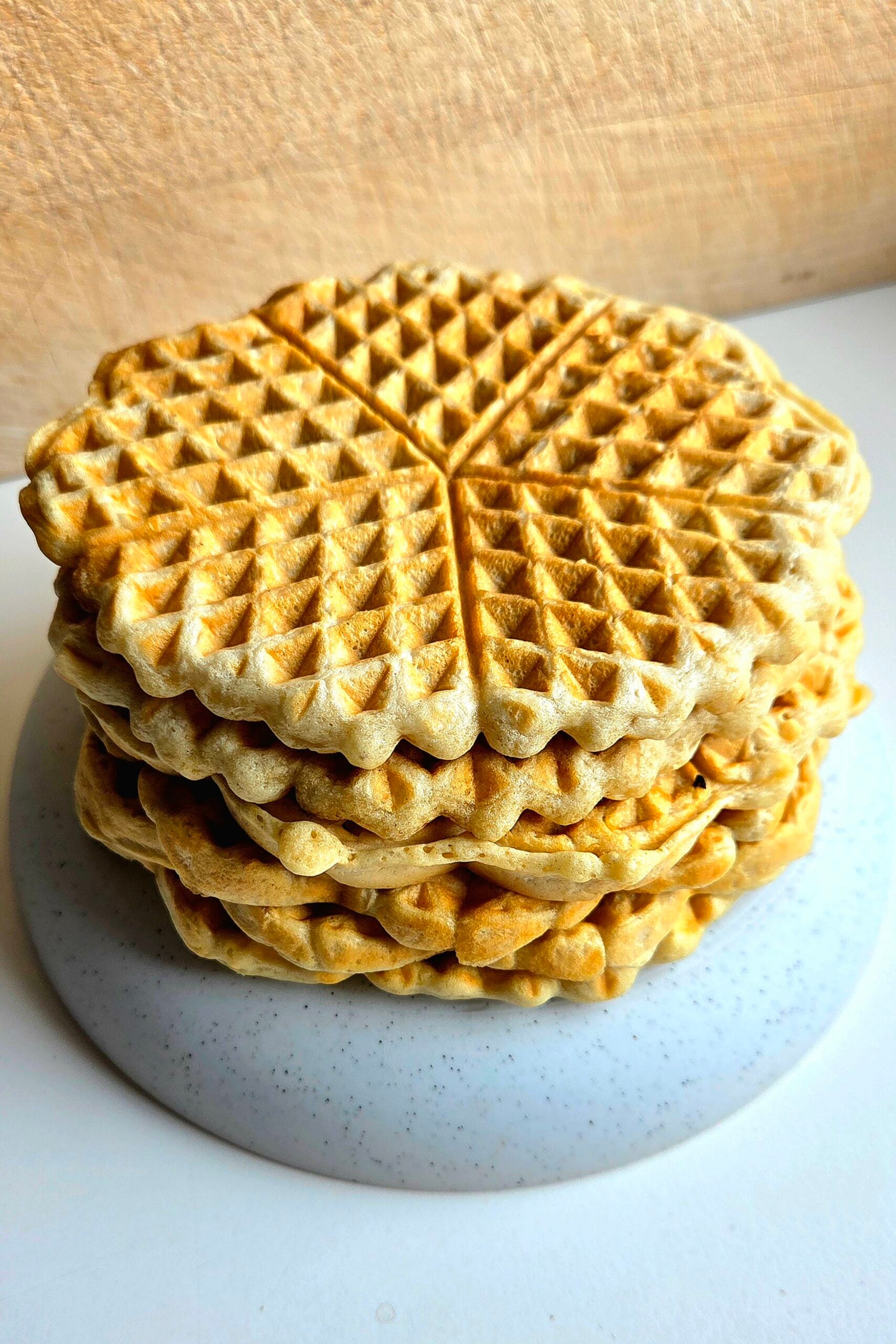
These sourdough waffles use a full 200 g of active starter — freshly fed and bubbly — which is a third of the batter and exactly why they taste like something. They come out soft and foldable rather than crisp, which puts them much closer to bread than to dessert — a waffle you wrap around cheese and ham rather than drown in syrup. No overnight rest, no waiting: mix, heat the iron, eat.
Sourdough Waffles — Soft, Savory, No Resting Needed
Ingredients
Equipment
Method
- Mix the batter. Whisk the active starter, flour and cold water together until smooth. It should be thick but pourable — closer to pancake batter than to bread dough.
- Turn the iron on. Set it to medium-high and let it come up to temperature while you finish the batter — it should be fully hot before the baking soda goes in.
- Season, then add the baking soda last. Whisk in the honey and salt, then the baking soda as the final thing you do before cooking. The batter will foam and lighten within seconds — that is the reaction you want, and it does not wait for you.
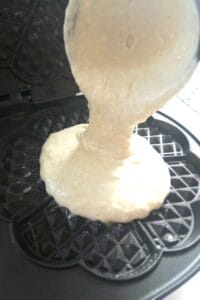
- Butter the plates and pour. Brush the hot iron with butter, then pour about 100 g of batter into the center and close the lid
- Cook. 3–6 minutes, depending on your iron and how dark you like them. The steam dying down is a better signal than the clock.
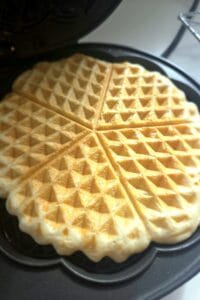
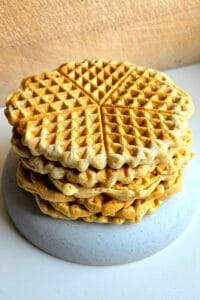
- Stack them as they come off. Pile them on a plate under a clean kitchen towel — the trapped steam is what keeps them soft and foldable. Brush the plates with butter again before every waffle, not just the first one.
Notes
- Consistency: if the batter has thickened while it sat, loosen it with a splash of cold water until it pours in a steady ribbon.
- Storing: they keep in the fridge for two days and freeze well. Lay them flat with parchment between each one before bagging. Reheat straight from frozen in a toaster or a dry pan — never a microwave, which turns them rubbery.
These are a bread recipe, not a dessert
A Norwegian waffle is not an American waffle. It is thin, soft and only mildly sweet, and at home it is eaten the way bread is eaten — with butter, with cheese, with something salty on top. Sweet toppings work, but they sit on it the way jam sits on a slice of bread: one option among several, not the whole point.
Sourdough pushes it further in that direction. The fermented tang gives the batter a savory depth that stands up to sharp cheese, cured ham and sour cream far better than a plain milk-and-egg batter does. If you have ever thought a waffle was too sweet to be lunch, this is the version that fixes it — the same thinking behind our unsweetened sourdough discard pancakes.
Soft, not crisp — and how to keep them that way
Be clear about what this batter does: it makes a soft waffle. There is no butter and no egg in it, and it will not give you the crackling, deep-brown crust of a Belgian waffle. What it gives you is pliability, which is the more useful quality when there is cheese involved. If crisp is what you’re after, our crispy Norwegian waffles use potato starch to get there.
So stack them. As each waffle comes off the iron, pile it on a plate and lay a clean kitchen towel over the top. The steam gets trapped between the layers and keeps them soft and foldable right through the batch.
Do not spread them out on a cooling rack. It won’t make them crisp — it will just dry them out, and a dried-out soft waffle is leathery rather than crunchy.
No resting required
Most sourdough waffle recipes ask you to mix a batter the night before. This one doesn’t, and it doesn’t need to.
The reason is the ratio. At 200 g of starter to 200 g of flour, a third of this batter is already fermented — the sour flavor is in the starter, not in something the batter has to develop overnight. Mix it and cook it and the tang is there.
If you happen to have a couple of hours, letting the covered bowl sit on the counter will deepen it slightly. Worth knowing, not worth planning your morning around.
Use active, recently fed starter rather than cold discard. Discard will work, but with no resting time to soften it the flavor comes through sharper and flatter.
The Iron for Sourdough Waffles
This batter is built for a Norwegian heart iron — five thin hearts joined in a flower, thin enough to fold. It works in a Belgian iron and it will taste good, but you’ll get a thick waffle rather than a Nordic one, and the folding is half of why these work.
Most authentic Norwegian irons run on 230V and won’t work on American power, even with an adapter. Look for a 110V heart waffle maker sold for the US market — the Euro Cuisine WM520 is the one we’d point a friend to. Ours is Norwegian, so we can’t honestly call it the one we use.
We go into the iron in more detail in our [Norwegian heart waffles] recipe, if you want the full background.
What to Put on Sourdough Waffles
- Butter and brown cheese, sliced paper-thin with a cheese slicer — the most Norwegian version there is
- Sour cream, cured salmon and dill — the combination we build our savory waffles around
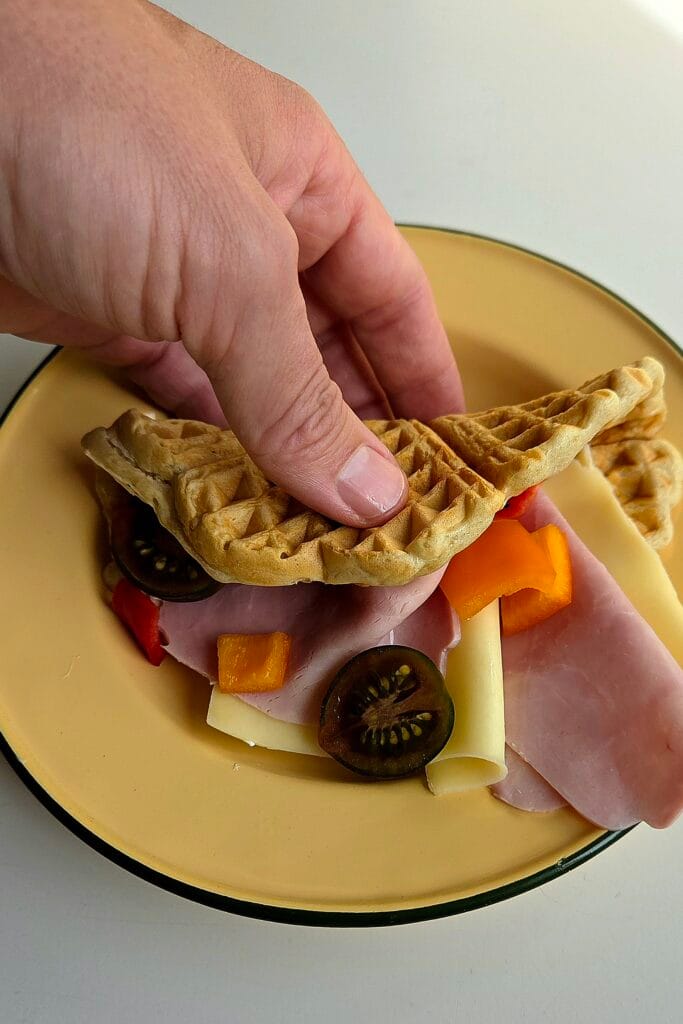
- Ham and cheese folded inside while the waffle is still hot enough to melt it
- A soft-boiled egg and chives, if you want it closer to breakfast
- A spoonful of jam and sour cream, if the sweet version is what you’re after
More Nordic bakes you’ll love
- Savory Waffles with Smoked Salmon — another waffle built for lunch, not dessert
- Crispy Norwegian Waffles with Chocolate — the opposite texture, thin and snapping
- Sveler — Norwegian Griddle Pancakes — the other great Norwegian griddle bake