Sandnøtter (Norwegian Christmas Butter Cookies)
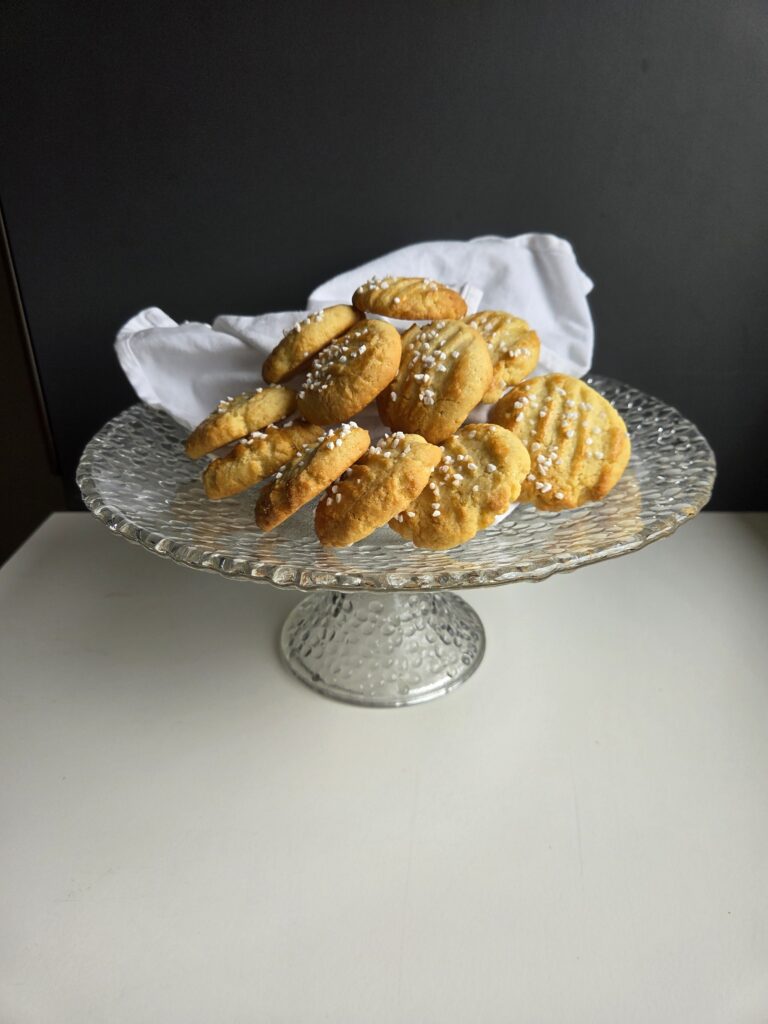
Sandnøtter are one of the most beloved Norwegian Christmas cookies — tender, buttery and made to melt on your tongue. They belong to the traditional syv slag (the “seven sorts” of Scandinavian Christmas baking), and their sandy, crumbly texture comes from one clever ingredient: potato starch. Here’s how we make them from scratch.
Sandnøtter (Norwegian Christmas Butter Cookies)
Ingredients
Equipment
Method
- Cream. Cream the softened butter and sugar together until pale, light and airy.
- Add the egg. Beat in the egg (and the vanilla extract, if using) until fully combined.
- Add the dry ingredients. Sift the vanilla sugar, potato starch and all-purpose flour together, then sift into the butter mixture.
- Bring it together. Knead gently until you have a firm, smooth dough. Chill 30 minutes if it feels too soft to roll.
- Roll. Heat the oven to 350°F (180°C). Roll the dough into small balls, about 20 g each, and place them on parchment-lined baking sheets — no more than about 20 per tray so they don't spread into each other.
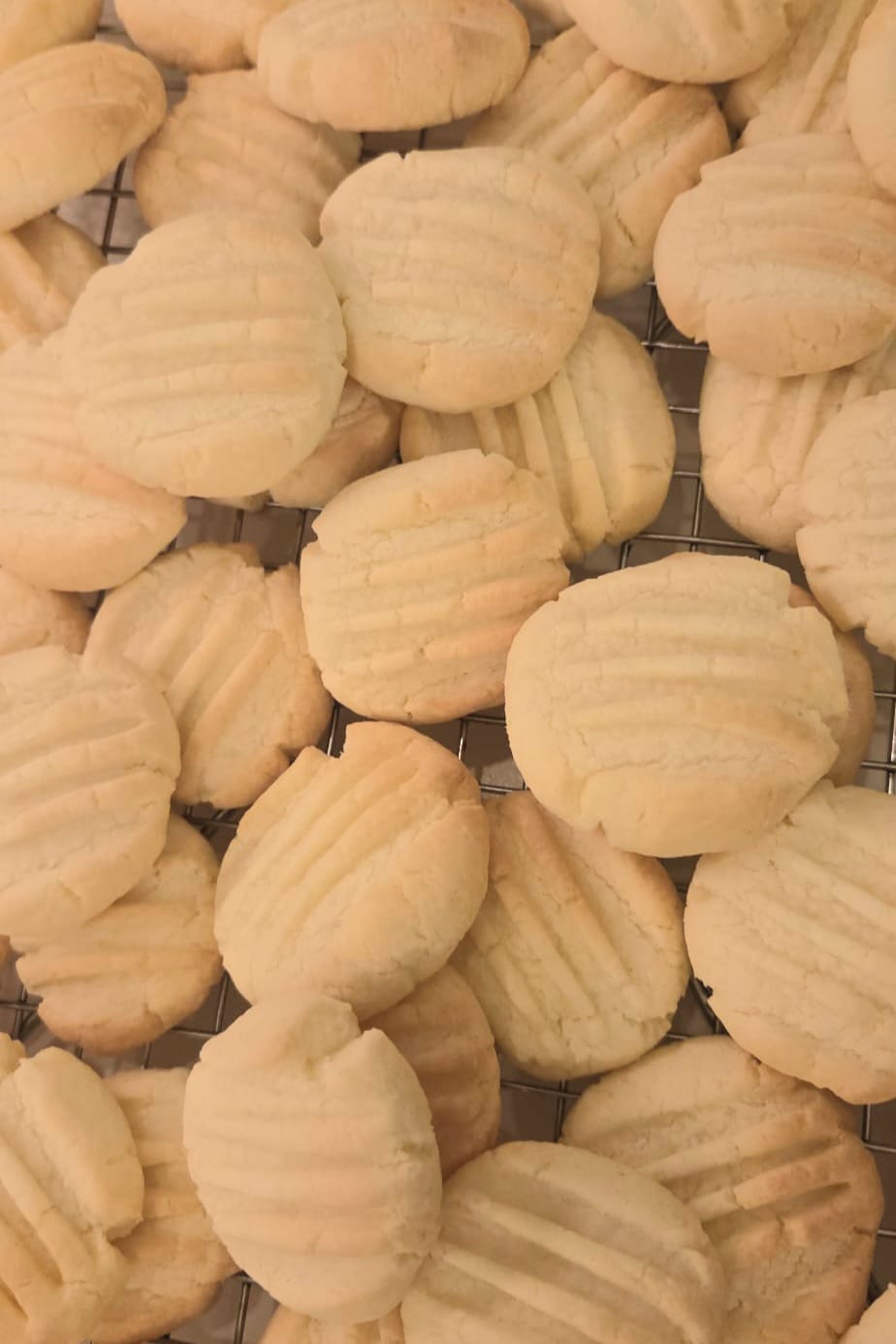
- Press the pattern. Press each cookie down gently with a fork to make the classic ridged pattern. If the fork sticks, dip it in a little potato starch between cookies.
- Bake. Bake for 12–14 minutes, starting to check at 11. Sandnøtter should stay pale — do not let them brown.
- Cool on the tray. Leave them on the tray until completely cool. They're fragile straight from the oven and firm up as they cool.
Notes
What are sandnøtter?
Sandnøtter are a classic Norwegian Christmas cookie and one of the traditional syv slag — the “seven sorts” of cookies many Scandinavian households still bake for the holidays. The name translates roughly to “sand nuts,” and it’s a perfect description: these little butter cookies have a fine, sandy crumb that dissolves the moment you bite in. They’re small, pale and unfussy, marked with the classic fork-pressed ridges on top. Unlike richer holiday bakes, sandnøtter are all about that delicate, short texture — no chocolate, no filling, just butter, sugar and a whisper of vanilla.
What makes sandnøtter so tender
The secret is potato starch. Where most butter cookies rely on wheat flour, sandnøtter swap most of it for starch — that’s what gives them their fine, sandy crumb. It’s the same ingredient that makes our crispy Norwegian waffles snap, doing a very different job here.
A common mistake for bakers outside Scandinavia is grabbing “potato flour” at the store. It’s not the same thing: potato flour is dried, ground whole potato and will turn your cookies dense and gummy, while potato starch is the pure, silky starch you actually want. In the US it’s usually labeled “potato starch” and sits with the baking supplies or in the kosher aisle.
Tips for perfect sandnøtter
- Weigh your ingredients. Potato starch is almost impossible to measure accurately by the cup — a kitchen scale gives you consistent results every time.
- Cream well. Beating the butter and sugar until pale and airy builds the light texture.
- Keep them pale. Sandnøtter should not brown. Pull them while they’re still light — they finish setting as they cool on the tray.
- Don’t crowd the tray. Around 20 per sheet keeps them from spreading into each other.
Troubleshooting
- My cookies browned. The oven ran too hot or they stayed in too long. Sandnøtter are done when set but still pale — start checking at 11 minutes.
- They fell apart when I moved them. That’s the potato starch doing its job — they’re fragile straight from the oven and firm up as they cool. Always cool them fully on the tray before lifting.
- The dough felt too soft to roll. Chill it for 30 minutes; softened butter can leave the dough slack in a warm kitchen.
How to store sandnøtter
Store sandnøtter in an airtight tin at room temperature, where they’ll keep for up to two weeks — the flavor and texture actually settle after a day or two. They also freeze beautifully: layer them between parchment in a sealed container for up to three months, and thaw at room temperature. That make-ahead quality is exactly why they earn a place in the syv slag every December.
Make it your own
A press of a fork gives the classic ridged top — the same pattern that holds the pearl sugar on our serinakaker. You can also flatten them with a patterned cookie stamp for a festive look, and a tiny pinch of cardamom in the dough leans them even more Scandinavian.
More Norwegian Christmas cookies
- Brune Pinner — Norwegian Almond Christmas Cookies — thin, crisp and cut on the diagonal while still warm
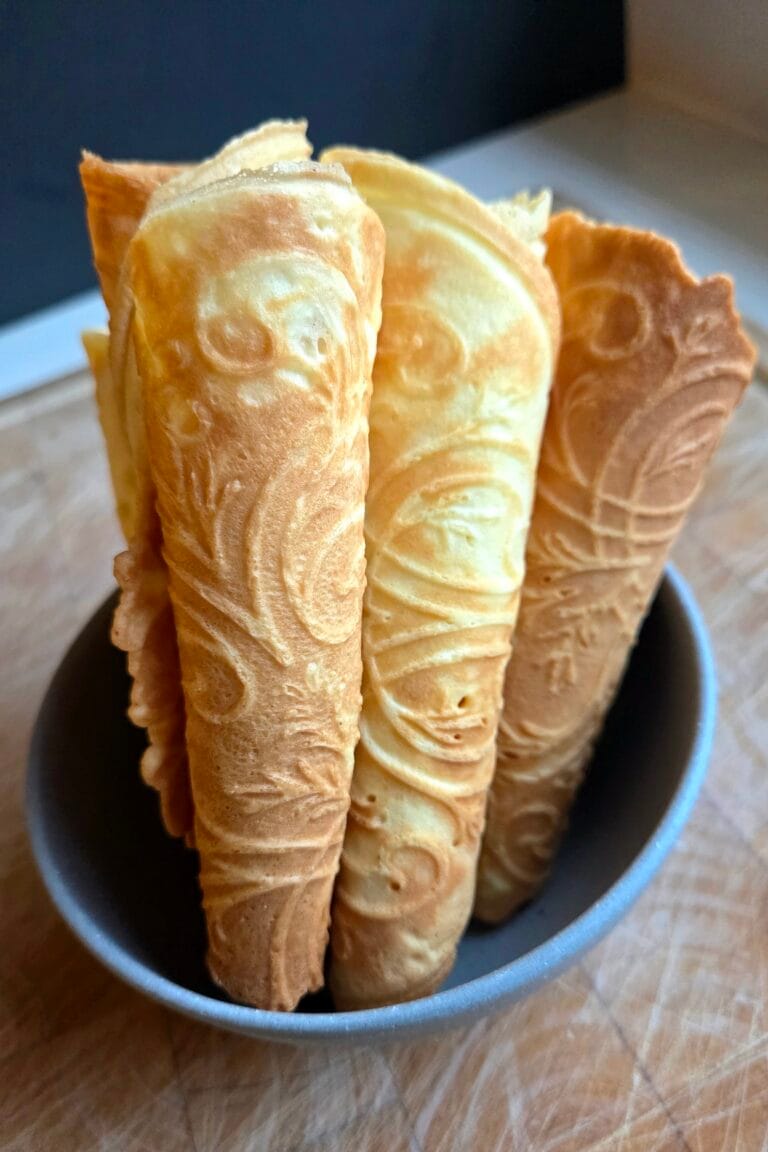
- Krumkake — Norwegian Waffle Cookies — rolled thin and crisp on a patterned iron
- Norwegian Coconut Macaroons (Kokosmakroner) — chewy, golden and naturally flour-free