Lussekatter — Swedish Saffron Buns
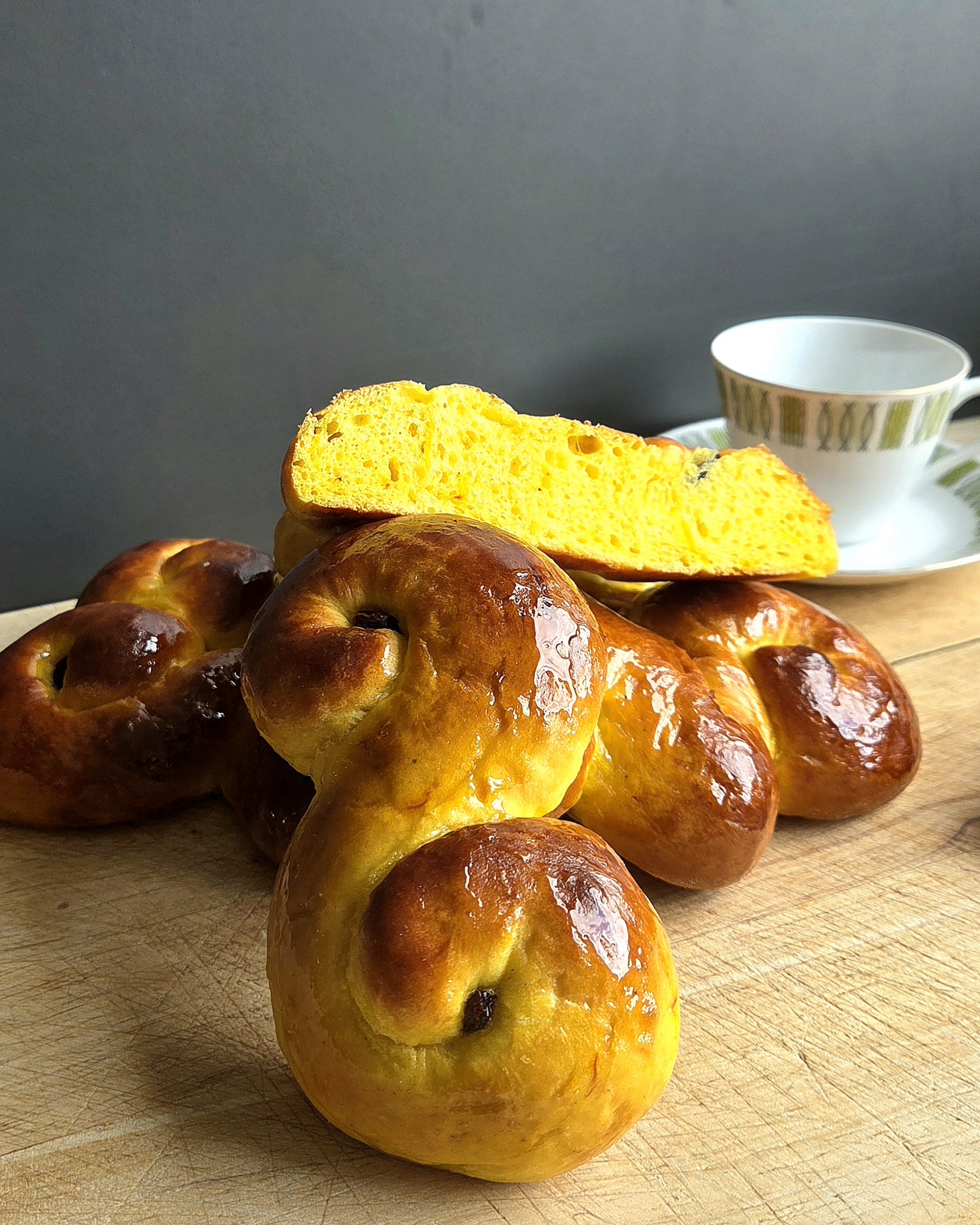
Lussekatter are Sweden’s classic saffron buns — soft, golden S-curls studded with raisins and baked for St. Lucia Day and all through the Christmas season. We make ours with a saffron and cardamom tangzhong — the same method behind our Norwegian julekake — for an extra soft crumb that stays fresh longer, and finish them with a glossy sugar glaze. Here’s how we bake them.
Lussekatter — Swedish Saffron Buns
Ingredients
Equipment
Method
- Whisk the flour and milk together in a saucepan.
- Heat over medium, stirring constantly, until the mixture thickens to a smooth paste (about 149°F / 65°C).
- Remove from the heat and stir in the saffron and cardamom. The warmth helps both spices bloom.
- Let the tangzhong cool to room temperature.
- Add the cooled tangzhong, flour, milk, yeast, sugar, egg and salt to the bowl of a stand mixer. Keep the butter aside.
- Knead for 7–10 minutes, then add the cubed butter.
- Continue kneading for a total of 15–20 minutes, finishing on high speed for the last 5 minutes. The dough should be smooth, glossy and pass the windowpane test.
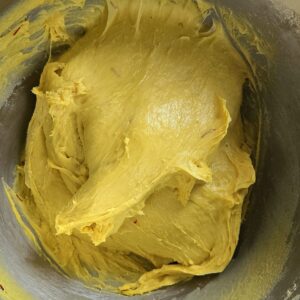
- Cover the bowl (a plastic bag over the bowl works well) and let rise for about 1 hour, until doubled in size.
- Divide the dough into pieces of about 60 g.
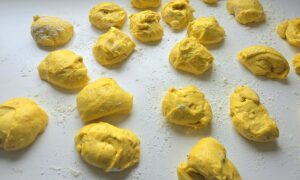
- Roll each piece into a long rope and curl both ends in opposite directions to form an S-shape.
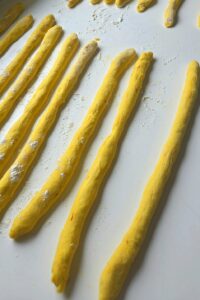
- Place on parchment-lined baking sheets, leaving space between each bun. Do not add the raisins yet.
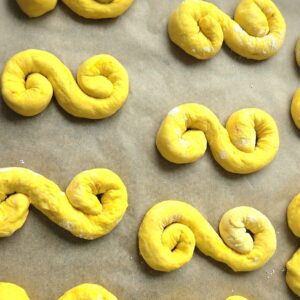
- Let rise for 35–45 minutes, until puffy.
- While the buns rise, combine the sugar and water in a small saucepan.
- Bring to a boil, stirring until the sugar has fully dissolved and the syrup is clear.
- Remove from the heat and set aside until the buns come out of the oven.
- Preheat the oven to 225°C (440°F).
- Press a raisin deep into the center of each curl, then brush the buns with egg wash if using.
- Bake for 7–12 minutes, until golden.
- Brush the sugar glaze over the buns as soon as they come out of the oven. Let cool on a rack.
Notes
- Saffron is the star. The cardamom is there to round it out, not to compete — don’t be tempted to add more.
- Storage: best the day they’re baked. Freeze cooled buns in an airtight bag and refresh briefly in a warm oven.
A Short History of Lussekatter
Lussekatter are baked for St. Lucia Day on December 13 and all through Advent, but the name “Lucia cat” has a darker past. In western Sweden the buns were once called dövelskatter — “devil’s cats” — a name likely borrowed from duivekater, a sweet Christmas bread from the Netherlands and northern Germany that probably reached Gothenburg in the 1600s. In folklore the devil could take the shape of a cat, and the bright saffron yellow was said to keep the darkness at bay.
Saffron buns started out as a luxury for wealthy households around Lake Mälaren, in Östergötland and on Gotland in the late 1600s. They only spread across the whole country in the 1800s, when Swedes began celebrating Lucia. Many of the shapes are older still, echoing patterns found on ancient jewelry in northern Europe as far back as the Bronze Age.
Saffron is the signature of lussekatter today, though for a long time it was an expensive luxury. We add a little cardamom to ours for a warmer, sweeter spice note — but saffron is still the star.
Tips for Soft, Golden Lussekatter
Bloom the spices in the tangzhong. Instead of steeping saffron separately, we stir it into the warm tangzhong along with a touch of cardamom. The heat draws out the color and flavor of both spices, and the tangzhong itself locks in moisture for a soft, tender bun. Saffron is the star here — the cardamom simply rounds it out. If you’d rather taste cardamom up front, that’s what our cinnamon knots are for.
Knead longer than you think. This is an enriched dough, and it needs 15–20 minutes in a stand mixer to develop properly. Add the butter after 7–10 minutes, once the gluten has started to form.
Add the raisins right before baking. Wait until after the second rise, then press each raisin deep into the curls. Add them too early and they’ll pop out as the dough rises; leave them on the surface and they’ll scorch. Soft, slightly moist raisins bake up plump instead of hard.
Finish with a sugar glaze. Brush the buns with a simple 50/50 sugar syrup straight out of the oven. It gives them that bakery shine and a light sweetness that pairs beautifully with saffron.
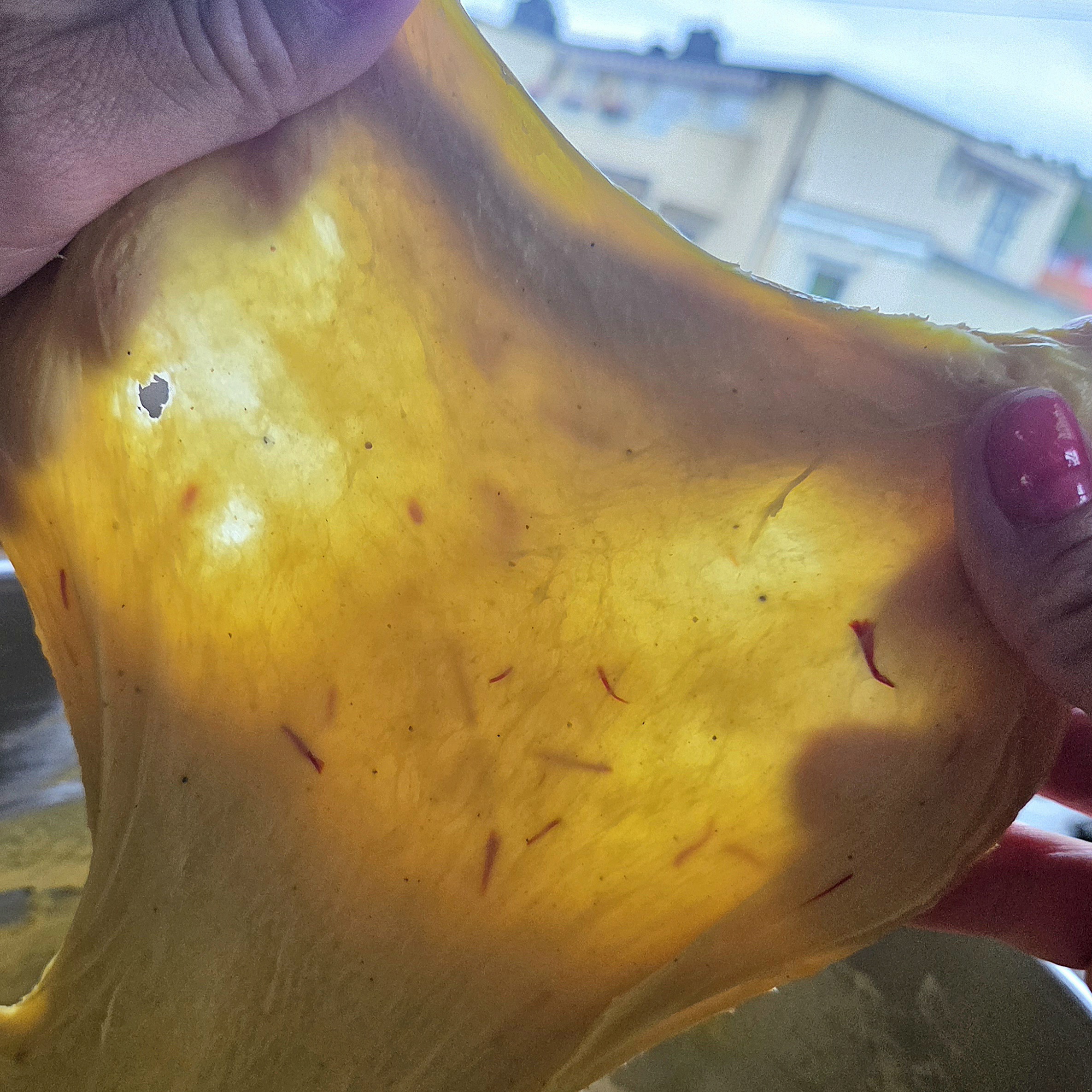
The Windowpane Test
Stretch a small piece of dough between your fingers. If it stretches thin enough to let light through without tearing, the gluten is fully developed and the dough is ready for its first rise. If it tears easily, knead a few minutes more and test again.
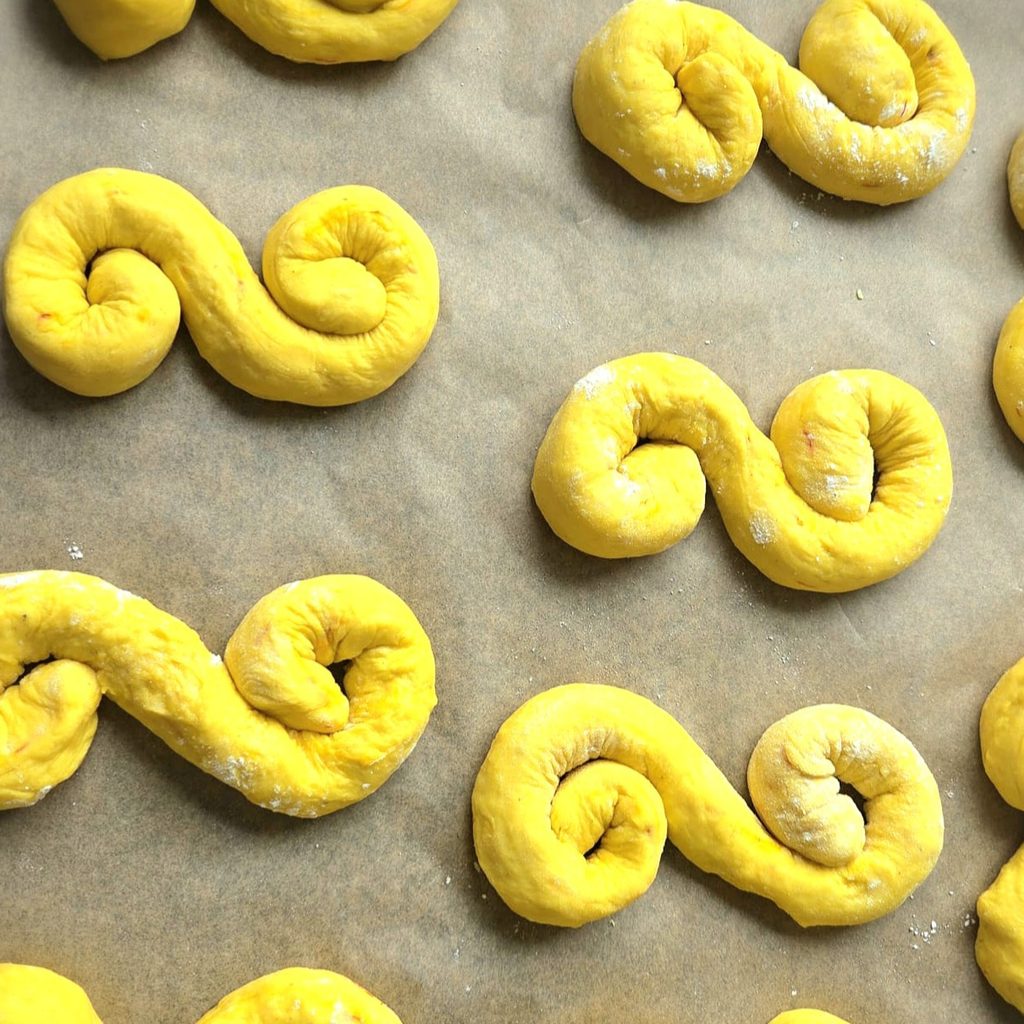
How to Shape Lussekatter
Roll each 60 g piece into a rope, then curl one end clockwise and the other counterclockwise until they meet in the middle, forming an S. Keep the ropes an even thickness so the buns bake evenly.
Classic Lussekatter Shapes
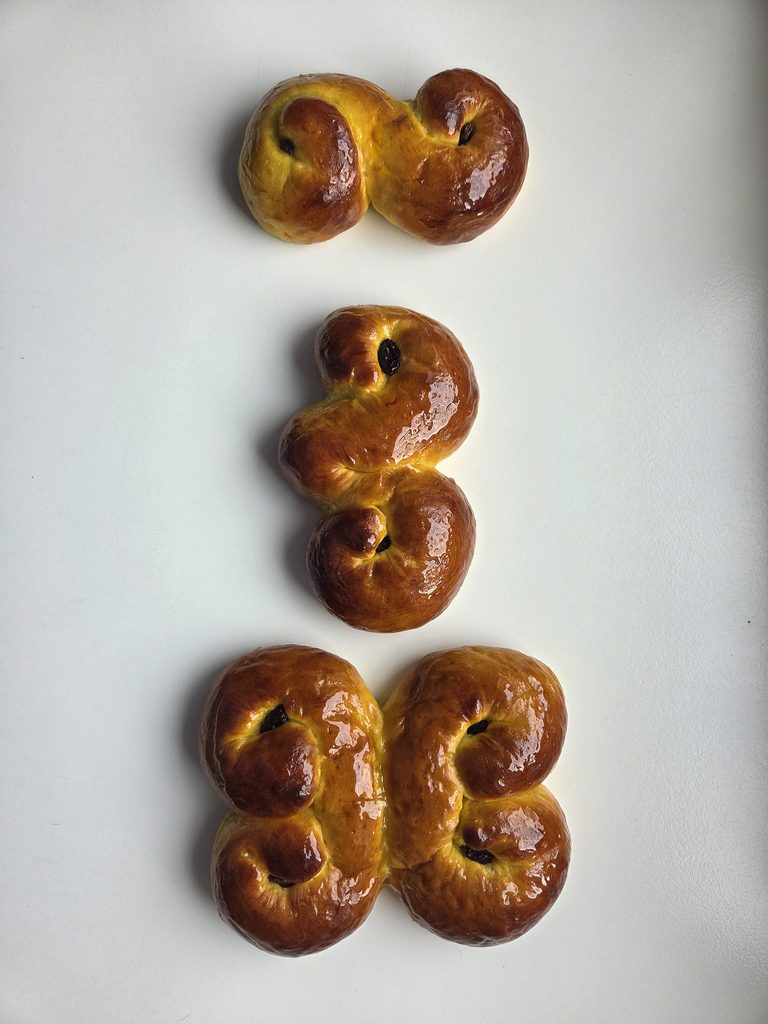
The S-curl is the shape most people know, but it’s only one of many. In Sweden the classic S is called julgalt, the “Christmas boar,” a shape said to carry a wish for plentiful food. Arrange two S-shapes, crossed or side by side, and you get a gullvagn, julvagn or julkors — the “golden wagon,” “Christmas wagon” or “Christmas cross.” The wagon shapes are said to represent the sun’s journey across the sky. There are larger festive versions too, like prästens hår, “the priest’s hair.”
In the past, each region of Sweden baked its own saffron breads and shapes. They all work with the same dough. Keep the ropes an even thickness, and give larger double shapes a minute or two longer in the oven.
Make It Your Own
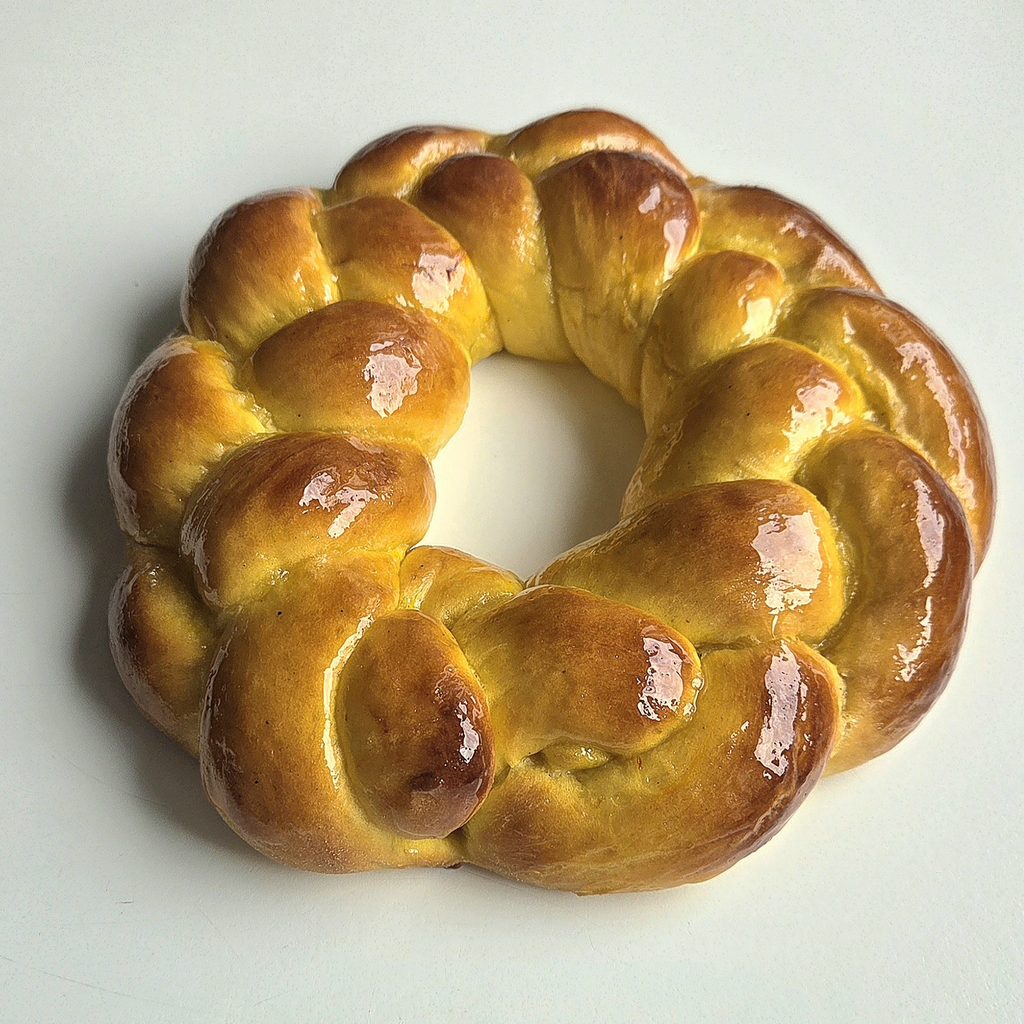
The same dough makes a beautiful braided saffron wreath for the Christmas table. Braid three ropes, join the ends into a ring, and bake a few minutes longer than the buns, until deep golden.
More Nordic bakes you’ll love
- Cinnamon Knots with Cardamom — another soft, enriched bun, with cardamom in the lead
- Pepperkaker — Crisp Norwegian Gingerbread Cookies — the thin, spiced cookie that sits next to the buns at Christmas
- Krumkake — Norwegian Waffle Cookies — crisp, patterned and rolled while hot