Crispy Norwegian Waffles (Tørrvafler) with Chocolate and Blackcurrant Cream
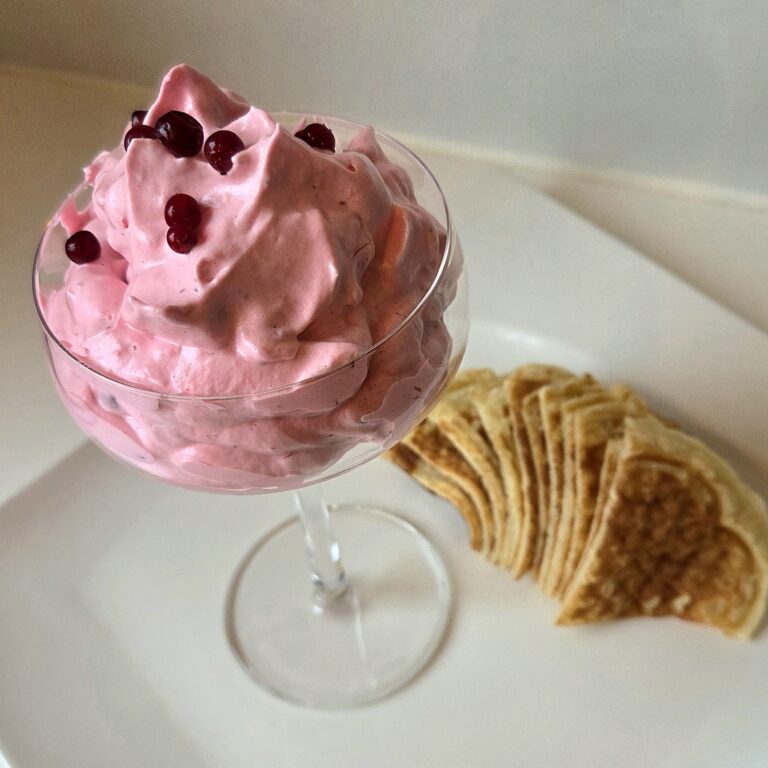
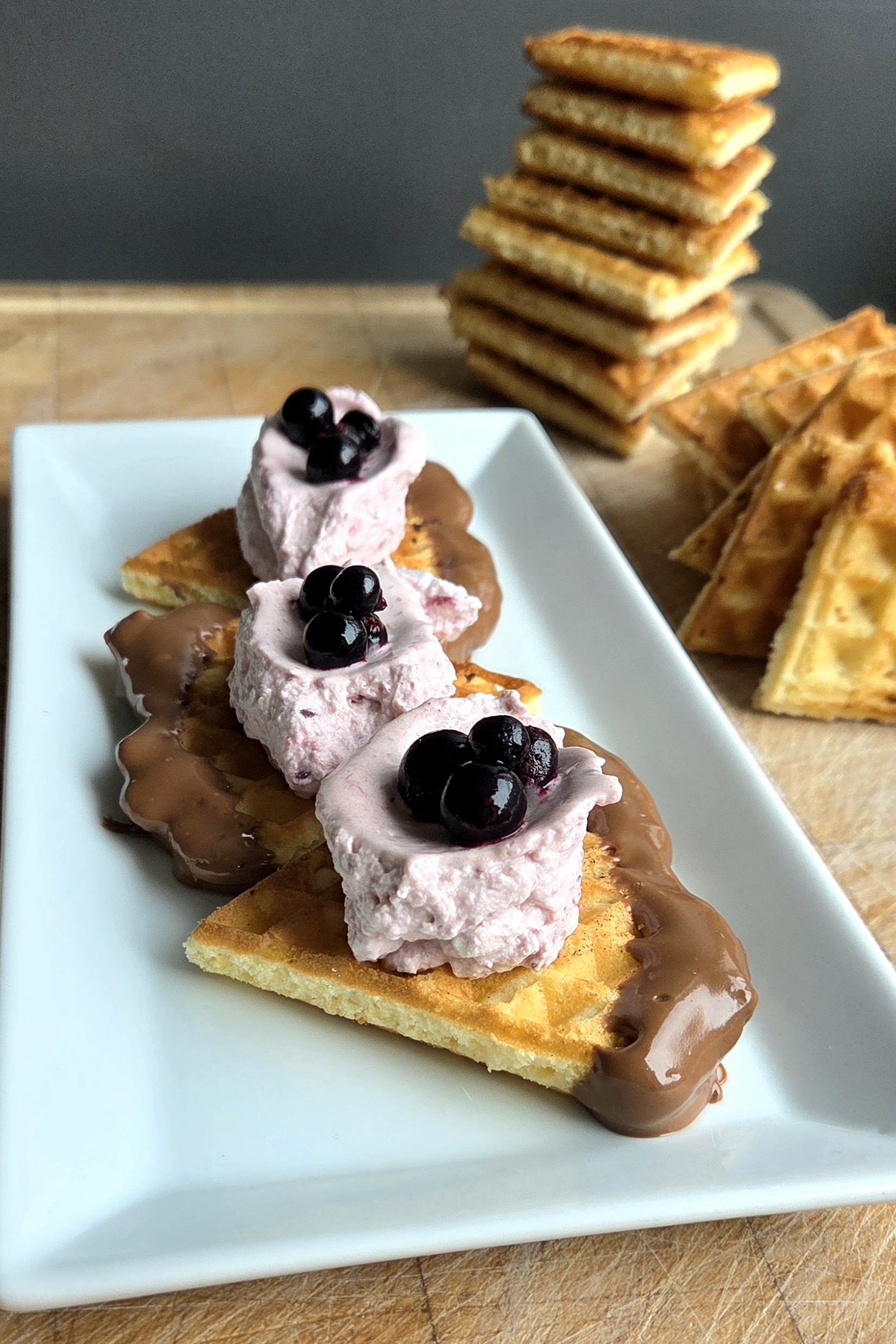
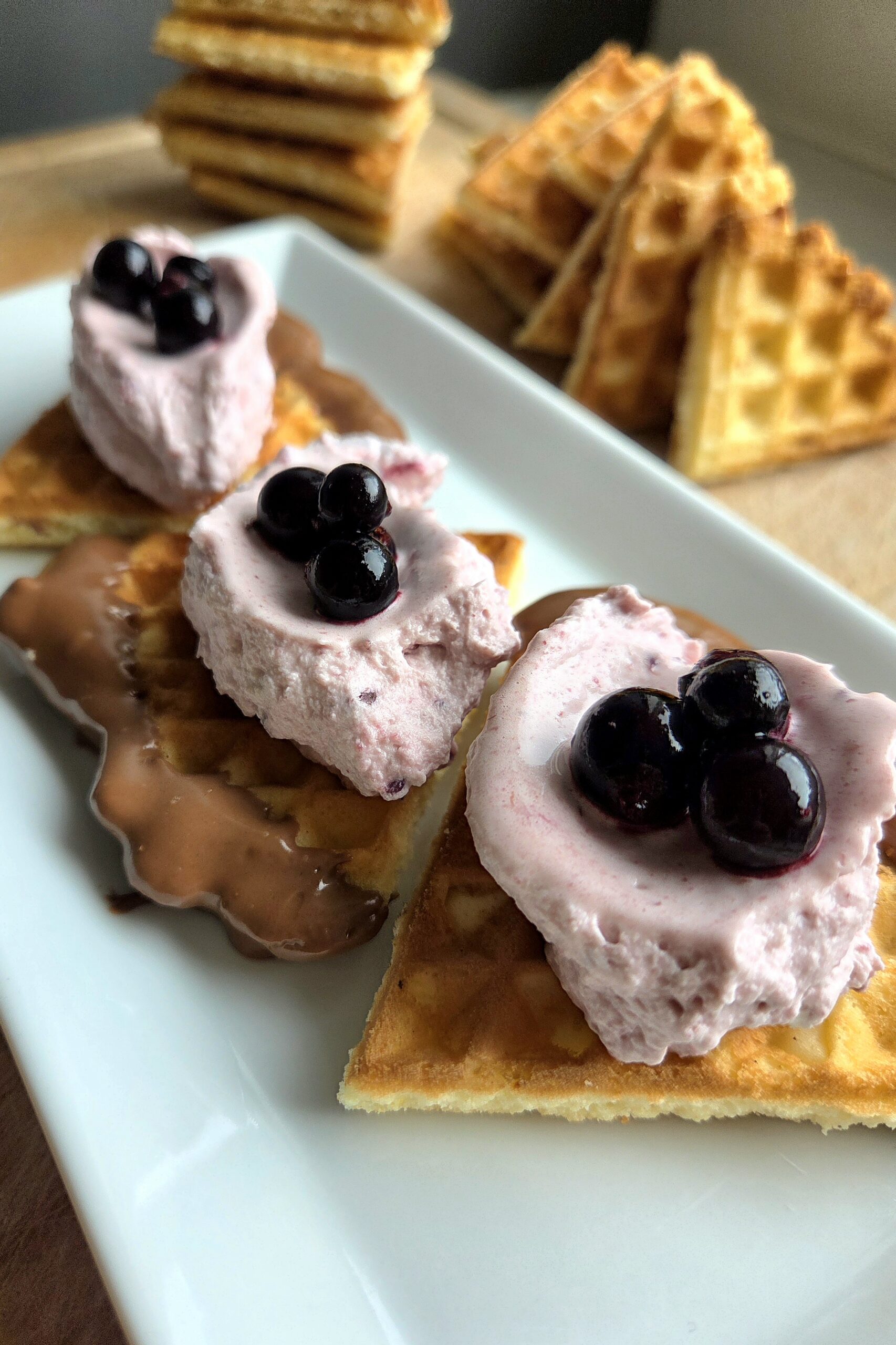
Crispy Norwegian waffles, known in Norway as tørrvafler or sprø vafler, are nothing like the soft ones you fold around brown cheese at breakfast. They come out thin and brittle, they snap when you break them, and half of each heart goes into melted chocolate. We serve them with whipped blackcurrant cream and whole berries.
Crispy Norwegian Waffles (Tørrvafler) with Chocolate and Blackcurrant Cream
Ingredients
Equipment
Method
- Melt the butter and set it aside off the heat to cool slightly.
- Whip the eggs and sugar to a pale, thick, airy foam — this is the only leavening that really matters here. Fold in the melted butter.
- Stir the potato starch, flour, baking powder and vanilla sugar together in a separate bowl, then sift the mixture into the egg foam through a fine-mesh sieve. Fold it in gently.
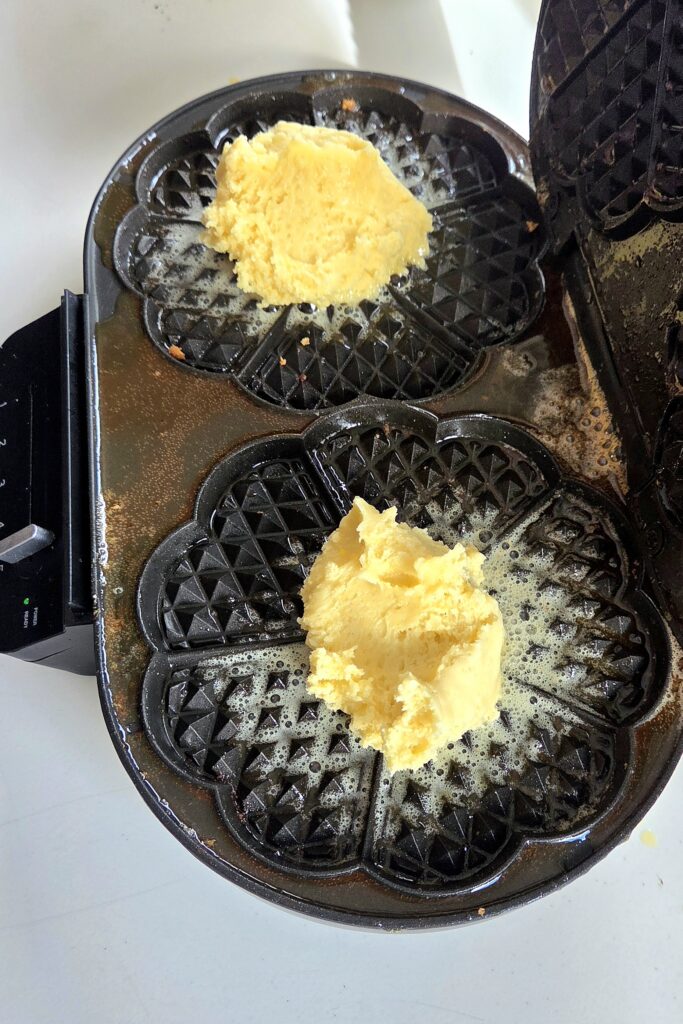
- Heat the waffle iron and brush it generously with butter. Pour in a scant ½ cup (about 100 ml) of batter per round and spread it thin toward the edges. Bake for 2–3 minutes, until evenly golden. Watch them closely at the end — they go from golden to burnt quickly.
- Lift each waffle onto a wire rack to cool in a single layer, and butter the iron again before the next one. The waffles only turn properly crisp once they are completely cold.
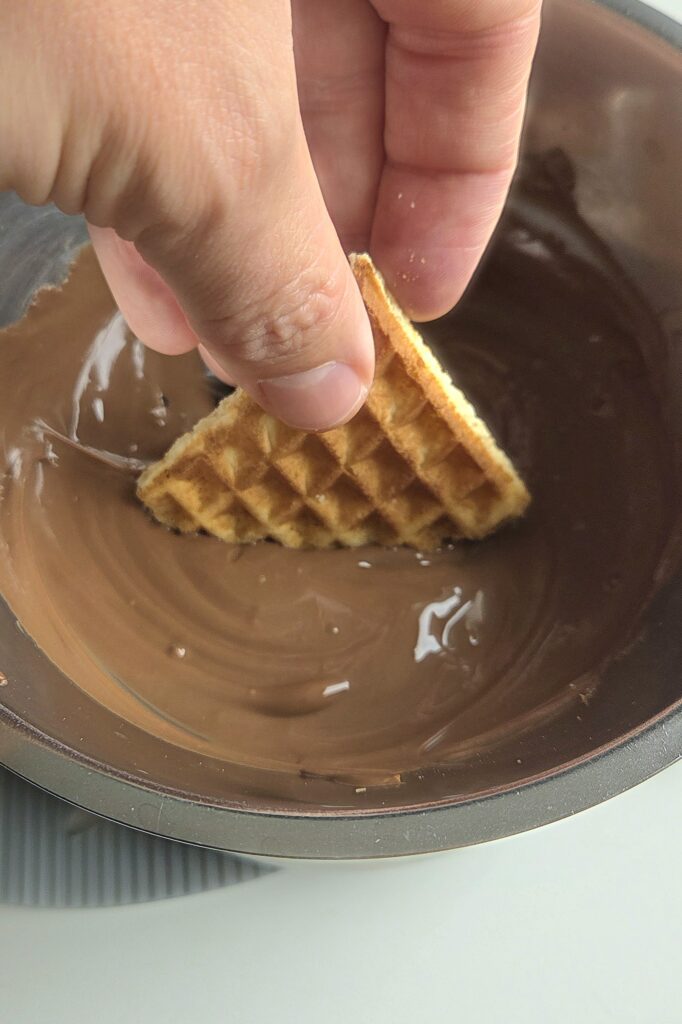
- Break the chocolate into pieces and melt it in a metal or glass bowl over a water bath — use a bowl wide enough that no water gets in. Separate the cooled waffles into individual hearts, dip one heart at a time halfway into the chocolate, let the excess drip off and set it on parchment paper.
- Leave at room temperature, or chill, until the chocolate has set firm.
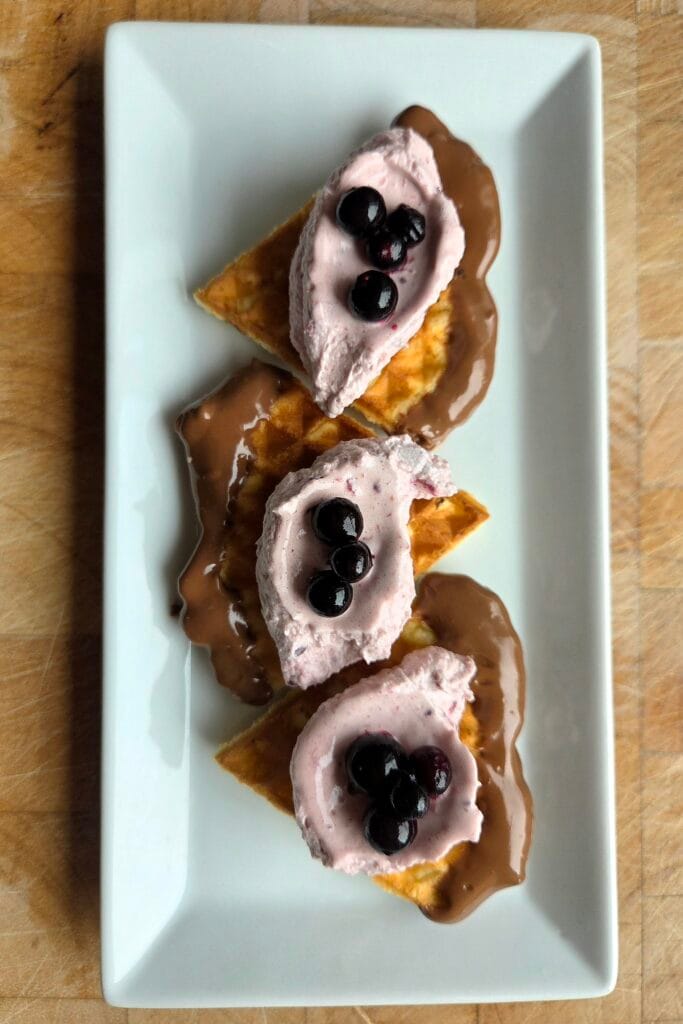
- Whip the cream to soft peaks, then fold in the blackcurrant jam. Serve the waffles with the cream and whole thawed blackcurrants.
Notes
Why they’re called tørrvafler
They go by two names in Norway, tørrvafler and sprø vafler, and both are in common use. The first is the literal one: tørr means dry, and that is the whole idea, since a tørrvaffel is baked to be kept rather than eaten warm off the iron. You can see it in the batter, which is stiff enough to sit on the iron as a scoop instead of spreading on its own.
We bake them all year. They also turn up at Christmas, where some households count them among the syv slag, the seven kinds baked for the holiday. That is a home tradition more than a documented one, and which families keep it varies.
The keeping quality is probably how they got onto the Christmas tray in the first place. A batch holds its snap for a week in a tin, so it can be baked well ahead, and it never takes up oven space during the one week of the year when the oven is already full. On the tray they go without cream, either plain or dipped in chocolate and finished with pearl sugar or chopped almonds while it is still wet. The cream belongs to the rest of the year.
Why potato starch makes them crisp
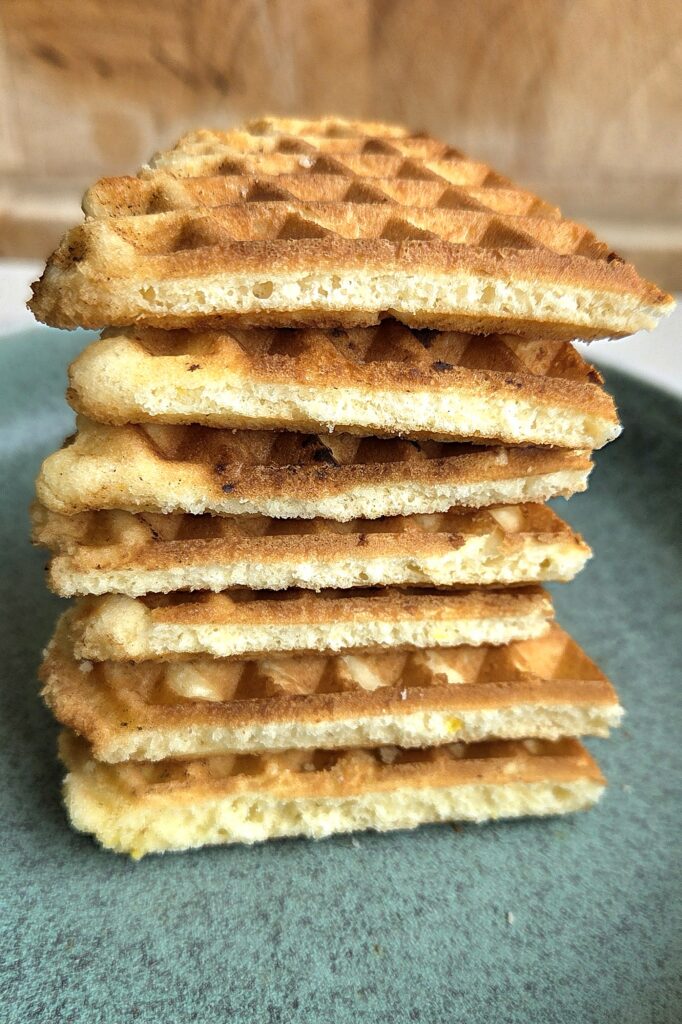
Most waffle recipes lean on wheat flour, and wheat flour holds moisture. Potato starch does the opposite: no gluten, no protein network, nothing to keep the crumb soft. As the waffle cools, the starch sets brittle.
Our cardamom waffles go the other way — all wheat flour, soft and foldable — and it’s worth baking both to feel how much of the result comes down to that one swap.
That is why the cooling step is not optional. Lift each waffle onto a wire rack in a single layer, with air moving underneath. Stack them warm and they steam themselves soft. Cold and separated, they turn glassy and snappy within ten minutes. The same goes for storing them: pack them warm and you undo the whole thing.
One more thing worth saying plainly: buy potato starch, not potato flour. They are different products, and potato flour will give you a heavy, damp waffle.
Getting the chocolate right
We use a light cooking chocolate, but any chocolate you like will work here — the technique matters far more than the bar. Buy a baking bar or couverture rather than chips, though: chips are formulated to keep their shape in the oven, and they never melt into a smooth coating.
Melt the chocolate over a water bath and then let it sit for a few minutes before you start dipping. Chocolate that is too warm runs straight off the ridges and dries thin and streaky. When it is just fluid and starting to thicken, it clings to the waffle pattern and sets with a clean edge.
Dip one heart at a time, halfway, let the excess drip back into the bowl, then lay it flat on parchment. Room temperature is fine for setting; the fridge is faster but can dull the shine.
Soft waffles can be dipped too, once they’ve been dried crisp in a low oven. We do that with whatever is left after a batch of kefir waffles, and the method is in our leftover waffle chips.
Butter the iron every single time
Not just the first waffle. A brushed layer of butter between each round essentially fries the surface of the batter, and that is a large part of the crisp exterior. Skip it after waffle three and you will taste the difference. This holds for every waffle we make, sweet or savory.
The waffle iron
A Norwegian heart-shaped iron is what gives these their shape, and it matters more than it sounds: the thin, shallow hearts are what let the waffle dry out and crisp. A Belgian-style deep iron will give you something softer. For US kitchens, look for a 110V heart waffle iron — the Nordic ones we use at home run on 230V and won’t work on US power. We cover choosing one, and how to clean it, in our guide to Norwegian waffle recipes.
Changing the cream through the year
Blackcurrant is our autumn version. The berries come late, the jam is sharp enough to stand up against milk chocolate, and the dark color reads well on the plate.
In spring we switch to rhubarb cooked down to a thick compote. In summer, raspberries or fresh cloudberries. Whatever goes into the cream should also go on top, so the flavor reads twice.
For something sharper in any season, leave the cream out and whip crème fraîche on its own. It takes the fruit the same way, cuts the sweetness of the chocolate and holds its shape longer on the plate. A note for US kitchens: crème fraîche whips because it is rich enough to hold air, while standard American sour cream is much leaner than Norwegian rømme and will only go runny. Reach for crème fraîche or a full-fat Mexican crema.
To push these toward dessert rather than a coffee bake, go chocolate and cherry. Fold melted chocolate or cocoa into the cream and serve dark cherries instead of berries.
More Nordic bakes you’ll love
- Krumkake — Norwegian Waffle Cookies — the Christmas cousin, rolled thin and crisp on a patterned iron
- Sveler — Norwegian Griddle Pancakes — the other great Norwegian griddle bake, soft where these snap
- Sourdough Waffles — a good use for discard, with a tang these sweet ones don’t have