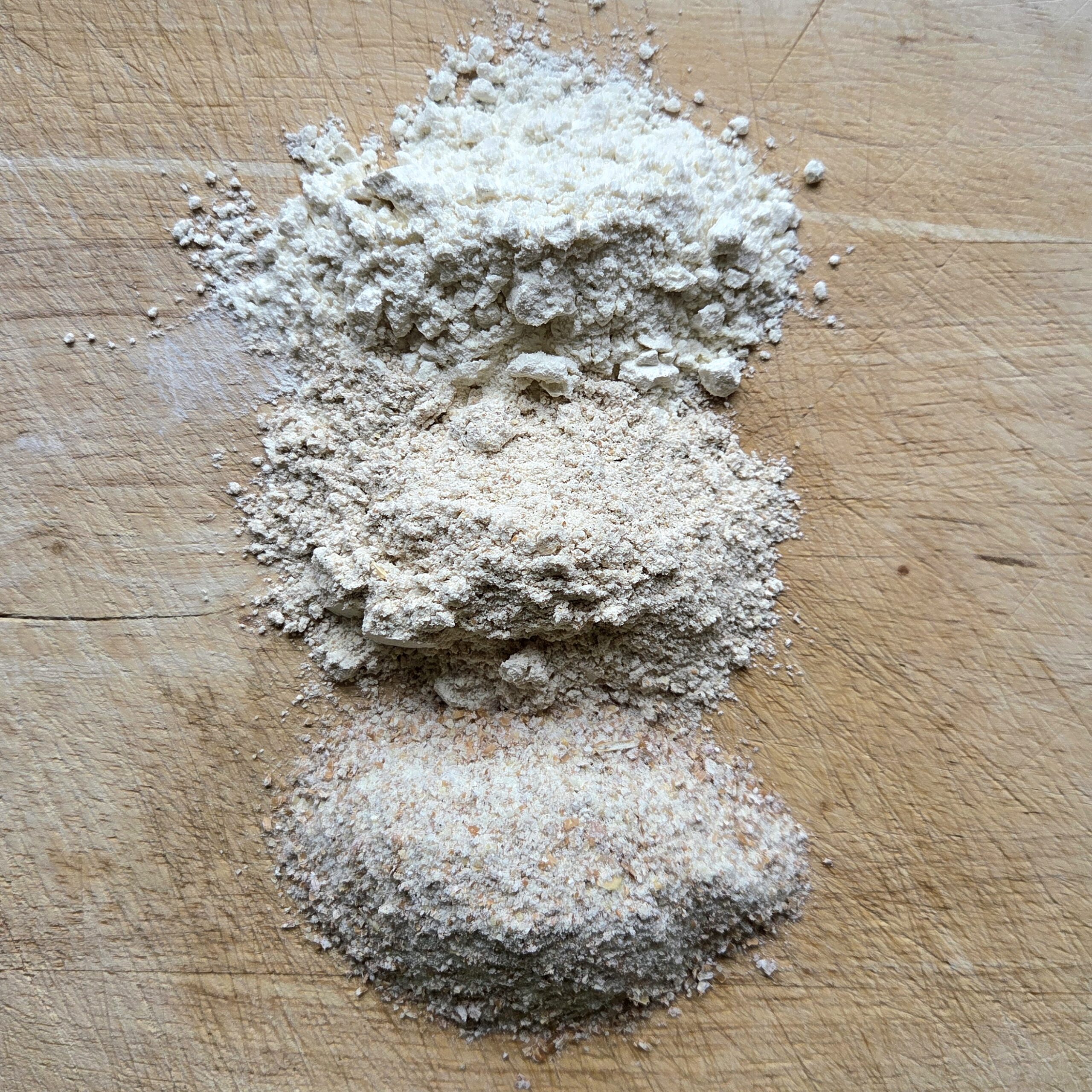
Choosing the best flour for sourdough is the first real decision you’ll make as a baker, and it shapes everything that follows — how the dough handles, how high it rises, how open the crumb turns out. The good news: you don’t need anything specialty to bake a great loaf. Here’s what each flour actually does, and what we reach for in our own kitchen.
Why Flour Matters More Than the Recipe
Flour is mostly starch, but the part that matters for sourdough is protein. When you add water and start working the dough, two proteins — glutenin and gliadin — link up into gluten, the stretchy network that traps the gas your starter produces. More protein means more gluten, which means more structure to hold that rise.
That’s why protein content matters more for sourdough than for a cake or a quick bread. Sourdough ferments for hours, sometimes overnight, and all that time the acids in your starter are slowly breaking gluten down. You need enough gluten strength at the start to survive to the oven. This is the one number worth knowing when you read a flour bag: protein percentage. Everything else in this guide comes back to it.
Bread Flour — Start Here
If you buy one bag, buy bread flour. It runs around 12–14% protein, which gives you a strong, elastic dough that handles long fermentation and holds its shape when you score it. It’s the most forgiving flour for a beginner because it leaves the widest margin for error — you can push the ferment a little too far and still get a loaf that stands up.
In a US kitchen, King Arthur Bread Flour is the reliable benchmark: consistent, widely available, and milled to a protein level that behaves predictably batch to batch. Any bread flour in that protein range will do the job.
All-Purpose Flour — Yes, It Works
You can absolutely bake sourdough with all-purpose flour, and plenty of good bakers do. It sits lower on protein — roughly 10–12% — so you’ll get a slightly softer crumb and a touch less rise than bread flour, but the difference is smaller than people expect. If all-purpose is what’s in the cupboard, use it and don’t wait.
One caveat: not all all-purpose flour is equal. Some brands are milled soft and low, others sit high enough to pass for bread flour. King Arthur All-Purpose is on the higher end and behaves well in sourdough. A softer, lower-protein AP will give you a flatter, more tender loaf — fine for a first bake, just know what you’re working with.
Bleached or Unbleached? Choose Unbleached
This one’s easy, and it’s worth knowing before you buy. Bleached flour is treated with chemicals — usually chlorine gas or benzoyl peroxide — to whiten it and speed up the aging process that flour naturally goes through on its own. That treatment does one thing you don’t want in sourdough: it weakens the protein, which means weaker gluten and less structure to hold your rise.
Unbleached flour ages the slow way and keeps its gluten strength intact, which is exactly what a long ferment needs. So the rule is simple: for sourdough, always reach for unbleached. Check the bag — it’ll say. Most good bread flours are unbleached already, but plenty of all-purpose flour on the shelf is bleached, so it’s the one place to pay attention.
Whole Wheat & Whole Grain — Flavor and Fiber
Whole wheat flour keeps the bran and germ that white flour strips out. That gives you three things: deeper, nuttier flavor, more fiber, and a faster ferment, because the bran carries extra nutrients that feed your wild yeast. It’s the natural home for a wholesome, high-fiber loaf.
The trade-off is structure. Those same bran particles act like tiny blades that cut through gluten strands as the dough develops, so a 100% whole wheat loaf comes out denser and shorter than a white one. It also drinks more water, so a whole grain dough usually needs a higher hydration — more on that in sourdough hydration explained.
The fix isn’t to avoid it — it’s to blend. Swapping 20–30% of your bread flour for whole wheat gives you most of the flavor and fiber with very little cost to the rise. Start there before you push higher — it’s the blend behind our whole grain sourdough bread.
Stone-Ground and Sifted Flours
Between white and whole wheat sits a middle ground. Stone-ground flour is milled slowly between stones, which keeps more of the germ’s flavor and oils. Sifted — or high-extraction — flour is whole grain with some of the coarsest bran screened out, so you keep most of the flavor with less cost to the rise. It’s how a lot of Nordic bakers work, and it’s a good next step once plain bread flour feels routine. Look for “high-extraction” or “sifted whole wheat” on the bag, or sift whole wheat through a fine sieve yourself.
Rye — Deep Flavor, Different Rules
Rye is the flavor flour: earthy, faintly sour, unmistakable in a Nordic loaf. It’s also the odd one out. Rye has very little functional gluten and high enzyme activity, which means it ferments fast, drinks a lot of water, and turns sticky in a way that catches new bakers off guard. A 100% rye loaf is a genuinely different technique, not a variation on wheat bread — our Danish rye bread (rugbrød) shows what that looks like.
For most bakers, rye earns its place in two smaller roles: a spoonful in your starter, where it feeds fermentation beautifully — it’s how we build a starter from scratch — and 10–20% of the flour in a wheat loaf, where it adds depth without wrecking the structure. Treat it as a seasoning flour first, a main flour much later.
How to Blend Flours
You don’t have to pick one. Most of our everyday loaves are a blend, and a good default to start from is:
- 80% bread flour for structure and rise
- 20% whole wheat for flavor and fiber
That ratio bakes like a white loaf but tastes like something. From there you can nudge it — more whole wheat for a heartier crumb, a little rye for depth — once you know how your dough behaves. Change one thing at a time so you can taste what each flour is actually doing.h behaves. Change one thing at a time so you can taste what each flour is actually doing.
The Best Flour for Sourdough Beginners
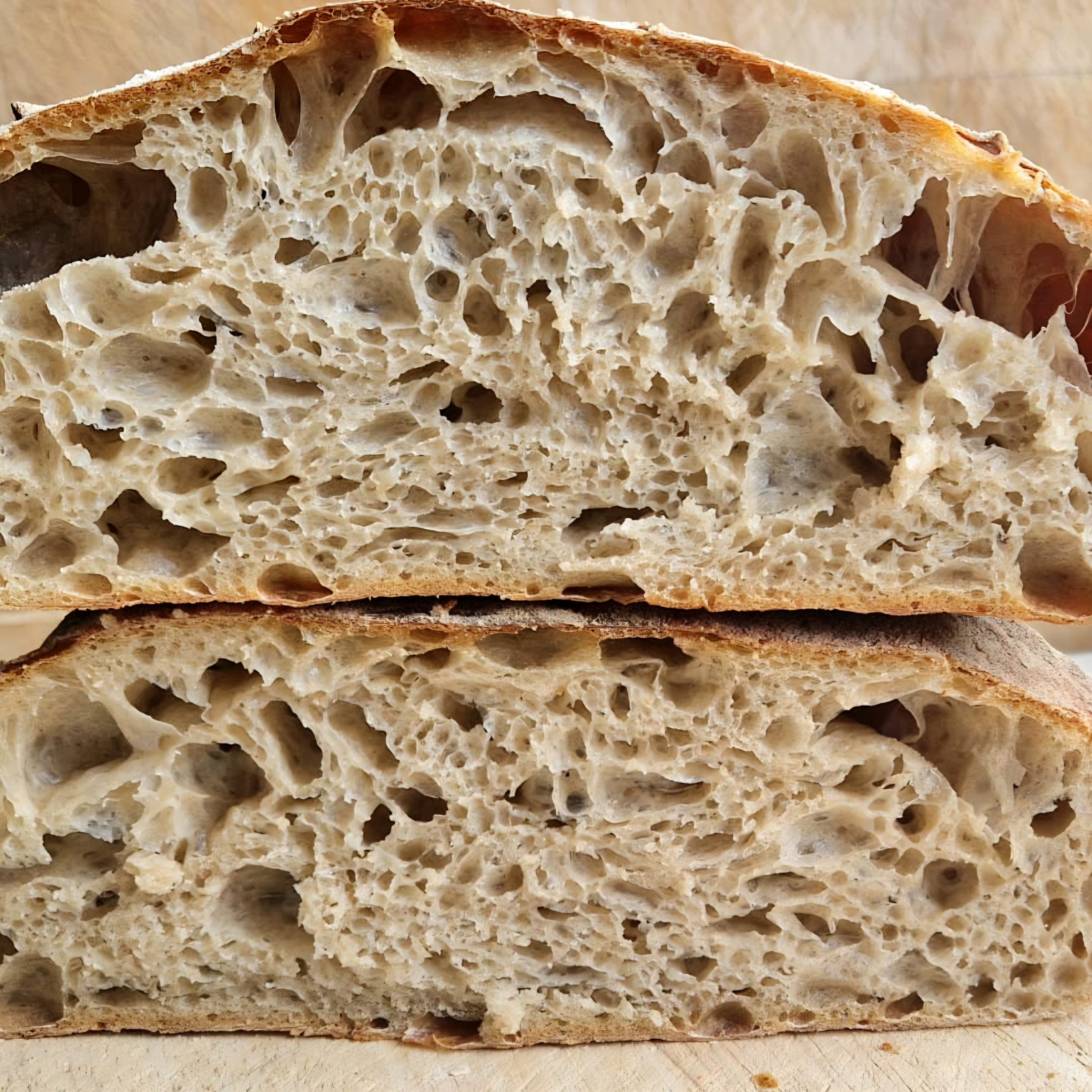
And if you’d rather not decide alone, start with a loaf built for exactly this: our beginner sourdough bread uses plain bread flour and nothing else. No bran, no rye, nothing drinking water in unpredictable ways — which makes it much easier to feel what well-developed dough is supposed to feel like before you start blending flours yourself.
The one tool that matters more than flour
Whichever flour you choose, weigh it. Sourdough lives on ratios — hydration, starter percentage, salt — and a cup of flour can vary by 30 grams depending on how you scoop it. A digital scale is the single piece of gear that will do more for your bread than any flour upgrade.
Working from a recipe in cups? Our Baking Weight Converter turns them into grams.
- A digital kitchen scale — bake by weight and your loaves get consistent overnight
Sourdough for Beginners · Step 4 of 9
More sourdough guides you’ll love
- Sourdough for Beginners — the complete guide, start to finish
- Hydration Explained — why 70% dough feels impossible, and why it’s worth it
- Beginner Sourdough Bread — the first loaf to bake once your starter is ready
- Whole Grain Sourdough Bread — put this flour to work in our everyday loaf