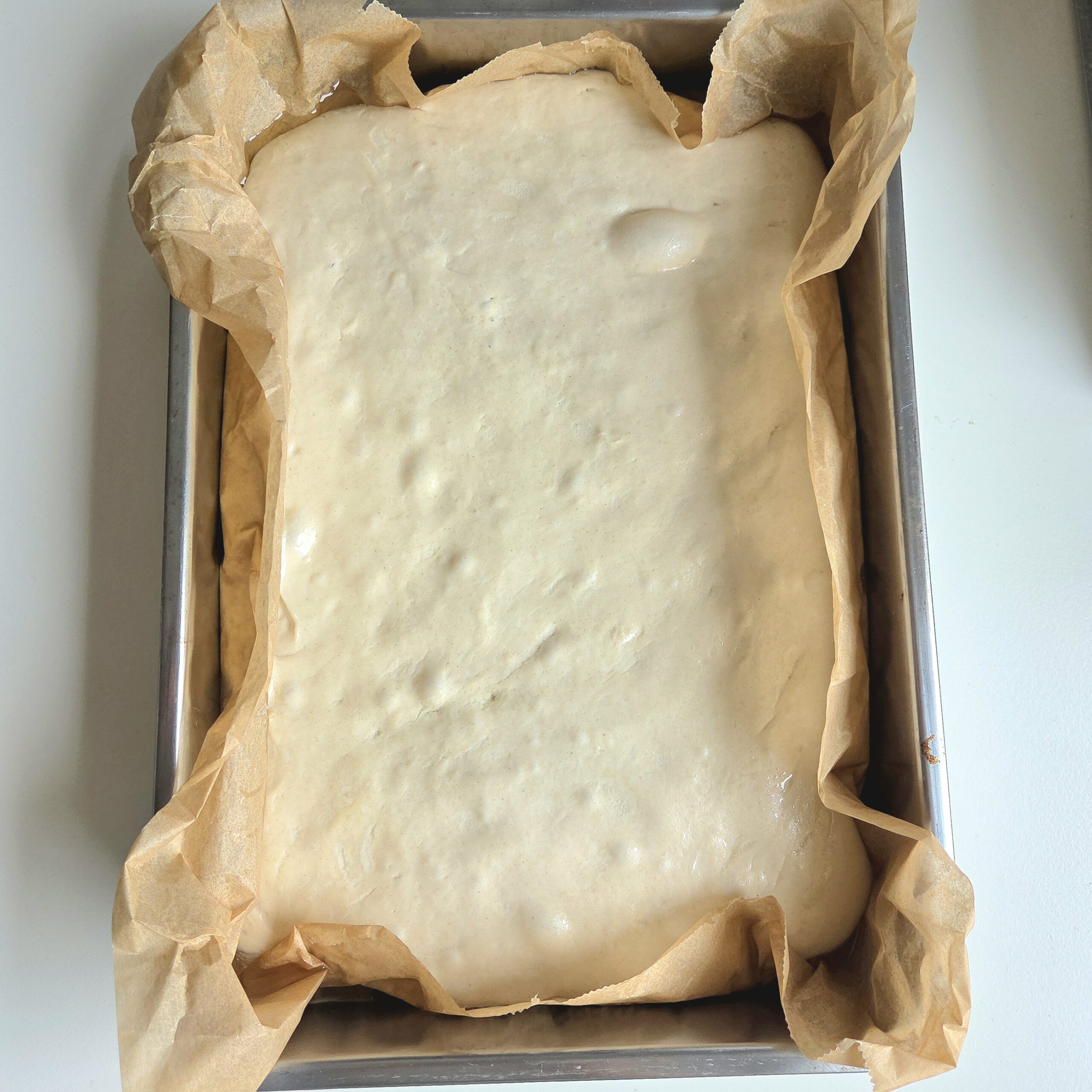
Sourdough hydration is one of those terms that sounds technical and scares new bakers off, but the idea underneath it is simple: it’s just how much water is in your dough, measured against the flour. Get a feel for it and you stop following recipes blindly and start understanding why your bread turns out the way it does. Here’s how it works, and how to pick the right hydration for the loaf you want.
What Hydration Actually Means
Hydration is the amount of water in your dough as a percentage of the flour. That’s the whole definition. A dough with 1,000 g of flour and 750 g of water is at 75% hydration — the water weighs 75% of what the flour does.
Notice it’s measured against the flour, not the total weight. That trips people up at first, but there’s a good reason bakers do it this way, and it’s the one bit of math worth understanding.
Baker’s Percentage — The Only Math You Need
Every ingredient in a bread recipe gets expressed as a percentage of the flour, and flour is always 100%. So a loaf might read: 100% flour, 75% water, 20% starter, 2.5% salt. Water at 75% is your hydration.
Why bother? Because it makes every recipe instantly comparable and instantly scalable. Once you know a dough is 75% hydration, you know exactly how it will feel in your hands, whether you’re baking one loaf or ten, whether the recipe uses grams or pounds. A “75% dough” behaves like a 75% dough every time. It’s the language bakers use to describe bread to each other, and once it clicks, recipes stop being instructions you follow and start being numbers you read.
To find the hydration of any recipe: divide the water by the flour, then multiply by 100. 750 g water ÷ 1,000 g flour × 100 = 75%. That’s it. This is also exactly why a scale matters more than measuring cups — you can’t work in percentages if you’re scooping.
Or skip the math: our Sourdough Calculator works out the water, starter and salt for any hydration you choose, and suggests recipes that sit in that range.
What about the water in your starter?
Your starter is half flour, half water, so it adds a little of both to the dough. Most recipes — ours included — quote hydration from the main flour and water only. Count the starter too and the number creeps up a few points: our beginner loaf is 67% on paper and close to 70% once the starter is included. Either way of counting is fine, as long as you compare recipes the same way.
What Low vs. High Hydration Does
Hydration is the dial that controls how your dough feels and how your crumb turns out.
Lower hydration (around 65%) gives you a firm, workable dough that holds its shape and is genuinely easy to handle. The crumb comes out tighter and more even — think sandwich bread or a sturdy everyday loaf. Nothing wrong with a tight crumb; it slices clean and holds butter. A firmer dough also scores far more cleanly: the surface holds a crisp edge, so if you want those sharp, decorative scoring patterns — a wheat stalk, a clean signature slash — a slightly lower hydration works in your favor. Wet dough drags and blurs the cut.
Higher hydration (75% and up) gives you a wetter, slacker, stickier dough that’s harder to shape but rewards you with that open, airy, hole-filled crumb people chase — the glossy, custardy interior of a good bakery loaf. The water gives the gluten room to stretch and the gas room to expand.
Neither is better. They’re different breads. The mistake beginners make is assuming higher is the goal and jumping straight to 80% dough they can’t control yet.
Why You Should Start Lower
If you’re new to this, start around 65–70%. Here’s the honest reason: a wet, high-hydration dough is a difficult thing to handle, and fighting a sticky mess on your first few loaves teaches you frustration, not skill. A firmer dough lets you actually feel what good gluten development, shaping tension and a proper proof are supposed to feel like — with the training wheels on.
Once shaping feels natural at 67–68%, push to 72%, then 75%. Add water a few percent at a time and let your hands catch up. Every experienced baker you admire started with dough they could hold. High hydration is a skill you grow into, not a level you unlock by pouring in more water.
Flour and Hydration Work Together
Here’s the part most hydration guides skip: the same percentage of water behaves completely differently depending on your flour. Whole wheat and rye drink far more water than white flour, because the bran and germ absorb it, so a 75% whole grain dough will feel much drier than a 75% white one. Strong bread flour also holds water better than all-purpose.
That’s why you can’t chase a hydration number in isolation. If you switch flours, your dough will feel different at the same percentage — and that’s normal, not a mistake. (If you haven’t yet, our [flour guide] walks through how each type behaves.) The number is a starting point; your hands make the final call.
Flour and Hydration Work Together
Here’s the part most hydration guides skip: the same percentage of water behaves completely differently depending on your flour. Whole wheat and rye drink far more water than white flour, because the bran and germ absorb it, so a 75% whole grain dough will feel much drier than a 75% white one. Strong bread flour also holds water better than all-purpose.
That’s why you can’t chase a hydration number in isolation. If you switch flours, your dough will feel different at the same percentage — and that’s normal, not a mistake. If you haven’t yet, our flour guide walks through how each type behaves. The number is a starting point; your hands make the final call.
The Best Sourdough Hydration for Beginners
One loaf, around 67% hydration, good unbleached bread flour. That’s exactly what our beginner sourdough bread is — 600 g bread flour and 400 g water, with nothing complicated to keep track of. Bake it until shaping feels comfortable and you can read when the dough is properly developed. Then nudge the water up a few percent at a time and watch what changes. Within a handful of bakes you’ll stop thinking about the number at all — you’ll just know, by feel, when the dough is right. That’s the whole point of understanding hydration: not to hit a target, but to stop needing one.
The one tool that makes hydration possible
You cannot work in hydration percentages with measuring cups — the whole system depends on weighing water and flour against each other. A digital scale isn’t a nice-to-have here; it’s the thing that makes the math work at all.
- A digital kitchen scale — weigh flour and water to the gram and your hydration is exact every time
Sourdough for Beginners · Step 5 of 9
More sourdough guides you’ll love
- Sourdough for Beginners — the complete guide, start to finish
- Best Flour for Sourdough — why the same hydration feels different flour to flour
- Beginner Sourdough Bread — the first loaf to bake once your starter is ready