Danish Brown Sugar Cake (Brunsviger)
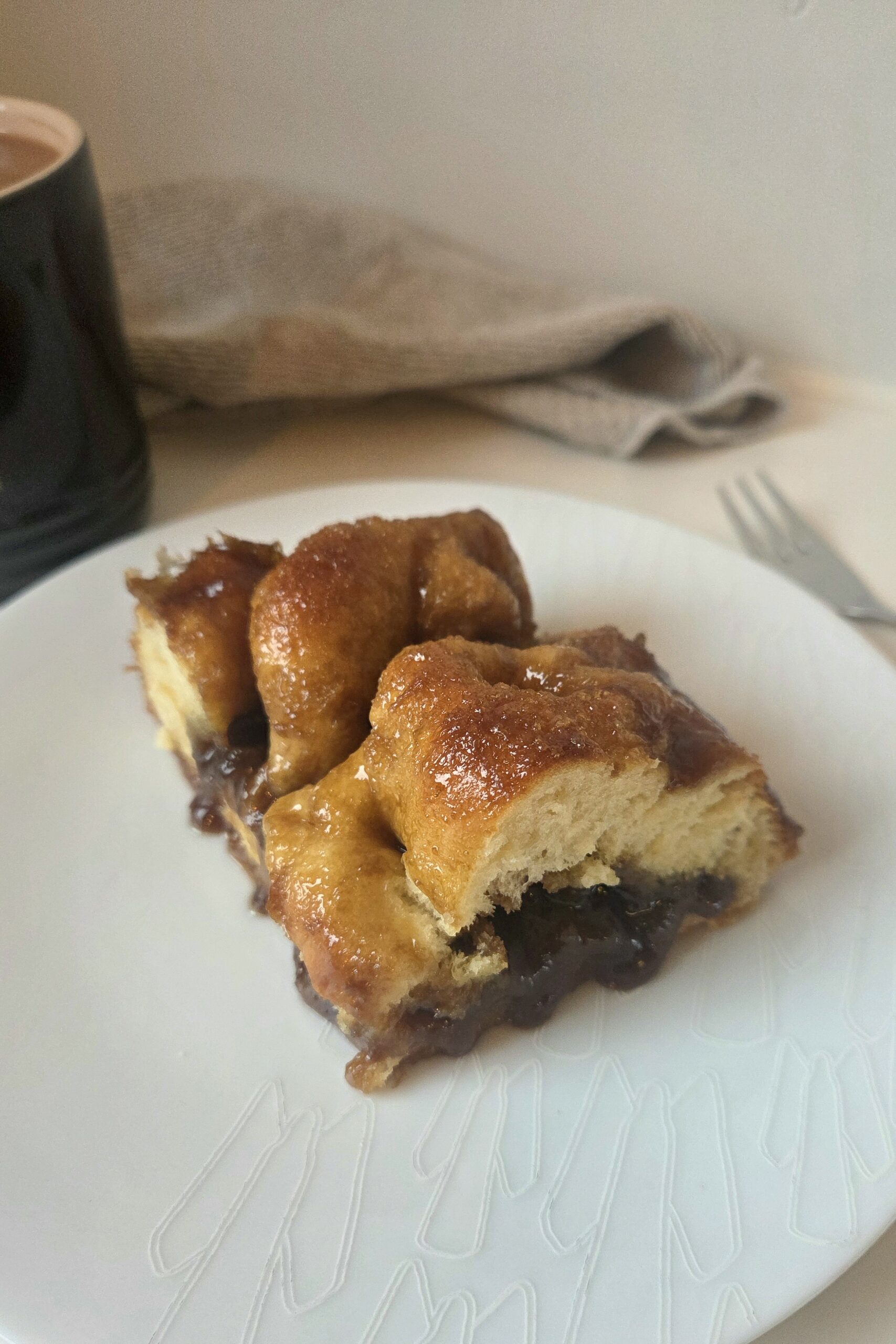
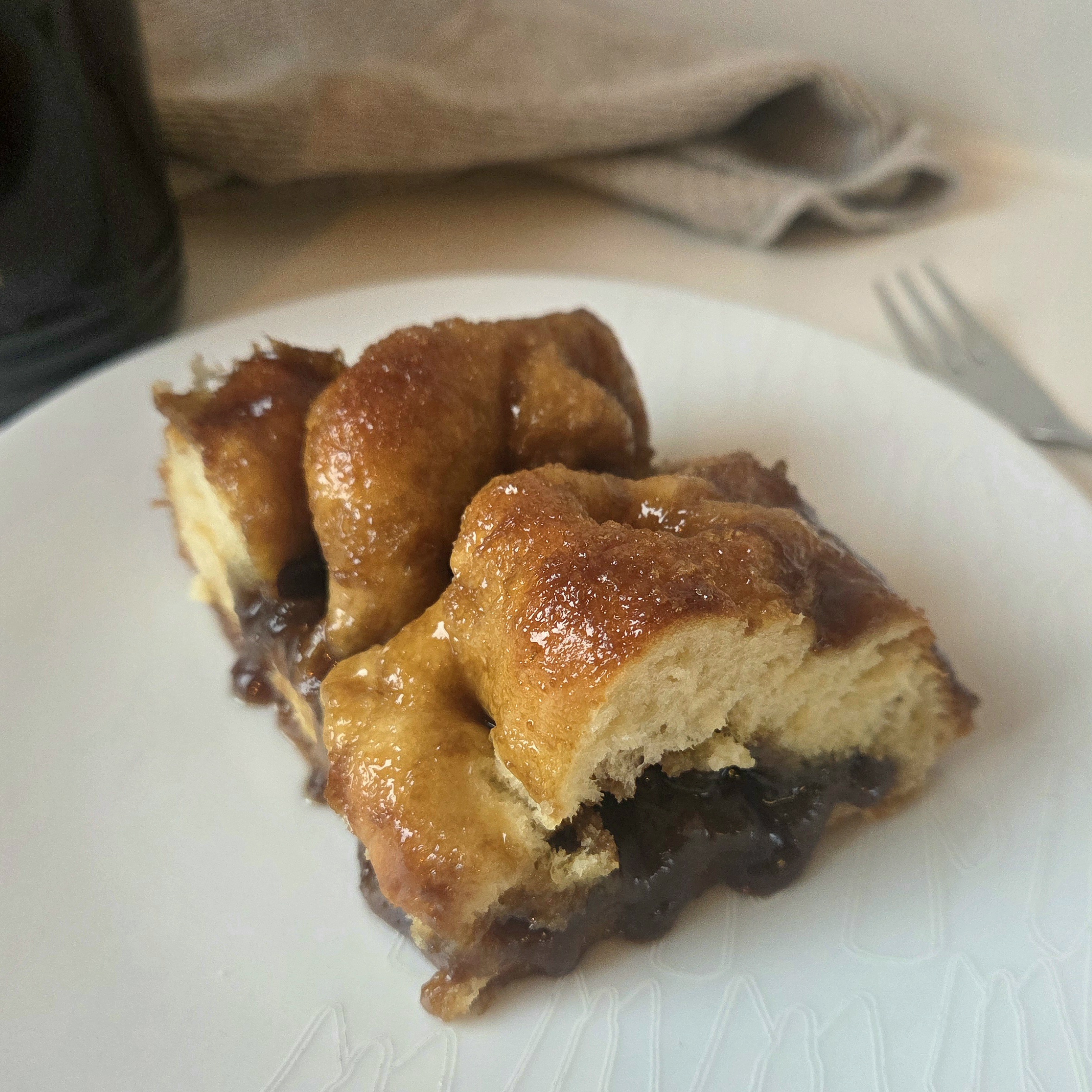
Danish brown sugar cake, or brunsviger, is a soft yeast dough baked in a pan under a thick layer of butter, brown sugar and golden syrup. We press deep wells into the risen dough before the topping goes on, so it settles into pockets of soft caramel instead of sitting on the surface.
Danish Brown Sugar Cake (Brunsviger)
Ingredients
Equipment
Method
- Mix. Put the cold milk, yeast, flour, sugar, salt and eggs in the bowl of a stand mixer. Keep the butter aside. Mix on low until the dough comes together.
- Knead, then add the butter. Knead on low-medium (speed 2 on a KitchenAid) for 7–10 minutes, then add the soft butter a little at a time.
- Knead to windowpane. Keep kneading for 15–20 minutes in total, until the dough is smooth, glossy and pulls cleanly from the bowl, and a small piece stretches thin enough to see light through. If the mixer feels warm, give it a few minutes’ rest.
- First rise. Cover the bowl and let the dough rise until doubled, about 45 minutes.
- Line the pan. Line the baking pan with parchment that comes up all four sides.
- Press out. Turn the dough into the pan and press it out evenly into the corners.
- Second rise. Cover and let rise until puffy and soft, about 30 minutes. A light fingertip press should spring back slowly.
- Heat the oven. During the second rise, preheat to 400°F (200°C), conventional heat (no fan).
- Melt. While the dough rises, put the butter, brown sugar and syrup in a saucepan over low to medium heat.
- Dissolve the sugar. Stir constantly until the sugar has fully dissolved into the butter and you can no longer see or feel any grains. The mixture should be smooth, even and glossy. Let it come just to the point of simmering, but never to a rolling boil.
- Cool slightly. Take the pan off the heat and let the topping cool until warm, not hot.
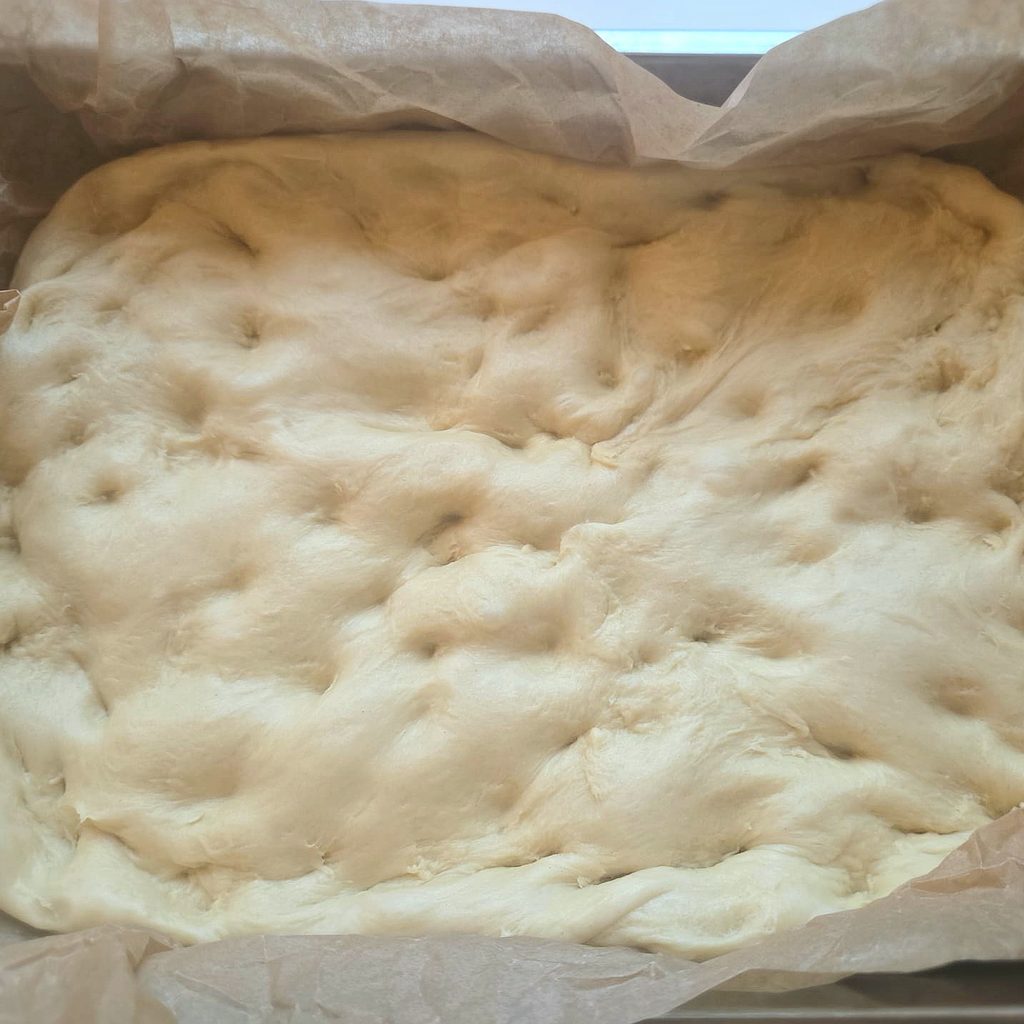
- Dimple. Wet your fingertips and press deep wells all over the risen dough, edges included. Stop before you reach the bottom of the pan, so a thin layer of dough stays under every well.
- Add the topping. Pour the warm topping over the dough and spread it gently to the edges. It will pool in the wells.
- Bake. Bake for 15 minutes, until the edges are golden brown and the topping bubbles across the whole surface. The dough under the topping should read 190°F (88°C).
- Tilt the pan. Straight out of the oven, tilt the pan gently from side to side so the hot topping runs over the edges and into the corners.
- Cool and cut. Cool in the pan on a wire rack for about 20 minutes, until the topping has stopped running. Lift out with the parchment and cut into squares.
Notes
Where brunsviger comes from
Brunsviger is baked all over Denmark, but the island of Funen treats it as its own. According to Den Store Danske, the cake came from Braunschweig in northern Germany (Brunsvig in older Danish), shows up in a Danish advertisement in 1830 and in a printed cookbook in 1859. Funen still celebrates a brunsviger day every October.
If you know Moravian sugar cake from North Carolina, the idea will look familiar: a yeasted dough with holes pressed in and filled with butter and brown sugar. It also sits well next to our Danish rye bread as the sweet half of what we bake from Denmark.
Our version is generous with the topping. Butter, sugar and syrup together weigh 685 g against 500 g of flour, which is why we bake it in a pan with proper sides and line it with parchment that comes up the walls.
Dimpling a Danish brown sugar cake
The wells decide where the topping ends up. On a flat sheet of dough, melted butter and sugar run off the high spots and collect along the sides of the pan, where they bake dark while the middle stays plain. Press wells across the whole surface, edges included, and each one holds its own pool of topping through the bake.
We press deep, but stop while there is still a layer of dough under the fingertip. A well that goes all the way through lets the topping run underneath, where it glues the cake to the paper. It will look like far too many holes when you’re done. In the oven the dough rises around them and closes them into the ridges you see on top. If you’ve pressed the wells for skolebrød, the motion is the same, only repeated across a whole pan.
Golden syrup and brown sugar outside Scandinavia
The syrup is there for texture as much as sweetness. Brown sugar on its own can turn grainy as the topping cools; a few spoonfuls of syrup keep it glossy and soft.
Scandinavian recipes call for light syrup (lys sirup), and golden syrup is the closest match in the US, with a similar mild caramel flavor. Light corn syrup gives the same gloss with less taste, and we would use it before we’d leave the syrup out. For the sugar, US dark brown sugar is the closest match to Scandinavian brun farin, with the deeper molasses note that makes the topping taste like brunsviger. Light brown sugar works, but the topping comes out paler and milder.
Cut it warm, eat it the same day
Brunsviger is at its best the day it’s baked, while the topping is still soft. With 100 g of butter to 500 g of flour, the dough is lean for a coffee cake, and it firms up by the next morning.
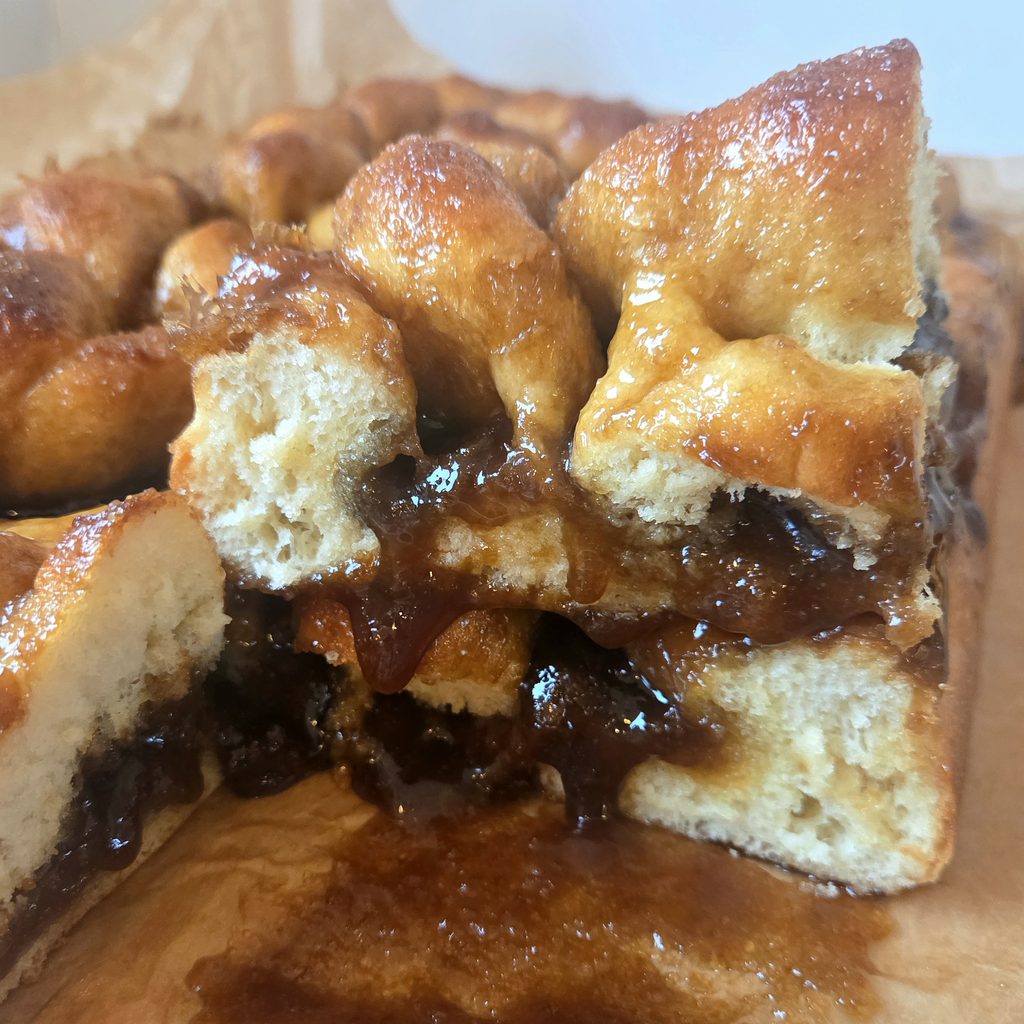
We let it stand for about 20 minutes before cutting. Any sooner and the topping runs out of the cuts and onto the paper. Leave it much longer and the squares lose the warm, soft top that makes it worth baking at home.
More from the Nordic kitchen
- Moist Orange Cake with Sticky Orange Syrup — another single-pan cake that gets its shine from syrup
- Norwegian Apple Cake (Eplekake) — an easy coffee cake with apples and almonds
- Cardamom Cinnamon Rolls with Cream Cheese Frosting — brown sugar and butter again, rolled into a soft cardamom dough