These are our Norwegian waffle recipes: thin, heart-shaped waffles the way they’re made in Norway. Some belong with afternoon coffee, others with lunch, brunch or the school lunchbox, and one batter puts your sourdough starter to work. Further down, we cover how to choose a heart iron and the Norwegian trick for cleaning one with a salt dough waffle.
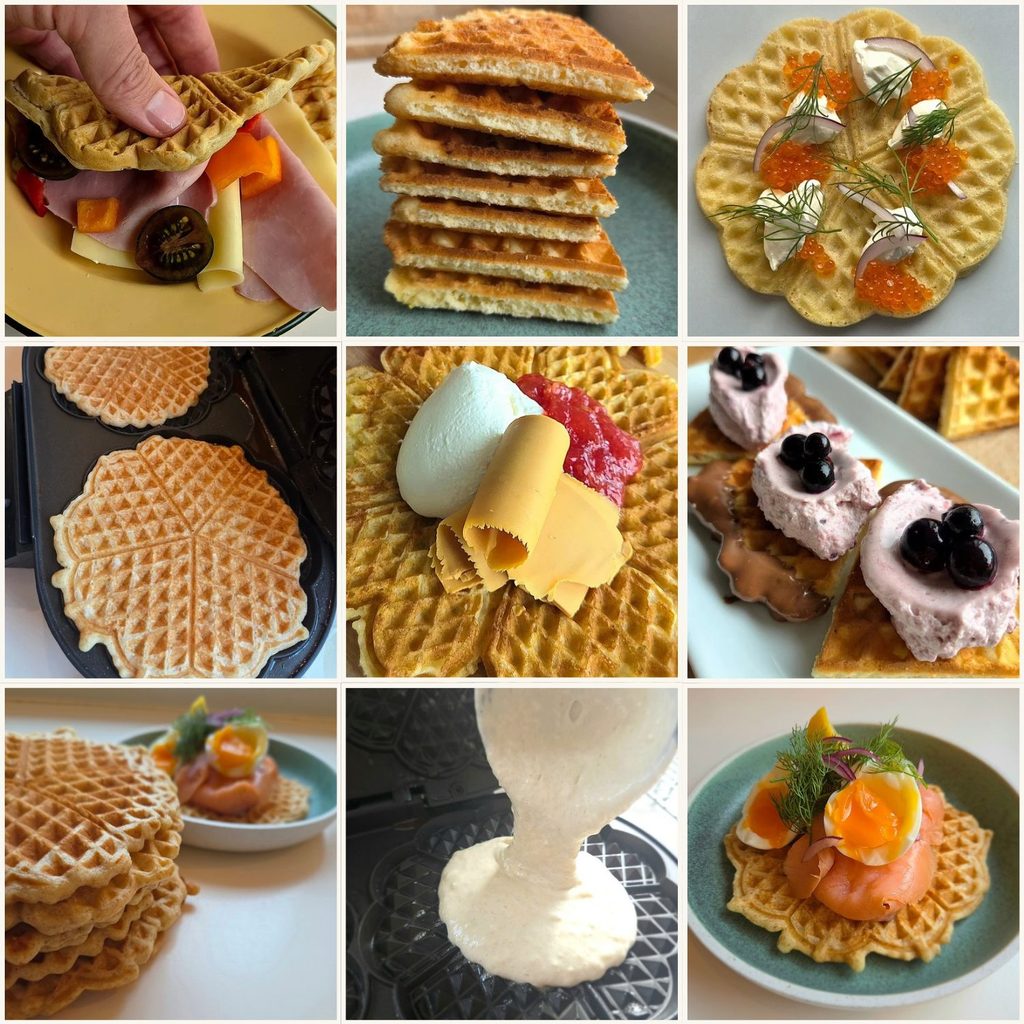
Sweet Norwegian waffles
The waffles we bake for afternoon coffee, from soft and cardamom-scented to thin and crisp.

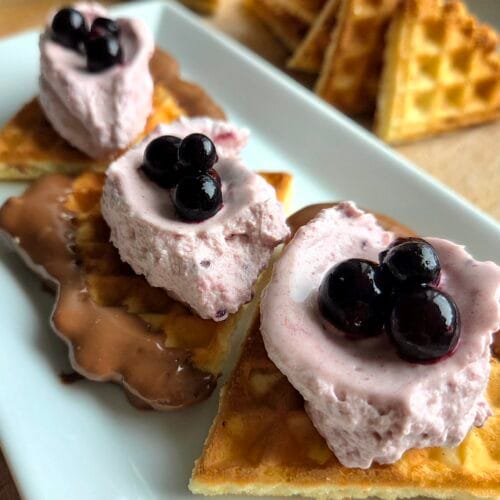
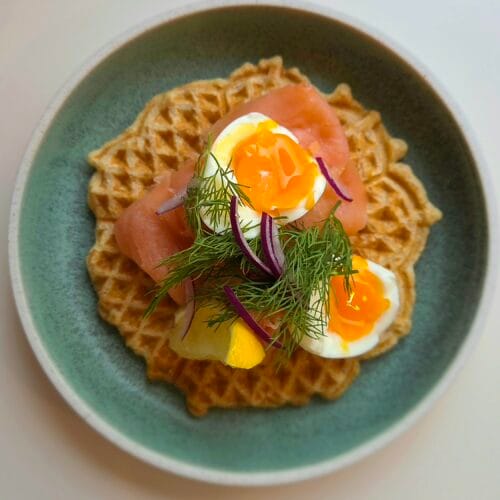
Savory Norwegian waffles
A Norwegian waffle can be savory too, and at home we eat it much like bread. These are built for lunch, brunch and a table full of guests.

Choosing a heart waffle iron
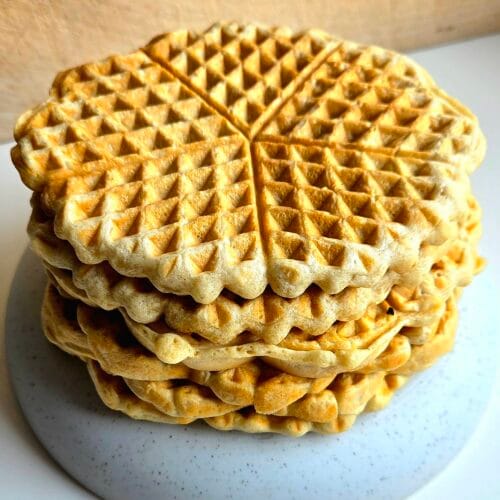
Every recipe here is made for a Norwegian heart iron: a round plate of five thin hearts with a shallow grid. That shallow grid is what makes the waffles thin — soft and foldable with one batter, crisp with another. A Belgian iron will cook the same batters, but you’ll get a thick, deep waffle rather than a Norwegian one.
One thing to know in the US and Canada: Nordic irons run on 230V and won’t work on North American 110V power, even with a plug adapter. An adapter changes the plug, not the voltage. Look for a heart waffle maker sold for the North American market — the Euro Cuisine WM520 is the one we’d point a friend to. Ours is Norwegian, so we can’t honestly call it the one we use, but it makes the right shape. Its plates are slightly deeper than a traditional Norwegian iron, so the waffles come out a touch thicker.
A few habits that make any iron work better:
- Preheat fully. A half-hot iron steams the batter instead of baking it.
- Butter the plates before every waffle, not just the first. The exception is a batter as butter-rich as our crunchy roe waffles.
- Treat the first waffle as a test for how much batter your iron wants and how hot it runs.
- Lift waffles with wood or silicone, never metal, so you don’t scratch the plates.
How to clean a waffle iron
A waffle iron can’t go in the sink, and most of the time it doesn’t need to.
Everyday care
After baking, unplug the iron and let it cool until it’s warm, not hot. Wipe the plates with a dry paper towel to pick up butter and crumbs, and clean the outside with a damp cloth and a little mild dish soap. Then store the iron with a fresh sheet of paper towel closed inside — it catches leftover fat and keeps the plates clean until next time. Never put an electric waffle iron in water.
The cleaning waffle (vaskevaffel)
Every so often, burnt butter and batter build up in the grid, and the waffles start to stick or brown unevenly. That’s when Norwegians bake a vaskevaffel — a cleaning waffle: a stiff dough of salt, flour and water that lifts the residue off the plates. It works in any waffle iron, and it’s a cleaning tool, not food, so throw it away afterward.
You’ll need (it’s a ratio, so scale freely):
- 100 ml (scant ½ cup) fine salt
- 200 ml (scant 1 cup) all-purpose flour
- 100 ml (scant ½ cup) water
- Wipe the outside. Unplug the iron, and while it cools, wipe the outside with a damp cloth and mild soapy water.
- Mix the dough. Stir the salt, flour and water together into a firm dough.
- Bake it. Heat the iron. Flatten a piece of dough into a disc, place it in the iron and close the lid. Bake for about 4–5 minutes, until the dough is dry and well browned and the residue has stuck to it. Repeat with fresh dough until the plates come out clean.
A short history of Norwegian waffles
Waffles came to Norway from the south. The irons likely arrived through trade with the Dutch, and with German miners and Danish officials. The earliest known Norwegian recipes, from the Kielland family in Stavanger in the early 1700s, were already spiced with cardamom — the spice that still defines our cardamom waffles. The five-heart shape came later, with irons made for the closed wood-fired stove, and it has been the Norwegian waffle ever since.