Lemon Tart with Italian Meringue
This lemon tart with Italian meringue is what we make at home when we want something sharp, bright and a little bit finished-looking without a lot of fuss. A thin shortcrust shell, a silky lemon curd, and a stable Italian meringue that holds its shape for days instead of weeping by evening. Here’s how we build it, step by step.
Lemon Tart with Italian Meringue
Ingredients
Equipment
Method
- Combine the powdered sugar, cold butter, flour, egg, salt and vanilla sugar. Mix only until the dough comes together — do not work it. If it feels dry, add 1–2 tbsp cold water.
- Divide the dough in two, wrap both halves and chill at least 30 minutes. The dough is also happy overnight. You only need one half for this tart — freeze the other.
- Roll one half out thin and line a greased tart pan. Lay parchment over the base and fill with dried peas or pie weights so the shell keeps its shape.
- Blind bake at 350°F (180°C) for 20–25 minutes, depending on how thin you rolled it. Cool completely.
- Brush the cold shell with melted chocolate and let it set. This is what keeps the base crisp once the lemon curd goes in.
- Bloom the gelatin in cold water.
- Bring the lemon juice, the first 75 g sugar and the butter to a boil.
- Whisk the eggs with the second 75 g sugar in a bowl, then whisk in a little of the hot mixture to temper.
- Pour the egg mixture back into the pan and cook for 3 minutes, stirring, until thickened.
- Stir in the bloomed gelatin and pass the curd through a fine sieve.
- Let the curd cool until it is barely warm to the touch, around 90°F (32°C), but still flowing freely off the spoon. Pour it into the chocolate-lined shell — it will settle into a smooth, glossy surface on its own. Chill until set, about 2 hours.
- Whip the egg whites at medium speed until foaming well and white. Lower speed gives smaller bubbles and a meringue that's easier to get right.
- Cook the sugar and water to 250°F (121°C). This temperature decides the texture of the meringue.
- Turn the mixer up. Pour the hot syrup down the side of the bowl in a thin stream while the mixer keeps running. Once all the syrup is in, keep whipping until the meringue is cold.
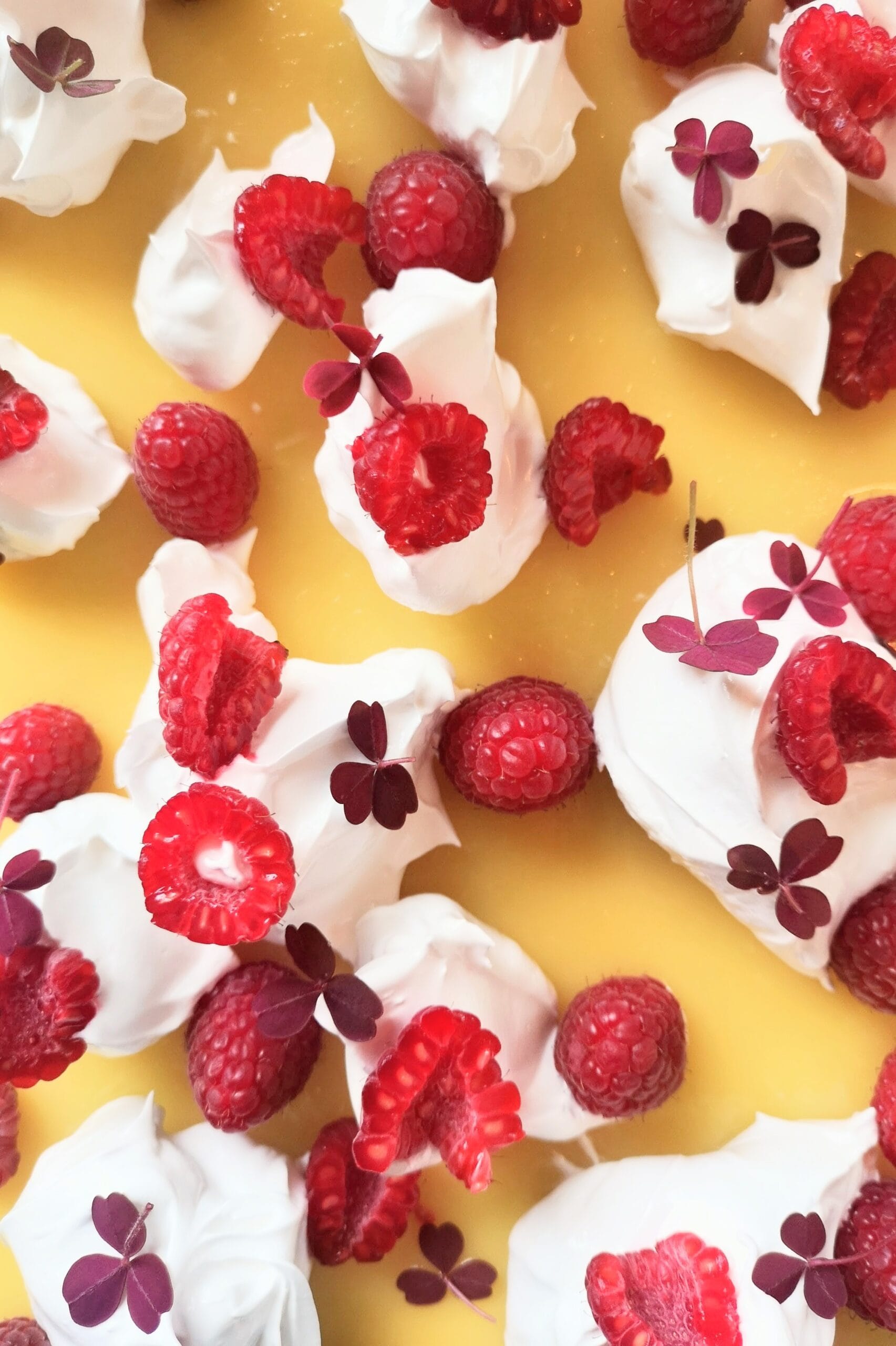
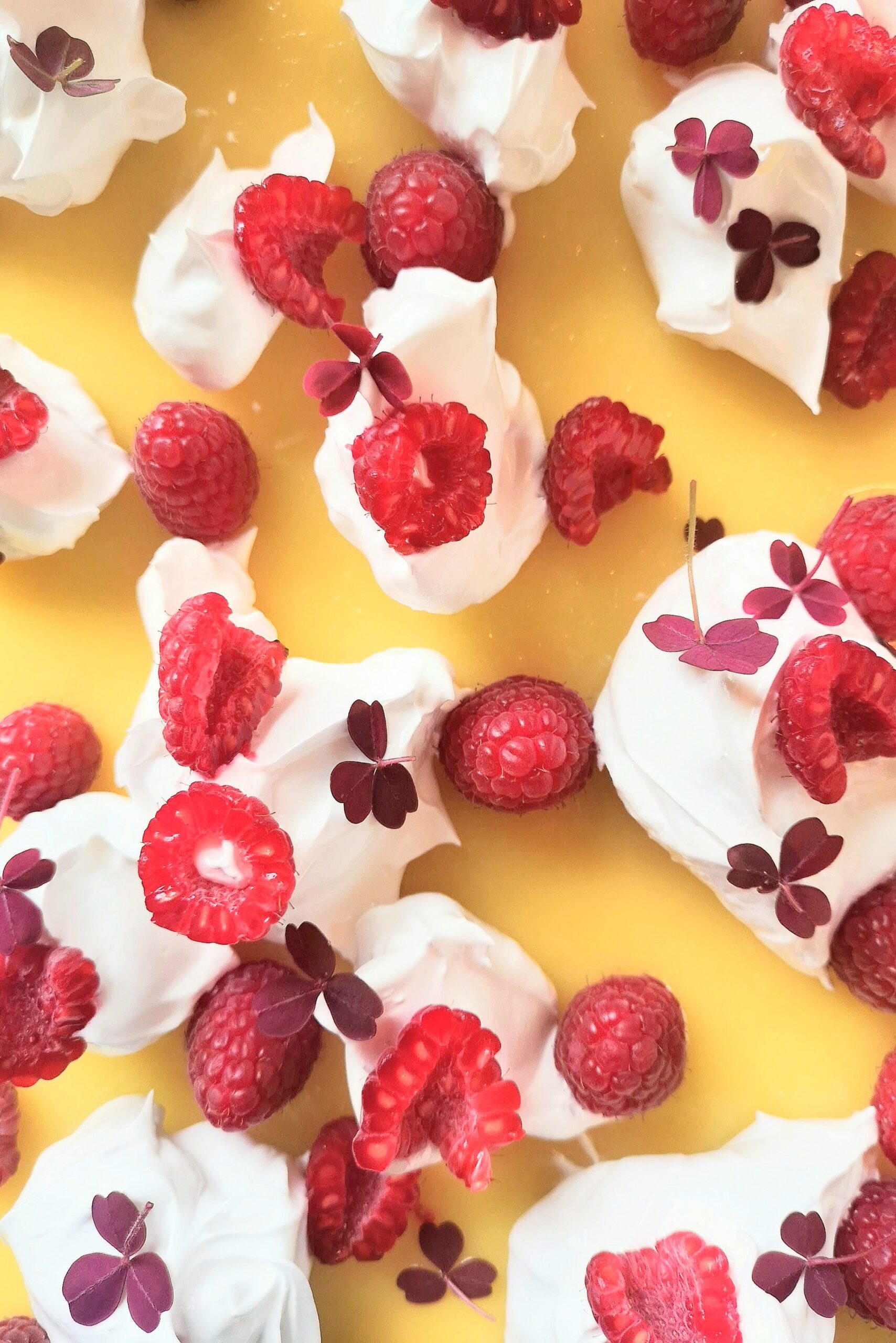
- Spoon the meringue over the set tart, pulling the back of the spoon up into soft peaks as you go. Finish with raspberries and a few leaves of wood sorrel.
Notes
Why we brush the tart shell with chocolate
A soggy base is what ruins most lemon tarts. Curd is wet, pastry is porous, and given a few hours in the fridge the two find each other.
The fix takes two minutes: once the blind-baked shell is completely cold, brush the inside with melted chocolate and let it set. It forms a thin, invisible seal between the pastry and the curd. Dark chocolate adds a faint bitterness that works beautifully with lemon; white chocolate keeps the flavour neutral. Either way, the base is still crisp the next day.
The trick to a mirror-smooth top
Don’t pour the curd hot, and don’t wait until it’s cold. There’s a window in between: strain it, let it cool until it’s barely warm to the touch — still flowing freely off the spoon — and pour it straight into the shell. It finds its own level and sets to a glossy, perfectly flat surface. No spreading, no piping, no spatula marks.
Both ends of that window matter. Too hot and you melt the chocolate seal you just brushed into the shell. Too cold and the gelatin has already started to work, and you’ll spend ten minutes chasing a smooth surface with a spatula and losing.
Italian meringue and the 250°F rule
There are three meringues in a pastry kitchen, and Italian is the one you want on a tart. Whipping hot sugar syrup into the whites cooks them as you go, which is why it stays glossy, pipes cleanly and doesn’t collapse into a puddle of syrup overnight.
Two things matter:
- Start the whites at medium speed. Slower whipping gives smaller, tighter bubbles and a much more reliable meringue than blasting them on high.
- Cook the syrup to exactly 250°F (121°C). This is not a range to guess at. Too cool and the meringue never sets up properly; too hot and it turns stiff and grainy. Use a thermometer.
Then keep whipping until the bowl feels cold to the touch. If you stop while it’s still warm, the meringue will slump when you pipe it.
Make this lemon tart your own
Raspberries are our default — the tartness lines up with the lemon rather than fighting it. Blueberries, redcurrants or thin slices of strawberry all work.
For the herbs we use wood sorrel (oxalis). It has a fine acidity that matches the curd, and the color sits well against the red berries. It’s hard to find in most shops, so lemon thyme or small mint leaves are a good stand-in.
This filling also makes excellent individual tartlets: roll the dough to about 2 mm, line small tartlet moulds, blind bake at 320°F (160°C) for 15 minutes, and pipe the cold curd in with a piping bag and a ⅜-inch (9 mm) round tip. Glazed with a neutral gel instead of meringue, they look like something out of a pastry shop window.
Want something with the same bright citrus finish but a lot less hands-on time? Our Moist Orange Cake with Sticky Orange Syrup gets you there in one bowl, no thermometer required.
More Nordic bakes you’ll love
Moist Orange Cake with Sticky Orange Syrup — another citrus-forward bake, but simple enough for a weeknight
Easy Rhubarb Cake with Almonds — if you’d rather work with fruit you already have on hand than build a curd from scratch