Jam Filled Buns with Cardamom
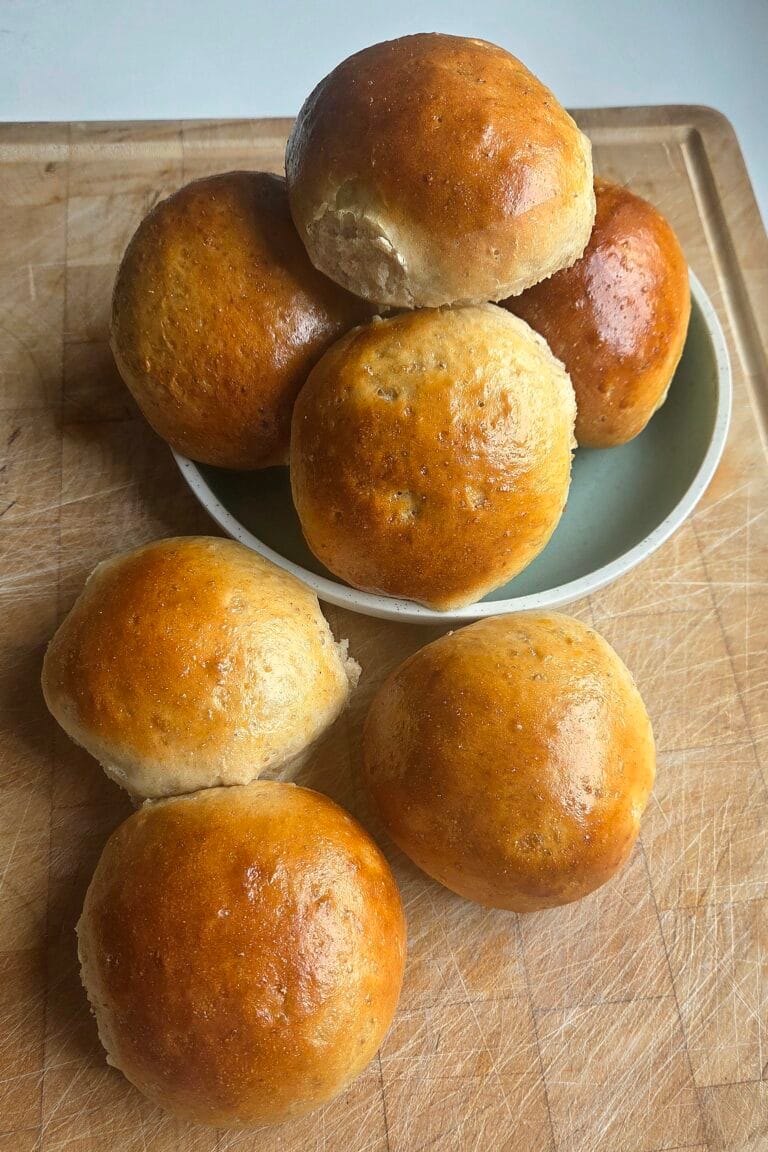
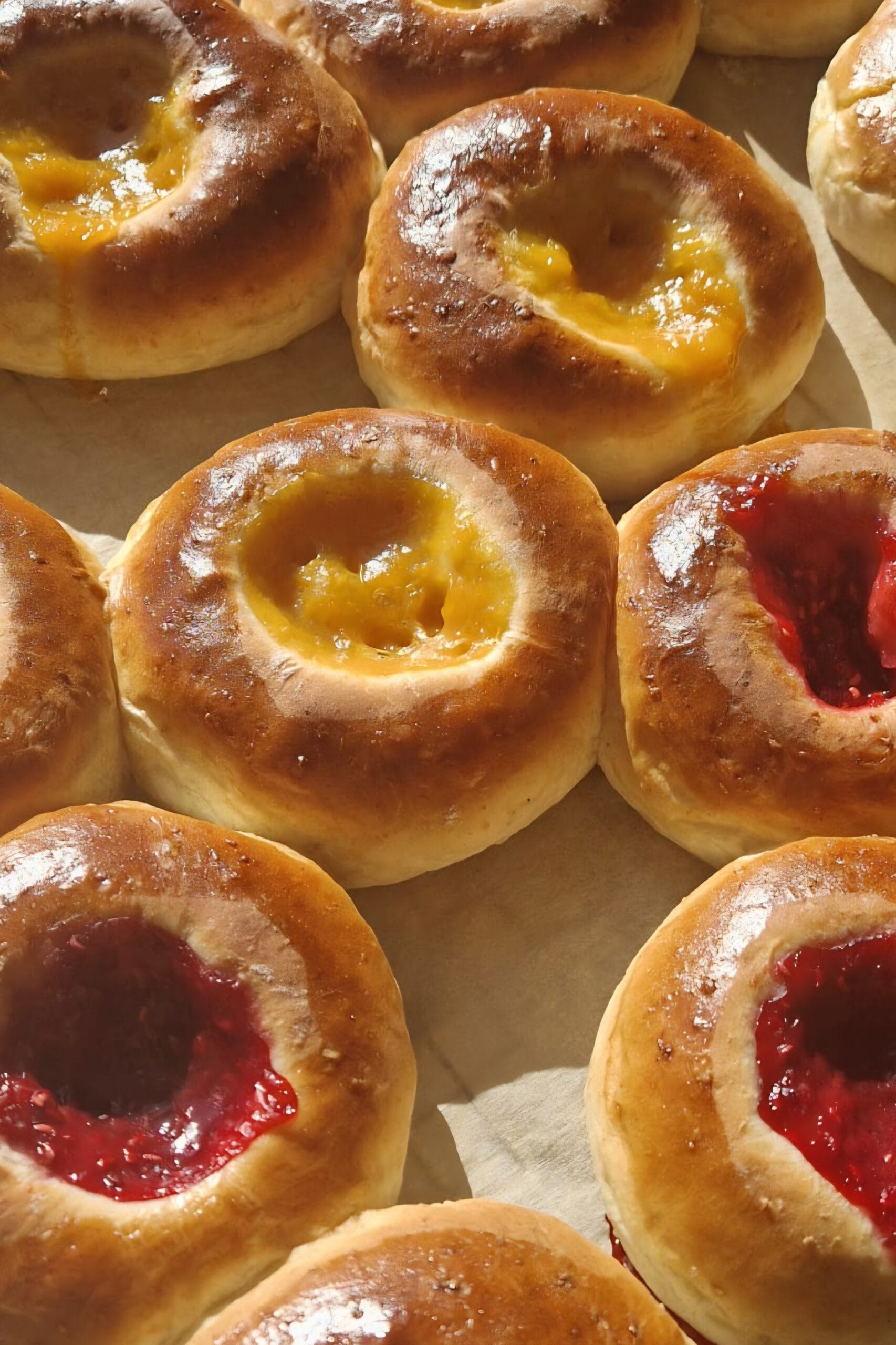
These soft jam filled buns are what we bake when there’s leftover jam in the fridge and a free afternoon — a cardamom-scented sweet dough, a deep well pressed into each bun, and a spoonful of raspberry or apple jam baked right in. The dough is made with tangzhong, so the crumb stays tender for days rather than hours. Brushed with sugar syrup straight from the oven, they come out glossy and bakery-bright.
Jam Filled Buns with Cardamom
Ingredients
Equipment
Method
- Cook the paste. Whisk the flour and milk together in a small saucepan until smooth. Cook over medium heat, stirring constantly, until it thickens into a soft paste — this happens around 149°F (65°C). It doesn't need to boil.
- Cool it. Scrape it into a bowl and let it cool to room temperature. Don't skip this: warm tangzhong will kill the yeast and slacken the dough.
- Combine. Put the cooled tangzhong in the mixer bowl with the flour, sugar, cold milk, cardamom, salt and the egg if you're using one. Crumble the fresh yeast straight in.
- First knead. Knead on low, then medium, for 7–10 minutes until the dough comes together and starts to pull away from the sides.
- Add the butter. Add the cubed cold butter a few pieces at a time and keep kneading. Total kneading time is 15–20 minutes.
- Check the gluten. Pull off a small piece and stretch it between your fingers toward the light. When it stretches into a thin, translucent film without tearing, it's ready. If it tears short, keep kneading.
- Cover the bowl (a plastic bag over the whole bowl works best) and leave somewhere warm until doubled, about 1 hour.
- Divide the dough into 14 pieces of about 75 g each. Roll each into a tight round and place on parchment-lined sheet pans, leaving space between them.
- Cover and prove for 35–45 minutes, until visibly puffy.
- Rise. Cover the bowl (a plastic bag over the whole bowl works best) and leave somewhere warm until doubled, about 1 hour.
- Shape. Divide the dough into 14 pieces of about 75 g each. Roll each into a tight round and place on parchment-lined sheet pans, leaving space between them.
- Proof. Cover and proof for 35–45 minutes, until visibly puffy.
- Preheat. Heat the oven to 425°F (220°C), conventional (top and bottom heat).
- Press the wells. Now — and not before — press a deep well into the center of each bun with your fingers, right down toward the base but not through it. Widen it more than looks necessary; the dough springs back in the oven.
- Fill. Spoon 1 tablespoon of jam into each well — one flavor per bun rather than mixing them. Brush the exposed dough around the edge with beaten egg, keeping it off the jam.
- Bake. Bake for 7–12 minutes, until deep golden. Watch them closely at this temperature — they color fast.
- Make the syrup. While they bake, bring the sugar and water to a boil, stir until clear, and take off the heat.
- Glaze. Brush the hot buns with the syrup as soon as they come out of the oven. Cool on a rack.
Notes
- Fresh vs. dry yeast: we bake with fresh yeast, which is standard in Nordic kitchens but hard to find in the US. Swap in 7 g (2¼ tsp) instant yeast — add it with the dry ingredients rather than crumbling it in, and don’t change anything else.
- Use thick jam. A loose, runny jam will boil over the edge and caramelize on the tray. Homemade jam cooked to a proper set, or a thick store-bought preserve, stays where you put it.
- Salted butter? Drop the added salt to a good pinch.
What tangzhong actually does
Tangzhong is an Asian bread technique — developed in Japan, where it’s called yudane, and spread widely under its Chinese name. You cook a small portion of the flour with milk into a thick paste before it ever meets the yeast. Gelatinizing the starch that way lets the dough carry more liquid than it otherwise could, and that water stays locked in the baked crumb.
The practical result is a bun that’s noticeably softer on day one and still good on day two — the difference between a bun you eat warm because you have to and one you’re happy to find the next morning. It’s the same method we use for our julekake and lussekatter, and it earns its five minutes every time.
Tips for Jam Filled Buns: Getting the Wells Right
The most common way these go wrong is a shallow well. Press it after the second rise, not before, and go deeper and wider than feels right — almost down to the base. Sweet dough has real spring in a hot oven, and a timid dent will close up around the jam and push it out over the side.
One tablespoon per bun is the sweet spot. More than that and it overflows; less and the jam disappears into the crumb.
Make them your own
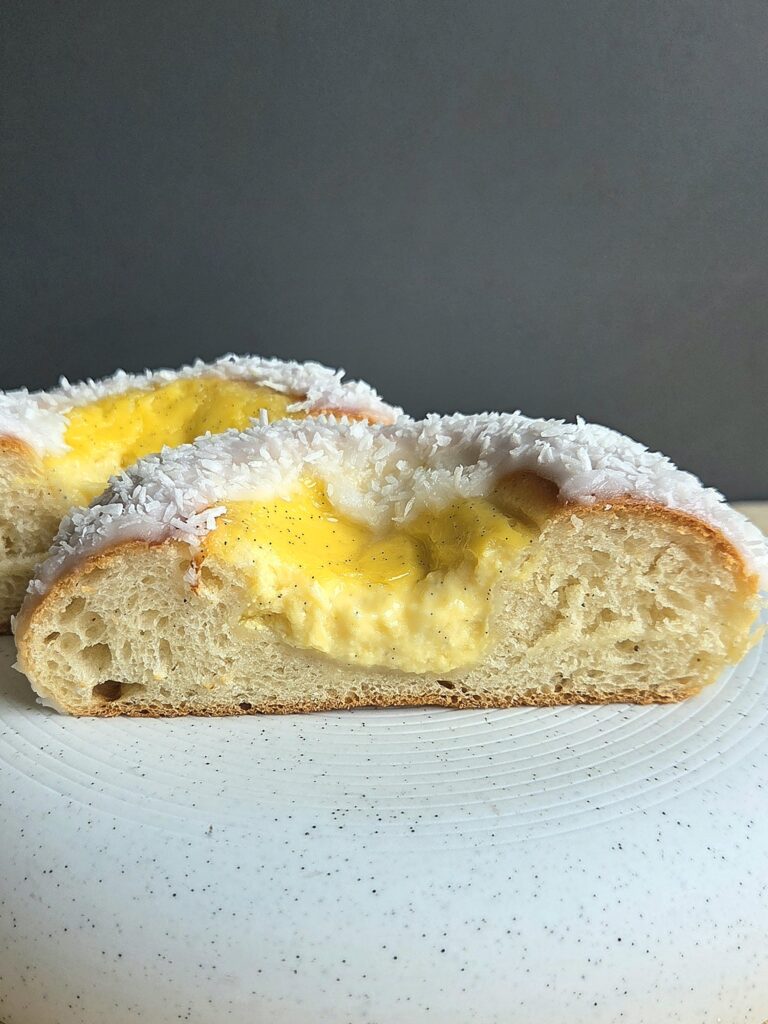
Any thick jam works. We fill half the batch with raspberry and half with apple — one flavor per bun, never mixed, which also makes them easy to tell apart on the tray. Blackcurrant, plum and lingonberry are all excellent here. For a bakery-style finish, add a spoonful of thick vanilla custard alongside the jam — the custard from our skolebrød works perfectly — or scatter pearl sugar over the egg-washed edge before baking.
More Nordic bakes you’ll love
- Cinnamon Knots with Cardamom — the same glossy sugar syrup finish, on a twisted cardamom bun
- Cardamom Cinnamon Rolls with Cream Cheese Frosting — soft rolls baked close together in a pan
- Norwegian Rye Buns with Anise (Laup) — a lightly sweet everyday bun, built for butter and brown cheese