Pepperkaker — Crisp Norwegian Gingerbread Cookies
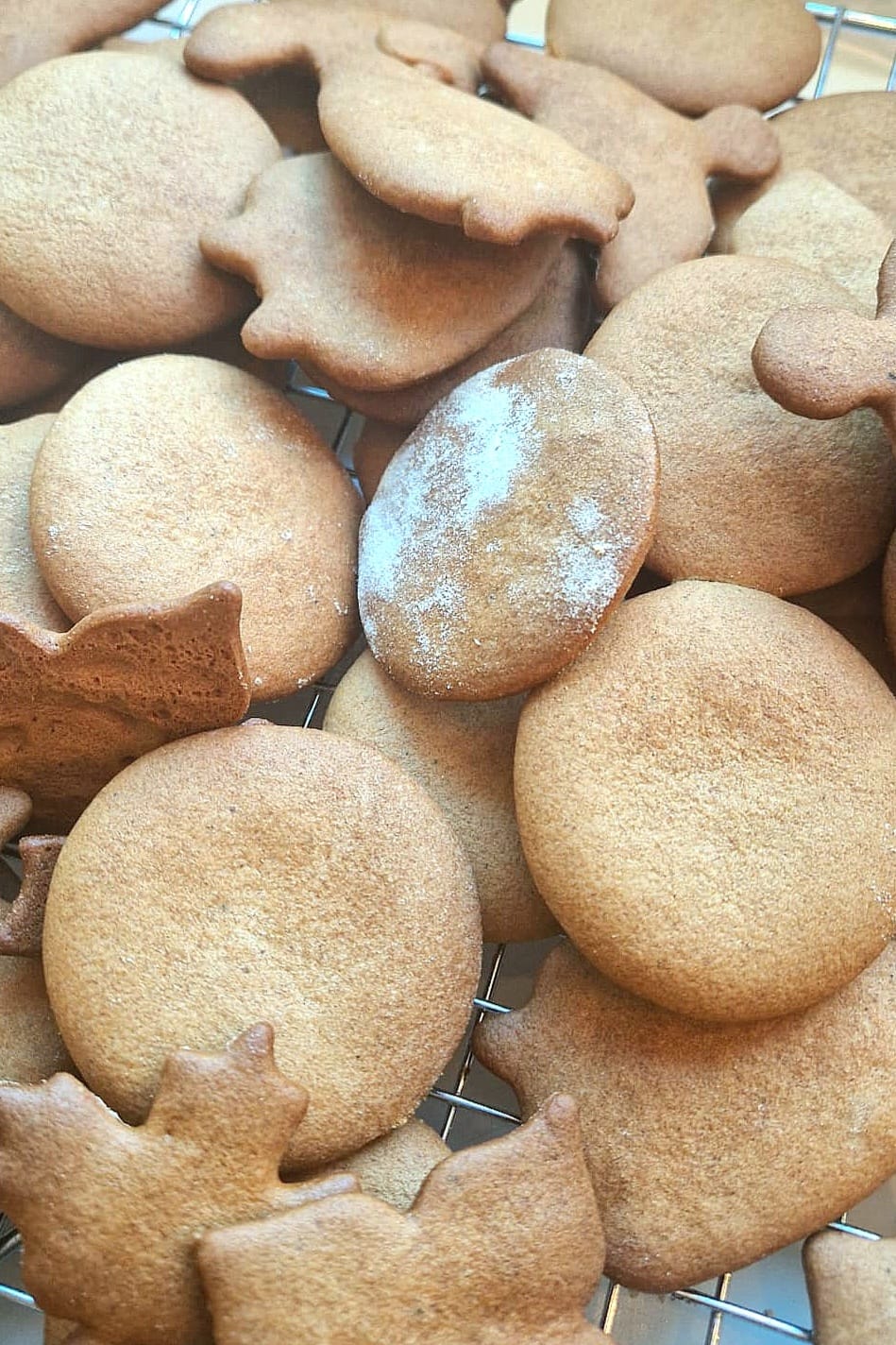
Pepperkaker are the crisp, dark gingerbread cookies at the center of a Norwegian Christmas — snappy, heavily spiced, and made in batches big enough to last the whole season. They’re one of the syv slag, the seven sorts of Christmas cookies baked in Norwegian homes every December. This is our kitchen recipe: a boiled syrup base, baking soda dissolved in cognac, and an overnight rest that deepens the spice before the dough ever hits the oven. Roll them thin and they break with a clean, sharp snap.
Pepperkaker — Crisp Norwegian Gingerbread Cookies
Ingredients
Equipment
Method
- Make the syrup. Combine the brown sugar, golden syrup and water in a large heavy saucepan. Bring to a boil, stirring until the sugar has dissolved completely. Take it off the heat.
- Mix the dry ingredients. Whisk the flour, ginger, pepper, cinnamon and cloves together in a separate bowl.
- Add the soda. Stir the baking soda into the cognac in a small glass until dissolved, then pour it into the hot syrup. It will foam up dramatically — this is exactly what should happen. Stir it down.
- Into the mixer. Pour the warm syrup into the bowl of a stand mixer fitted with the paddle. Add the dry ingredients and mix on low until combined. The mixture will be thick and dark.
- Add the butter. Pour in the melted butter and keep mixing on low until the dough has cooled to room temperature — this is what brings it together into a smooth, workable dough rather than a greasy one.
- Rest overnight. Cover the bowl and refrigerate at least 12 hours.
- Preheat. Heat the oven to 400°F (200°C). Line your baking sheets with parchment.
- Work in small pieces. Cut off a piece of dough about the size of a fist and keep the rest in the fridge — cold dough rolls thin without tearing.
- Roll thin. Roll out on a lightly floured surface to 2–3 mm — thin enough that you can almost see the counter through it. This is what makes pepperkaker snap instead of bend.
- Cut. Cut out your shapes and transfer them to the lined sheets, leaving a little space between them.
- Bake a test sheet. Bake a test sheet first. Put four or five cookies on a sheet on their own and watch them closely from around 6 minutes. This is the step that saves the batch: 2 mm bakes noticeably faster than 3 mm, and home ovens run hot or cold by 20°F (10°C) without telling you. Let the test cookies cool completely before you judge them — they are meant to feel soft coming out of the oven and firm up on the rack. Snap one. If it bends, they need another minute; if the edges have gone bitter, pull them earlier.
- Bake the rest. Bake the rest in batches at the time your test sheet gave you, until the edges have darkened a shade and the surface looks dry and matte.
- Cool on a rack. Let them sit on the sheet for a minute, then move them to a wire rack. They crisp as they cool.
- Store. Store completely cool in an airtight tin.
Notes
- Substitutes for the cognac: brandy or dark rum work directly. For an alcohol-free version, use the same volume of strong brewed coffee or water.
- About the sugar: the Norwegian original is brun farin, which is darker than American light brown sugar. Dark brown sugar is the right substitute. Skip muscovado — it buries the cloves and pepper.
- About the syrup: Norwegian lys sirup is closest to golden syrup; light corn syrup works too. Dark syrup or molasses gives a much darker, more bitter cookie.
- Measure the spices level. A full teaspoon of black pepper is the right amount — heaped, it tips from warm to harsh.
- Half batch: 213 g dark brown sugar, 37 ml syrup, 75 ml water, 350 g flour, ½ tsp of each spice, 1 tsp baking soda, 25 ml cognac, 133 g butter.
- Make ahead: the dough keeps a week in the fridge and freezes well. Baked, they keep at least a month in an airtight tin.
What makes a pepperkake different from gingerbread
The name gives it away. Pepper is not decorative here — there is a full teaspoon of ground black pepper in the dough, and it sits behind the ginger and cloves as a low, warm heat rather than anything sharp. Norwegian pepperkaker are also thinner and drier than most American gingerbread: not a chewy cookie, but a brittle one, built to keep for weeks in a tin.
These are crisp, not chewy
Worth knowing before you start: Norwegian pepperkaker are thin and brittle. They snap. If you are expecting the soft, chewy gingerbread cookie common in American holiday baking, this is a different cookie entirely.
The thick, soft, honey-sweetened version belongs to the Central European tradition — German Lebkuchen and its relatives, which Norwegians know separately as honningkake. Related family, different bake. In Norway, a pepperkake rolled thick enough to be chewy would simply be considered underrolled.
That thinness is the whole design. It is what lets them hang on a tree, keep for a month in a tin, and stand up to a piece of blue cheese without going soggy.
One real variation does exist. Many Norwegian recipes use hjortetakksalt — baker’s ammonia — in place of or alongside baking soda. It gives a drier, more shattering crispness and smells sharply of ammonia while baking, which alarms people the first time. It bakes off completely; we explain why in our sveler recipe. This recipe uses baking soda alone and gets its snap from the thin roll and the butter instead.
One real variation does exist. Many Norwegian recipes use hjortetakksalt — baker’s ammonia — in place of or alongside baking soda. It gives a drier, more shattering crispness and a slightly more open cookie, and it smells sharply of ammonia while baking, which alarms people the first time. It bakes off completely. This recipe uses baking soda alone and gets its snap from the thin roll and the butter instead.
The step most recipes skip
Baking soda goes into the cognac, not the flour.
It dissolves completely in the alcohol, then goes into the hot syrup where it foams up and works through the entire batch at once. Stirred into flour instead, it never disperses as evenly, and you get pale patches and the faint soapy note that ruins an otherwise good pepperkake. It is a small step and it takes thirty seconds, but it is the difference between a good batch and a reliable one.
The butter is the other thing worth pointing out. There is 265 g of it to 700 g of flour, which is richer than a standard pepperkake dough, and it goes in after the flour rather than melting into the syrup at the start. You stir it through as the dough cools, and what you get is a short, tender crumb that breaks cleanly instead of the hard, dry snap most people remember. Rolled thin, that richness is exactly what keeps them crisp without turning them into planks.
The overnight rest does the other half of the work. The spices bloom into the fat and sugar, the dough firms up enough to roll paper-thin, and the flavor on day two is noticeably rounder than on day one.
Roll them thinner than feels right
Aim for 2–3 mm. It feels too thin while you are doing it, and it is not.
Work with one fist-sized piece at a time and keep the rest of the dough in the fridge — cold dough rolls out cleanly, warm dough tears and sticks. If a sheet gets soft while you are cutting shapes, slide it back in the fridge for a few minutes rather than fighting it with more flour.
They come out of the oven still soft. That is correct. The snap arrives as they cool on the rack.
Which is exactly why the first sheet should be a test. Bake four or five on their own, let them cool completely, and snap one. Eight minutes at 400°F (200°C) is the starting point, but your thickness and your oven decide the real number — and you only find it out after the cookie is cold. One test sheet costs you five minutes and tells you what the remaining hundred need.
How Norwegians eat pepperkaker
Most of the time, plainly. A pepperkake with coffee, straight from the tin, no icing — that is the everyday version, and it is what most of the batch is for. The decorated ones come out for the tree and for children.
The other setting is gløgg: Norwegian mulled wine, and the drink most associated with pepperkaker outside the home. At Christmas markets and at juleavslutning — the end-of-term gatherings held in schools, workplaces and clubs through December — a cup of gløgg and a plate of pepperkaker is the standard offering. It is served alcohol-free where children are present, and made with red wine, and often a measure of spirits, for adults. The spice in the drink and the spice in the cookie are working from the same palette, which is exactly why it lands.
But there’s one pairing worth trying that has become a favorite among adults: pepperkaker with blue cheese.
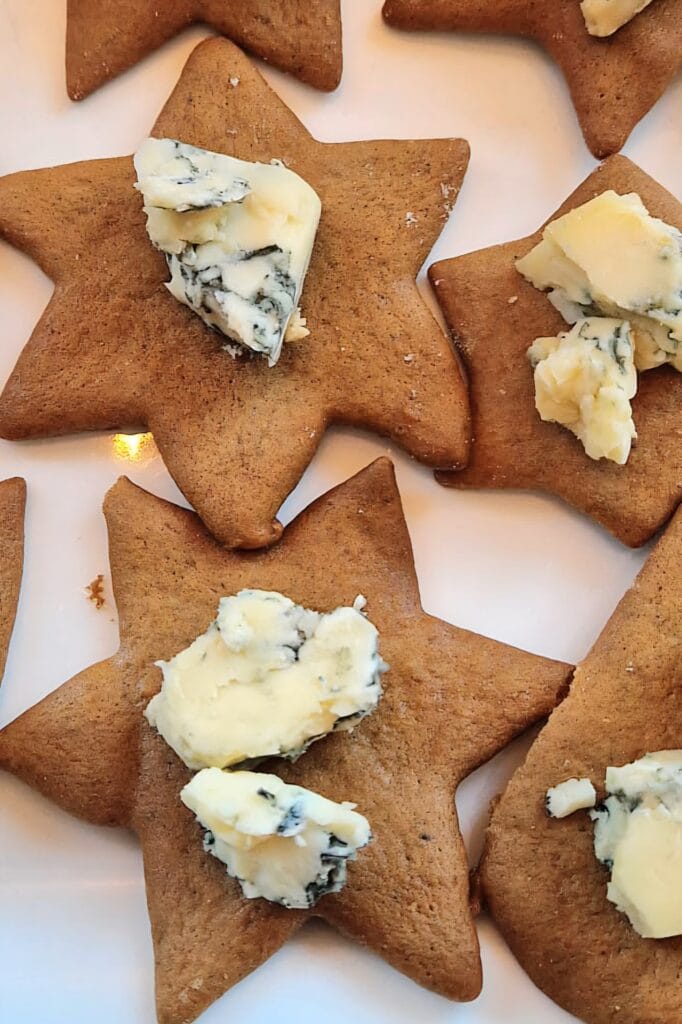
A piece of Stilton or a good Norwegian blue on a plain pepperkake, usually a star. No icing, nothing else. It sounds odd written down and it makes complete sense in the mouth — the salt and funk of the cheese cut straight through the sugar and the cloves, the same way a spiced chutney works on a cheese board. This isn’t old tradition; it’s a newer habit that caught on because it works.
If you want to try it, set aside a handful of undecorated shapes and serve them at room temperature with the cheese soft. Pour port rather than gløgg here — the cheese needs the acidity and length behind the sweetness, and gløgg is too spiced to meet the salt. Coffee stays with the plain cookies.
Make it your own
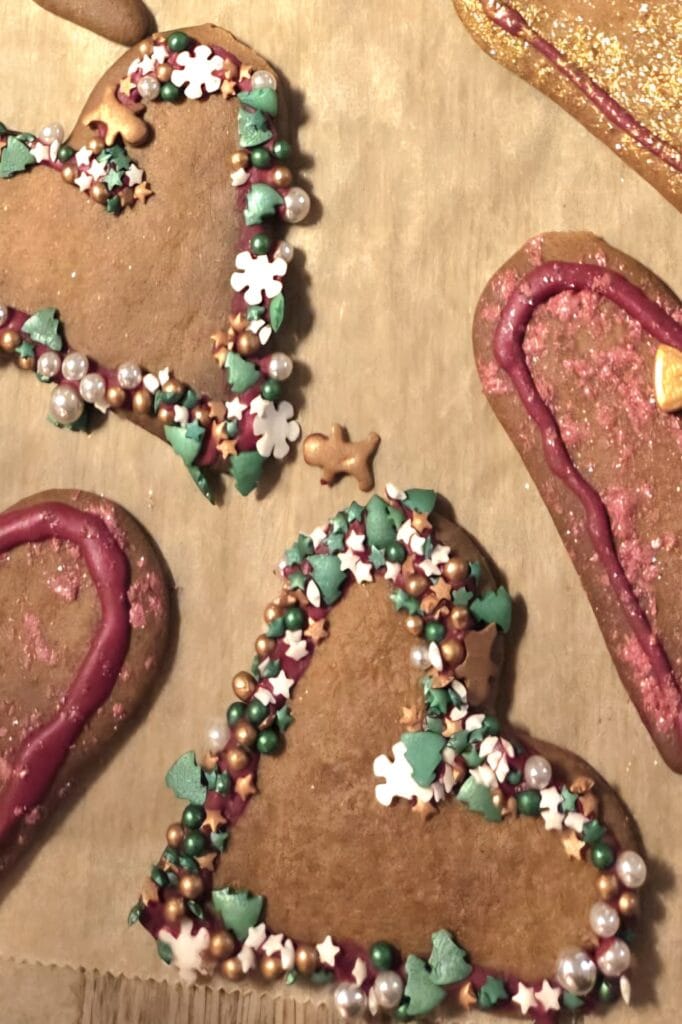
Decorated pepperkaker are their own tradition, and the icing matters more than it looks like it should.
Use a thick royal icing — egg white whisked with powdered sugar until it holds a firm ribbon, stiff enough to pipe a line that stays where you put it. A thin, runny glaze soaks into the cookie and softens it from the inside out. In the US, meringue powder in place of raw egg white gives the same result and is what most bakers reach for.
Then let it cure properly. The iced cookies need to sit uncovered at room temperature until the icing is completely hard all the way through — several hours, and overnight is better. Pack them before that and the trapped moisture goes straight into the cookie. This is the single most common reason a batch of crisp pepperkaker turns soft by Christmas Eve.
The same rule applies to anything else you put on top. Sprinkles, sugar pearls and dragées are fine because they are dry. Anything with moisture in it — fresh fruit, soft caramel, marzipan pressed on top — will soften the cookie underneath within days. Save those for cookies you plan to serve the same day.
Punch a small hole near the top before baking if you want to hang them on the tree. And if you want a second cookie that keeps just as long in a tin, our brune pinner are the other early bake we lean on.
More Nordic bakes you’ll love
- Krumkake — Norwegian Waffle Cookies — rolled thin and crisp on a patterned iron
- Sandnøtter — Norwegian Christmas Butter Cookies — tender, crumbly and pale, the opposite of a pepperkake
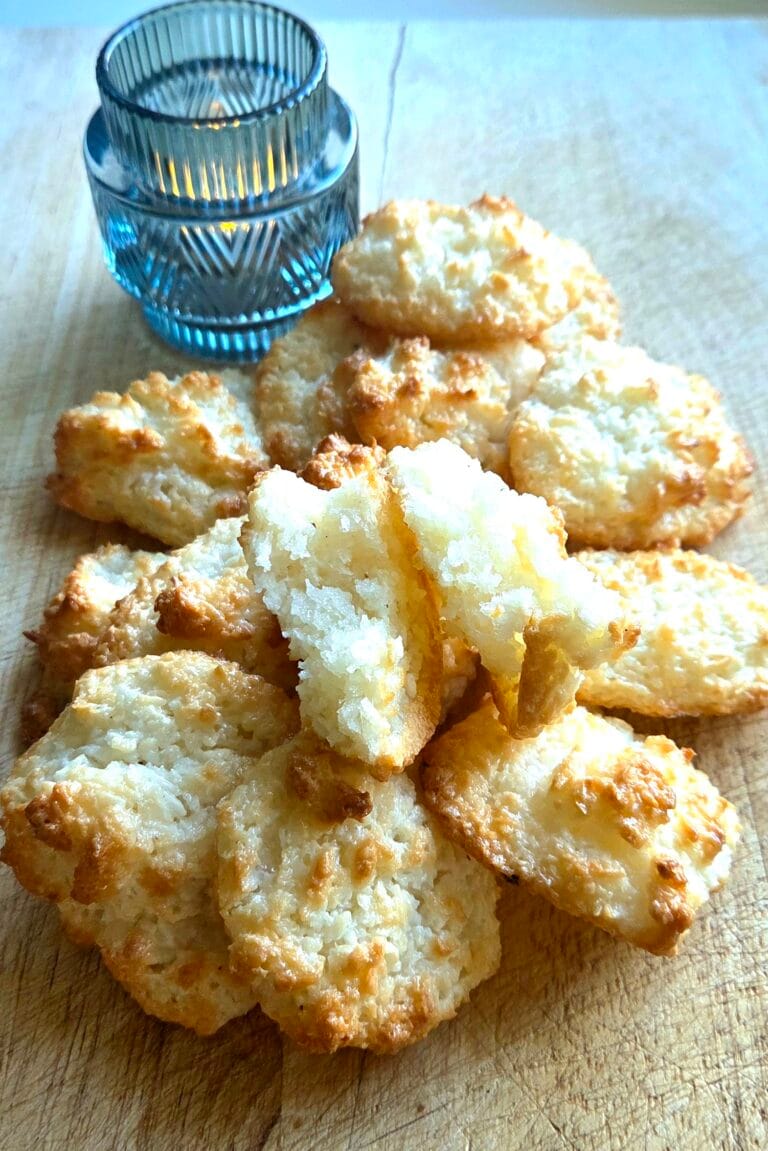
- Norwegian Coconut Macaroons (Kokosmakroner) — the easiest of the syv slag, with no rolling at all