Cheese Scones with Jarlsberg
These cheese scones are the savory bake we make more than any other — soft, cheesy and on the table in under an hour. We make ours with Jarlsberg, but any firm cheese you like works just as well. They started as the bread we served alongside starters in our kitchen and became the standard for breakfast, soup nights and anything that needs bread alongside it. No rising, no kneading, one bowl.
Cheese Scones with Jarlsberg
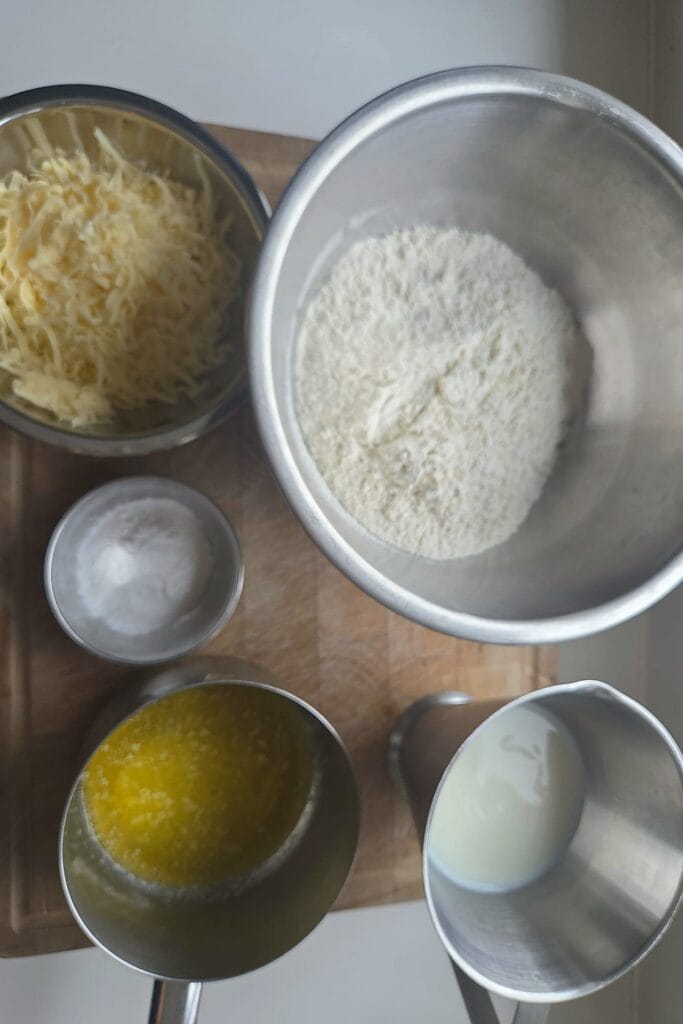
Ingredients
Equipment
Method
- Preheat. Heat the oven to 350°F (175°C), conventional heat — top and bottom elements, not fan. Line a baking sheet with parchment.
- Butter into milk. Melt the butter, then stir it straight into the cold milk. The mixture will look slightly separated — that's fine.
- Dry ingredients. Whisk the flour, baking powder and salt together in a large bowl.
- Mix. Pour the milk and butter over the dry ingredients and mix just until it comes together into a shaggy, soft dough.
- Fold in the cheese. Add the grated Jarlsberg and fold it through with a few turns. Stop as soon as it's distributed — this is the step where scones get tough.
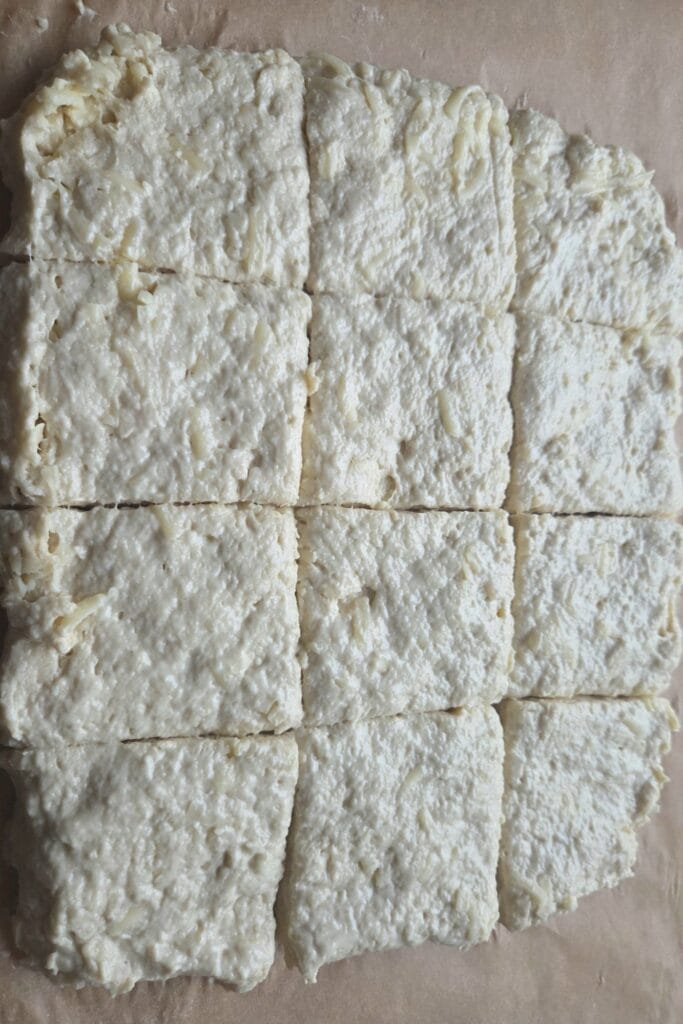
- Pat out. Tip the dough onto the parchment and pat it out to a rough 10 × 12 inch (25 × 30 cm) square, about ¾ inch (2 cm) thick. Use a bench scraper to square off the edges.
- Cut. Cut into 12 squares straight on the sheet, leaving them where they are so the sides stay soft and touching.
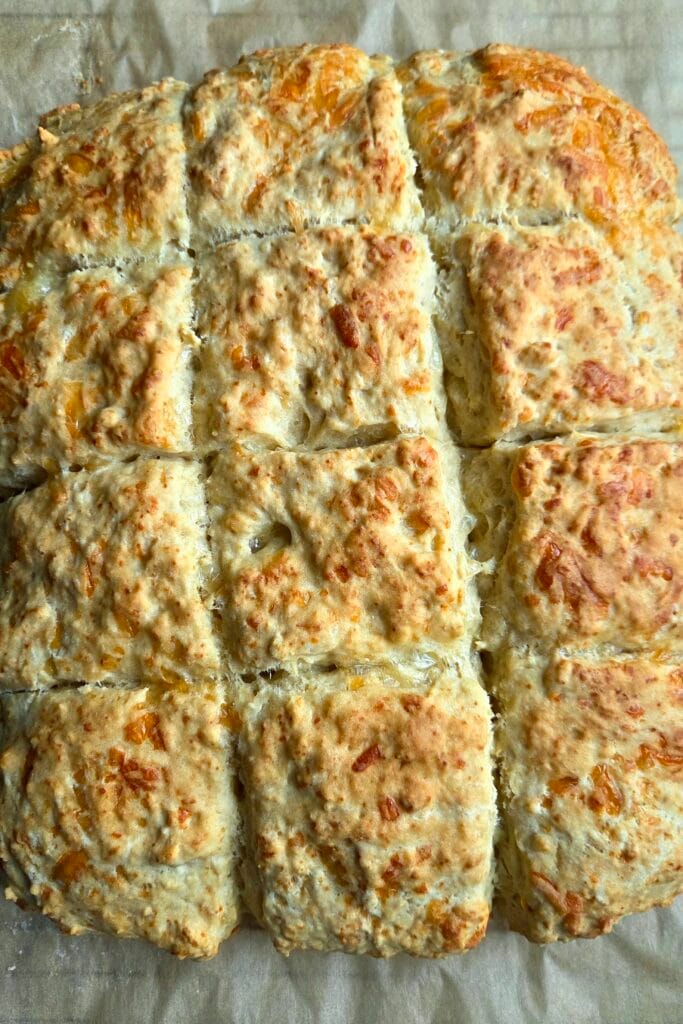
- Bake. Bake for 30 minutes, until golden and puffed with visible cheese browning on top.
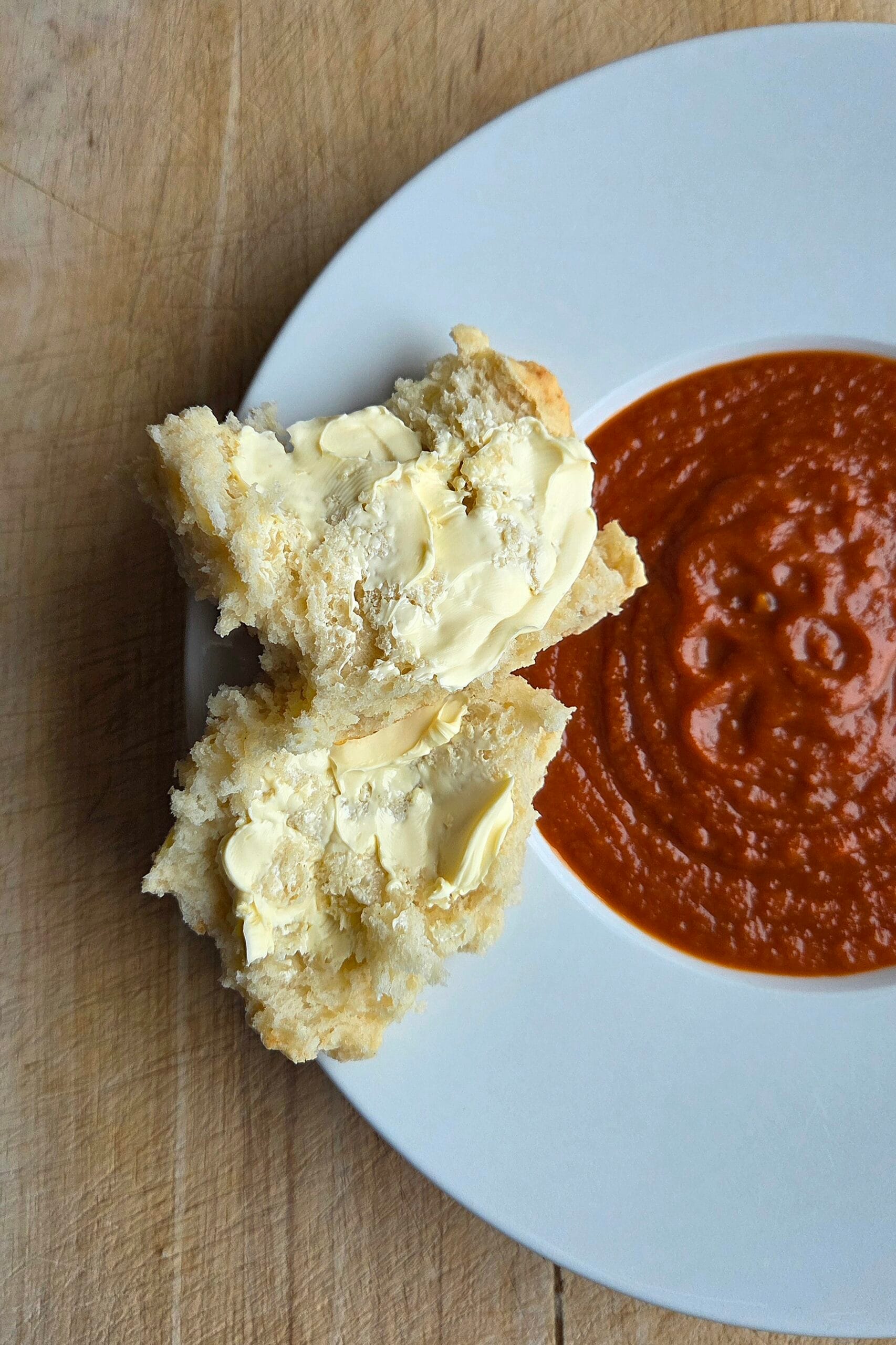
- Cool and serve. Cool on the sheet for 10 minutes, then pull apart and serve warm with butter.
Notes
- Grate the cheese coarsely yourself. The bigger shreds stay visible in the crumb and brown into crisp edges on top. Bagged pre-shredded cheese is cut fine and coated in starch, and it melts into the dough instead of browning.
- Any firm cheese works at the same weight — see the post below for our favorites.
- Storage: best the day they’re baked. Reheat in a 300°F (150°C) oven for 5 minutes to bring back the soft crumb; the microwave makes them chewy. They freeze well — reheat straight from frozen for 10 minutes.
Why Jarlsberg works so well here
Jarlsberg is the Norwegian cheese most Americans already recognize — mild, nutty, faintly sweet, with a melt that stays creamy instead of turning greasy. That sweetness is what makes these scones taste like more than “cheese bread,” and it’s the same reason we fold it into our caramelized onion sourdough. That said, this isn’t a recipe that depends on it. Aged Gouda, a sharp cheddar, Gruyère or Comté all work. The rule is simple: use a firm cheese you’d happily eat a slice of on its own, and grate it coarsely yourself.
Why melted butter, not cold butter
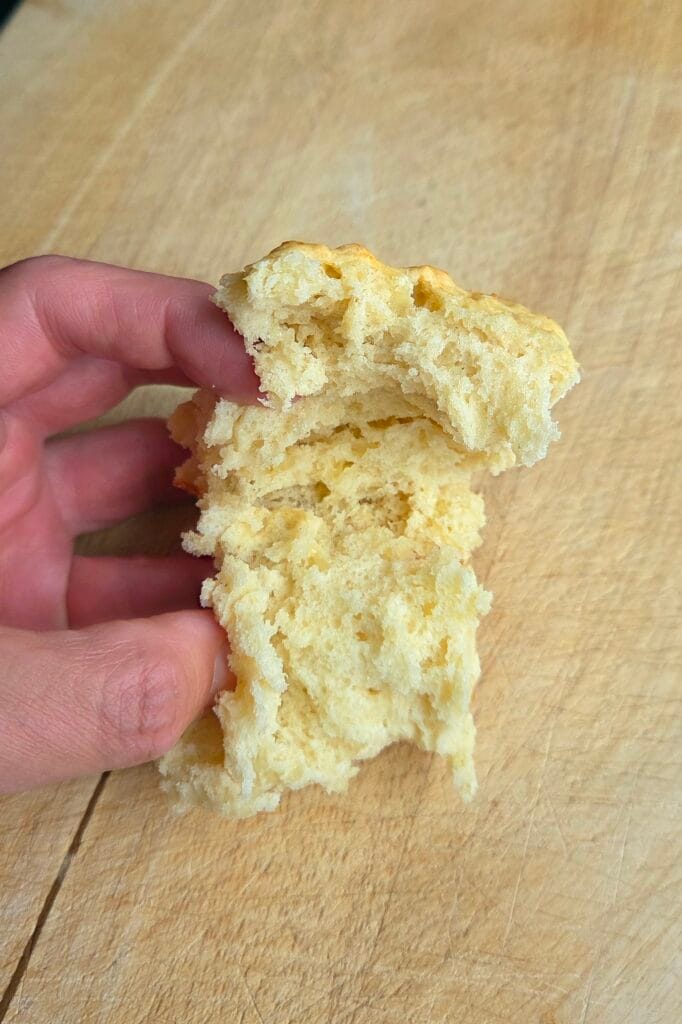
Classic scones rely on cold butter rubbed into flour to build flaky layers. We melt it and stir it into cold milk instead. You lose the flakiness and gain something better for this job: a soft, bready crumb that pulls apart in sheets and holds butter without falling to crumbs. It also means the dough comes together in about five minutes with nothing but a bowl and a spoon.
Don’t work the dough
This is the only part that can go wrong. The dough should look shaggy and slightly wet, and it should feel like you stopped too early. Mix just until the flour disappears, fold the cheese through with a few turns, and stop. Every extra turn builds gluten, and gluten in a scone means dense and rubbery instead of light.
Cut them before they bake
We pat the dough into a rough square, cut it into 12 pieces on the parchment, and bake it as one slab — the same tray method as our oat scones. The pieces rise into each other, so the sides stay soft and steamy while the tops go golden and the cheese browns. You pull them apart at the table. If you’d rather have crisp sides all around, space them an inch apart before baking.
What to serve them with
Warm with cold butter is the whole point. A bowl of tomato soup and two of these, still warm, is a full dinner in our house on a weekday. Beyond that: alongside a stew, split and filled with ham and mustard, or as a bread basket for a starter next to a few slices of Danish rye bread. They’re also good under a fried egg for breakfast.

Make it your own
- Herbs: a tablespoon of chopped chives or thyme folded in with the cheese.
- Heat: a teaspoon of coarse mustard or a pinch of cayenne in the milk.
- Sharper: swap half the Jarlsberg for a mature cheddar — you keep the melt and gain bite.
More Nordic bakes you’ll love
- Oat Scones — Soft Norwegian Tray Scones — the sweet-leaning sister, baked the same way in one slab
- Sourdough Scones with Whole Wheat — when you’d rather put your starter to work
- Savory Waffles with Smoked Salmon — another savory everyday bake for lunch