Caviar Dip with Sourdough Chips
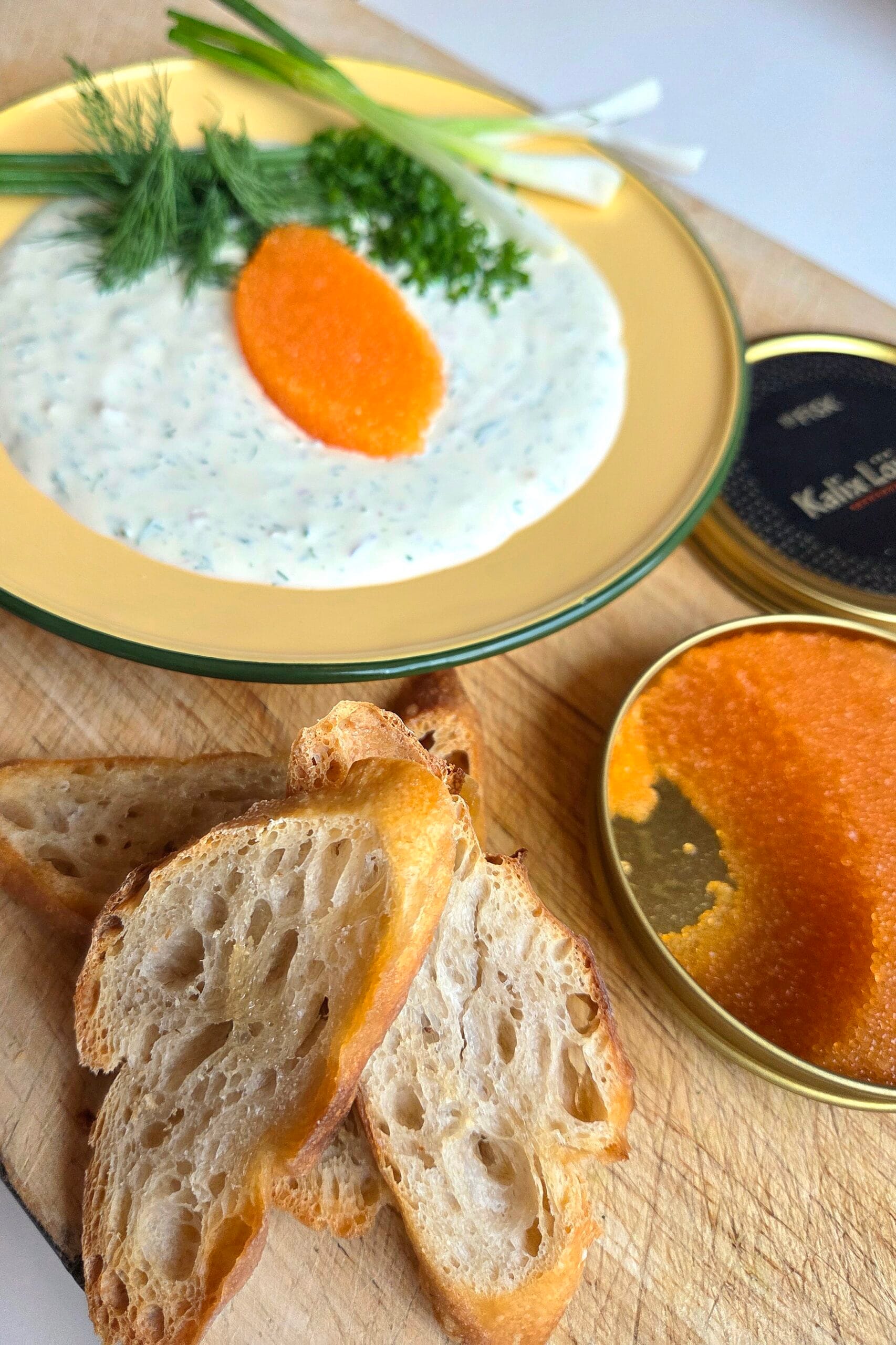
This caviar dip is what we make when there’s leftover sourdough and something worth celebrating: cold sour cream with dill and shallot, roe spooned into the middle, and thin sourdough chips baked until they snap. The roe is what lifts it from a good snack into something people remember — and it works just as well with a modest tin as with the expensive stuff.
Caviar Dip with Sourdough Chips
Ingredients
Equipment
Method
- Preheat. Heat the oven to 340°F (170°C).
- Slice thin. Slice the baguette on a slight angle into thin slices, about ⅛ inch (3–4 mm). Thin is what makes them snap rather than crunch.
- Oil and salt. Lay the slices in a single layer on a parchment-lined sheet pan, drizzle lightly with oil over one side only, and sprinkle with Maldon salt. Don't overlap them — the salt should land while the oil is still wet so it holds.
- Bake. Bake for 12–18 minutes, until golden and dry all the way through. Rotate the pan halfway if your oven runs uneven. Timing varies a lot with how stale the bread is, how thick you cut it and how your oven runs — go by the chip, not the clock.
- Snap test. Test one before you take the tray out: break it in half. It should snap cleanly. If it bends at all, give it a few more minutes. Cool on a wire rack.
- Make the cream. Stir the sour cream with the shallot, dill and black pepper. No salt. Let it sit for 10 minutes so the shallot softens into the cream.
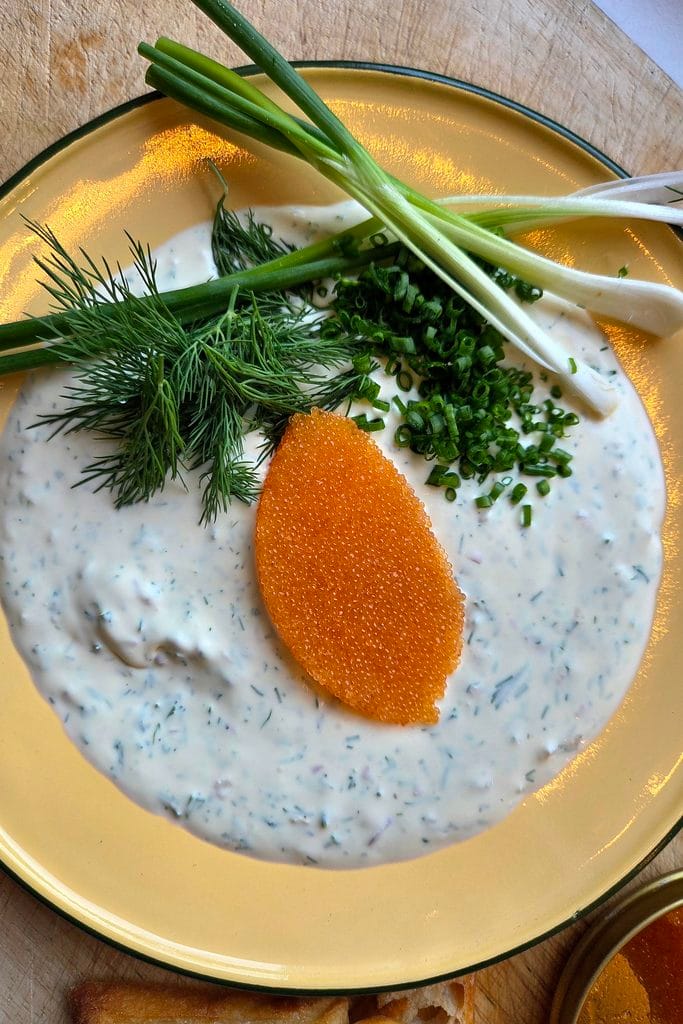
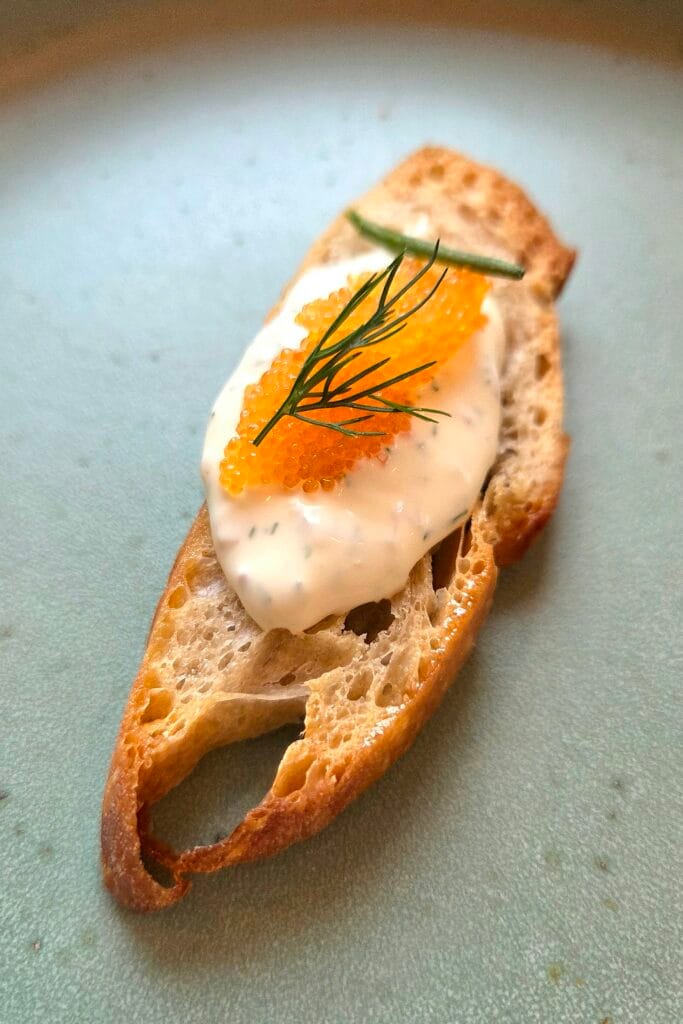
- Serve one of two ways. As a dip: spread the cream in a shallow bowl or on a plate and spoon the roe into the middle, so every scoop picks up both. As a plated appetizer: bring the cream, the chips and a small bowl of roe over ice to the table and let people build their own — a chip, a spoonful of cream, roe on top. Finish either version with chives.
Notes
- No roe? Salt the cream lightly to compensate.
- Storage: chips keep airtight at room temperature for about 5 days. The cream is best the same day. Once opened, roe should be eaten within two days.
Roe at any budget
This is the rare dish that works just as well at both ends of the price range. The chip and the cream are neutral by design — they carry whatever you put on top rather than competing with it. Spend what you want to spend.
We made this with Kalix löjrom, the vendace roe from the northern Baltic that carries a protected designation in Sweden: fine-grained, mild and faintly nutty. It’s more or less impossible to buy outside Scandinavia, which is fine, because the dish was never about that specific tin.
What each type brings:
- Sturgeon caviar — the most delicate flavor of the lot, nutty and long. If you have a tin worth saving, this is a good way to serve it: nothing here gets in its way.
- Trout roe — medium beads, clean and lightly briny, with a firm pop. Widely available at a decent fish counter.
- Whitefish roe — small golden beads, mild and crisp. Sold in the US as American golden whitefish caviar and the closest thing to löjrom you’ll find there.
- Salmon roe — large, glossy beads that burst rather than pop. Bolder and oilier, and visually the most striking on a chip. Use fewer per chip.
- Lumpfish roe — tiny, firm and properly salty, and a familiar sight on Danish and Icelandic tables. Rinse briefly and drain if the dye bleeds.
Three and a half ounces (100 g) is generous for six as an appetizer, and half that still works — you just spoon a little less onto each chip.
Two ways to serve a caviar dip
There are two ways to put this on the table, and the difference is really about portioning.
As a dip, spread the cream out in a shallow bowl or on a plate and spoon the roe into the middle. Every scoop then picks up cream and roe together, and the roe is already divided evenly — nobody has to judge how much to take. This is what we do when people are standing around a board with a drink in hand, and it’s the right choice if the roe was expensive.
As a plated appetizer, keep them separate: the cream in one bowl, the roe in another set over ice, chips alongside. People build their own. It gives everyone control over how much roe goes on each chip, which is what you want when they’re sitting down.
Beyond that, roe is easy to ruin in small ways. Three things worth knowing:
Keep it cold. Set the tin or a small bowl over ice on the table. Roe left at room temperature for an hour goes soft and loses its snap.
Skip the metal spoon. Steel gives roe a faint metallic edge that’s hard to unhear once you’ve noticed it. Mother-of-pearl is the traditional answer and costs very little; bone, horn or even plastic all work.
Lift, don’t stir. Scoop from the side and place it — dragging a spoon through crushes the eggs and you lose the pop that you paid for.
Why leftover sourdough makes the best chips
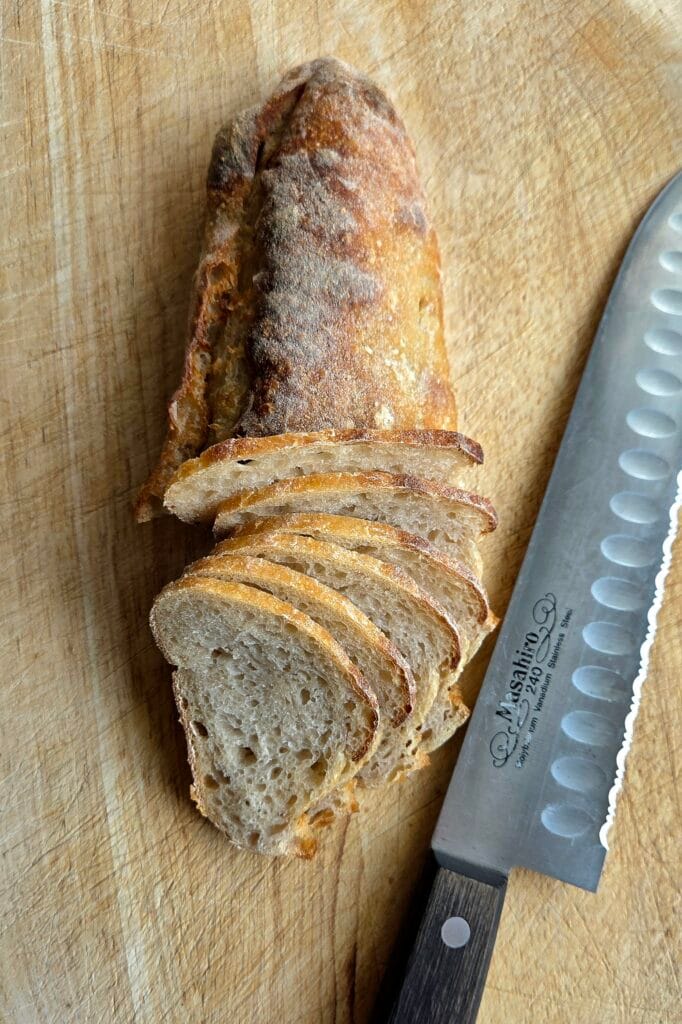
A fresh loaf fights you. The crumb is soft and damp, the knife drags, and the slices come out uneven and thick. Bread that’s a day or two old slices clean and thin, and because it has already lost moisture it crisps faster and more evenly.
A baguette is ideal because the slices come out small and snackable, but any leftover sourdough works. Cut on a slight angle for a longer slice with more surface — better for scooping, and it holds a spoonful of cream without tipping.
Our sourdough baguettes have a little whole grain in them, which gives the chips a nuttier, less neutral flavor — good with roe, and worth knowing if you’re baking specifically for this. For something closer to a white loaf, use the dough from our beginner sourdough bread and shape it into baguettes instead.
Aim for 3–4 mm. Any thicker and the center stays leathery no matter how long you bake.
Oil one side only, drizzled rather than brushed. Both sides is too much fat for something this thin — it goes greasy instead of crisp, and the underside is already sitting on a hot pan.

One thing worth knowing about the timing: these are done when they’re done, and the range is wide. Stale bread bakes faster than day-old, thin slices faster than thick, and ovens vary more than anyone admits. So test rather than trust the clock — break a chip in half and look for a clean snap. And don’t leave them in hoping they’ll firm up on the rack. There’s no sugar in this bread to set as it cools, so unlike a cookie, they crisp in the oven or not at all.
Why the cream stays plain
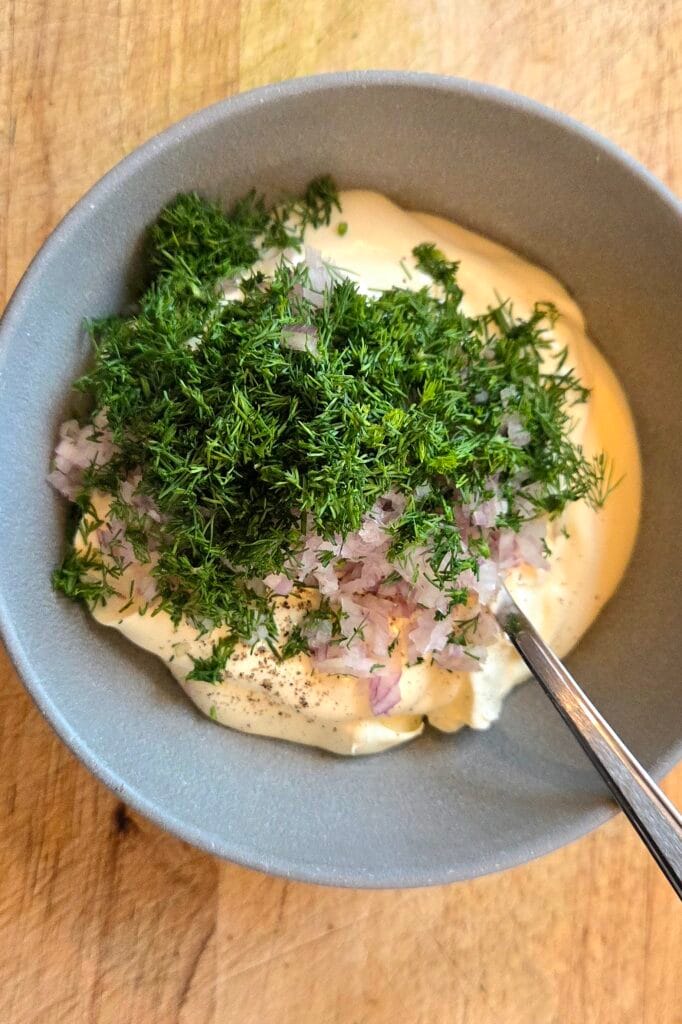
Sour cream, finely chopped shallot, plenty of dill, black pepper. No salt.
That’s deliberate. The chips are salted with Maldon before baking and the roe brings its own clean saltiness, so the cream’s job is to be cold, herby and neutral — the thing that carries the roe rather than competes with it. Season it and everything flattens out.
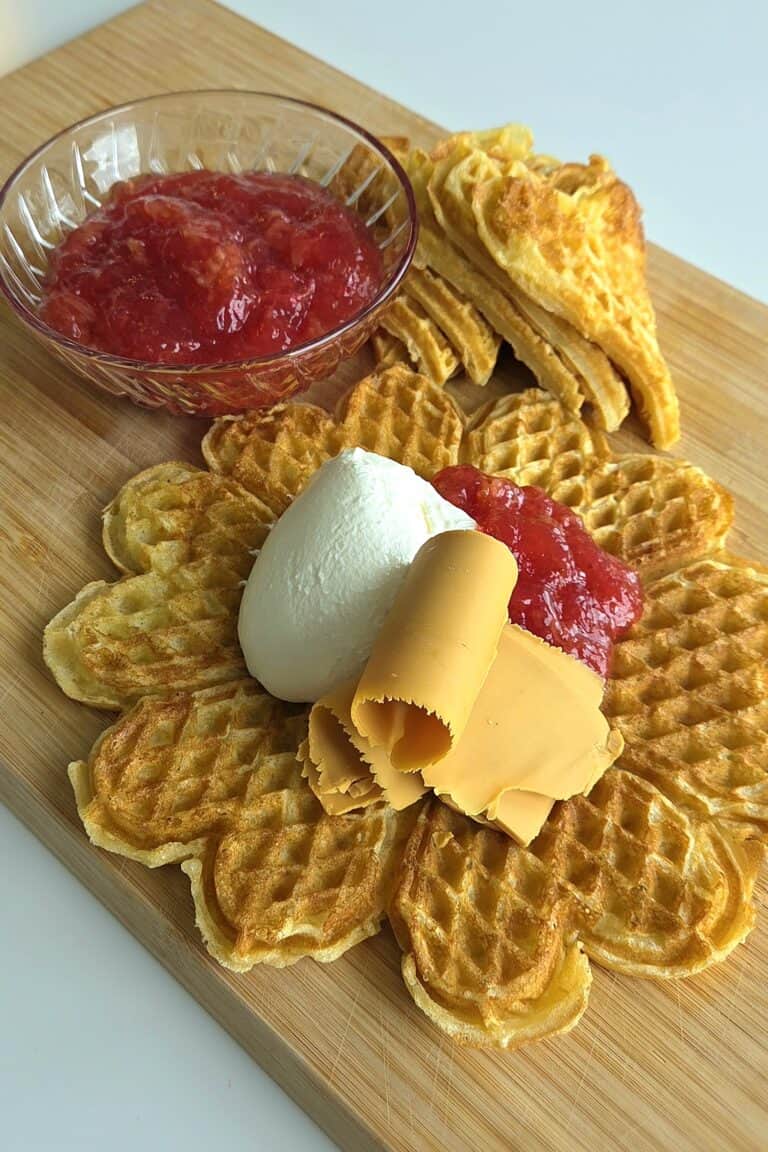
Use full-fat sour cream or crème fraîche; low-fat versions go thin and watery once the shallot starts releasing liquid. If you’re serving this without roe, salt the cream lightly to compensate. The same cold sour cream and dill is what we spoon onto our savory waffles with smoked salmon.
What to drink with it
Dry and sparkling. The acidity and bubbles cut the cream and lift the salt in the roe — Champagne if the occasion calls for it, but a dry crémant, cava or brut sparkling does the same job. Avoid anything off-dry; sweetness and roe don’t get along.
Make it your own
Swap the dill for tarragon or chervil. Add finely grated lemon zest to the cream in summer. A little grated horseradish works if you’re serving this alongside smoked fish. Rub the warm chips with a cut clove of garlic for a version that goes with a glass of something cold rather than with roe.
More Nordic bakes you’ll love
- What to Do With Leftover Sourdough — the full guide to using up a loaf that’s past its best, from chips to crumbs
- Sourdough-Crusted Salmon — another Nordic starter built on thin-sliced sourdough
- Norwegian French Toast (Arme Riddere) — the sweet end of the same problem; stale bread is what the recipe wants