Sourdough Focaccia
This sourdough focaccia is built on the same dough as our beginner sourdough bread, with two changes: 100 g less flour and a splash of olive oil in the dough. That turns a shapeable bread dough into a soft, rich pan bread at just over 80% hydration. It gets one fold and a long rise, most of it right in the pan, and no shaping at all. We dimple the top and finish it with olive oil and flaky salt.
Sourdough Focaccia
Ingredients
Equipment
Method
- Mix the dough. Stir the starter into the lukewarm water until mostly dispersed. Add the flour, salt and olive oil and mix by hand until no dry flour remains. The dough will be loose and sticky — that's right for focaccia. Cover and rest for 30 minutes.
- One fold — and only one. With a wet hand, do one full set of stretch and folds: grab the edge of the dough, stretch it up and fold it over the center, turn the bowl a quarter and repeat, four folds in total. Cover the bowl. That's all the folding this dough gets.
- Rest in the bowl. Leave the covered dough on the counter for about 1½ hours — this is the window where a free-standing loaf would get three more folds. This dough just rests and starts its rise.
- Into the pan. Line the pan with baking parchment and pour in 2 tablespoons of olive oil, spreading it over the paper. Tip the dough in and stretch it gently toward the corners without pressing the air out. It won't reach them yet — it will as it rises.
- Proof in the pan. Cover loosely and let it rise on the counter until doubled, puffy and pillowy, filling the pan — for us that's about 7 hours at 70°F (21°C). Room temperature matters far more than the clock here: a warm kitchen can get there in 4 to 5 hours, a cool one may need 9 or more. Read the dough, not the timer.
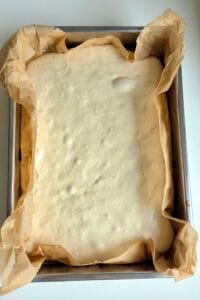
- Preheat. About 30 minutes before the dough is ready, heat the oven to 480°F (250°C), rack in the middle. No steam for this one — the olive oil on top does the job steam does for a lean loaf.
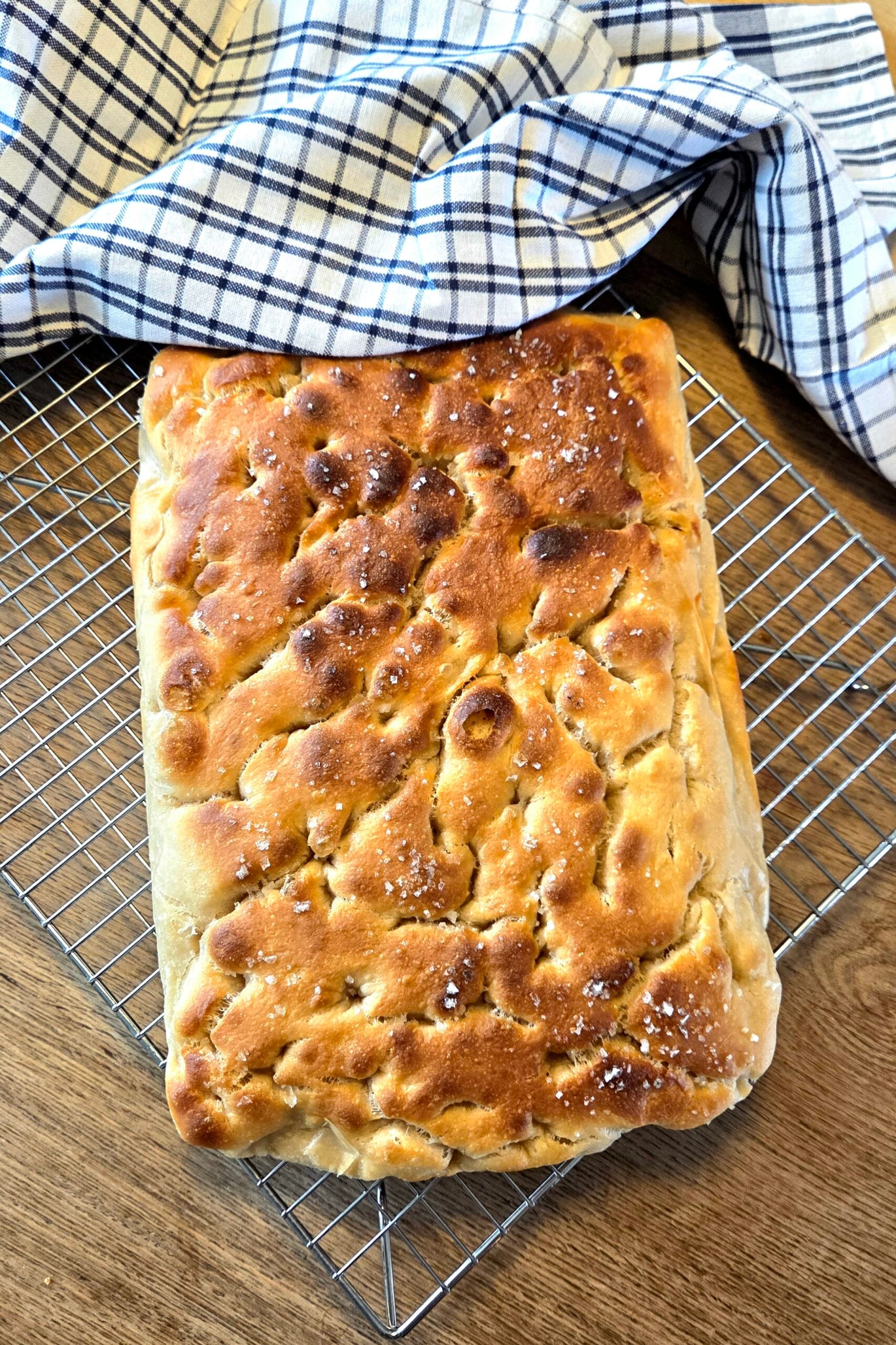
- Dimple and top. Drizzle the remaining 2 tablespoons of olive oil over the dough, then press your fingertips firmly all the way down through the dough to create deep dimples — don't be gentle, the big bubbles you want will survive. Finish with flaky salt.
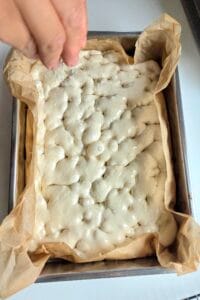
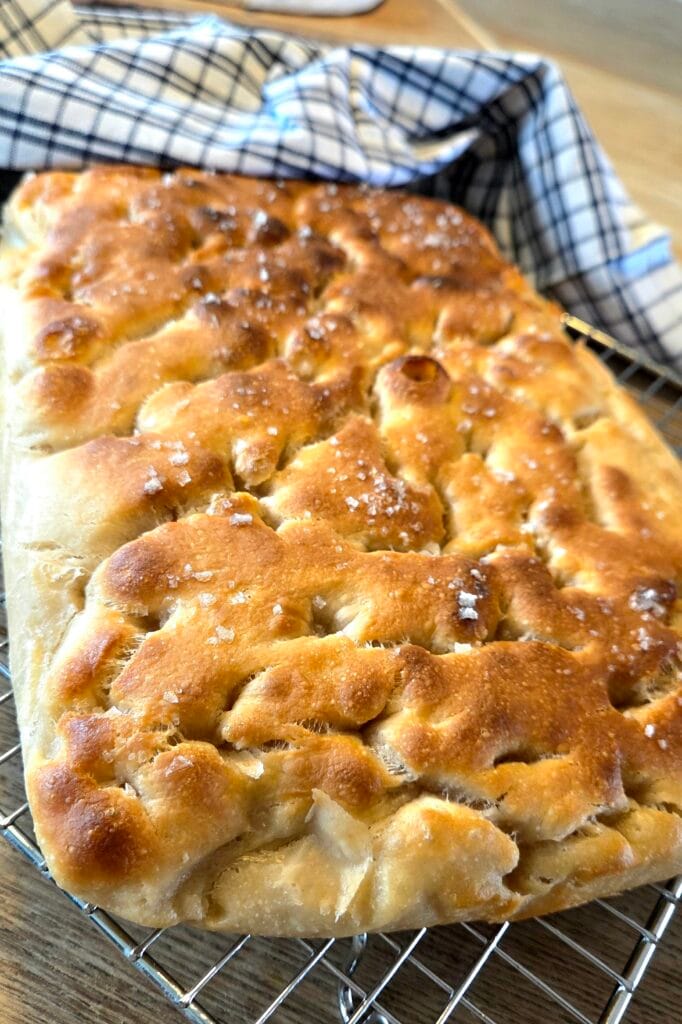
- Bake. Bake for 20 minutes at 480°F (250°C), then turn the oven down to 400°F (200°C) and bake about 15 minutes more, until the top is deep golden and the edges are crisp.
- Cool on a rack. Lift the focaccia out of the pan by the parchment and onto a wire rack right away, so the base stays crisp instead of steaming soft. Let it cool at least 15 minutes before cutting.
Notes
- Overnight option. Once panned, the covered pan can go into the fridge for up to 16 hours instead of rising on the counter. Next morning, let it stand at room temperature until puffy and pillowy — usually 1½ to 3 hours — before dimpling and baking.
- Wet hands, not more flour. At just over 80% hydration the dough sticks to everything. Wet your hands and your scraper instead.
One dough, two breads
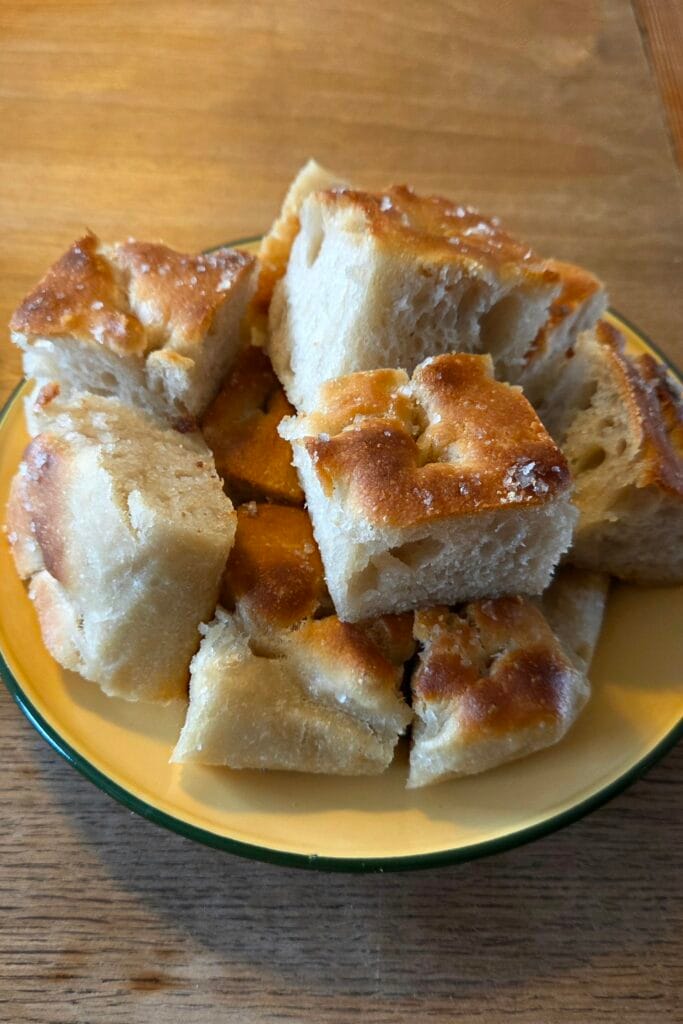
If you’ve baked our beginner sourdough loaf, you already know this dough — we hold back 100 g of flour and add a splash of olive oil. Less flour takes it to just over 80% hydration, which is what gives focaccia its soft, open crumb and crisp base; our guide to sourdough hydration explains why wetter dough opens up. The oil makes the crumb tender and rich — this is a pan bread, not a lean loaf. One formula to remember, two very different breads.
Why this sourdough focaccia only needs one fold
Stretch and folds build strength, and strength is what a free-standing loaf needs to stand tall on the oven floor. Focaccia doesn’t stand — it leans on the pan. So we do one fold to organize the gluten, give the dough a short rest, then let it do its whole rise right in the pan: the pan is both proofing basket and baking vessel. Long, undisturbed fermentation is what builds that soft, open crumb — and the clock is only a guide. Watch the dough: doubled, bubbly and pillowy means ready, whether that takes five hours in a warm kitchen or nine in a cool one. Our guide to bulk fermentation shows how to read those signs.
Make it your own
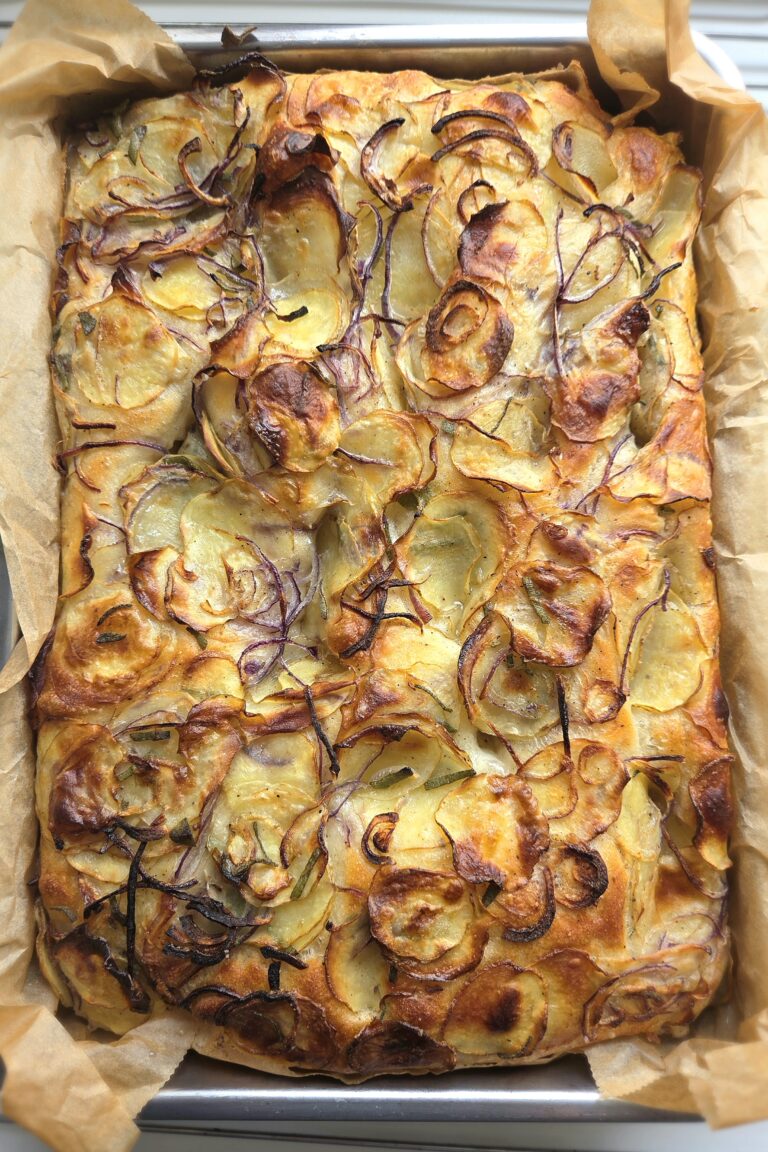
Plain, with good olive oil and flaky salt, is how we bake it most often — but the dimples are made for toppings. Rosemary needles, halved cherry tomatoes pressed cut-side up, or pitted olives all work. If you add garlic, toss the slices in the topping oil and press them down into the dimples: sitting dry on the surface, garlic burns before the crumb is baked — down in the dimples, coated in oil, it roasts sweet and golden. We’ve made that mistake so you don’t have to. For a heartier version with sliced potato, red onion and sage, see our potato focaccia.
Sourdough focaccia FAQ
More from the Nordic kitchen
- Potato Focaccia with Red Onion and Sage — the same idea, loaded with sliced potato and sage
- Sourdough Rolls — crusty rolls with no shaping at all
- Whole Grain Sourdough Bread — the everyday loaf, for when you want a crackly crust