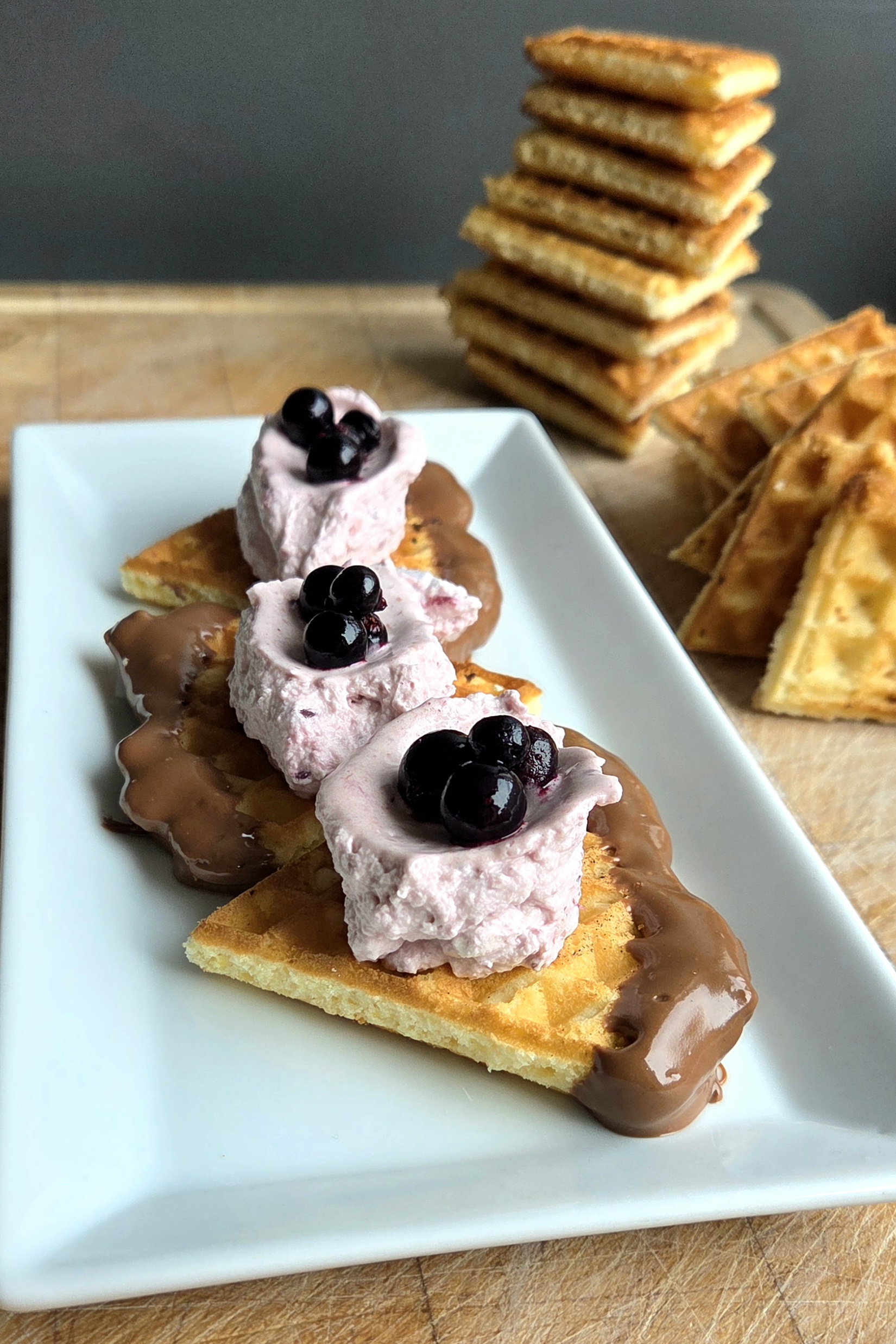
Crispy Norwegian Waffles with Chocolate and Blackcurrant Cream
These crispy Norwegian waffles are nothing like the soft ones you get for breakfast — they are thin, buttery and snap like a cookie, then get dipped halfway in chocolate. Potato starch is what does it, and a whipped egg-and-sugar base gives them their lightness. We serve them with whipped blackcurrant cream and whole berries, the way they are eaten at home.
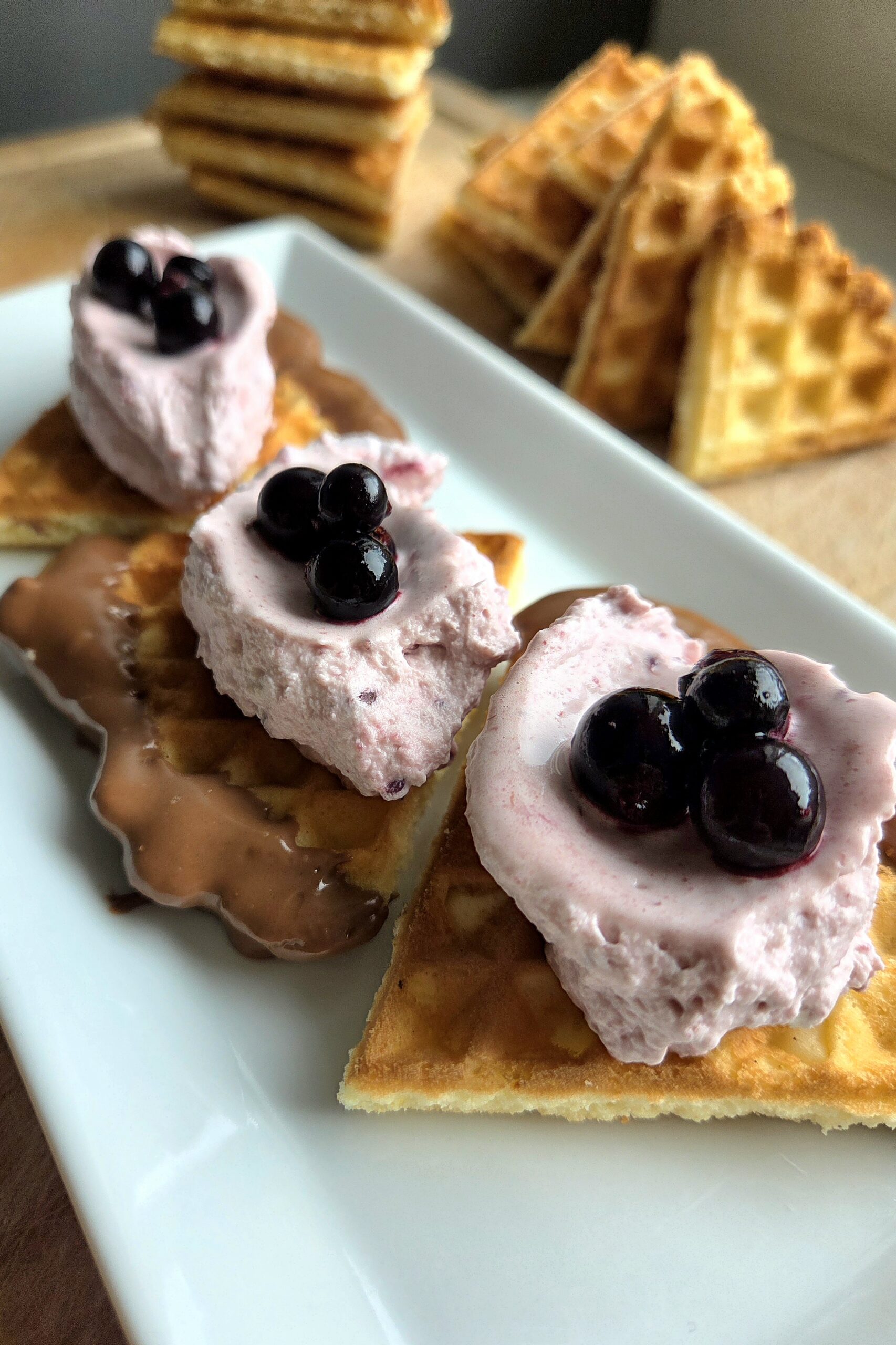
Crispy Norwegian Waffles with Chocolate and Blackcurrant Cream
Ingredients
Equipment
Method
- Melt the butter and set it aside off the heat to cool slightly.
- Whip the eggs and sugar to a pale, thick, airy foam — this is the only leavening that really matters here. Fold in the melted butter.
- Stir the potato starch, flour, baking powder and vanilla sugar together in a separate bowl, then sift the mixture into the egg foam through a fine-mesh sieve. Fold it in gently.
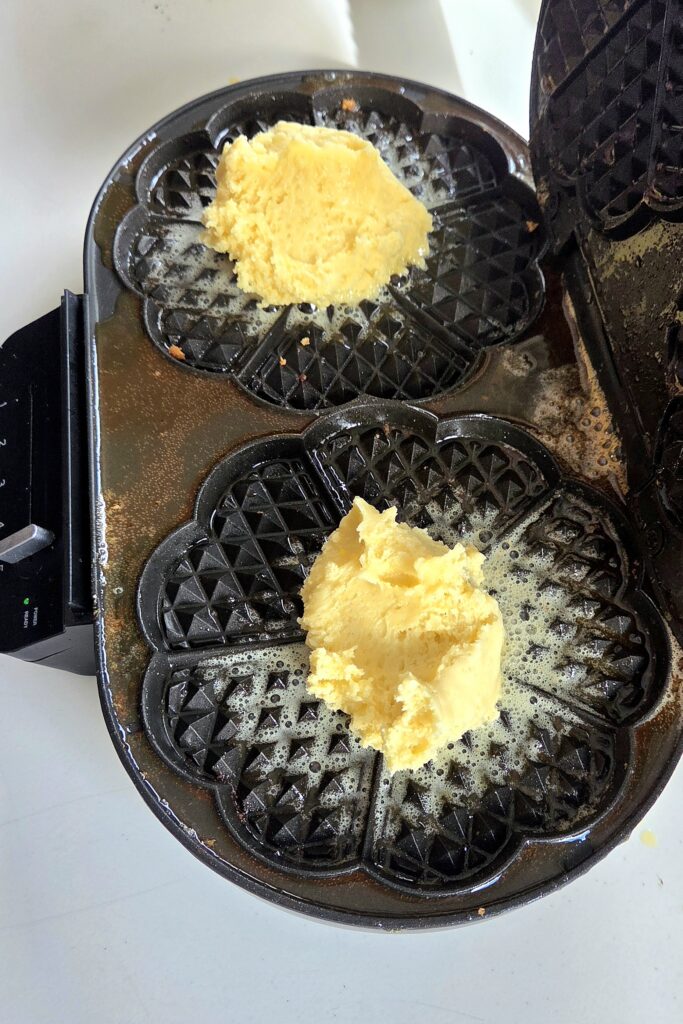
- Heat the waffle iron and brush it generously with butter. Pour in a scant ½ cup (about 100 ml) of batter per round and spread it thin toward the edges. Bake for 2–3 minutes, until evenly golden. Watch them closely at the end — they go from golden to burnt quickly.
- Lift each waffle onto a wire rack to cool in a single layer, and butter the iron again before the next one. The waffles only turn properly crisp once they are completely cold.
- Break the chocolate into pieces and melt it in a metal or glass bowl over a water bath — use a bowl wide enough that no water gets in. Separate the cooled waffles into individual hearts, dip one heart at a time halfway into the chocolate, let the excess drip off and set it on parchment paper.
- Leave at room temperature, or chill, until the chocolate has set firm.
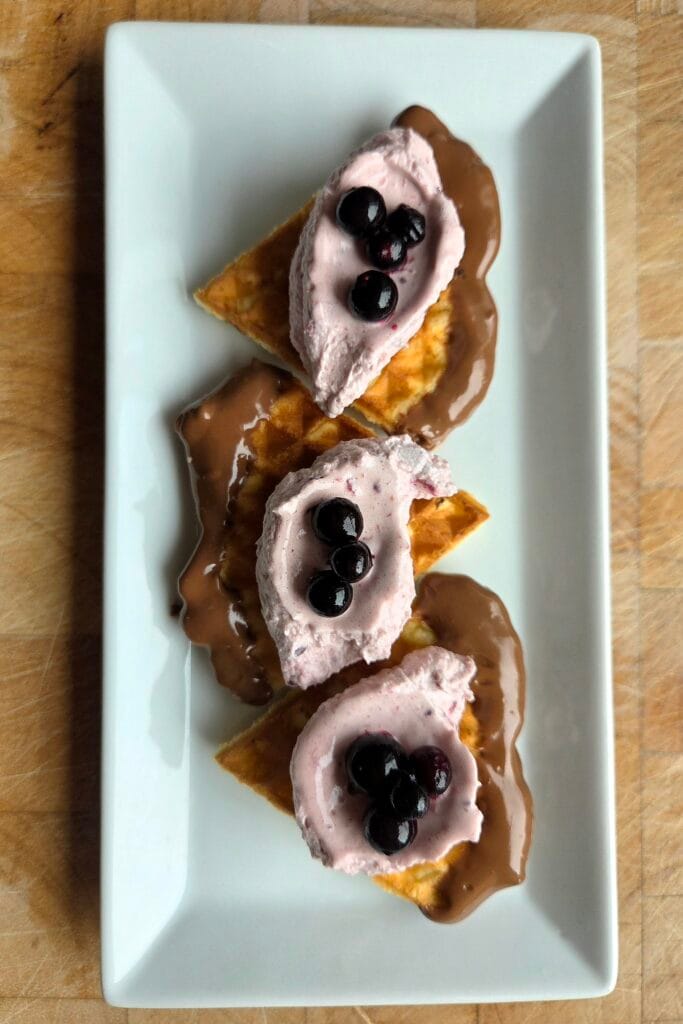
- Whip the cream to soft peaks, then fold in the blackcurrant jam. Serve the waffles with the cream and whole thawed blackcurrants.
Notes
Why potato starch makes them crisp
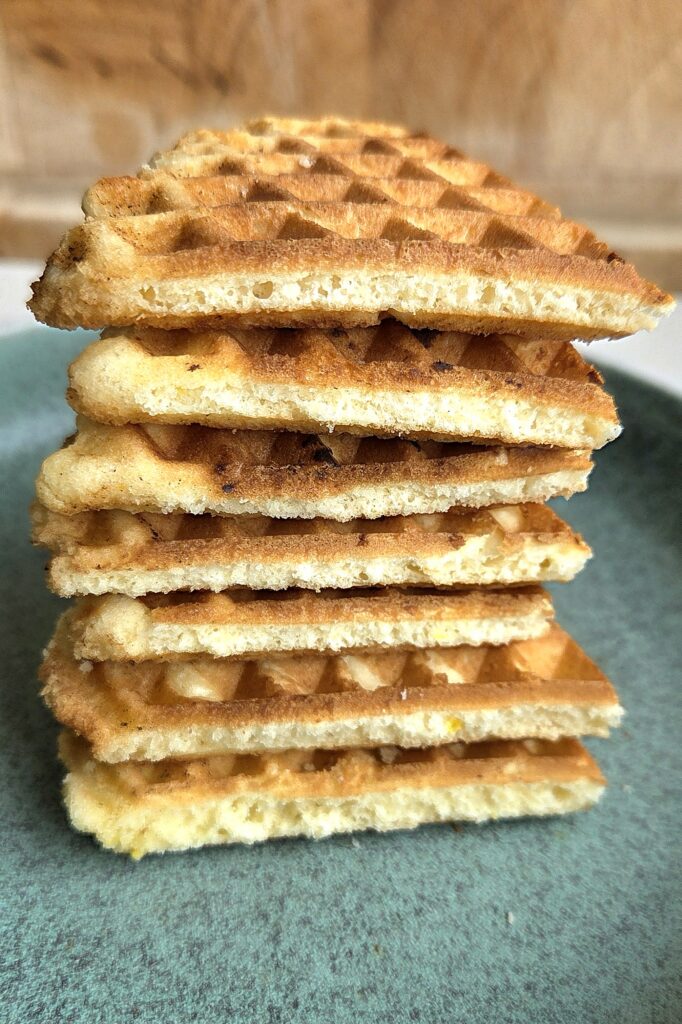
Most waffle recipes lean on wheat flour, and wheat flour holds moisture. Potato starch does the opposite: no gluten, no protein network, nothing to keep the crumb soft. As the waffle cools, the starch sets brittle.
Our cardamom waffles go the other way — all wheat flour, soft and foldable — and it’s worth baking both to feel how much of the result comes down to that one swap.
That is why the cooling step is not optional. Lift each waffle onto a wire rack in a single layer, with air moving underneath. Stack them warm and they steam themselves soft. Cold and separated, they turn glassy and snappy within ten minutes. The same goes for storing them: pack them warm and you undo the whole thing.
One more thing worth saying plainly: buy potato starch, not potato flour. They are different products, and potato flour will give you a heavy, damp waffle.
Getting the chocolate right
We use a light cooking chocolate, but any chocolate you like will work here — the technique matters far more than the bar. Buy a baking bar or couverture rather than chips, though: chips are formulated to keep their shape in the oven, and they never melt into a smooth coating.
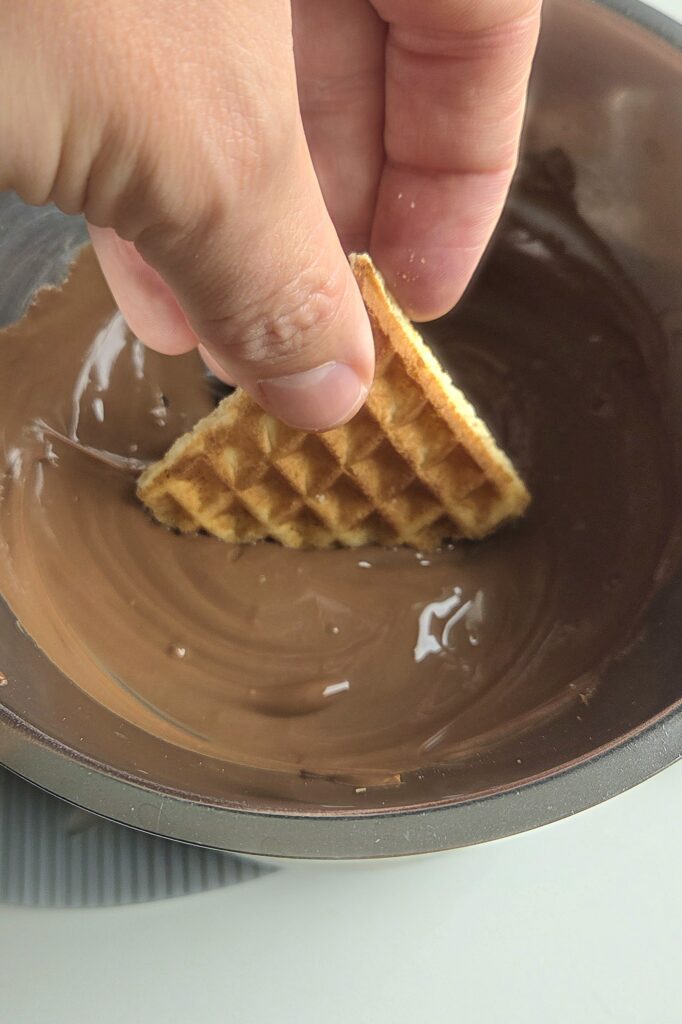
Melt the chocolate over a water bath and then let it sit for a few minutes before you start dipping. Chocolate that is too warm runs straight off the ridges and dries thin and streaky. When it is just fluid and starting to thicken, it clings to the waffle pattern and sets with a clean edge.
Dip one heart at a time, halfway, let the excess drip back into the bowl, then lay it flat on parchment. Room temperature is fine for setting; the fridge is faster but can dull the shine.
Butter the iron every single time
Not just the first waffle. A brushed layer of butter between each round essentially fries the surface of the batter, and that is a large part of the crisp exterior. Skip it after waffle three and you will taste the difference. This holds for every waffle we make, sweet or savory.
The waffle iron
A Norwegian heart-shaped iron is what gives these their shape, and it matters more than it sounds: the thin, shallow hearts are what let the waffle dry out and crisp. A Belgian-style deep iron will give you something softer. For US kitchens we’d point to a 110V heart waffle iron — the Nordic ones we use at home run on 230V and won’t work on US power.
Make it your own
The chocolate is yours to choose — dark gives a sharper contrast against the sweet waffle, and white pulls the whole thing toward dessert.
The cream is what we change through the year. Blackcurrant is what we reach for, but any berry works, and so does fruit — swap in raspberries, lingonberries or cloudberries in summer, and poached pears or plums when the berries are gone. Whatever you fold into the cream is what you should pile on top, so the flavor reads twice.
For something sharper, skip the cream and whip crème fraîche on its own instead. It takes the jam the same way, cuts the sweetness of the chocolate and holds its shape longer on the plate. One note for US kitchens: crème fraîche whips because it’s rich enough to hold air, but standard American sour cream is much leaner than Norwegian rømme and will only go runny — reach for crème fraîche instead.
And if you want these to land as a proper dessert rather than a coffee bake, go chocolate and cherry: fold melted chocolate or cocoa into the cream and serve with dark cherries instead of berries. It’s a different plate altogether.
More Nordic bakes you’ll love
Krumkake — Norwegian Waffle Cookies — the Christmas cousin, rolled thin and crisp on a patterned iron
Sveler — Norwegian Griddle Pancakes — the other great Norwegian griddle bake, soft where these snap
Sourdough Waffles — a good use for discard, with a tang these sweet ones don’t have