Norwegian Julekake — Soft Tangzhong Christmas Bread
Julekake is Norway’s classic Christmas bread — a lightly sweet, cardamom-spiced loaf studded with raisins, served in thin slices with butter through the whole holiday season. This version uses the tangzhong method to give it an extra soft, tender crumb that stays fresh for days. It’s the loaf we bake every December, and here’s exactly how we make it from scratch.
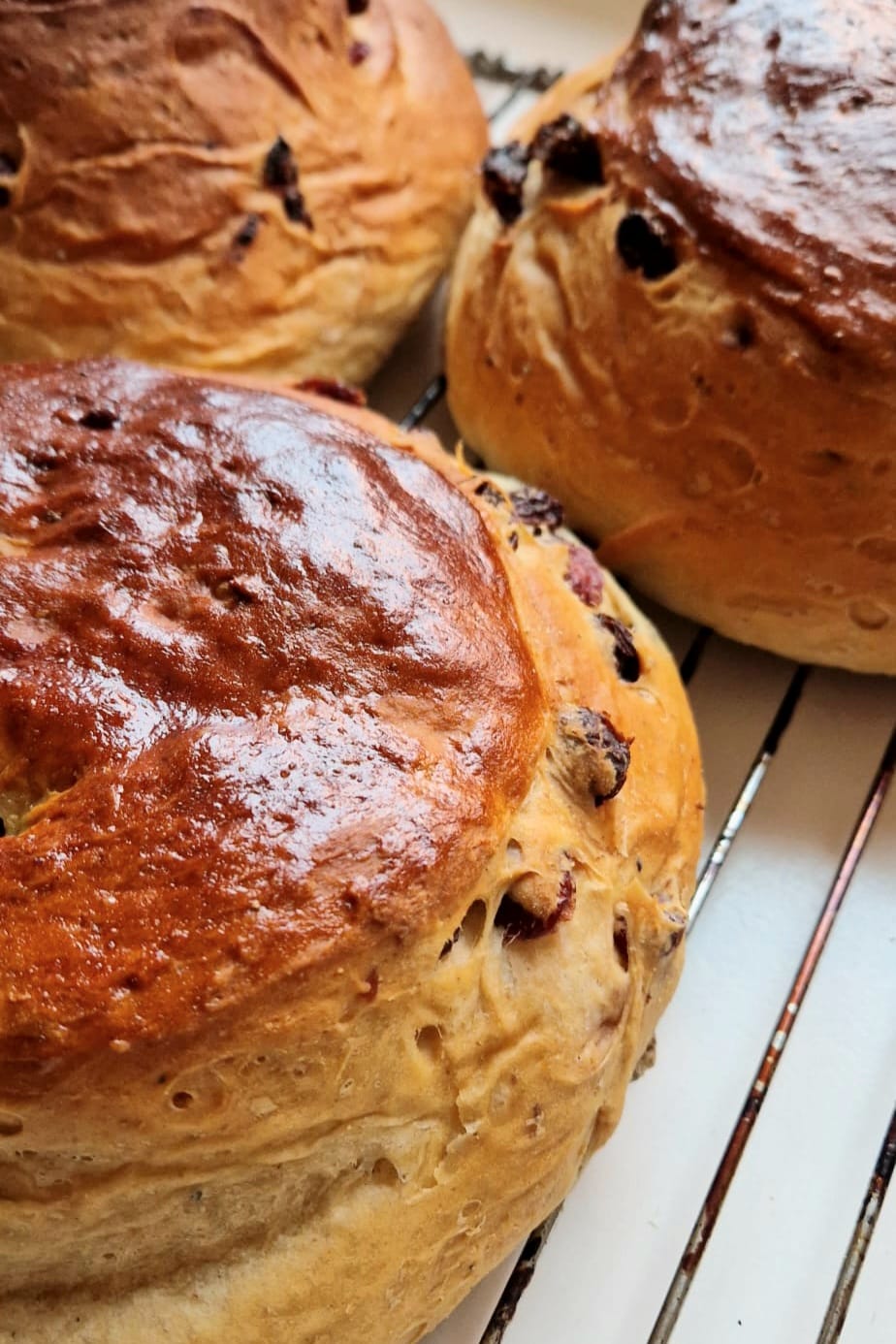
Norwegian Julekake with Tangzhong
Ingredients
Equipment
Method
- Make the tangzhong. Whisk the flour and milk together in a small pot. Warm over medium heat, stirring, until it thickens into a smooth paste — this happens around 149°F (65°C). It doesn't need to boil. Cool to room temperature, about 30 minutes.
- Combine. Add the cooled tangzhong, the lukewarm milk, yeast, sugar, flour, salt, cardamom and egg to the mixer bowl. You can crumble fresh yeast straight in — no need to dissolve it in liquid first.
- Knead. Knead on low speed. After 7–10 minutes, add the cubed butter a little at a time. Keep kneading, finishing on high speed for the last 5 minutes — 15–20 minutes total.
- Check the gluten. Pull off a small piece of dough and stretch it between your fingers toward the light. When it stretches into a thin, translucent windowpane, it's ready. If it tears and feels short, keep kneading.
- Add the raisins. Knead them in gently at the very end, just enough to distribute them without tearing them apart.
- Bulk rise. Cover the bowl and let the dough rise in a warm spot until doubled, about 1 hour.
- Shape. Divide into 3 or 4 pieces and shape into round loaves on a parchment-lined baking sheet. Score around the edge and press the center down so the score opens up as it bakes.
- Second rise. Cover loosely and let the shaped loaves rise until puffy, 35–45 minutes. Heat the oven to 350°F (180°C), conventional top and bottom heat, during the last 20 minutes.
- Bake. Brush with beaten egg for a glossy, golden finish. Bake slightly low in the oven for 40–50 minutes, until deep golden and 190°F (88°C) in the center. If the tops brown too fast, cover them loosely with foil for the last 15 minutes.
- Cool. Cool completely on a wire rack before slicing.
Notes
- Sticky is right. The tangzhong holds extra moisture on purpose, so the dough feels soft and tacky after the butter goes in. Resist adding flour — that softness is the tender crumb.
- Candied peel: we leave it out, but if you love it, add about ½ cup with the raisins.
- Instant yeast: replace the 35 g fresh yeast with 12 g (4 tsp) instant yeast and mix it straight into the flour.
A little about julekake
Every Norwegian home has its own julekake. It sits somewhere between a bread and a cake — enriched with butter, sugar and egg, warmed with cardamom, and usually dotted with raisins, often with candied peel too. We leave the peel out and let raisins and real cardamom carry it. It’s baked as a round loaf, sliced thin and eaten with butter or brown cheese.
What the tangzhong method does
Tangzhong is an Asian bread technique — developed in Japan, where it’s called yudane, and spread widely under its Chinese name. You cook a small portion of the flour with liquid into a thick paste before mixing the dough. Heating the starch lets it absorb far more liquid than it could cold — so you can build extra moisture into the dough without making it slack. The payoff is a softer, fluffier crumb and bread that stays fresh noticeably longer. It’s the single reason this julekake still slices beautifully three days in, and the same principle behind the mashed potato in our potato focaccia.
Make Julekake Ahead and Store It
Thanks to the tangzhong, this loaf keeps beautifully. Wrapped well at room temperature, it stays soft for three to four days — far longer than a standard enriched bread. For longer storage, julekake freezes perfectly: let it cool completely, wrap it tightly in plastic and then foil, and freeze for up to three months. Thaw it at room temperature still wrapped, and a few minutes in a warm oven brings back that fresh-baked softness. We often bake several loaves at once and freeze the extras for the holidays. And the last slices, a few days old, make the best arme riddere you’ll ever have.
Julekake FAQ
Can I make julekake without candied peel?
Yes — this recipe already leaves it out. If you love it, stir in about ½ cup with the raisins.
Why use the tangzhong method for julekake?
It lets the dough hold more moisture, so the crumb is softer and stays fresh for days. For a bread eaten over a long holiday season, that staying power makes a real difference
Can I use active dry or instant yeast instead of fresh?
Yes. Replace the 35 g fresh yeast with 12 g (4 tsp) instant yeast and add it straight to the flour.
My dough feels sticky after adding the butter. Is that normal?
Completely normal — the tangzhong holds extra moisture on purpose. Resist adding more flour; that softness is what gives you the tender crumb.
How do I know when julekake is baked?
Deep golden on top, hollow when tapped underneath, and 190°F (88°C) in the center. A sugary crust browns early, so trust the thermometer over the color.
More Nordic bakes you’ll love
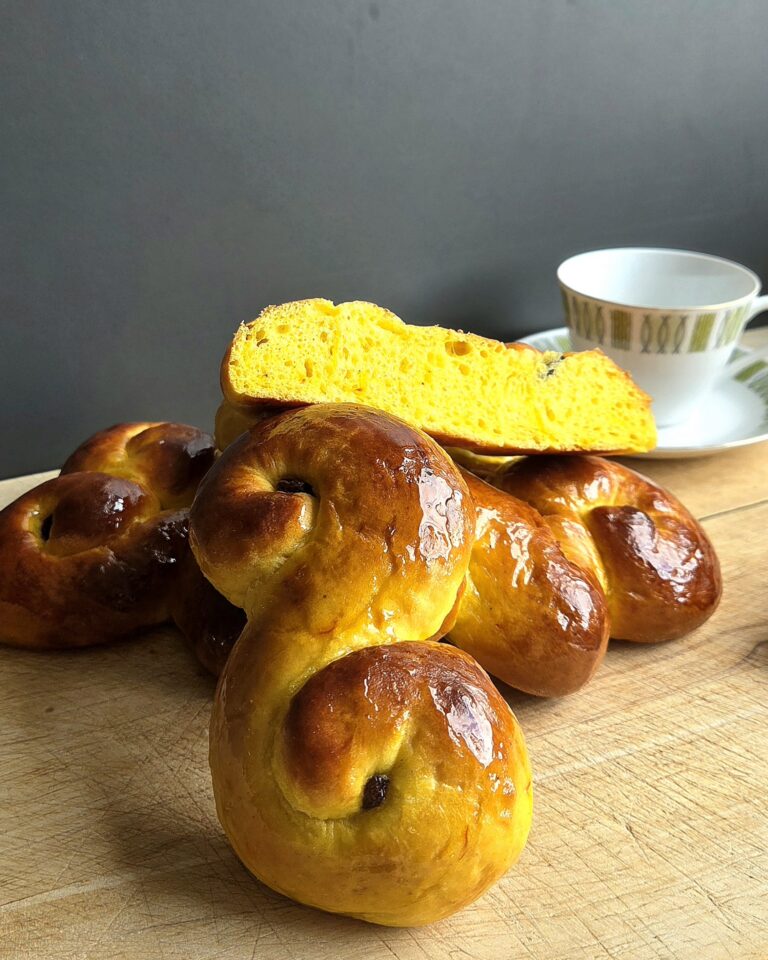
- Lussekatter — Swedish Saffron Buns — the other great Scandinavian Christmas yeast bake
- Norwegian Apple Cake (Eplekake) — the autumn bake that keeps soft with a similar idea
- Brune Pinner — Norwegian Almond Christmas Cookies — the first of the syv slag on our Christmas table