Norwegian French Toast (Arme Riddere)
Arme riddere (“poor knights”) is the Norwegian French toast we turn to when half a two-day-old sourdough loaf is left on the board and nobody wants toast again. Slices of leftover bread soak in a cardamom-and-cinnamon custard, fry in foaming butter, and get a sprinkle of sugar in the pan that caramelizes against the crust. Ten minutes of soaking and fifteen in the pan, and stale bread becomes the best breakfast of the week.

Norwegian French Toast (Arme Riddere)
Ingredients
Equipment
Method
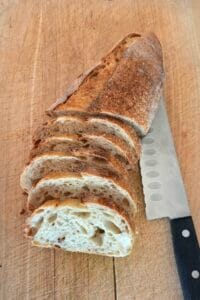
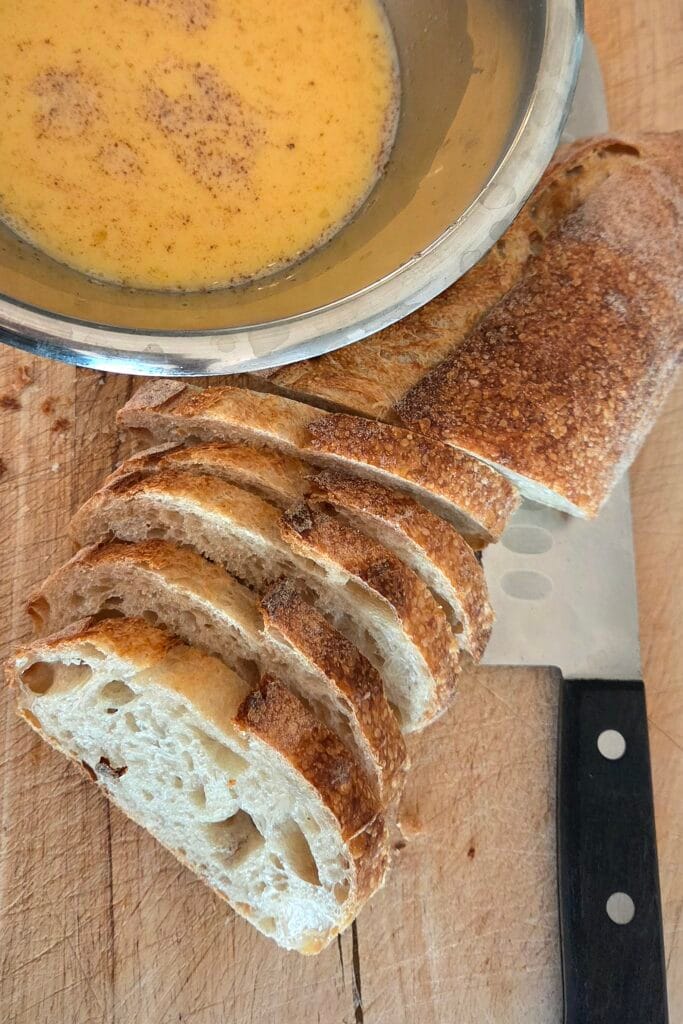
- Slice the bread. Cut the sourdough into ½-inch (1 cm) slices. We use bread that's two days old — dry enough to soak up the custard without falling apart. Three days works just as well.
- Make the custard. Whisk the eggs, milk, 2 tbsp sugar, cinnamon and cardamom together until fully combined and slightly foamy.
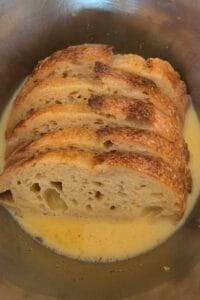
- Soak. Lay the slices in the custard and soak for about 10 minutes, turning them once halfway so both sides take up the liquid. Give the crust extra time — it needs longer than the crumb to soften.
- Heat the butter. Melt the butter in a wide pan over medium-low heat and let it foam.
- Fry the first side. Fry the slices on medium-low for 3–4 minutes, in two batches if your pan won't fit all six. Just before flipping, sprinkle a little sugar over the top of each slice.

- Flip and caramelize. Turn the slices, raise the heat to medium and fry for 2–3 minutes more, until deep golden and caramelized on both sides.
- Onto a rack. Move the finished slices straight onto a wire rack — never a plate — so the crust stays crisp while you fry the rest.

- Serve. Serve warm, stacked, with raspberries, raspberry jam, a drizzle of honey and a dusting of powdered sugar.
Notes
- Second batch: wipe the pan and add fresh butter between batches, so burnt sugar from the first round doesn’t scorch the next.
- Keeping warm: slices on the rack stay crisp in a 200°F (95°C) oven for 15 minutes while you finish the rest.
Why Two-Day-Old Sourdough Makes the Best Arme Riddere
Fresh bread is the wrong bread here. A loaf that’s two days old has dried out just enough to act like a sponge — it takes up the custard without collapsing into mush when you lift it. Three days is fine too. An open, well-fermented crumb is ideal, because those big holes fill with custard and turn silky in the pan while the crust stays chewy. Leftover brown butter sourdough makes an even richer version — the butter is already in the bread.
Cut the slices around ½ inch (1 cm). Thinner and they go limp; thicker and the center is still raw when the outside is dark. And give the crust extra time in the bowl — it needs longer to soften than the crumb does, and an under-soaked crust is the most common thing that goes wrong. Got more bread than six slices’ worth? Our sourdough bread pudding uses half a loaf at once.
The sugar goes in the pan, not on the plate
Here’s the one technique that separates good arme riddere from the average version: sprinkle a little sugar over each slice just before you flip it. It lands in the hot butter and caramelizes directly against the bread, giving you a thin, crackly, almost brûléed surface. Fry on medium-low first so the custard sets through, then raise the heat to medium after flipping to build color.
The other rule is even simpler — move every finished slice straight onto a wire rack, never onto a plate. Trapped steam is what turns a crisp slice soggy in under a minute.
Make it your own
We served ours with fresh raspberries, raspberry jam, a drizzle of honey and a dusting of powdered sugar — the tartness is what keeps the whole plate from tipping into too-sweet.

If you want to push it further, grate a little fresh ginger into the custard, or add a few turns of black pepper. Both are excellent with raspberries and honey, and neither is as strange on the plate as it sounds. Lingonberry jam, cloudberries or warm apple compote — the same compote that goes into our Norwegian apple trifle — all work in the same role. And in December, day-old slices of julekake make the best arme riddere of the year.
More from the Nordic kitchen
- Beginner Sourdough Bread — the everyday sourdough we sliced for this
- What to Do With Leftover Sourdough — every use we’ve found for the end of the loaf
- Sveler — Norwegian Griddle Pancakes — another Norwegian afternoon bake, soft and buttery from the pan