Norwegian World’s Best Cake (Kvæfjordkake)
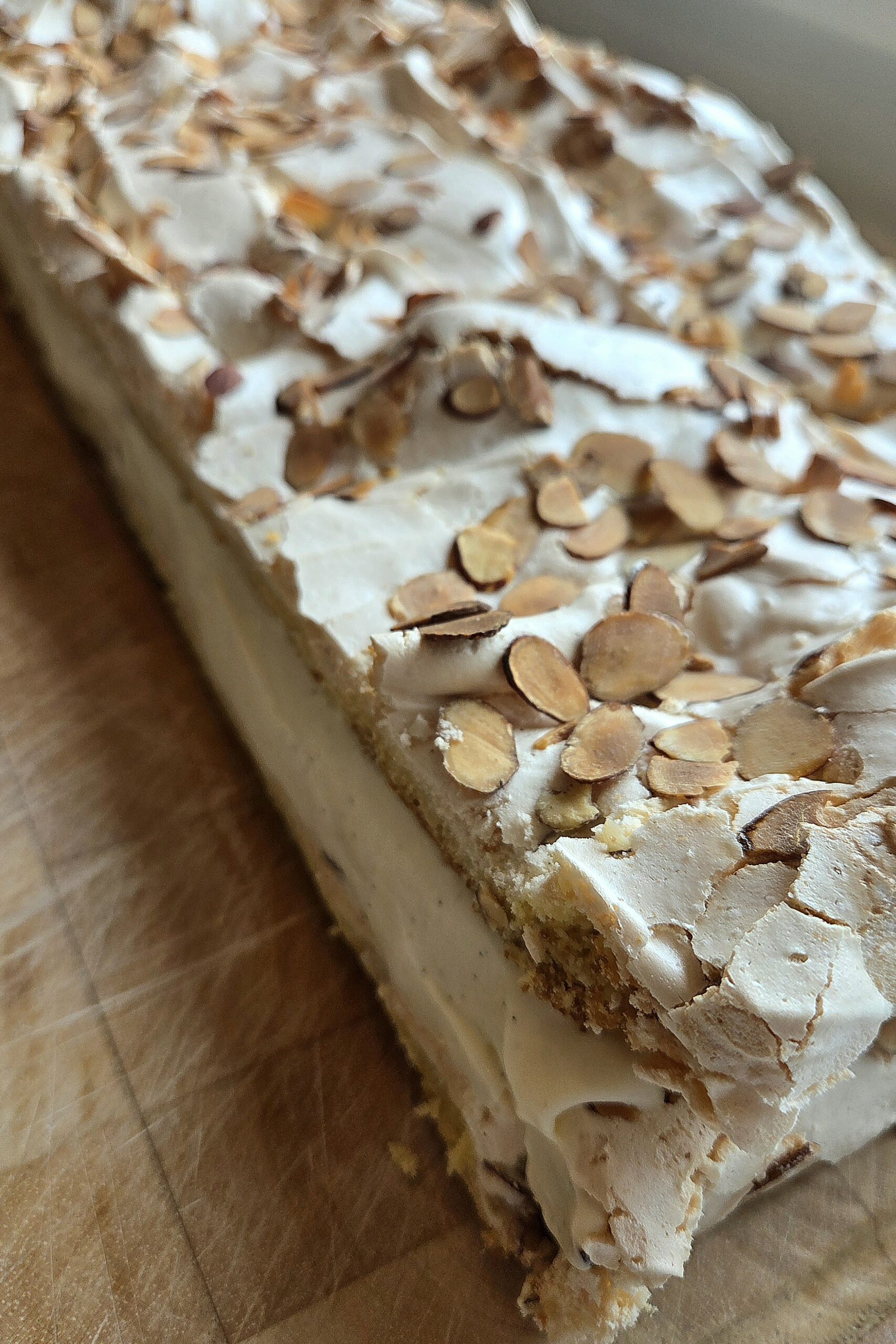
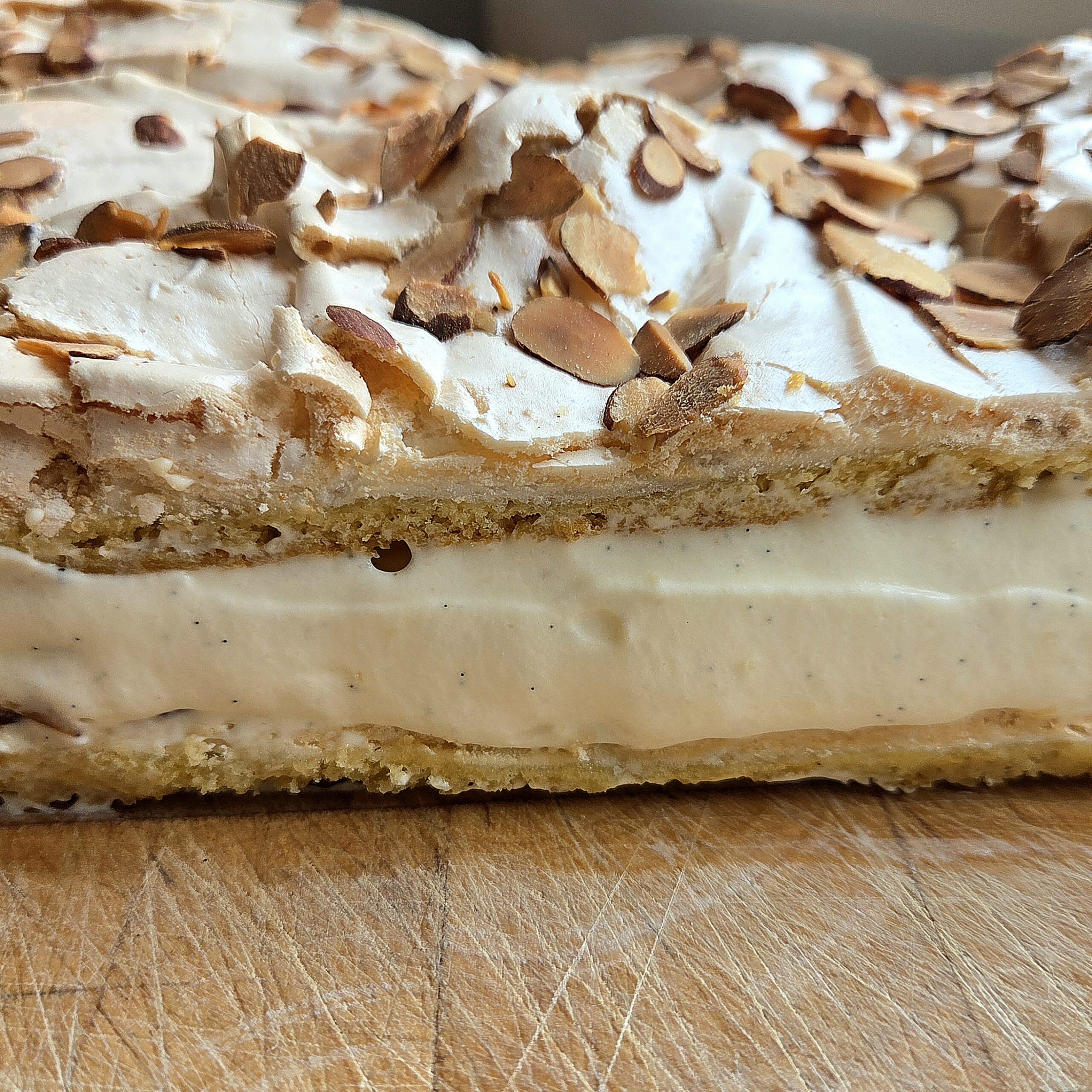
Norwegian world’s best cake, kvæfjordkake at home, pairs a thin butter sponge with crackly almond meringue and a thick layer of vanilla custard cream. Both layers bake together on one oven tray, and the work splits neatly over two days.
Norwegian World’s Best Cake (Kvæfjordkake)
Ingredients
Equipment
Method
- Heat the milk: Bring the milk, vanilla bean and seeds, and 65 g (⅓ cup) of the sugar to a boil in a saucepan.
- Mix the eggs: Whisk the yolks, whole eggs, the remaining 35 g (3 tbsp) sugar and the cornstarch until smooth.
- Temper: Pour the hot milk into the egg mixture in a thin stream, whisking all the time.
- Cook: Return everything to the saucepan and boil for 3–4 minutes, whisking constantly, until thick and glossy and no longer tasting of starch.
- Strain: Pass the custard through a fine-mesh sieve into the mixer bowl and remove the vanilla bean.
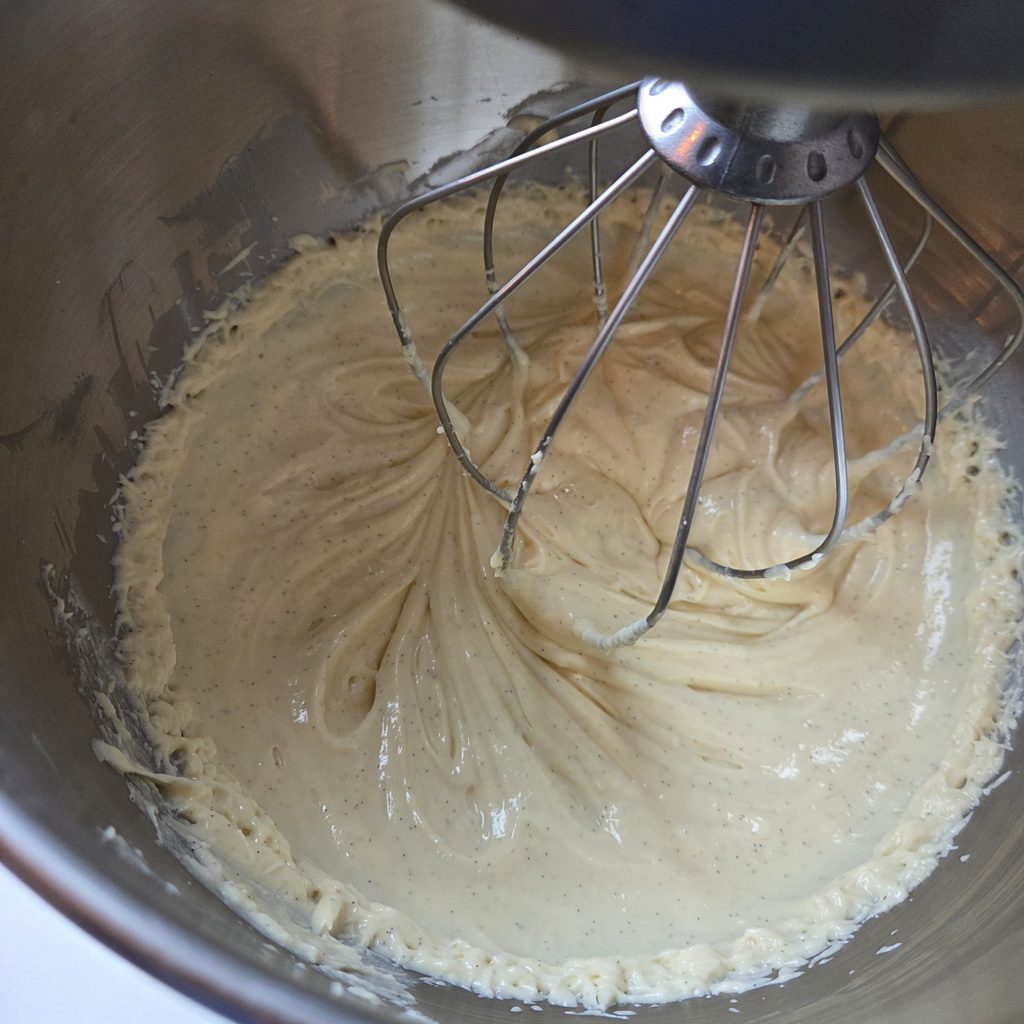
- Cool by whisking: Whisk on medium speed until the custard is almost cold to the touch, about 15–20 minutes.
- Add the butter: Beat the soft butter pale in a separate bowl, then add it to the custard a spoonful at a time. Whisk 3–4 minutes more until smooth.
- Chill: Press plastic wrap onto the surface and refrigerate at least 4 hours or overnight.
- Preheat: Heat the oven to 340°F (170°C). Line the sheet pan with parchment, greasing the pan underneath.
- Cream: Beat the butter and sugar until pale and fluffy, about 5 minutes.
- Add yolks: Beat in the yolks one at a time.
- Finish the batter: Mix in the flour and baking powder, then the milk and vanilla. The batter is thick, close to a soft frosting.
- Spread: Spread the batter evenly into a rectangle on the parchment with the offset spatula.
- Whip the meringue: In a clean bowl, whip the egg whites to soft peaks. Add the sugar a spoonful at a time and keep whipping until stiff and glossy, and the sugar no longer feels grainy between your fingers.
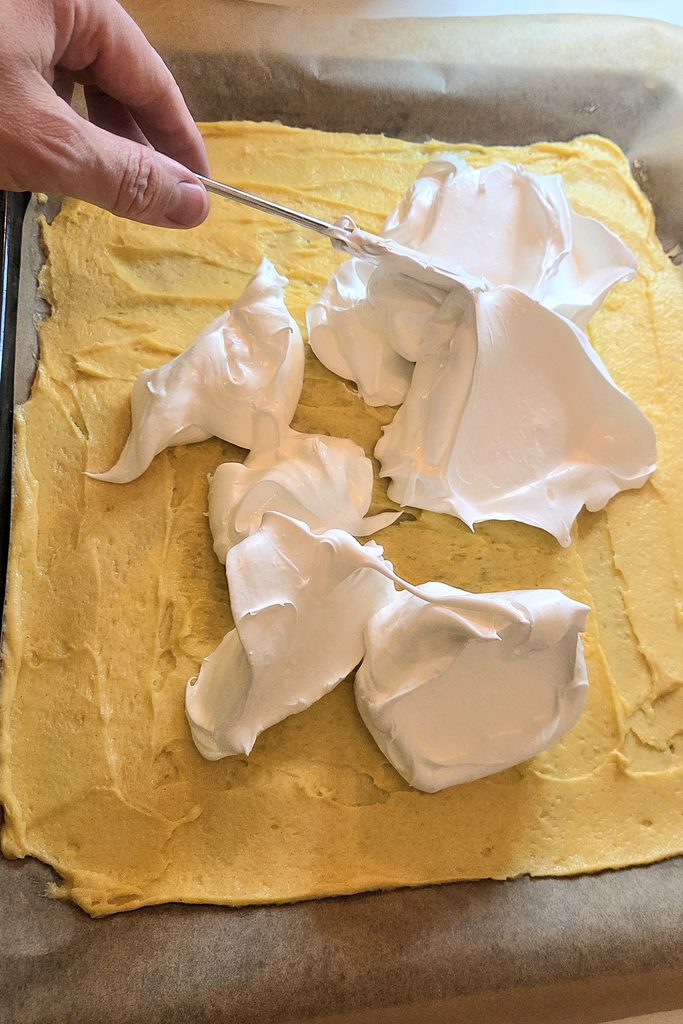
- Top: Spread the meringue over the batter all the way to the edges. Scatter the sliced almonds over it.
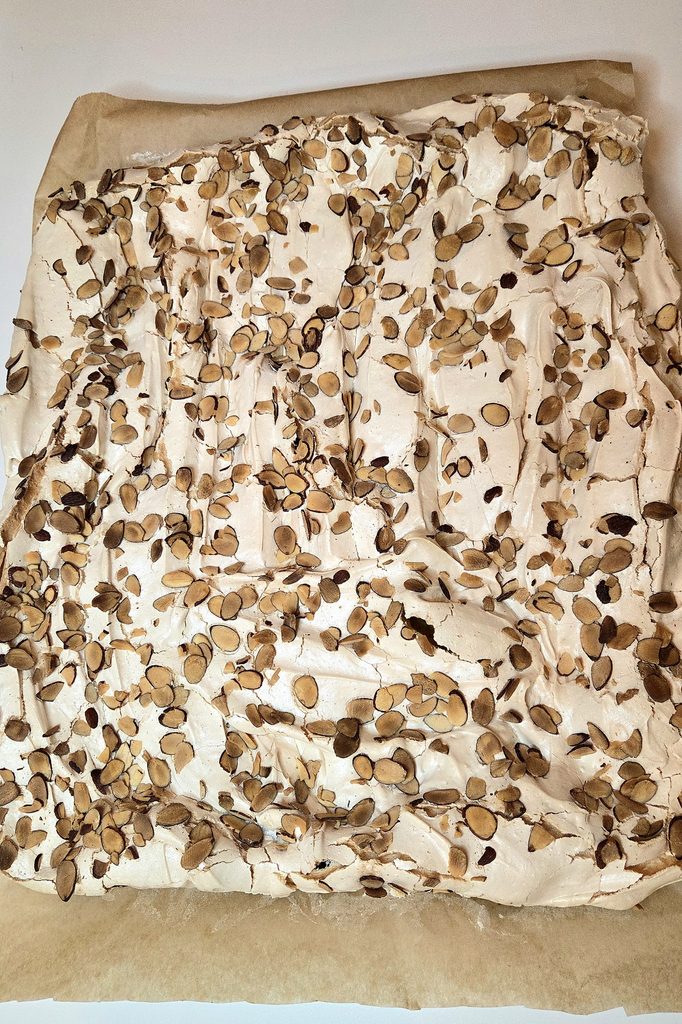
- Bake: Bake 25 minutes at 340°F (170°C), then lower to 300°F (150°C) and bake 10 minutes more. The meringue is done when it is pale beige, dry and crackly on top, and the almonds are toasted.
- Cool: Leave the cake on its parchment until completely cold, at least 2 hours.
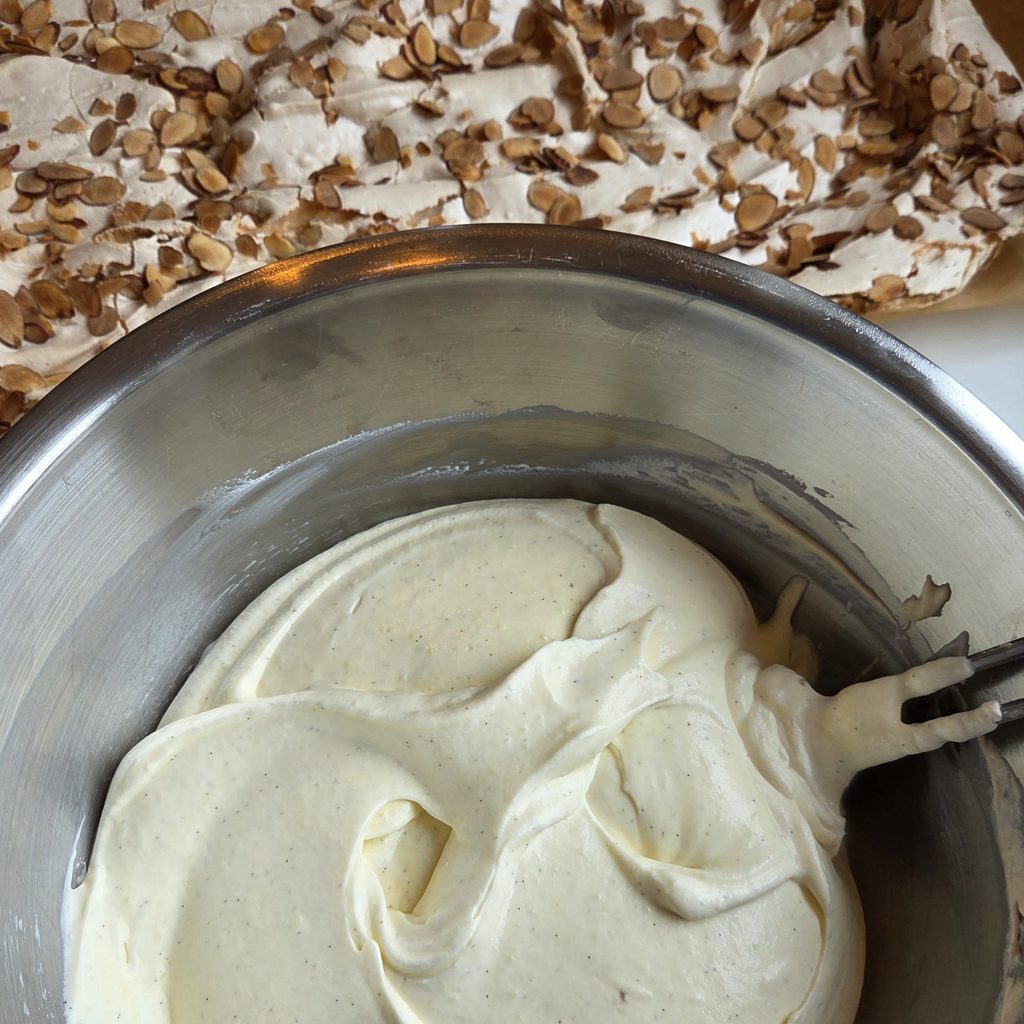
- Finish the cream: Whisk the chilled custard smooth. Whip the cream to firm peaks without sugar and fold it into the custard.
- Cut: Cut the cake in half lengthwise. Slide the offset spatula under each half to free it from the paper.
- Bottom layer: Lift one half onto the serving board with the meringue side up.
- Fill: Spread the vanilla cream evenly over the meringue.
- Top layer: Lift the second half on top, meringue side up. Chill until serving.
Notes
Where the world’s best cake comes from
The name is less of a boast than it sounds. According to the Norwegian encyclopedia Store norske leksikon, the cake traces back to Hulda Ottestad from Kvæfjord, who ran Café Alliance in Harstad in Northern Norway and adapted a Danish recipe she had bought. In 2002 listeners of the NRK radio show Nitimen voted it Norway’s national cake. “Verdens beste” stuck as the everyday name, and you will find it on almost every Norwegian cake table on the 17th of May.
Our version comes from a handwritten page in our kitchen binder, sized for a half hotel pan of the kind used in professional kitchens. We scale it by 1.5 to fill a full oven tray at home.
One sheet, two layers
The batter is closer to a soft frosting than a pourable cake batter, so it spreads with a spatula instead of settling on its own. Keep it even: thin corners bake dry before the center is set. The meringue goes straight on top of the raw batter, the almonds go on the meringue, and everything bakes together. A hot start sets the sponge, and the last 10 minutes at a lower temperature dry the meringue without browning it further.
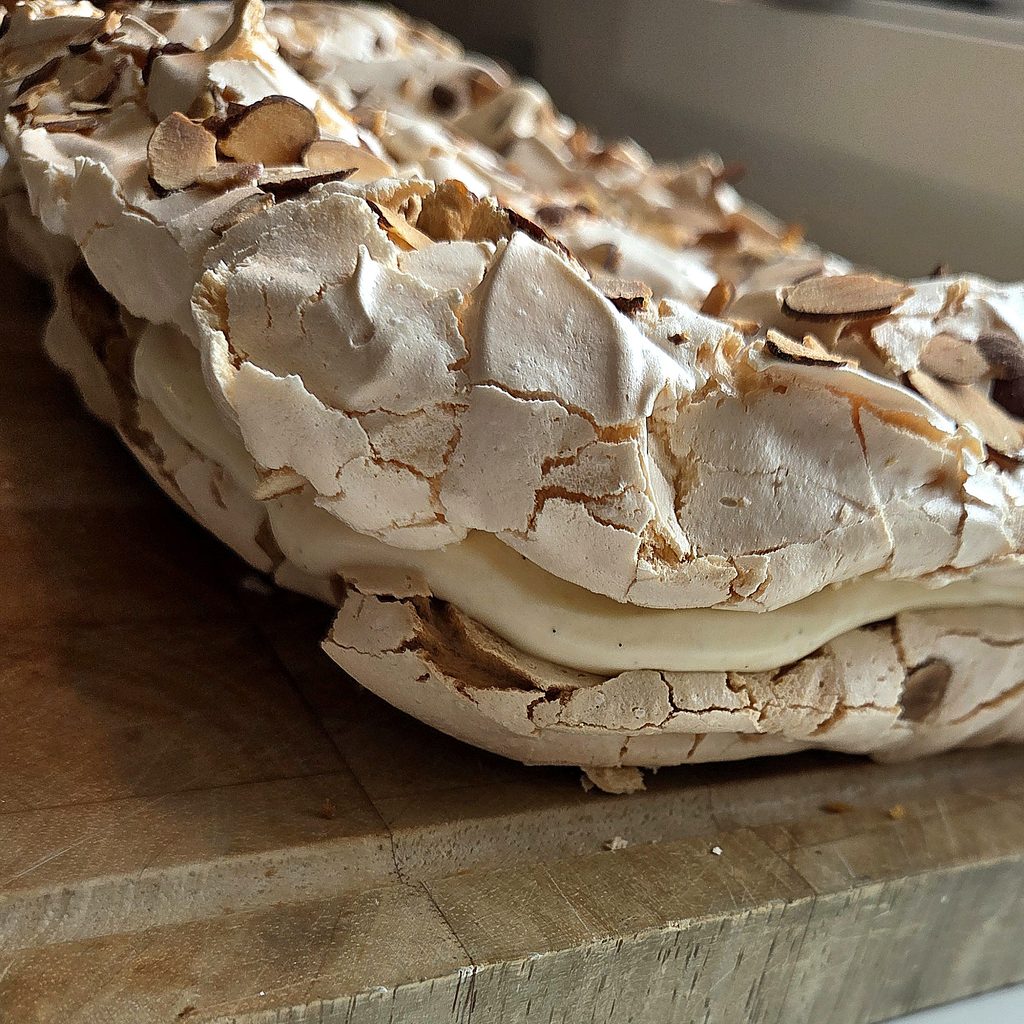
Once it is completely cold, we cut the sheet in half lengthwise, which gave us the long, narrow cake in the photos. That was our choice for this party, not a rule. The shape varies from kitchen to kitchen in Norway, and the recipe adapts without changing a single amount. Cut across the short side instead and you get two shorter, wider layers that stack into something close to a square. For a round cake, divide the batter and the meringue evenly between two parchment-lined round pans and stack them the same way, meringue side up on both.
A custard built like a buttercream
The filling starts as a classic cooked vanilla custard thickened with cornstarch, the same family as the cream inside our Norwegian school buns (skolebrød). Here it gets a second life: we whisk it in the mixer until almost cold, then beat in soft butter a little at a time. The butter makes it firm enough to hold between two layers without sliding.
On the day, we fold in whipped cream with no added sugar. Between the meringue, the sponge and the custard there is already plenty of sweetness, and the plain cream keeps the filling light. Some Norwegian bakers flavor the cream with a splash of dark rum. We leave it out, but it is the classic variation if you want one.
For a cream that skips the stove altogether, råkrem folds raw whisked yolks into whipped cream. We serve it with Norwegian strawberries and cream.
Two days, less stress
Both the baked sheet and the custard base have to be completely cold before they meet, and that takes hours whichever way you plan it. So we let the waiting happen overnight. The baked sheet stays on its parchment on the counter, loosely covered, and the custard base goes into the fridge with plastic wrap pressed onto the surface. On the serving day there is about 20 minutes of work left: whip the cream, fold it in, cut and stack. That rhythm suits the 17th of May, when the morning belongs to the parade and not the kitchen.
Meringue side up, both times
Both layers go meringue side up. On the bottom layer the cream sits directly on the meringue, so every bite has crunch against the soft custard, and the top layer shows off the toasted almonds. Expect some cracking when you move the layers. Baked meringue is brittle, and that brittleness is the texture you want in the finished slice. If you want more practice with meringue, our lemon tart with Italian meringue uses a cooked sugar syrup method that holds its shape under a torch.
More from the Nordic kitchen
- Moist Orange Cake with Sticky Orange Syrup — a syrup-soaked citrus cake for everyday coffee.
- Norwegian Marble Cake (Marmorkake) — vanilla and cocoa swirled in a loaf pan.
- Norwegian Apple Trifle (Tilslørte Bondepiker) — apple compote, buttered breadcrumbs and cream, layered in a glass.