Grilled Ham and Cheese on Sourdough
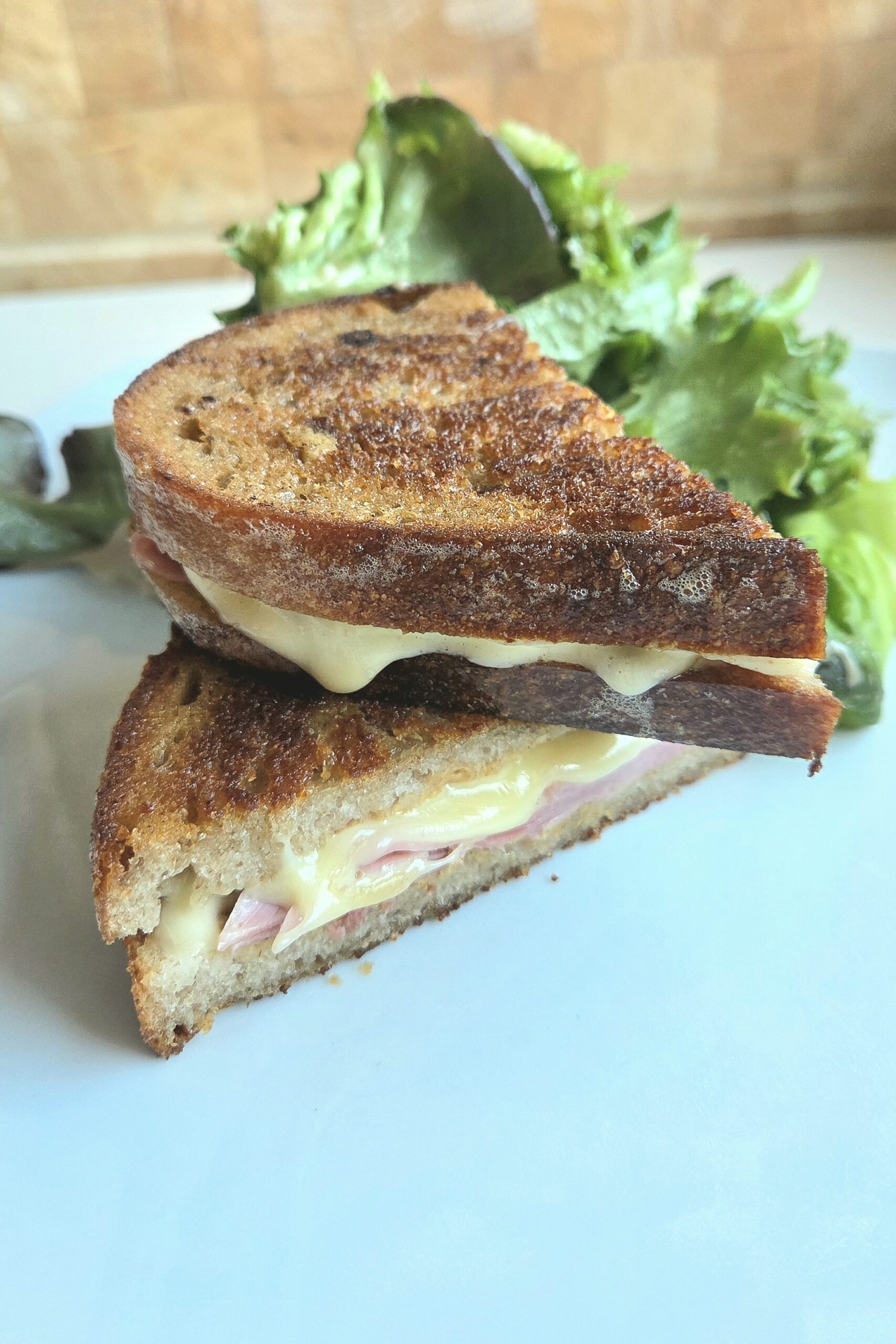
Grilled ham and cheese on sourdough is our weekday answer to a loaf that has been on the counter for two days. The slices go into foaming butter with Dijon, thinly sliced Jarlsberg and cooked ham, and they need about ten minutes over gentle heat to brown through while the cheese melts. We serve it with a green salad in a sharp mustard vinaigrette.

Grilled Ham and Cheese on Sourdough
Ingredients
Equipment
Method
- Make the vinaigrette: Put the mustard, honey, garlic or shallot, vinegar and salt in the jar, close the lid and shake. Add the oil a little at a time, shaking hard between each addition, until the dressing turns creamy and holds together. Season with pepper and set aside.
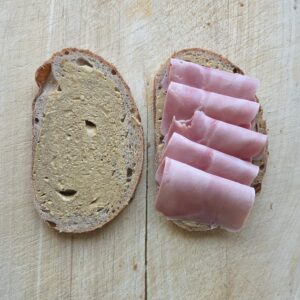
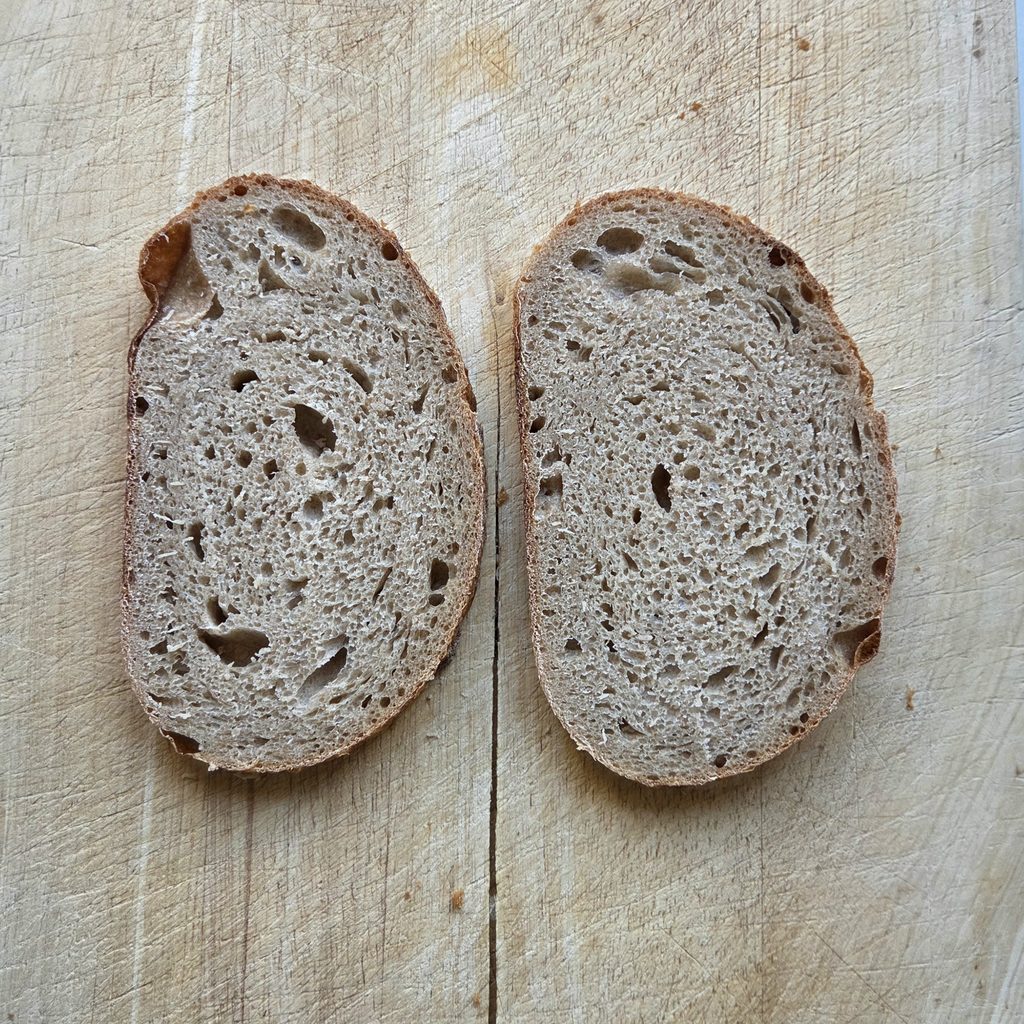
- Slice and spread: Cut four slices ½ inch (1.5 cm) thick and pread the mustard thinly over one side of each slice, all the way to the crust.
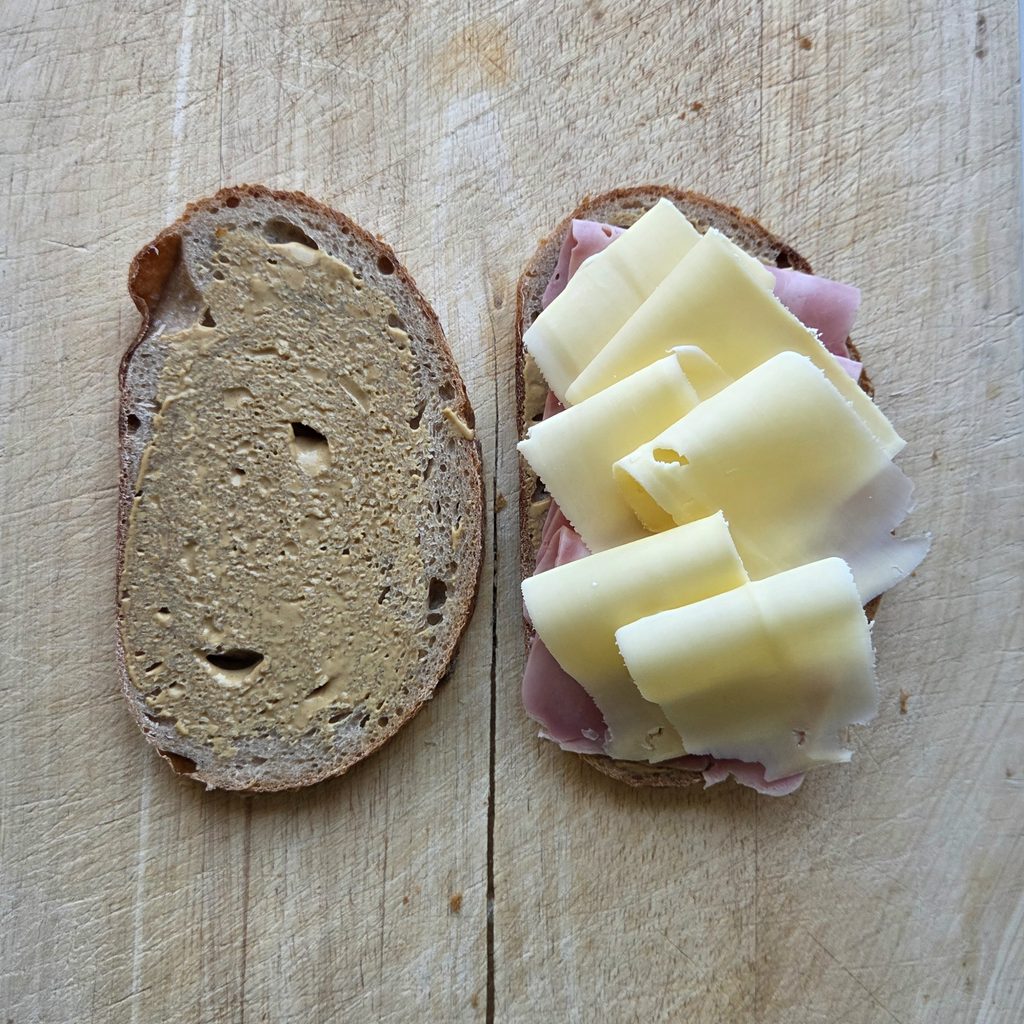
- Build the sandwiches: Fold the ham loosely over two of the slices and lay the cheese on top, keeping it inside the crust line. Close with the remaining slices, mustard side down.
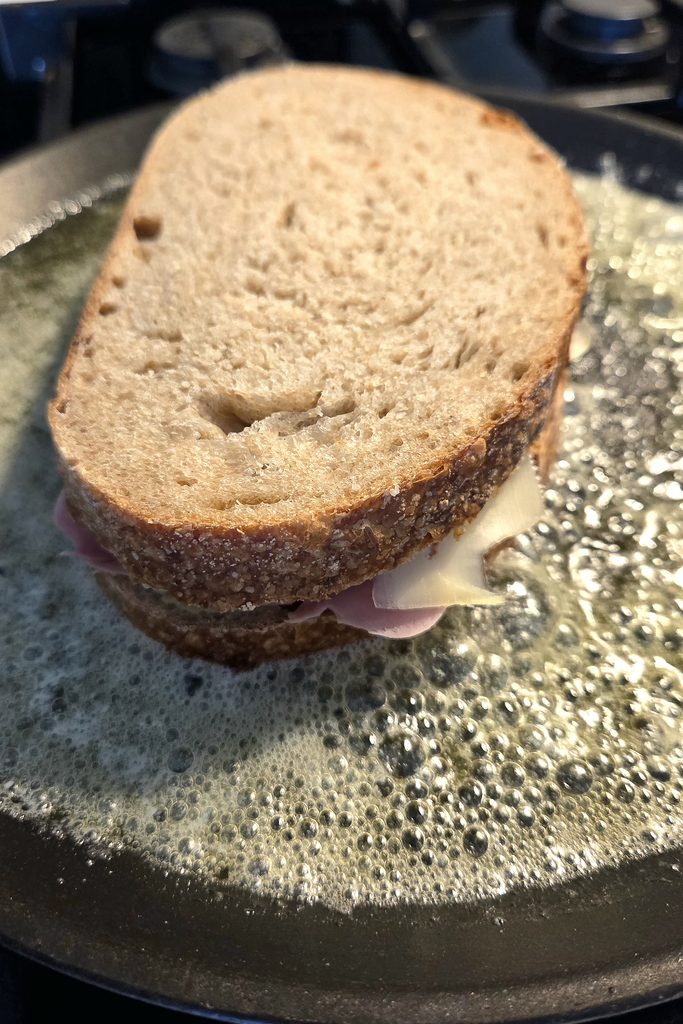
- Start frying: Melt half the butter in the skillet over medium-low heat until it foams. Add the sandwiches and fry 2–3 minutes, until the underside is light golden. Don't press them.
- Turn and brown: Add the rest of the butter, let it foam and turn the sandwiches into it. Keep turning them back and forth every minute or two for 6–8 minutes more, until both sides are deep golden brown and the cheese runs at the edges. If the butter browns or the bread darkens faster than the cheese melts, turn the heat down.
- Rest and cut: Rest the sandwiches on the board for 1 minute so the cheese settles, then cut them diagonally.
- Dress and serve: While the sandwiches rest, toss the greens with enough vinaigrette to coat the leaves. Serve right away with the sandwiches.
Notes
Why leftover sourdough makes a better grilled ham and cheese
A grilled sandwich spends close to ten minutes in the pan, which is longer than most fried bread. Fresh sourdough soaks up butter over that time and turns heavy, and the soft crumb squashes flat under the spatula. After two days the crumb has firmed up. It keeps its shape, takes on color instead of fat, and holds the filling in place when you cut it.
We cut the slices ½ inch (1.5 cm) thick from the middle of the loaf. Thinner slices burn before the cheese has melted, and thicker ones leave the center cold. Any of our loaves works here; this one is our whole grain sourdough, and the leftover sourdough guide collects everything else we do with the end of a loaf.
Medium-low heat and foaming butter
This is the opposite of our chanterelle toast, where a hot pan crisps the bread fast and nothing has to cook through. Here the cheese must melt all the way to the center before the crust goes too far, so the heat stays at medium-low for 8 to 10 minutes in total.
We turn the sandwiches back and forth several times instead of frying one side and then the other. The side that just left the pan keeps sending its heat inward while the other side browns, so the cheese warms from both directions at once and neither crust gets ahead. Every turn also shows you the color, which makes the browning easy to control. We never press the sandwich; the bread stays airy and the cheese stays inside.
We melt the butter in the pan instead of spreading it on the bread. It foams up around the slices, and the open crumb browns in a marbled pattern wherever it touches the metal. A quiet, steady foam means the heat is right. If it turns brown and smells of hazelnut early on, the pan is too hot: lift it off the burner for half a minute and turn the heat down. The second half of the butter goes in at the first turn, so the bread keeps frying in fresh fat.
Jarlsberg, sliced thin
Jarlsberg is mild and slightly sweet, and it melts evenly into the ham. We cut it with a Norwegian cheese slicer, which gives sheets thin enough to soften in the same time the bread needs to brown. A thick slab cut with a knife stays firm in the middle long after the crust is done. In Norway a sandwich like this just goes by “toast”. ⚠️
Swiss or Emmental behave the same way if you can’t find Jarlsberg. The same cheese goes into our caramelized onion sourdough, and the last slices of that loaf make a very good grilled sandwich.
A sharp salad to cut the butter
Butter, ham and cheese want something acidic next to them on the plate. We make the vinaigrette with the same Dijon that goes in the sandwich, at one part vinegar to three parts oil, and shake it in a jar. The mustard, honey and vinegar go in first. The oil follows a little at a time with a hard shake between each pour, so the mustard binds one round before the next arrives. Toss the greens while the sandwiches rest. Soft leaves dressed any earlier go limp before the sandwich reaches the table.

More from the Nordic kitchen
- Norwegian French Toast (Arme Riddere) — two-day-old sourdough soaked in cardamom custard and fried in butter
- Sourdough-Crusted Salmon — a slice cut thin enough to fuse onto the fish as it fries
- Sourdough Bread Chips — thin slices baked crisp, with a cold dill sour cream dip