Toast Skagen (Swedish Shrimp Toast)
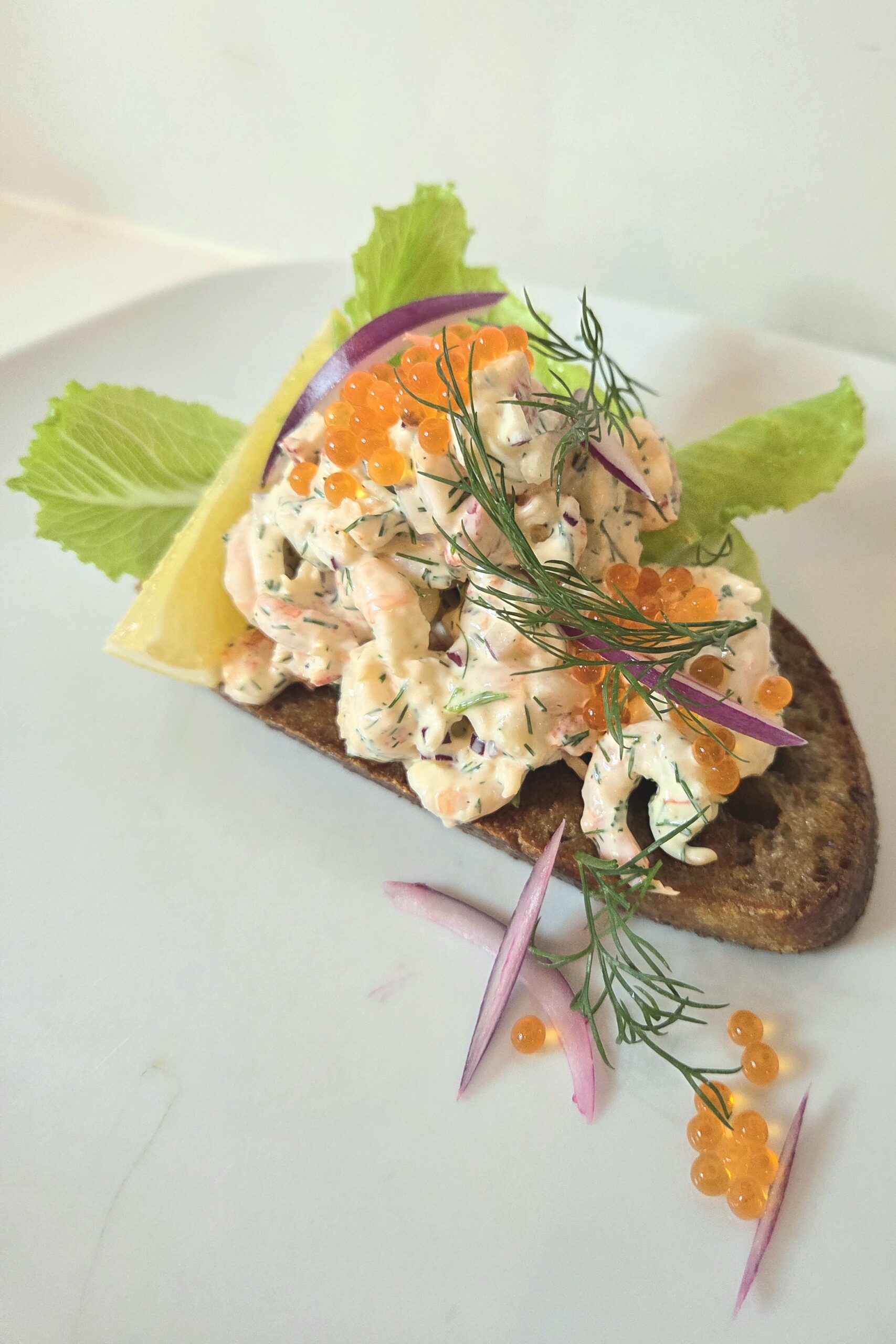
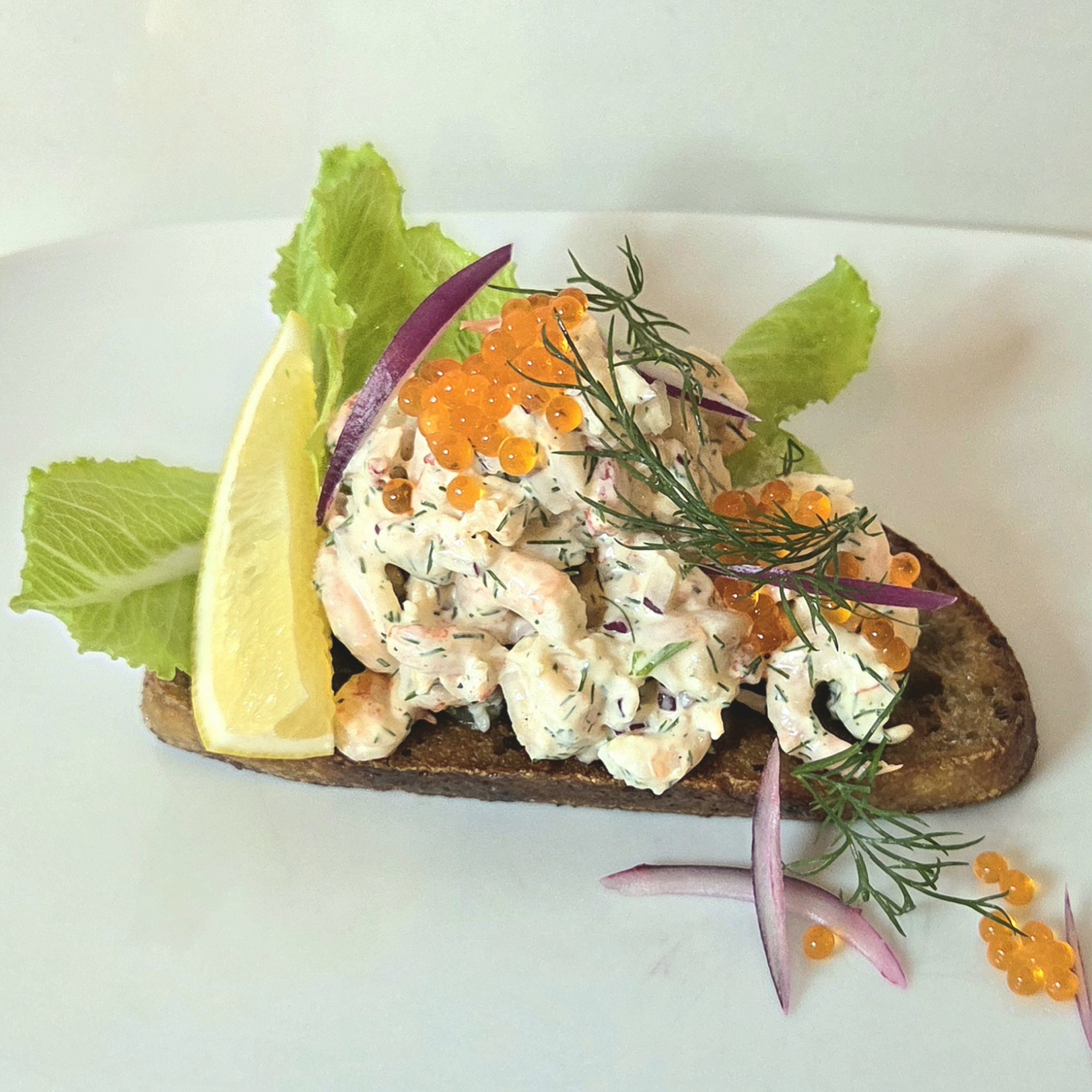
Toast Skagen is the Swedish shrimp toast: bread fried in butter under a cold pile of shrimp in dill dressing, with roe on top. We fold crayfish tails in with the shrimp and finish with salmon roe, and the bread underneath is a slice of our own whole grain sourdough.
Toast Skagen (Swedish Shrimp Toast)
Ingredients
Equipment
Method
- Drain the shellfish. Tip the shrimp and crayfish into a sieve and leave them for 5 minutes, then pat dry with paper towels. They should look matte, with no liquid pooling underneath.
- Make the dressing. In a bowl, stir together the mayonnaise, crème fraîche, chopped red onion and chopped dill. Squeeze in the juice of one lemon wedge (about 1½ tsp) and season with salt and pepper.
- Fold in the shellfish. Add the shrimp and crayfish and fold with a spatula until just coated, keeping the shrimp whole. Taste and adjust the salt and lemon. Keep cold while you fry the bread.
- Heat the fat. Heat half the butter and half the oil in a large frying pan over medium-high heat until the butter foams.
- Fry the bread. Fry two slices at a time until deep golden and crisp on both sides, about 2 minutes per side. Wipe out the pan and repeat with the rest of the butter, oil and bread.
- Rest on a rack. Move the slices to a wire rack for 1–2 minutes so the steam escapes from the underside.
- Build the toasts. Set each slice on a plate, tuck two or three romaine leaves along the back and spoon the röra on top. Add a lemon wedge at the side.
- Finish and serve. Spoon the salmon roe over the röra in small mounds and finish with red onion strips and dill sprigs. Serve straight away, while the toast is still crisp.
Notes
No crème fraîche: full-fat sour cream does the same job. Other roe: trout roe has smaller beads; lumpfish roe is the budget choice. Give lumpfish a quick rinse in a fine sieve if it colors the dressing. Storage: keep leftover röra covered in the fridge and eat it within 24 hours. Fried bread doesn’t keep, so fry only what you’ll serve.
Swedish, even though the name is Danish
Most people guess Denmark when they hear the name, and the guess makes sense: Skagen is the fishing town at the very northern tip of Jutland. The dish itself is Swedish. It’s credited to the Stockholm chef and restaurateur Tore Wretman, who introduced it in the 1950s, and the story usually told is that he first made it on board during a sailing race off Skagen in 1956 (sweden.se).
The classic is plain shrimp in a mayonnaise dressing on butter-fried white bread, crowned with löjrom, the small golden vendace roe from the northern Baltic. We keep that build and change the details, for reasons that come up in each section below.
Shrimp and crayfish in the toast Skagen mix
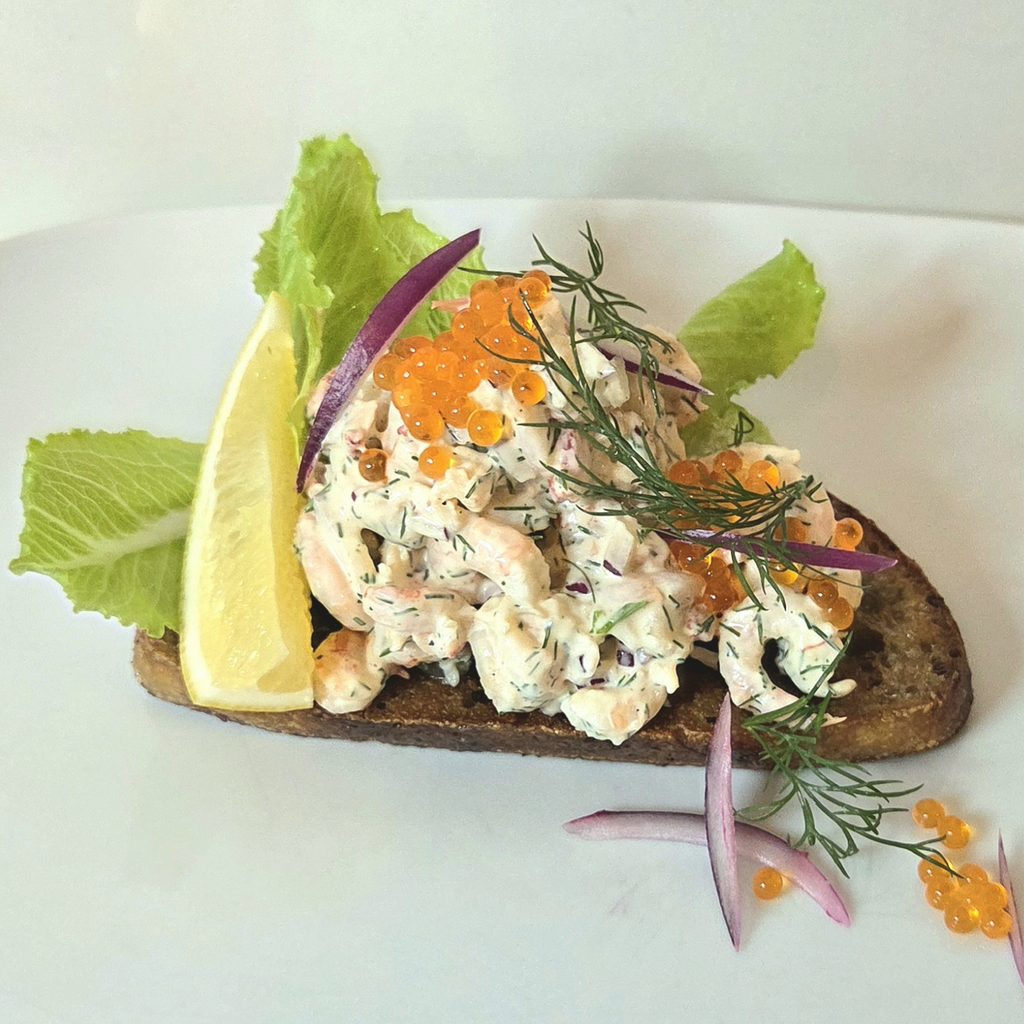
Shrimp alone makes a good toast Skagen. Crayfish tails make a better one, to our taste: they’re firmer and a little sweeter, and two textures keep every bite from tasting the same. We use 150 g shrimp to 100 g crayfish, so the shrimp stay in charge.
Both come cooked. In Scandinavia, crayfish tails are sold in brine; in the US, look for cooked crawfish tail meat, often in the freezer section. Whatever you buy, drain it in a sieve and pat it dry. Wet shellfish is what usually turns skagenröra loose and watery on the plate.
The dressing is half mayonnaise, half crème fraîche. Mayonnaise on its own sits heavy on a slice that has already been fried in butter, while crème fraîche brings a clean sourness and keeps the mix light. Taste before you salt. Peeled shrimp are often brined, and some brands carry plenty of salt already.
Why the bread is fried in butter, not toasted
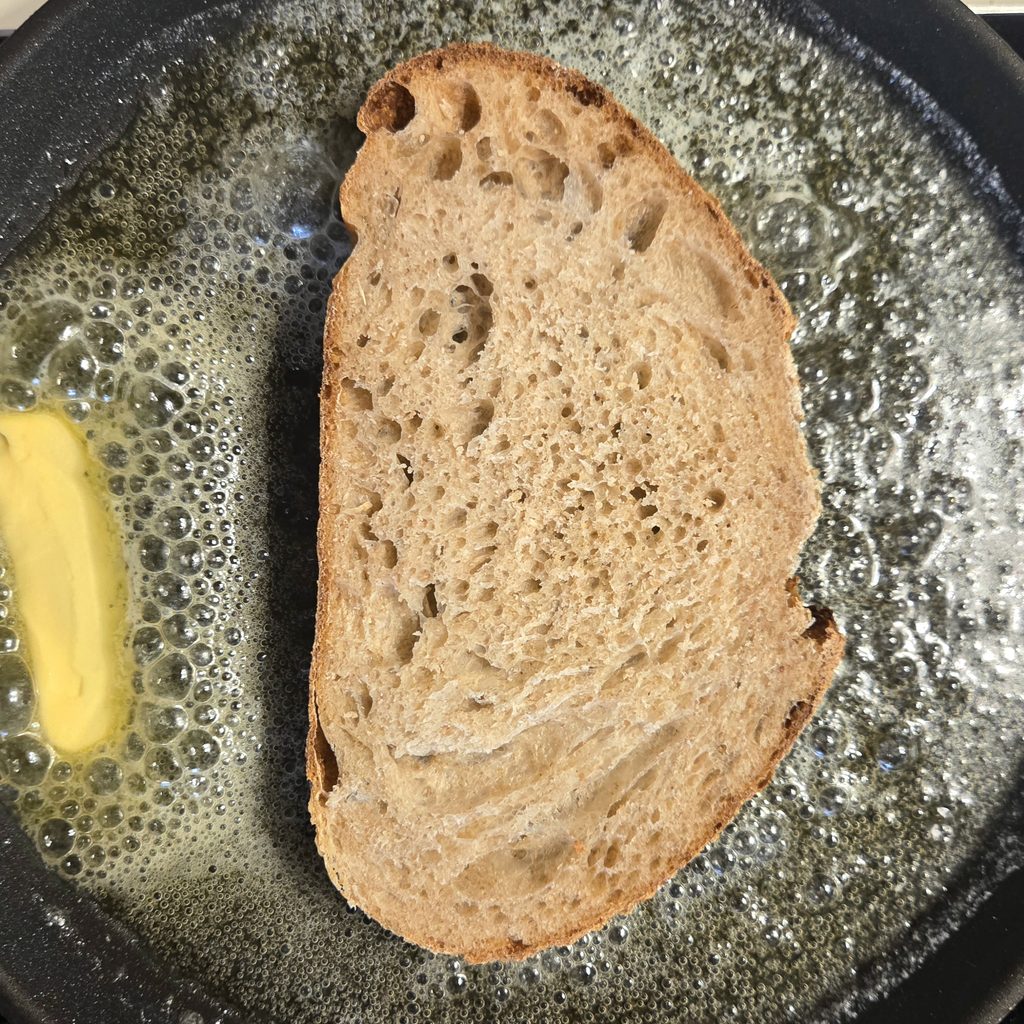
The classic toast Skagen sits on bread fried in butter. We put the same amount of neutral oil in the pan, which lets the heat stay at medium-high long enough for a deep golden crust before the butter burns. A fried surface also holds up under the cold dressing far longer than dry toast does.
We use our whole grain sourdough when it’s two days old, cut about ½ inch (1 cm) thick. By then the crumb has dried out enough to fry crisp all the way through, and it stays firm under a heaped spoonful instead of bending. The whole grain adds a nutty depth that suits shellfish. Skip any slice with a big hole near the middle: the dressing will find it. If the end of a loaf is sitting on your counter, this is a good job for it, and our guide to using up leftover sourdough has plenty more.
Fry two slices at a time, about 2 minutes per side, and wipe the pan between batches so dark bits from the first round don’t scorch on the second. When the slices are deep golden, move them to a wire rack for a minute or two before you build. Left on a plate, the underside steams and loses its crunch; on a rack it stays crisp.
Salmon roe instead of löjrom
Löjrom is what Wretman used, and it’s still the classic topping in Sweden. Outside the Nordics it’s hard to buy and expensive when you find it, so we use salmon roe. The beads are bigger and oilier, they burst rather than pop, and the orange stands out clearly against a pale pile of shrimp. Trout roe sits in between if you want something smaller. Our caviar dip goes through the other roes and what each one brings.
Spoon the roe on last, in two or three small mounds, and leave it there. Stirred into the röra the beads crush and leak into the dressing.
Roe is a raw fish product. If you’re pregnant, older or unwell, choose pasteurized roe or leave it off; the toast still works without it.
More from the Nordic kitchen
- Chanterelle toast — another slice fried in butter, this time under golden mushrooms
- Grilled ham and cheese — Jarlsberg, ham and Dijon, turned slowly in foaming butter
- Sourdough-crusted salmon — a salmon fillet under a thin slice of sourdough that fries to a crackle