Sourdough Crackers with Spelt
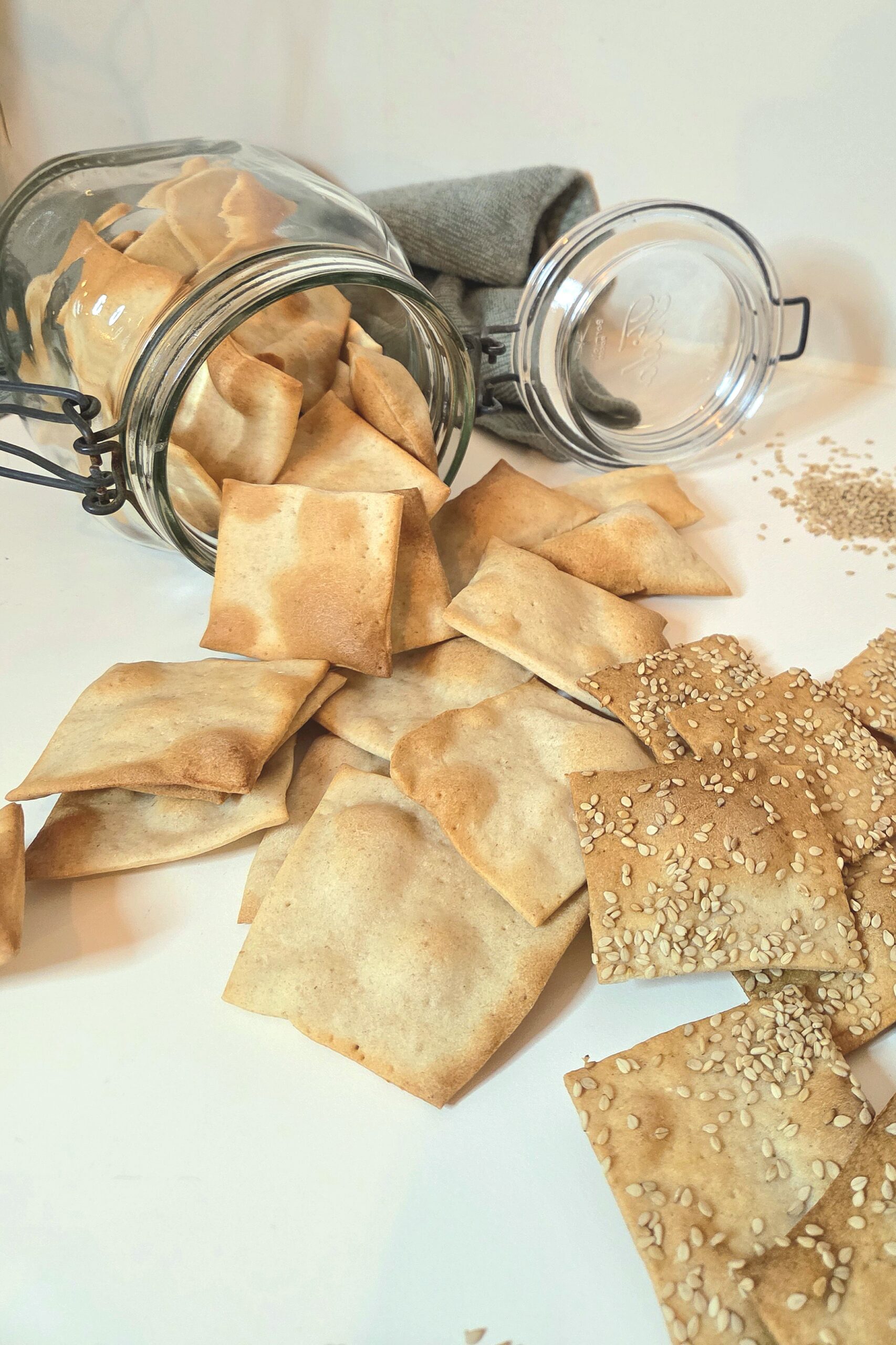
Sourdough crackers keep in a jar on the counter and go well with cheese or a spoonful of something on top. Ours use whole spelt alongside all-purpose flour, and a salt brine brushed on before baking. The dough needs a night in the fridge, then it rolls out in minutes.
Sourdough Crackers with Spelt
Ingredients
Equipment
Method
- Mix and knead: Put all the dough ingredients in the bowl of a stand mixer fitted with a dough hook. Knead for 10 minutes on low to medium speed, until the dough pulls away from the sides of the bowl. It will be firm and dry. Don't add more water.
- Rest overnight: Put the dough in a plastic bag or an airtight container and refrigerate for 12–24 hours. The dough is noticeably softer the next day.
- Make the brine: Stir the salt into the water until it dissolves.
- Preheat: Heat the oven to 400°F (200°C) on the convection (fan) setting, with a rack in the center.
- Roll: Divide the dough into 3 equal pieces, one per baking sheet. Keep the pieces you aren't rolling covered in the fridge. Start rolling on the counter. When the sheet gets thin, move it onto parchment and keep rolling until it is about 1/16 inch (2 mm) thick and even all over.
- Brush, top and dock: Brush the sheet lightly with brine. While the surface is still damp, sprinkle with sesame seeds if using. Prick the dough all over with a fork.
- Cut: Cut the sheet into about 40 squares of roughly 2 inches (5 cm) with a pizza cutter or knife, or stamp out rounds with a cutter. Slide the parchment onto a baking sheet.
- Bake: Bake for 5–10 minutes, until the edges are golden, the surface has brown patches and the crackers are crisp. Lift one and snap it before you take the tray out: if it bends, give the tray another minute or two. Watch closely after 5 minutes, because thin crackers darken fast.
- Cool: Move the crackers to a wire rack and let them cool completely. Roll out the next piece while the first tray bakes, and bake one tray at a time.
- Mix the crab salad: Pick through the crab meat for bits of shell. Stir the mayonnaise, crème fraîche, red onion, lemon juice and chopped dill together in a bowl, then fold in the crab. Season with salt and pepper, and keep it cold until serving.
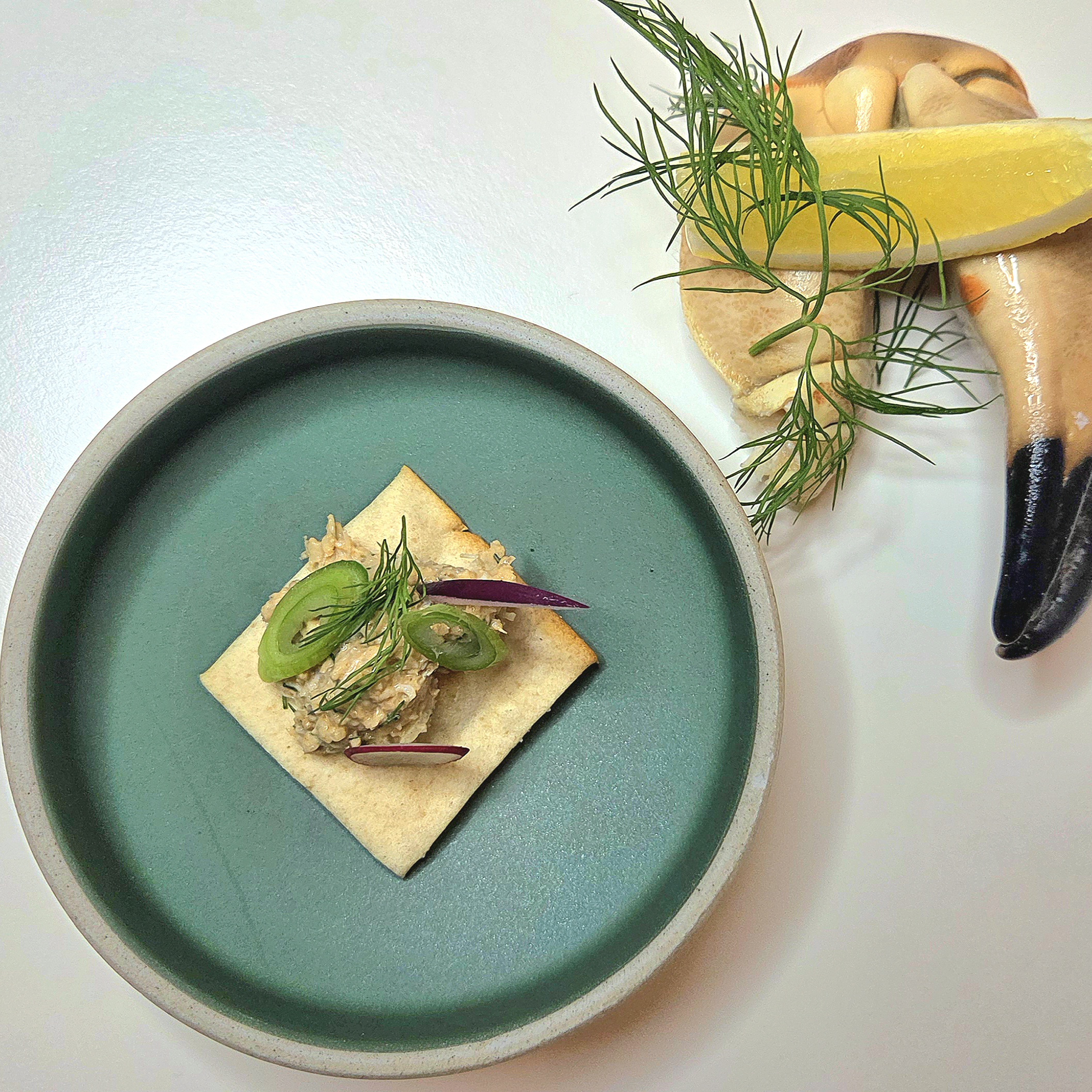
- Top and garnish: Just before serving, spoon a small mound of crab salad onto each cracker. Finish with spring onion, red onion, a slice of radish and a sprig of dill.
Notes
Store the crackers in an airtight jar at room temperature for weeks. Soft crackers crisp up again after 3–4 minutes at 350°F (175°C). For the crab salad, Dungeness is the closest US match to the Norwegian crab we use. For a shortcut, buy dressed crab (cleaned shells filled with the meat) or ready-picked crab meat. Sour cream can replace the crème fraîche. Keep the crab salad in the fridge and use it within a day.
Why the dough rests in the fridge overnight
Straight from the mixer, this dough is firm and dry. Counting the water in the starter, hydration is around 45 percent, far stiffer than a loaf, and if you try to roll it out right away it fights back and shrinks. After a night in the fridge the flour has absorbed all the water and the gluten has relaxed, so the same dough rolls out thin without springing back.
We use active starter, fed at 1:1:1 and roughly doubled (our feeding guide explains the ratio and how to time it). In a cracker rolled this thin, it matters more for flavor than for rise, and the overnight rest gives it time to add a mild tang.
Rolling sourdough crackers to 2 mm
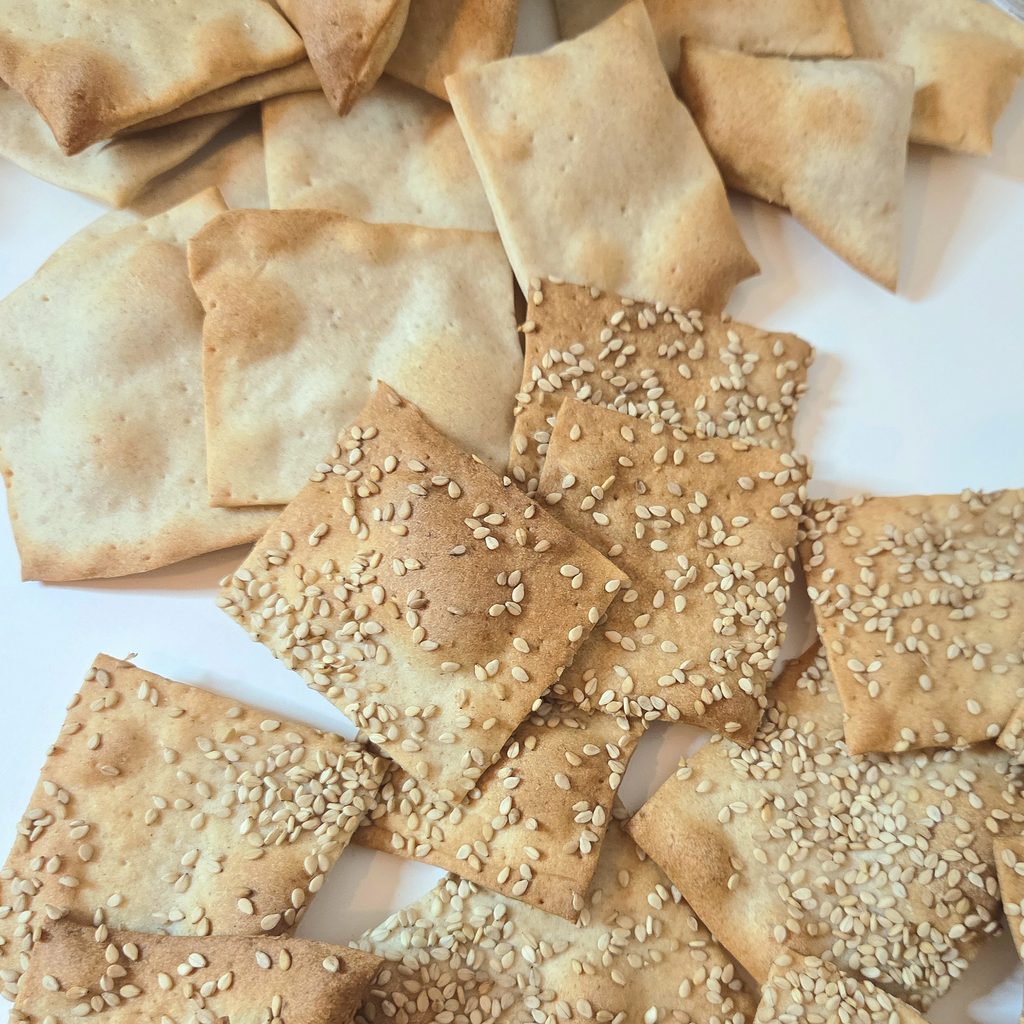
Thickness decides the texture. At 2 mm the crackers snap cleanly. At 3 mm they bake up harder and more like a biscuit, and the centers stay pale while the edges brown.
We start on the counter and finish on the parchment. Once the sheet is thin it tears easily if you try to move it, so it goes onto the paper halfway and stays there through rolling, brushing, cutting and baking. Expect the thinnest corners to brown first, as you can see in the photos.
They have to be crisp before they leave the oven. There’s no sugar in the dough to set as it cools, so a cracker that still bends on the tray will be just as soft on the rack.
Salt brine on top, a little salt in the dough
A teaspoon of salt seasons the dough itself. The rest comes from the brine, roughly 11 percent salt, brushed on before baking. As the water evaporates, a fine layer of salt dries onto the surface, more evenly than flakes sprinkled on by hand. That’s also why the sesame goes on right after brushing: the damp surface holds the seeds in place through baking.
You only need a fraction of the brine for one batch. Keep the rest in the fridge for next time.
Docking, and the crackers that puff anyway
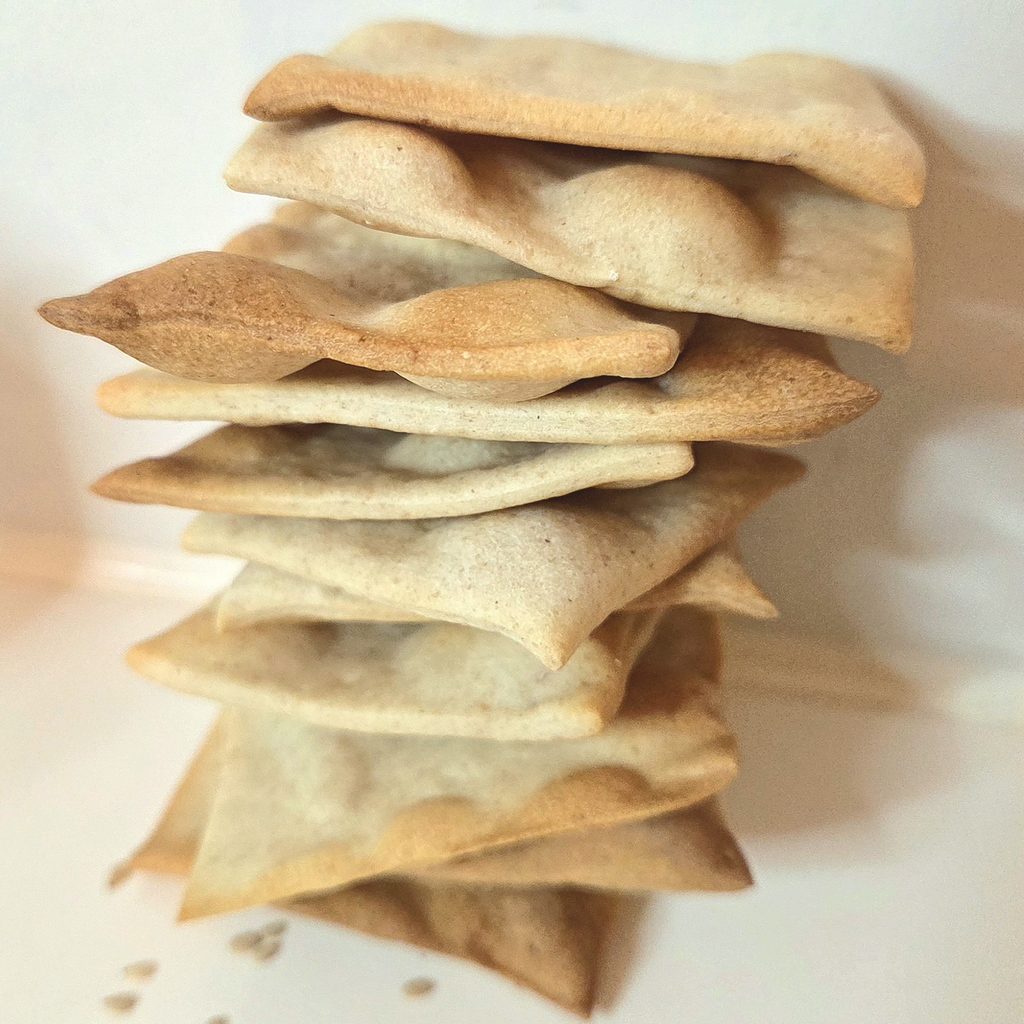
Cheese is the obvious match, from a mild white to an aged one. The crackers in the photos carry a crab salad, and you’ll find it as its own section in the recipe card.
We bind the crab with equal parts mayonnaise and crème fraîche. Mayonnaise on its own makes the salad heavy, and the crème fraîche adds a slight sourness so a little lemon is enough. Red onion goes in finely chopped for bite, while the garnish on top (spring onion on the diagonal, thin red onion wedges, a slice of radish) gives each cracker some crunch and color.
Top the crackers right before serving. A moist salad softens a 2 mm cracker if it sits for long.
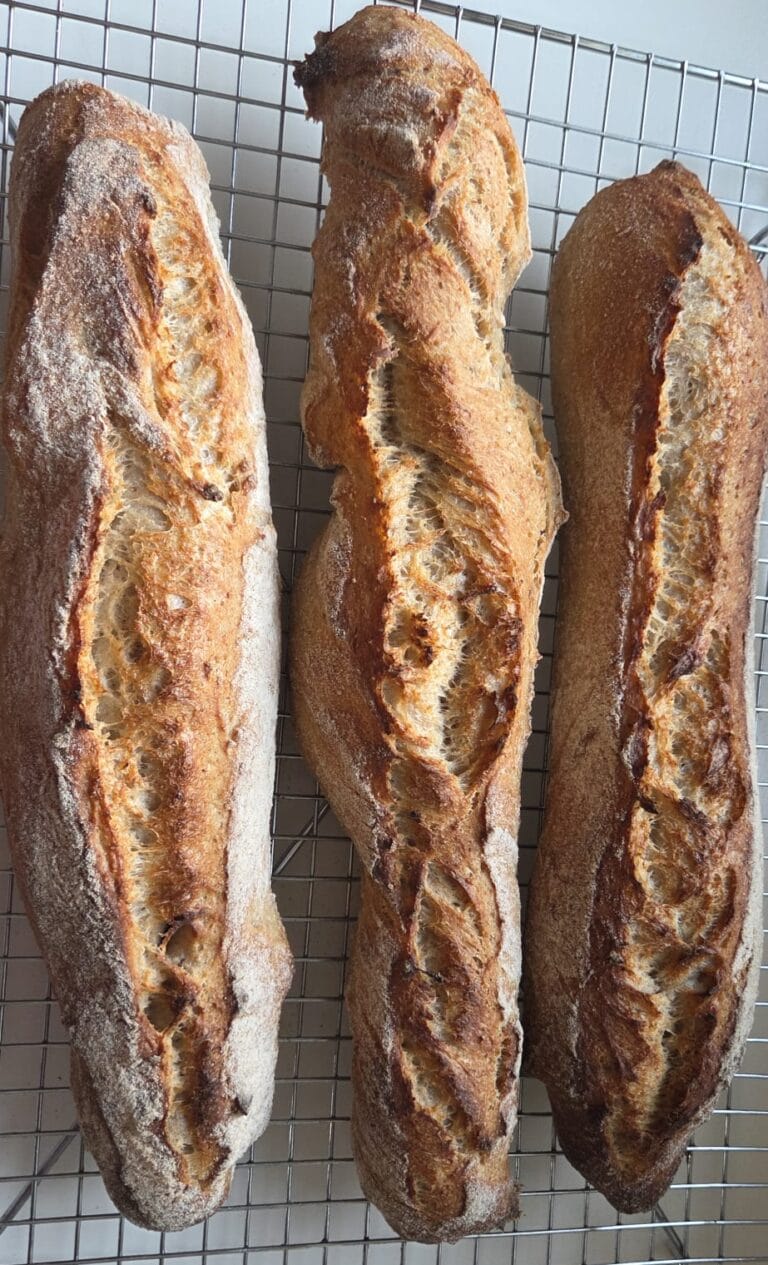
For something similar built on bread, our caviar dip with sourdough chips uses a leftover baguette instead.
More from the Nordic kitchen
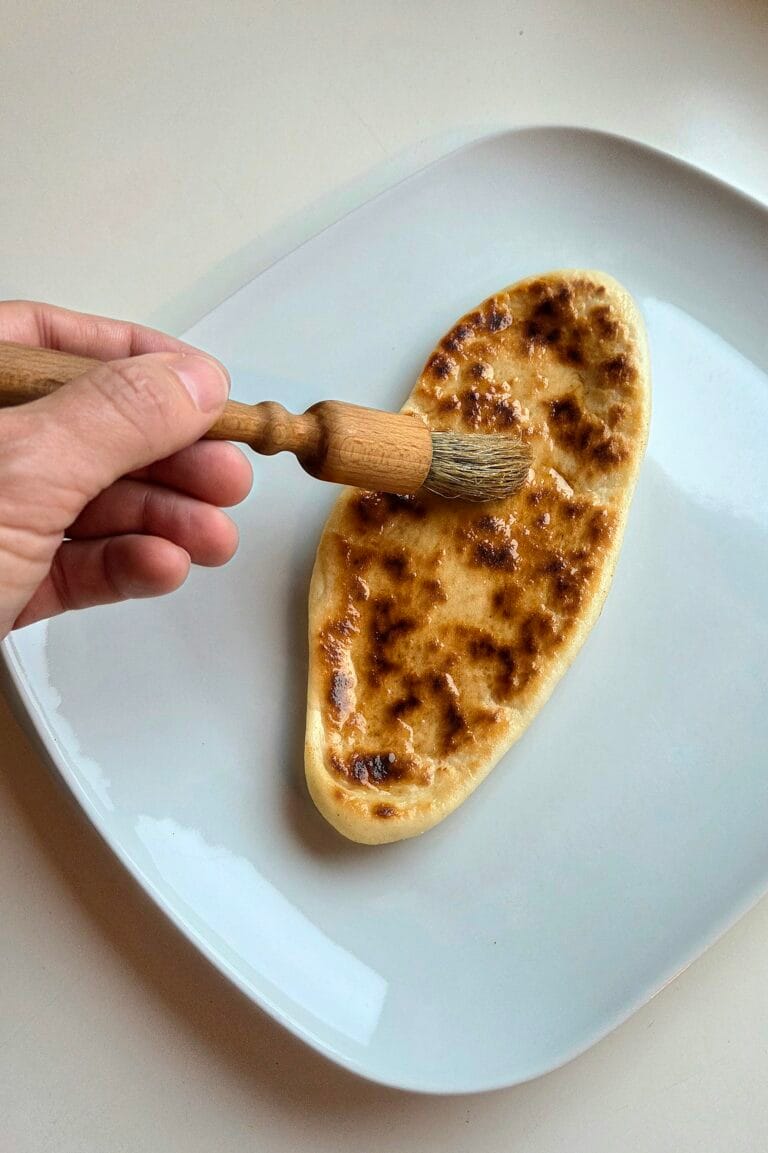
- Sourdough Discard Naan — soft flatbread cooked in a pan, made from the starter jar.
- Danish Rye Bread — dense rugbrød for open-faced sandwiches.
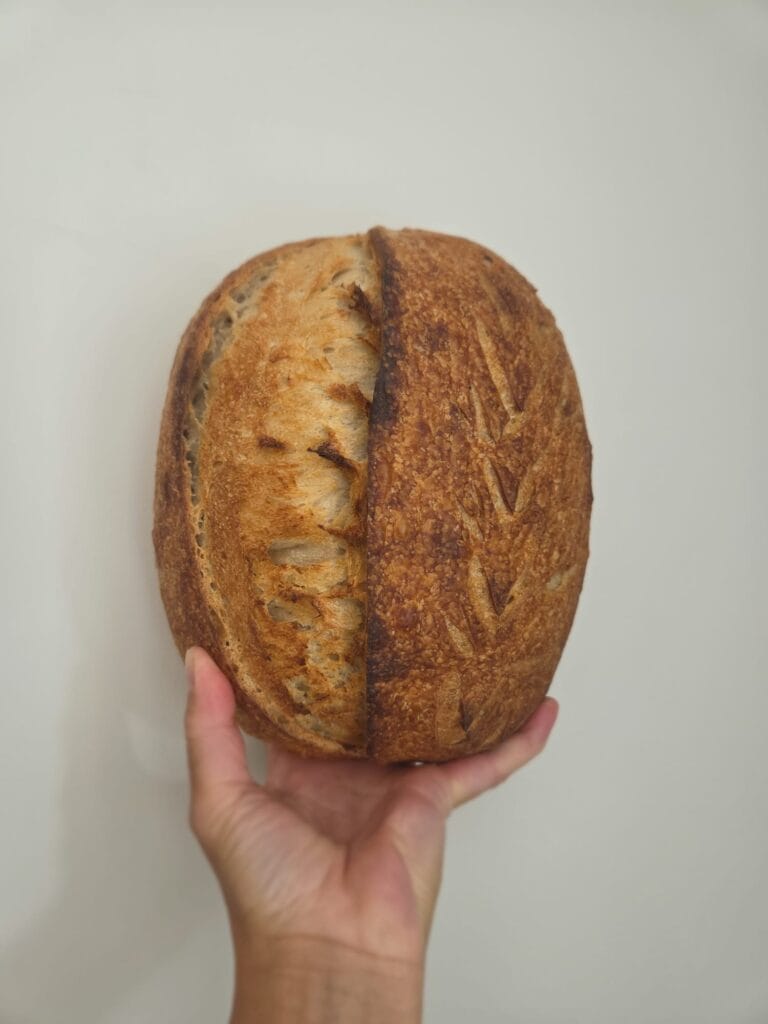
- Whole Grain Sourdough Bread — our everyday loaf with a whole grain blend.