Whole Wheat Waffles with Oats
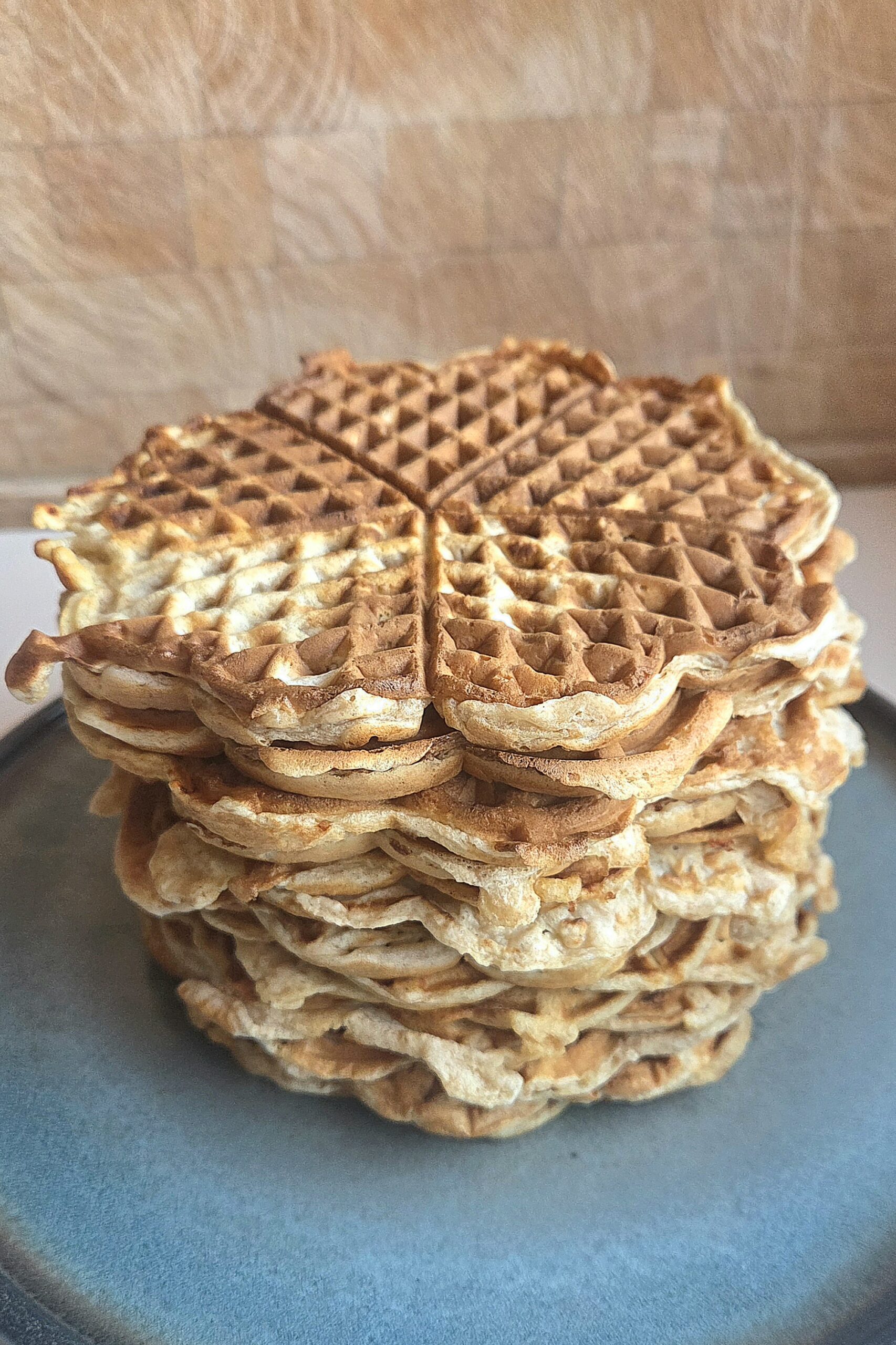
These whole wheat waffles are half white flour and half finely milled whole wheat, with quick oats stirred into the batter. In Norway they’re hverdagsvafler (everyday waffles), and in our house they show up at weekend breakfast and in the kids’ lunchboxes in place of a sandwich.
Whole Wheat Waffles with Oats
Ingredients
Equipment
Method
- Mix the dry ingredients. Whisk the all-purpose flour, whole wheat flour, oats, salt, baking powder and sugar together in a large bowl.
- Add the milk. Pour in about half the milk and whisk to a thick, smooth batter with no dry pockets. Whisk in the rest of the milk.
- Add the eggs. Whisk in the eggs one at a time until the batter is even in color.
- Add the butter. Melt the butter, let it cool for a minute, then whisk it into the batter.
- Let it swell. Rest the batter for at least 30 minutes, until it has thickened and the oats look plump. It can also be covered and refrigerated overnight, or for up to a week.
- Stir before baking. The batter separates as it stands. Stir it up from the bottom until smooth again.
- Bake the waffles. Heat the iron to medium-high and brush it with butter. Ladle in enough batter to just reach the edges, close the lid and bake for about 3 minutes (it varies with the iron and the heat), until the waffle is golden brown and the iron has almost stopped steaming. Brush with more butter as the iron dries out.
- Cool on a rack. Lay each waffle flat on a wire rack rather than stacking them, so the underside stays dry.
Notes
Why our whole wheat waffles are half white flour
These are whole grain waffles, but not 100 percent whole wheat: half the flour is plain white, and we keep it that way on purpose. Bran soaks up liquid and weakens the gluten, so the white flour keeps the batter loose enough to spread evenly in the iron. You still taste the wheat, and the waffle stays soft enough to fold around a slice of cheese.
The whole wheat we use is finely milled (sammalt hvete, fin). Coarse whole wheat leaves the batter gritty and the surface rough. Most supermarket whole wheat flour in the US is milled fine enough to swap in directly.
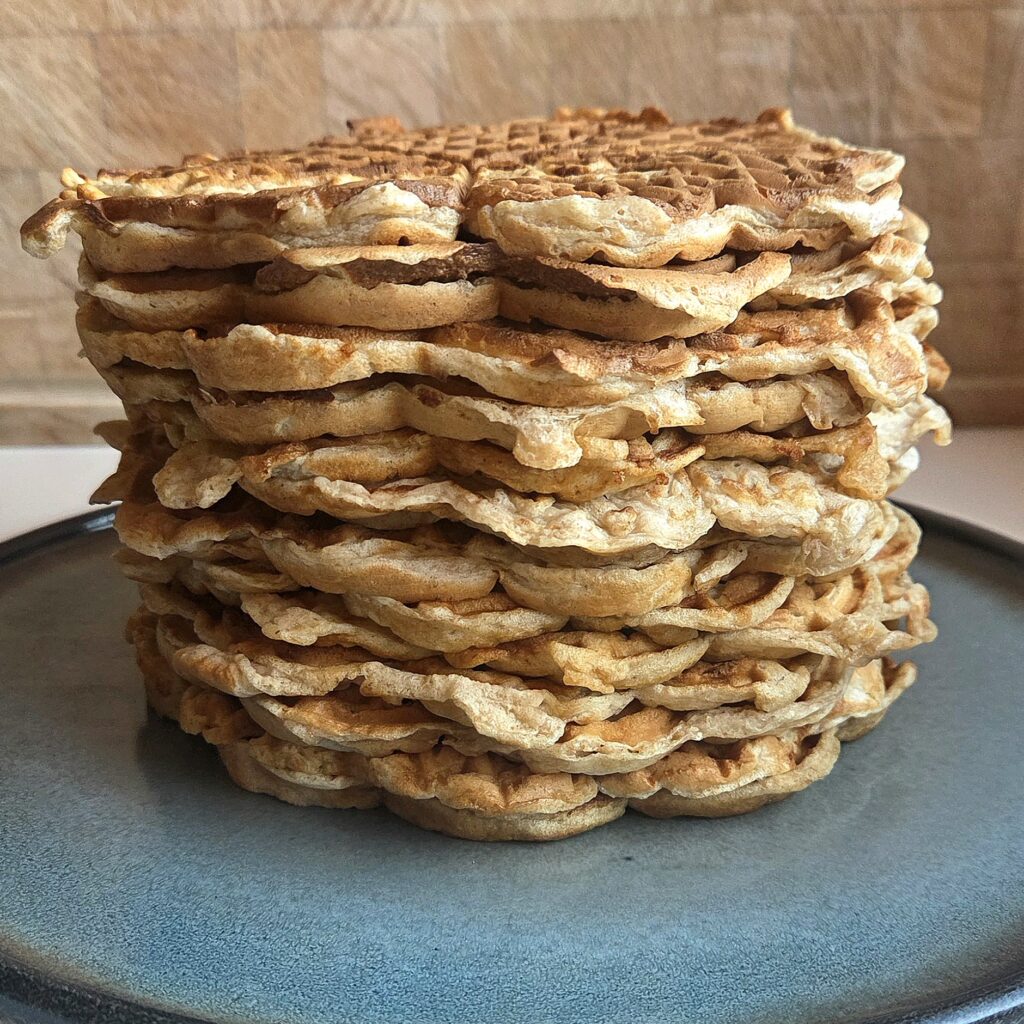
Let the batter swell, overnight if you like
Oats and bran need time to take up the milk, so this batter rests for at least half an hour before it goes into the iron. It thickens as it stands and the oats soften from dry flakes into something closer to porridge.
The batter also keeps in the fridge for up to a week. We often mix it on Sunday and bake on Monday morning, either for breakfast or straight into the lunchbox. It will separate in the bowl, which is normal and stirs back together.
We use quick oats (lettkokte havregryn in Norway). The thin flakes soften completely during the rest, so the batter pours smoothly from the ladle.
Waffles in the lunchbox instead of bread
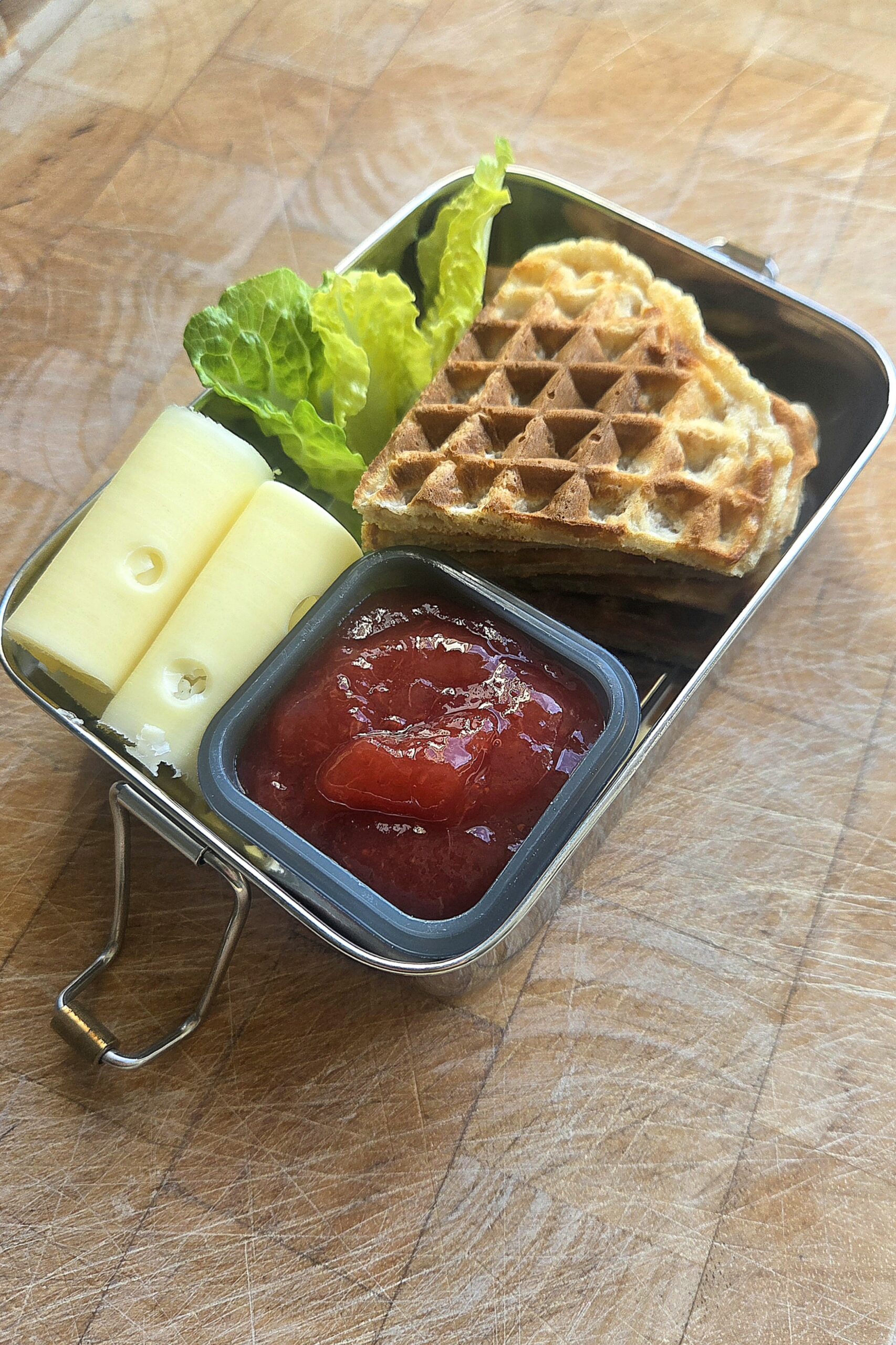
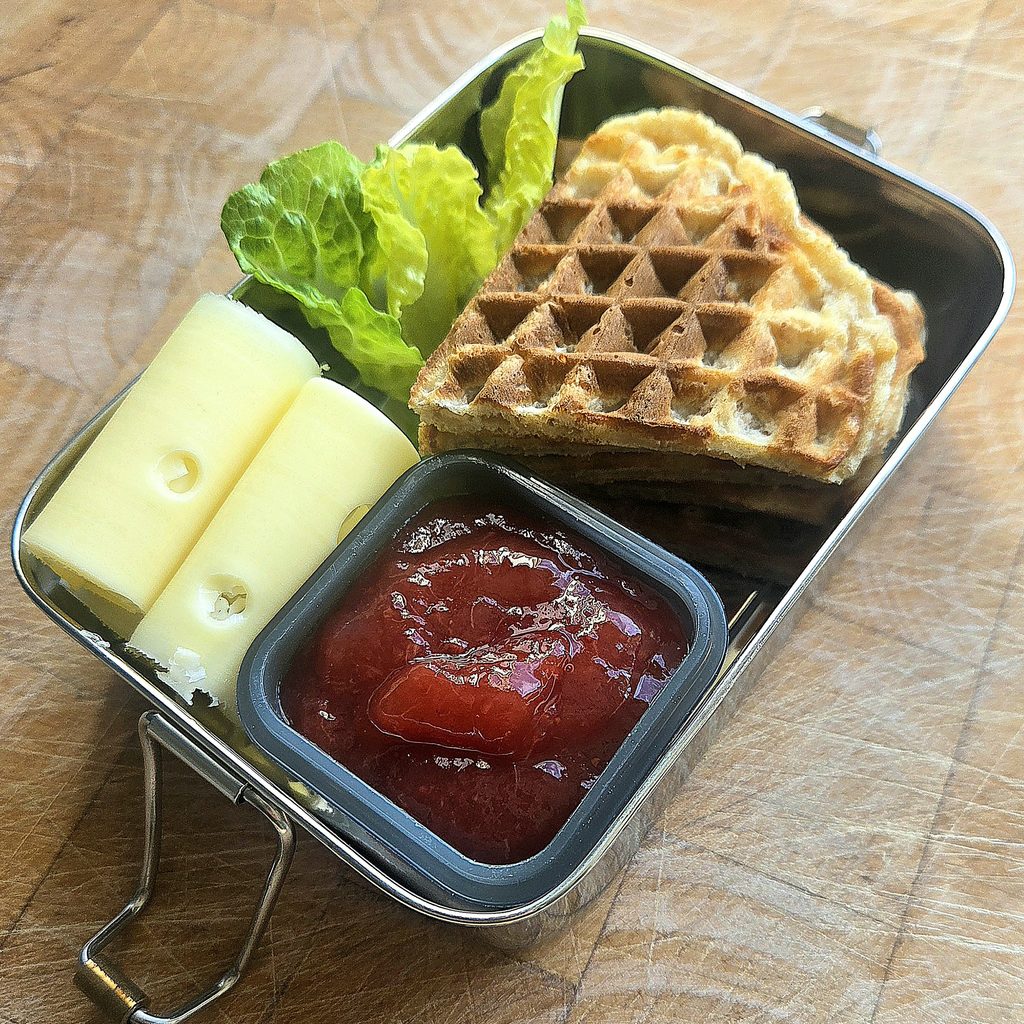
With one tablespoon of sugar for the whole batch, these sit closer to bread than to cake, and that’s why they work cold at lunchtime. Our kids get a few waffle hearts in a steel lunchbox, with rolled cheese, a couple of lettuce leaves and a small pot of jam on the side. Cool them on a rack and pack them only once they’re completely cold: a warm waffle in a closed box steams itself soft by noon.
For a weekend lunch built on a waffle, our savory waffles with smoked salmon use a yeasted whole grain batter with no sugar at all. When it’s coffee time rather than a school day, we bake the sweeter Norwegian heart waffles with cardamom instead. Every batter we make, along with how to pick and clean a heart iron, is collected in our guide to Norwegian waffle recipes.
More from the Nordic kitchen
- Crunchy Waffles with Sour Cream & Salmon Roe — wafer-thin waffles from flour, water and butter, served as an appetizer
- Sourdough Waffles — an overnight batter that puts spare starter to work
- Crispy Norwegian Waffles — snappy potato-starch hearts dipped in chocolate, with blackcurrant cream