Kefir Waffles (Kefirvafler)
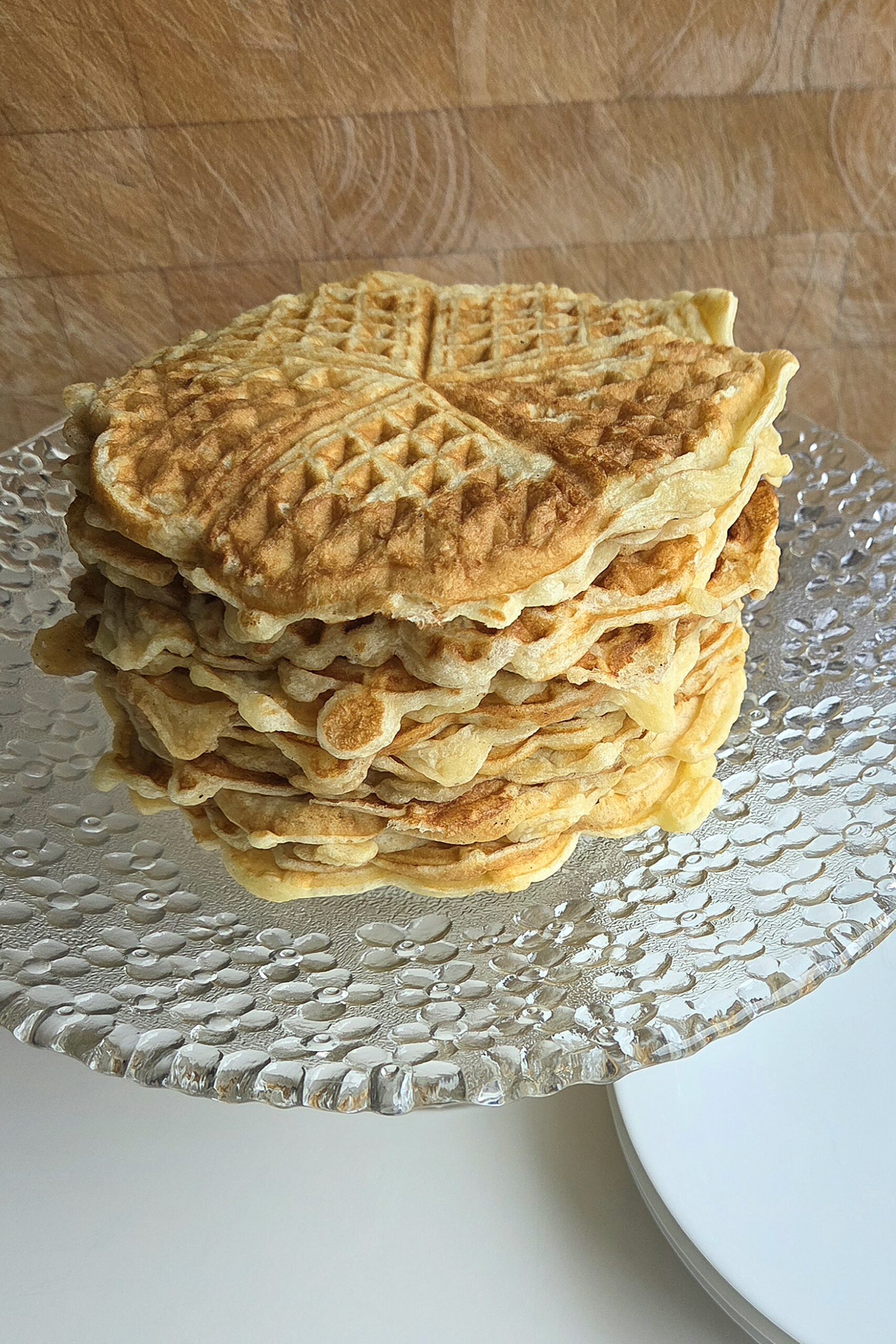
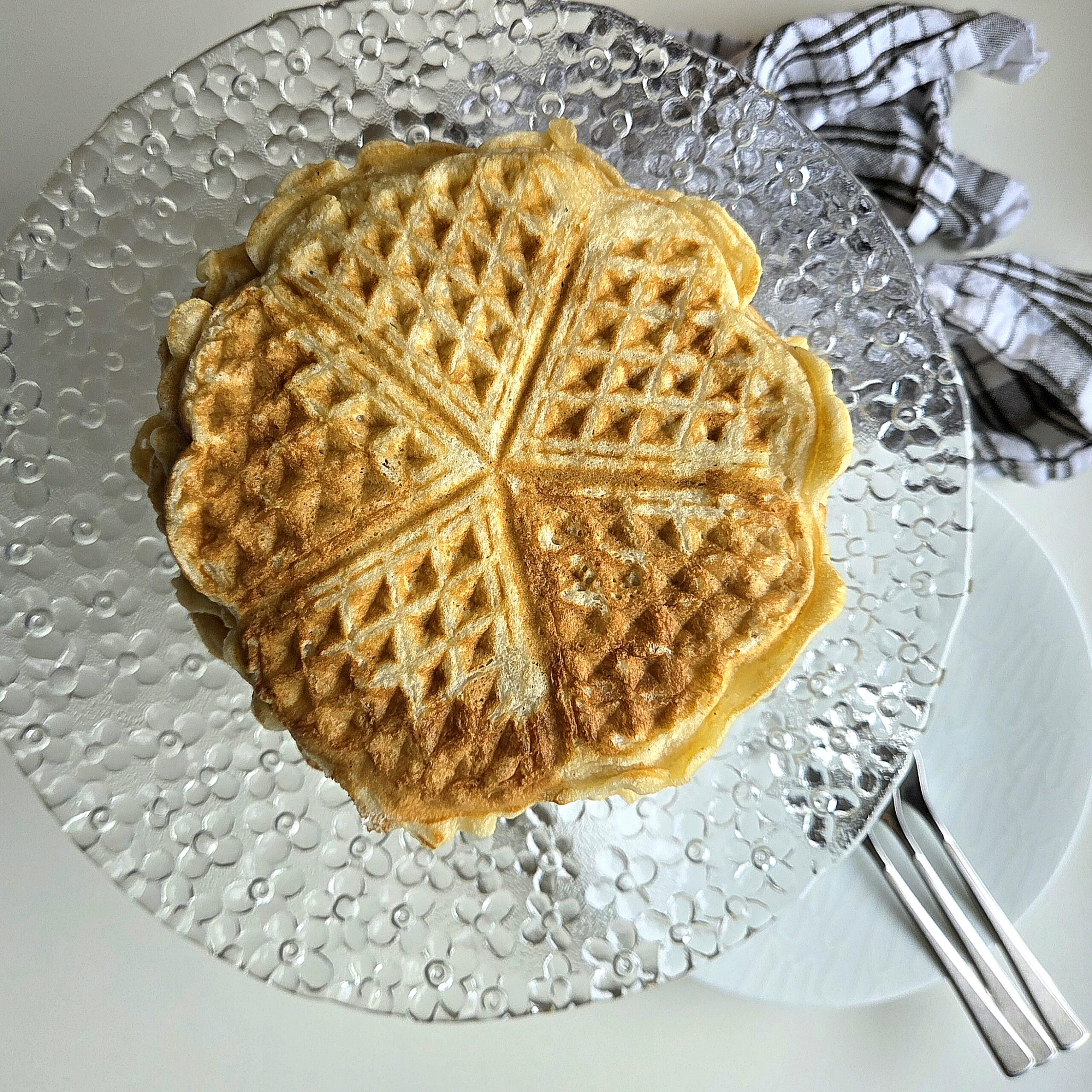
Kefir waffles rise from baking soda reacting with the natural acidity of the kefir, so there is no baking powder anywhere in this batter. A full liter of kefir to 250 g of flour makes a loose batter that bakes into thin, soft hearts, with cardamom and vanilla kept quiet in the background. One batch gives about 25, which covers a full table at afternoon coffee.
Kefir Waffles (Kefirvafler)
Ingredients
Equipment
Method
- Melt the butter. Melt the butter in a small saucepan and set it aside for about 10 minutes, until it no longer feels hot on the back of a finger.
- Whip the eggs. Whip the eggs, sugar, vanilla and cardamom in the stand mixer on high for 4–5 minutes, until pale and thick and the mixture falls from the whisk in a ribbon that sits on the surface for a moment.
- Add the kefir and butter. On low speed, pour in the kefir, then the melted butter, and mix until the batter is even.
- Add the flour. Add the flour a little at a time on low speed. Scrape the bottom of the bowl with a spatula so no dry flour is left.
- Let it rest. Cover the bowl and rest the batter for 30 minutes at room temperature, until it has thickened slightly and looks smooth.
- Stir in the baking soda. Heat the waffle iron to medium-high. Sift the baking soda over the batter and stir it through until no white specks remain.
- Bake. Brush the iron with butter and ladle in about 85 ml (⅓ cup) of batter. Close the lid and bake for about 3 minutes, until golden brown and the iron has almost stopped steaming. Brush with butter before each waffle.
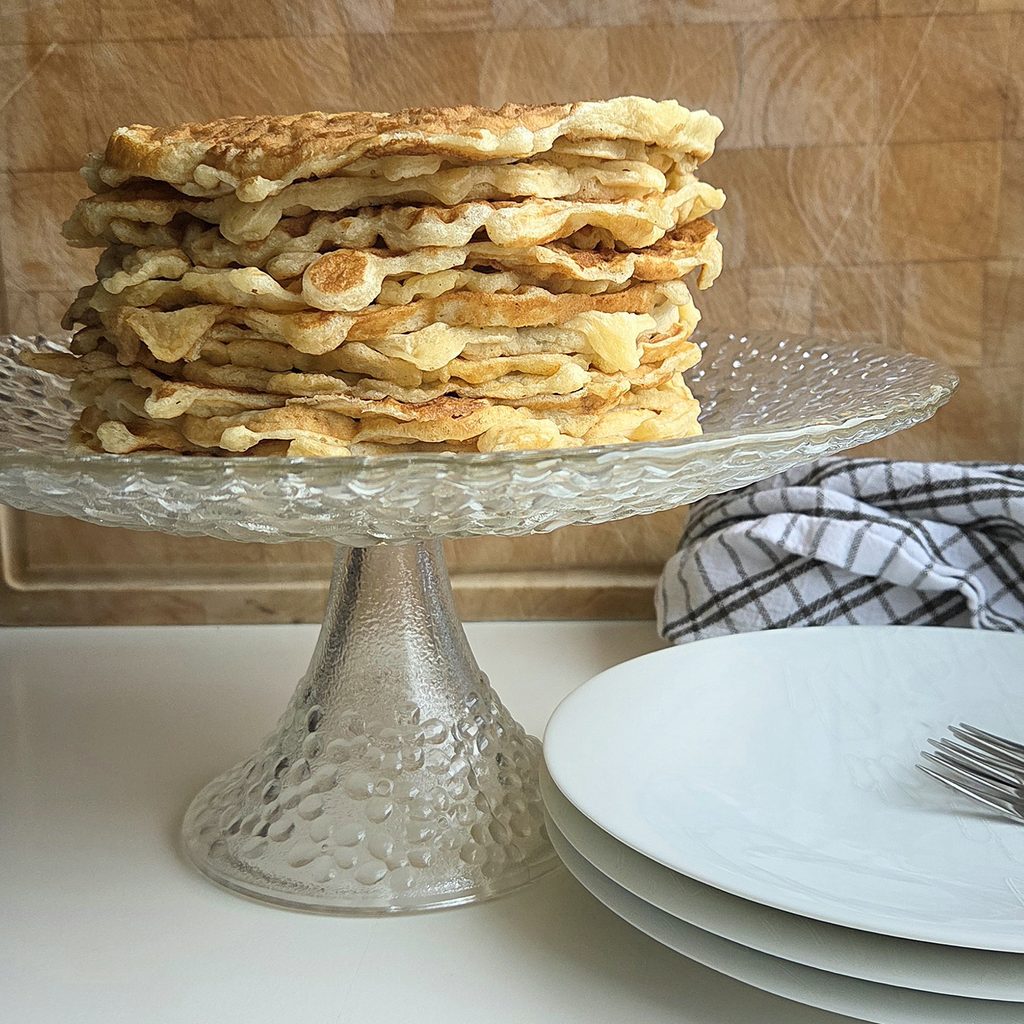
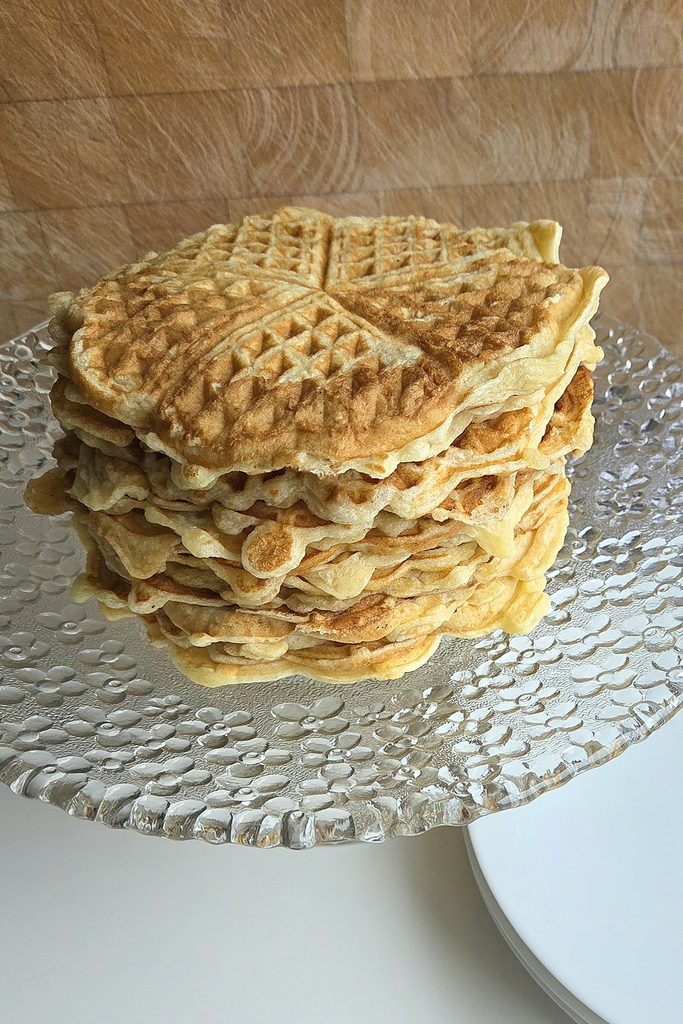
- Keep them soft. Stack the waffles under a clean kitchen towel as they come off the iron and serve them freshly baked.
Notes
Why the baking soda goes in last
Baking soda starts working the moment it meets an acid, and kefir is acidic enough to set it off straight away. Stir it in at the beginning and much of that gas is gone by the time the 30-minute rest is over. We add it only once the iron is heating, so the first waffle goes in while the batter is at its liveliest.
Sift it over the surface rather than tipping it in from the spoon. Baking soda clumps in the jar, and a lump that survives the stirring bakes into a bitter, soapy spot you’ll notice in the first bite.
What kefir does to the batter
Kefir is thicker and more acidic than milk, and both matter here. The acidity is what drives the baking soda, and it also softens the gluten, so these kefir waffles stay tender even after the long stretch at the iron. With 170 g of sugar in the batch, the tang stays in the background.
There is very little flour here for the amount of liquid: 250 g to a liter of kefir and four eggs. Pancake batters work on a similar balance, and we keep it that way on purpose. The batter runs out thin in the iron, and the waffles come off soft and pliable, with wavy edges instead of a thick, even slab. During the 30-minute rest the flour takes up some of the kefir, so the batter has thickened slightly by the time the soda goes in.
Whipping the eggs to eggedosis first
The eggs and sugar are whipped together before the kefir goes in, the way Norwegians make eggedosis. Four or five minutes on high gives a pale, thick foam that traps air and dissolves the sugar fully, so the baking soda isn’t doing all the lifting on its own. If you skip the whipping and whisk everything together at once, the waffles bake up flatter and denser.
Cardamom and vanilla go into the eggs at this stage too, so they spread evenly through the whole batch. The cardamom is a small amount on purpose. For waffles where it leads, bake our Norwegian heart waffles with cardamom.
How we serve kefir waffles
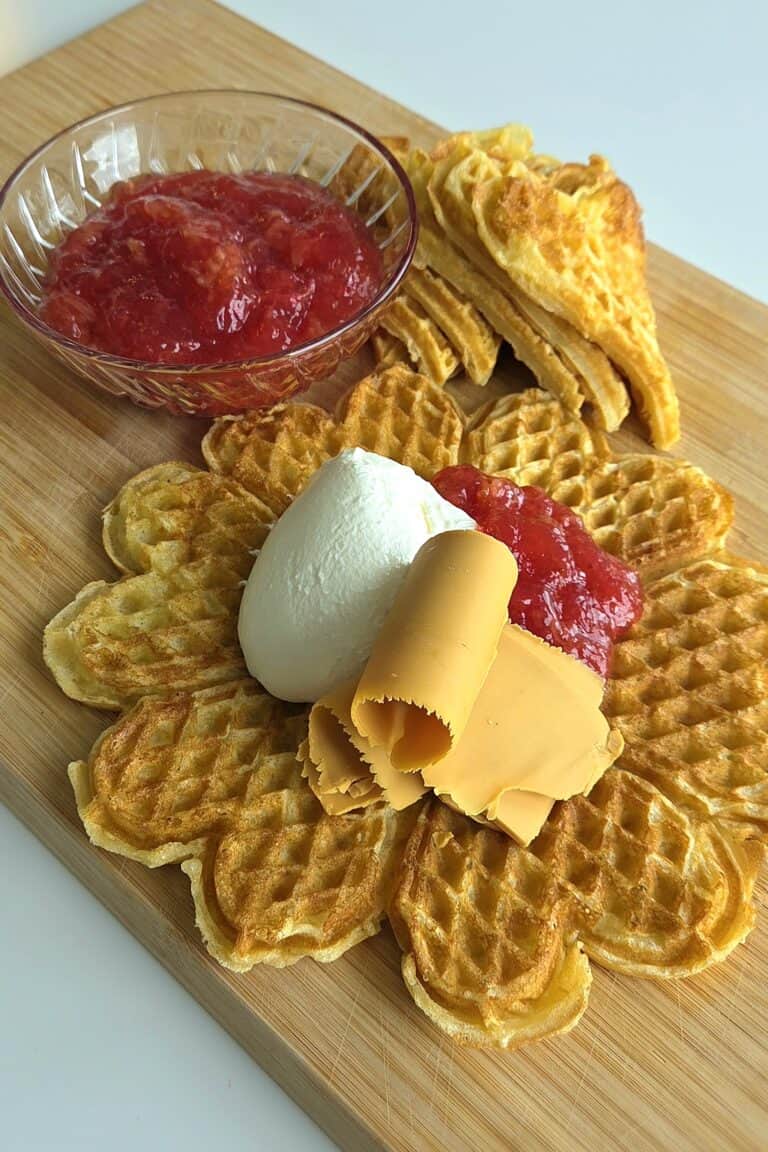
Kefir waffles go with almost anything sweet. Jam and sour cream, fresh berries with whipped cream, or a sprinkle of sugar on a waffle still warm from the iron all work, and on an ordinary afternoon that’s how they reach our table, next to a pot of coffee.
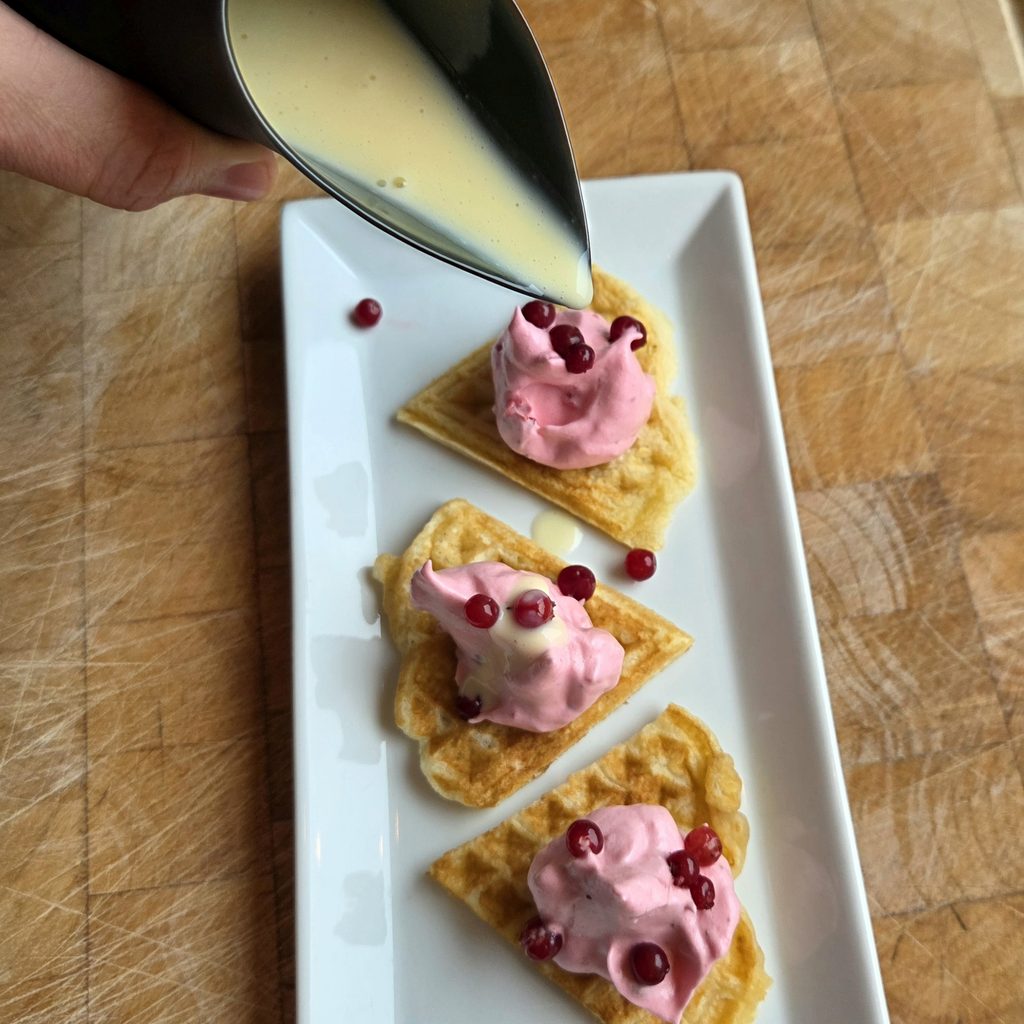
For dessert, we serve them with a Norwegian topping you rarely see outside Norway: Trollkrem (Norwegian Lingonberry Cream), a whipped lingonberry cream that is tart enough to balance the sugar in the batter. The vanilla sauce that goes with it uses up the egg yolks and is in the same recipe. We break the waffles into single hearts, put a spoonful of cream on each with a few fresh lingonberries, and pour the sauce over at the table. Because the waffles are soft, you can cut through heart, cream and sauce with the side of a fork.
Whatever is left at the end of the day doesn’t go to waste. We cut the leftover waffles into strips, dry them in the oven and dip them in chocolate to make leftover waffle chips, which keep for two weeks in an airtight tin.
For tips on picking a heart iron and keeping it clean, see our guide to Norwegian waffle recipes.
More from the Nordic kitchen
- Crispy Norwegian Waffles with Chocolate — thin potato-starch hearts that snap once cool, dipped halfway in chocolate
- Krumkake — the waffle cookie pressed paper-thin and rolled into a cone while hot
- Sveler — thick griddle pancakes with the same soft, sweet place at the coffee table