Sourdough-Crusted Salmon
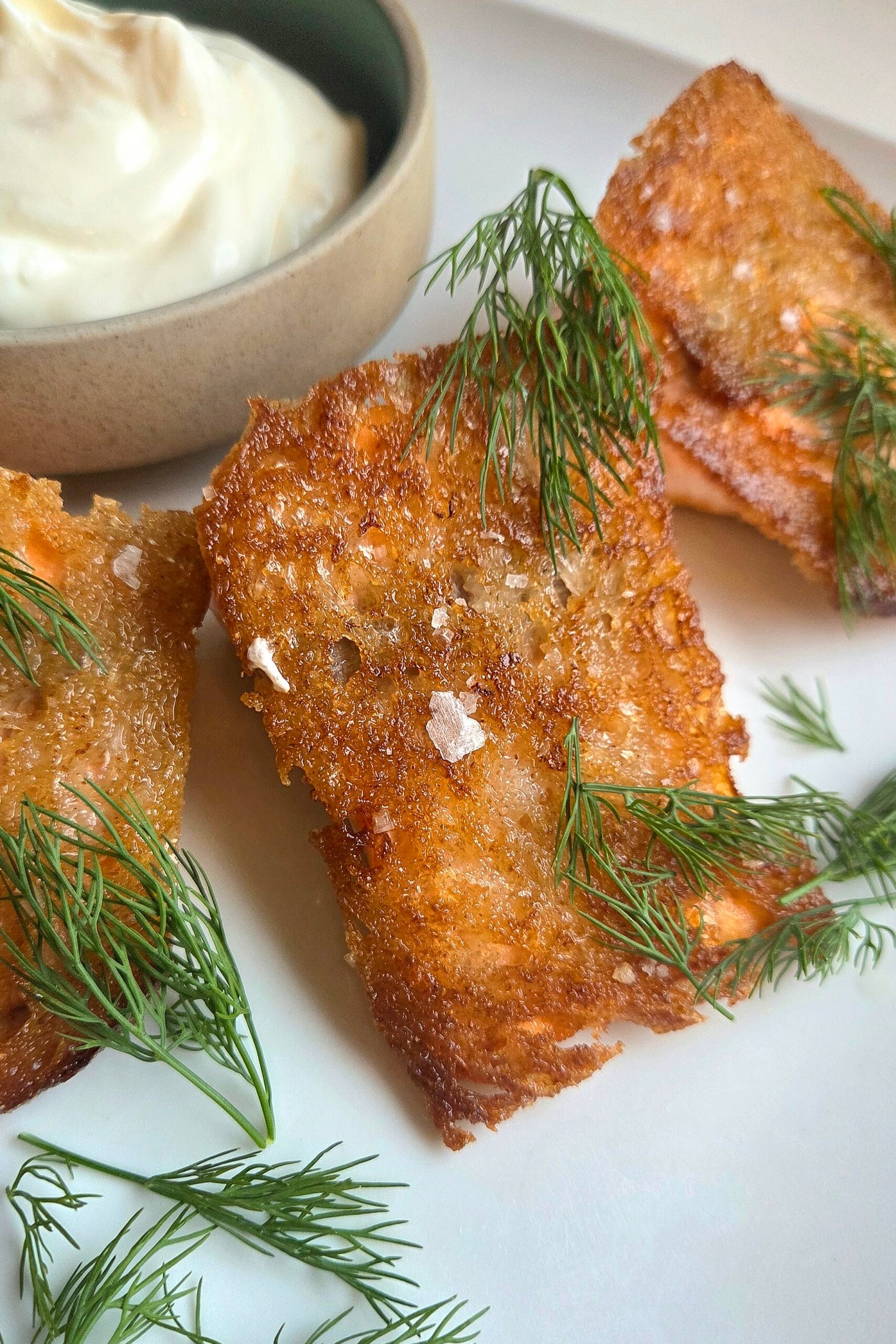
Sourdough-crusted salmon turns the last of a two- to four-day-old loaf into the crispest crust you’ll get on a piece of fish — no batter, no breadcrumbs, just one paper-thin slice fried straight onto the salmon. The bread and the fish fuse in the pan and shatter together when you cut into them. It takes twenty minutes and makes a starter that looks like it came out of a restaurant kitchen.
Sourdough-Crusted Salmon
Ingredients
Equipment
Method
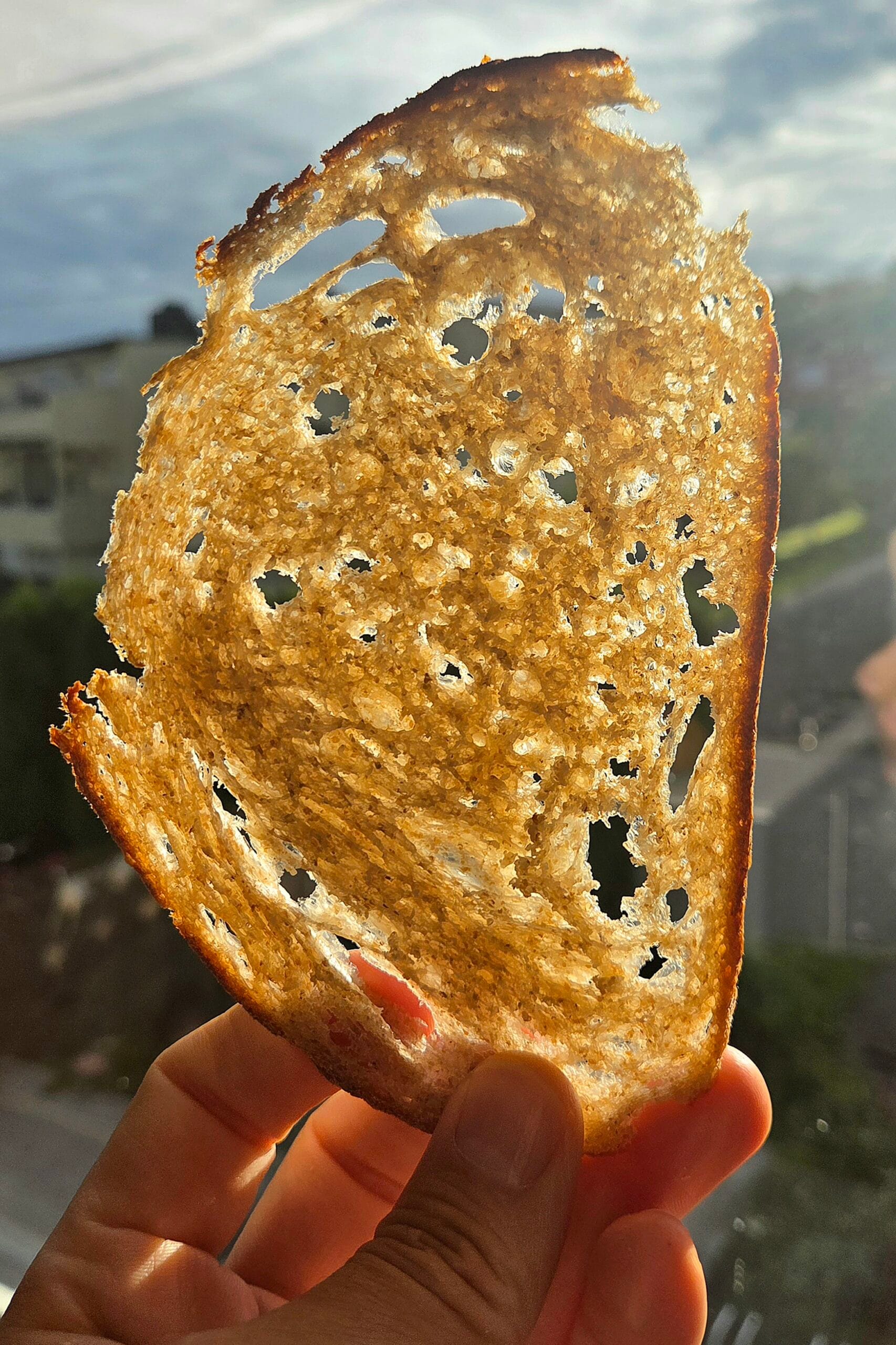
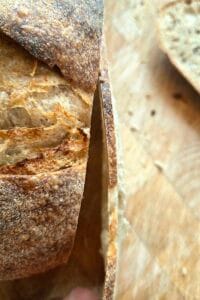
- Slice the bread thin. Cut 4 slices from a sourdough loaf that's at least two days old, as thin as you can manage — aim for ⅛ inch (3 mm) or less. Thinner is better. Set the crust ends aside for breadcrumbs.
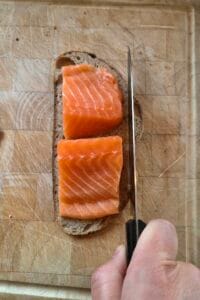
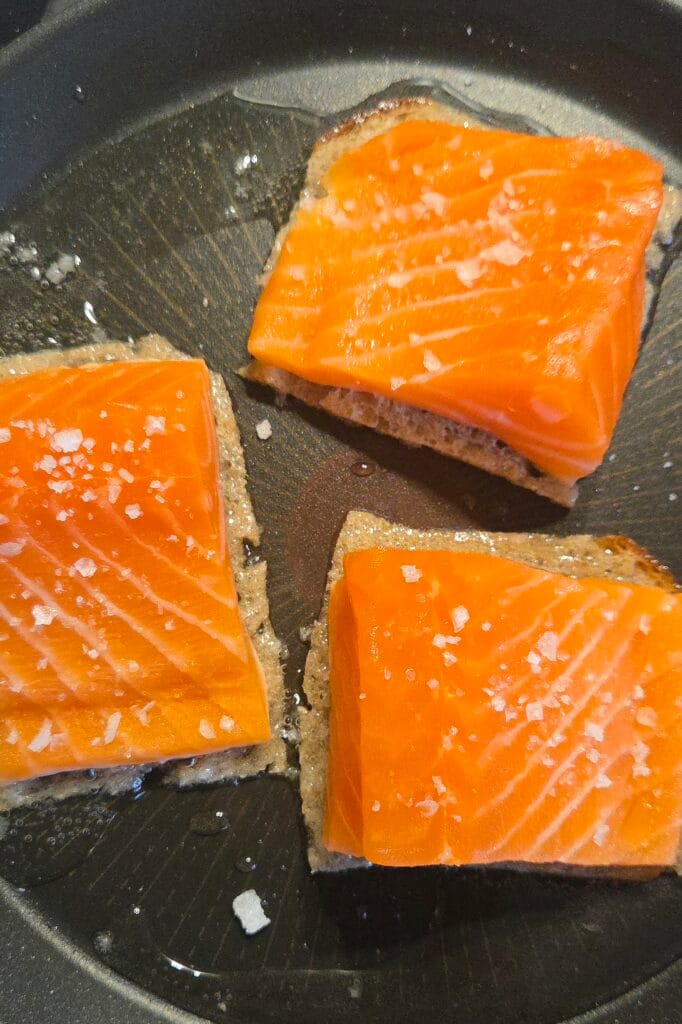
- Match bread to fish. Cut the salmon into 4 even pieces. Place a piece on each slice of bread and trim the bread to match the fish, leaving no overhang.
- Season. Season the top of the fish with flaky salt. There's no need to press the fish down — resting it on the bread is enough.
- Into the pan. Heat the oil in a skillet over medium-low heat. Add the pieces bread side down, without crowding the pan.
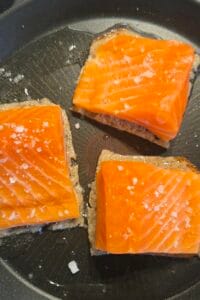
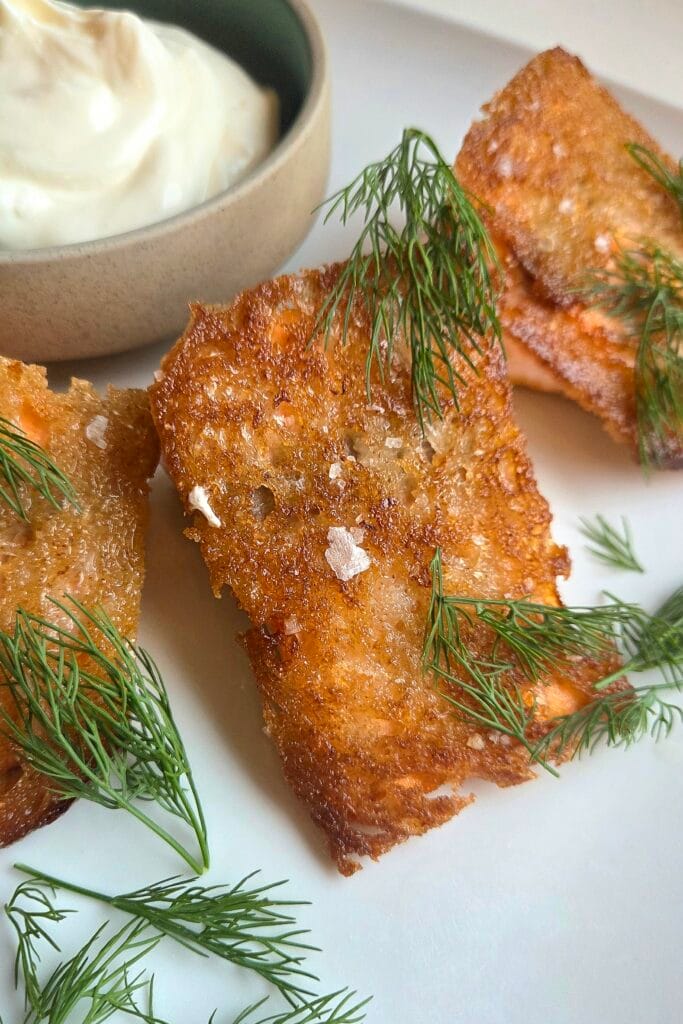
- Fry undisturbed. Fry for 4–5 minutes. The bread will darken to deep gold and the fish will turn opaque from the bottom up. Don't move them — the crust needs to set.
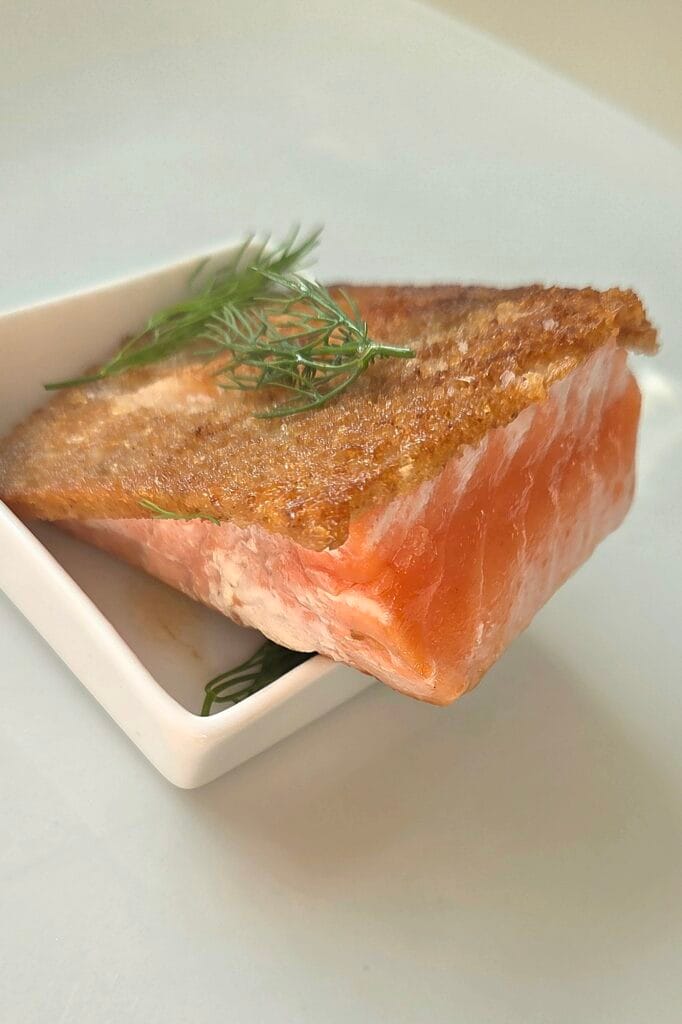
- Flip briefly. Flip and cook 1–2 minutes more. Go by the thickest part of the fish: take it as far as you like. We stop while the center is still translucent — past that it dries out.
- Drain and serve. Lift onto paper towel, crust side up, for a few seconds. Serve at once with sour cream, dill and a final pinch of flaky salt.
Notes
- How done should the salmon be? Up to you — anywhere from just warmed through to fully cooked. If you like the center translucent, buy salmon sold for raw use (often labeled sushi- or sashimi-grade), or salmon that has been frozen first.
- Scaling up or down: one slice of bread and one piece of fish makes one serving, so this scales however far you want. The only limit is the pan — fry in batches rather than crowding, or the bread steams instead of crisping.
One thin slice is the whole trick
The idea isn’t ours — chefs have been crowning fish with a thin slice of bread for years, and Laurent Gras popularized it with sourdough in Chicago. What we’ve changed is the bread: not fresh and soft, but two to four days old and cut as thin as the knife allows.
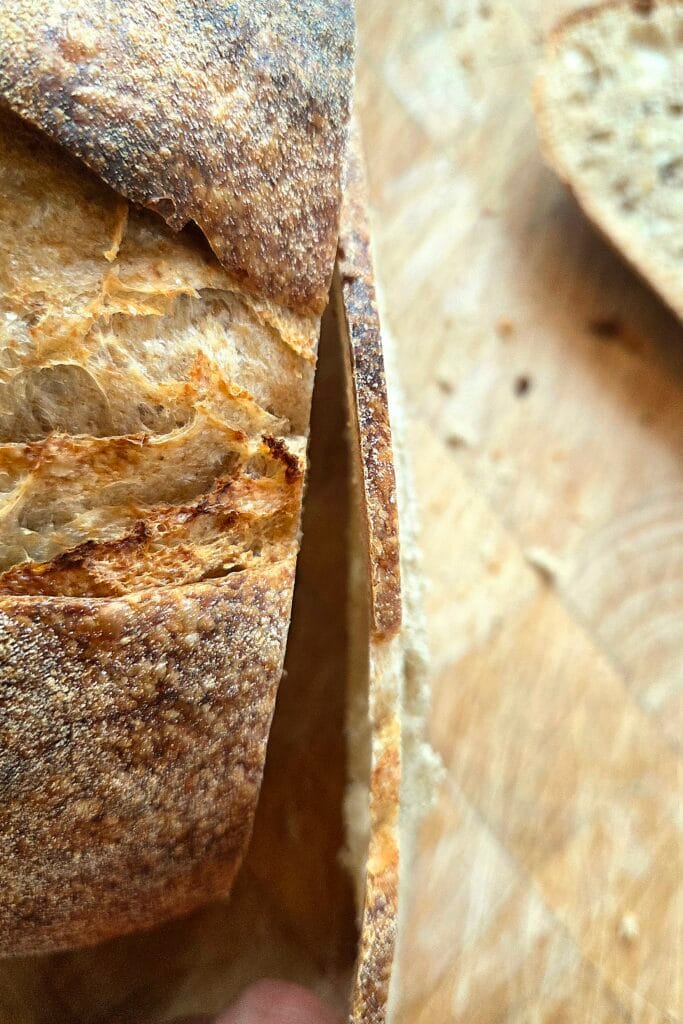
Everything here rides on the slice. Take a loaf that’s at least two days old, put a long serrated knife to it, and cut as thin as you dare — 3 mm or under. Hold the loaf steady and let the blade do the work in long strokes rather than pressing down.
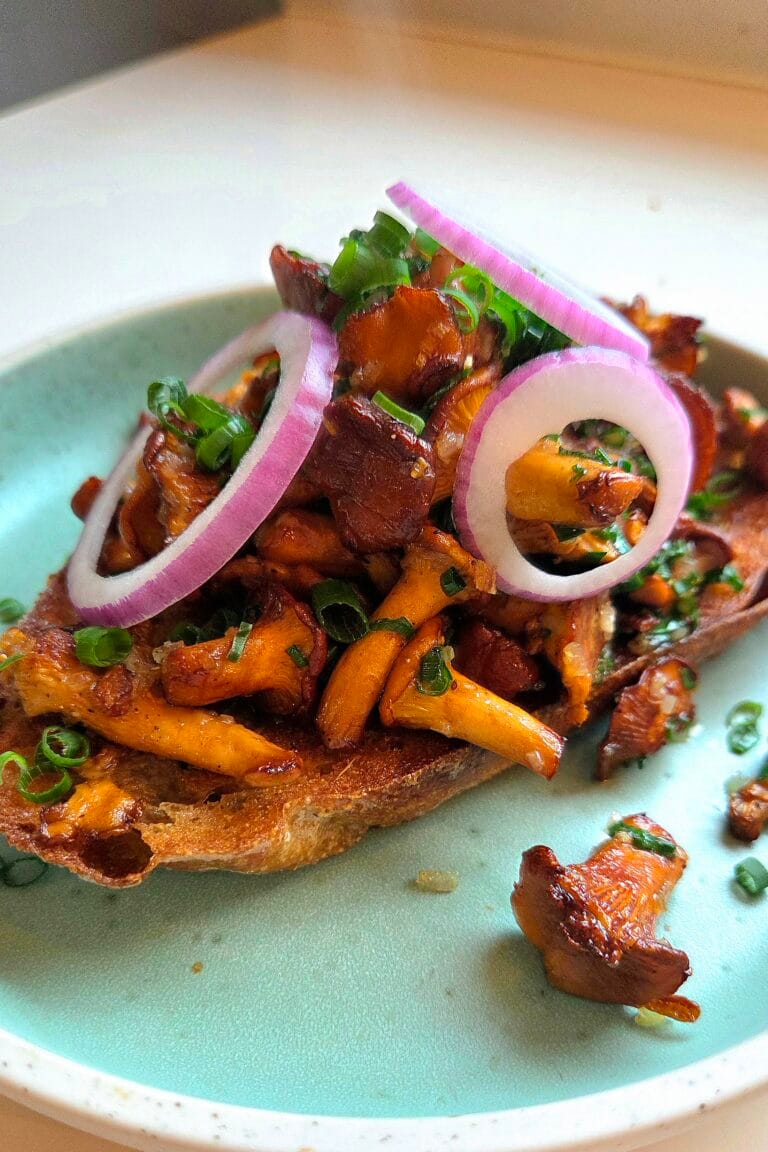
A fresh loaf will fight you at the knife, not in the pan. Fresh bread crisps perfectly well once it’s frying — the trouble is that soft crumb compresses under the blade instead of slicing, so you can’t get anywhere near thin enough. Two days in, it has firmed up enough to cut clean. At three or four days it gets easier again — a drier crumb takes a thinner slice. It’s the same age of loaf we fry in butter for our chanterelle toast, and one of the reasons we never throw the last third away.
Why Sourdough-Crusted Salmon Holds Together
There’s no egg, no flour, nothing holding this together, and you don’t need to press the fish down either. Just lay it on the bread, put it in the pan bread side down over medium-low heat, and leave it alone. As the salmon warms, its proteins set into the open crumb and bond to it. By the time the bread is deep gold, the two are a single piece.
Medium-low is deliberate. High heat browns the bread before the fish has had time to grip, and you’ll get a crust that lifts off in one sheet. Low and slow gives the proteins time to do their work while the crumb dries and crisps.
Make it your own
Cod and scallops are excellent this way, and they’re actually simpler: they cook through from the bread side alone, so they never need turning. Salmon is the one exception — thick enough that it wants a quick 90 seconds on the second side to finish.
We use Norwegian salmon, which is what we grew up cooking, but any good fatty salmon works. We serve it plainly, with sour cream, dill and flaky salt. A spoonful of good mayonnaise works, as does crème fraîche with lemon zest. Anything sharp and cold against that hot crust.
More Nordic bakes you’ll love
- Beginner Sourdough Bread — the loaf this starts with
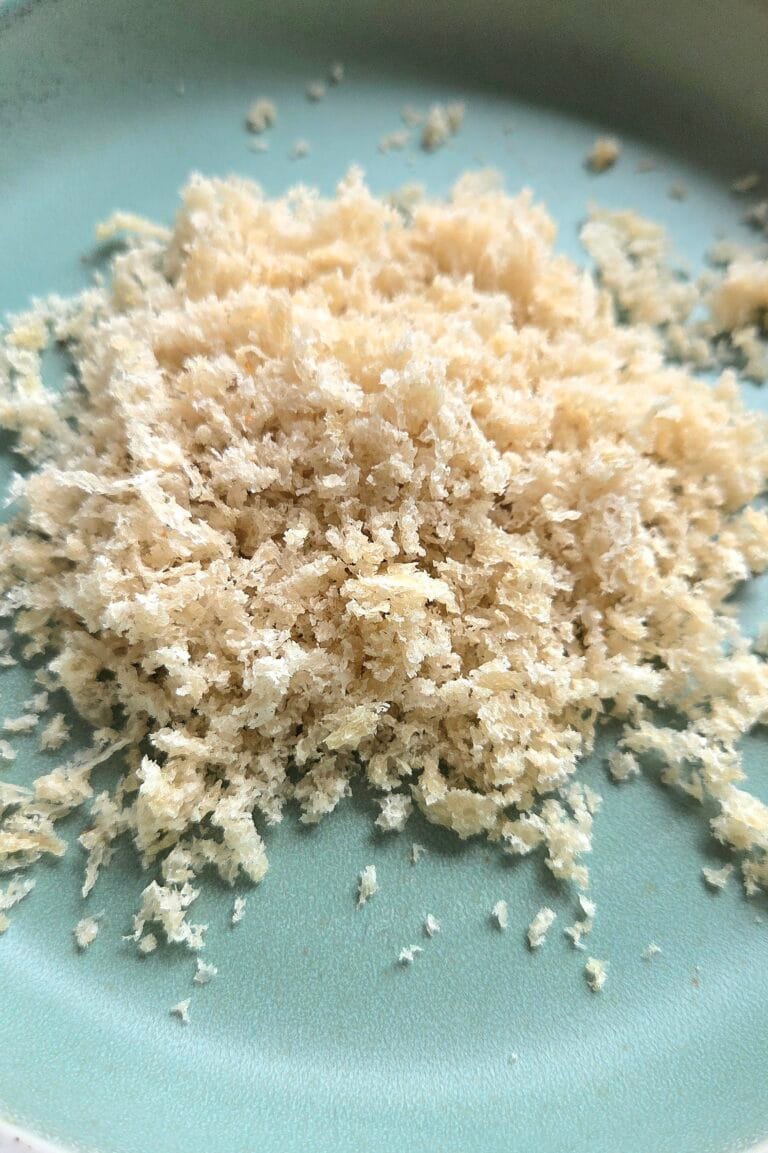
- Sourdough Breadcrumbs — for the crust ends you trimmed off
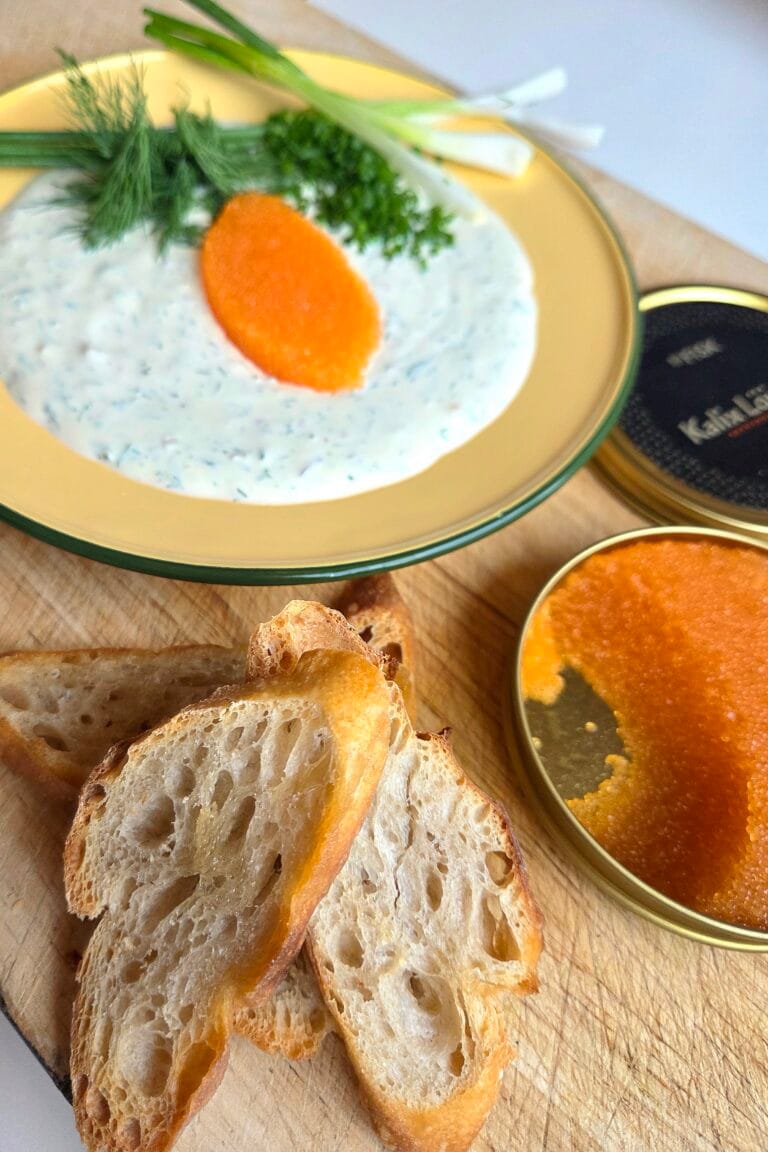
- Caviar Dip with Sourdough Chips — another Nordic starter built on thin-sliced sourdough