Sourdough Breadcrumbs
Sourdough breadcrumbs are the simplest thing you can make from a loaf that’s past its best — dry it low and slow, blitz it, and you’ve got a jar of crisp, nutty crumbs that beats anything in a cardboard canister. Any sourdough works, but this is where an old loaf really earns its keep: once bread is five days old or more, it’s the last rung on our stale bread ladder, too hard for almost anything else. All it takes is an oven set barely warm and enough patience to let it dry all the way through. We keep a jar on the shelf at all times and reach for it more than we expected to.
Sourdough Breadcrumbs
Ingredients
Equipment
Method
- Preheat. Heat the oven to 210°F (100°C). Use the convection/fan setting if you have one — moving air speeds up drying.
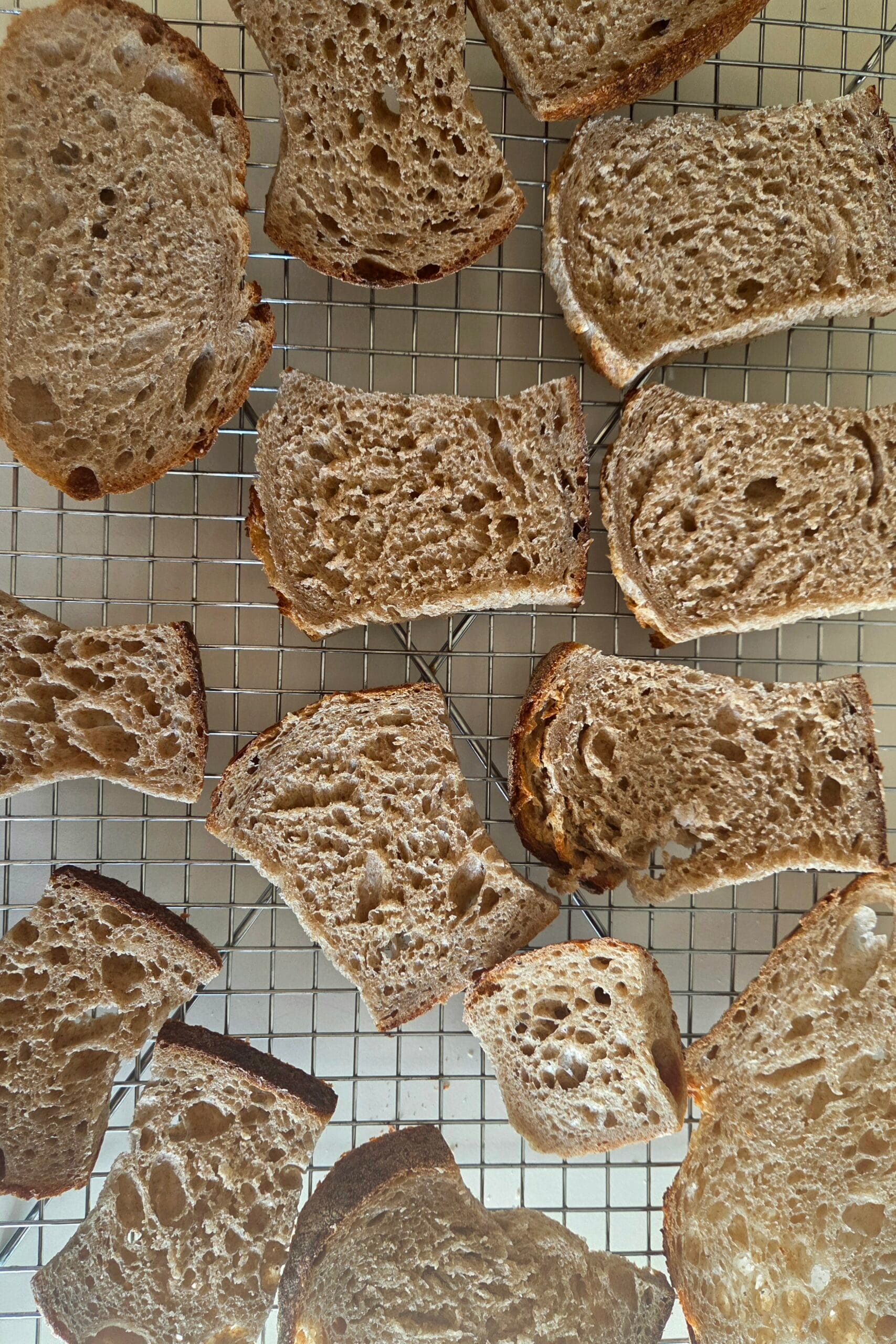
- Slice. Slice the bread about ½ inch (1 cm) thick, then cut the slices into rough pieces. Leave the crust on — it carries most of the flavor and color.
- Spread out. Spread the pieces on a wire rack set over a rimmed baking sheet, in a single layer. Don't crowd them.
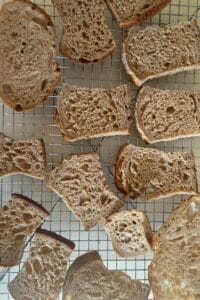
- Dry. Dry for 45–60 minutes for older bread — fresher bread can need 20–30 minutes more. They're ready when a piece snaps cleanly in half with no bend and no soft center. Give it another 10 minutes if there's any give.
- Cool completely. Cool on the rack, about 30 minutes. Warm bread releases steam, and steam is what turns a jar of breadcrumbs into a clump.
- Break up. Break the dried pieces into smaller chunks by hand, or press them under a rolling pin.
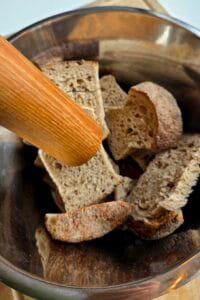
- Blitz. Blitz in batches until you reach the texture you want — a few short pulses for coarse crumbs, longer for fine. Shake the container between pulses so nothing sits at the bottom.
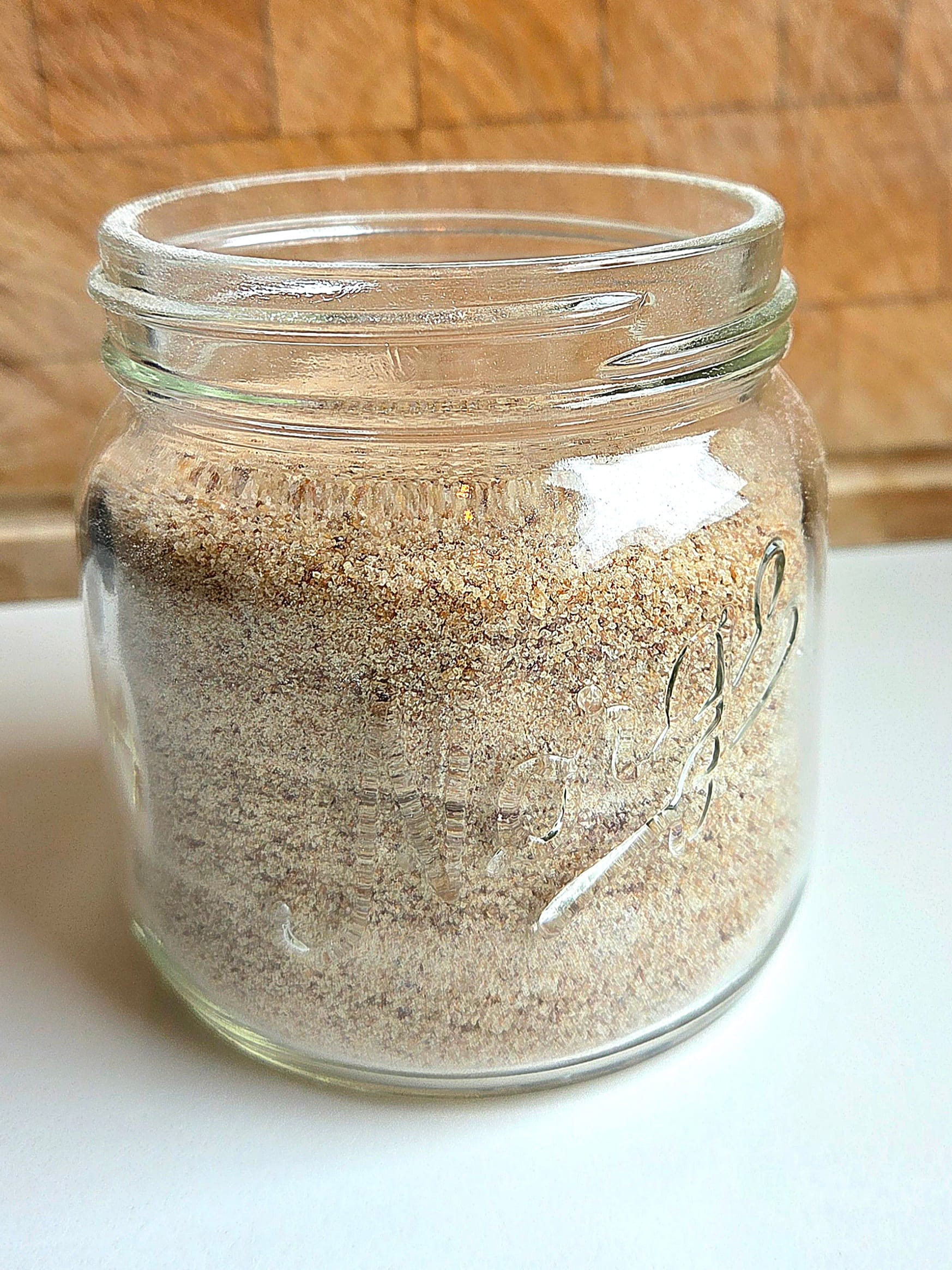
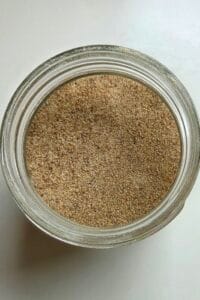
- Store. Transfer to an airtight jar.
Notes
Why your own beat store-bought
Two reasons, and neither is sentimental.
The first is flavor. Store-bought crumbs are made from bland white bread, then dried hard and stored for months. Whole grain sourdough brings acidity, nuttiness and a deep toasted crust — and all of that survives the oven. You taste the bread, not just the crunch.
The second is texture. Commercial crumbs are ground to a uniform sand. Ours come out uneven, with a mix of fine grind and small crisp flecks, and that mix is what gives you both crunch and body. It’s the difference between a coating that shatters and one that sits there.
How to Dry Bread for Sourdough Breadcrumbs
This is the whole recipe, really. The oven step isn’t baking — it’s dehydrating. You want the water out without any browning, which is why it sits at 210°F (100°C) rather than a normal baking temperature.
The mistake is stopping too early. Bread dries from the outside in, so a piece can feel crisp between your fingers while the center still holds moisture. Blitz it in that state and the jar is fine for three days, then it clumps and eventually molds.
So: snap a piece in half and look at the cut edge. Pale, dry and uniform all the way to the middle means you’re done. A darker, denser core in the center means back in the oven for another ten minutes. It’s a two-second check and it’s the difference between a month on the shelf and a week.
Cooling matters for the same reason. Warm bread gives off steam, and steam trapped in a sealed jar undoes the hour you just spent.
You don’t need a food processor
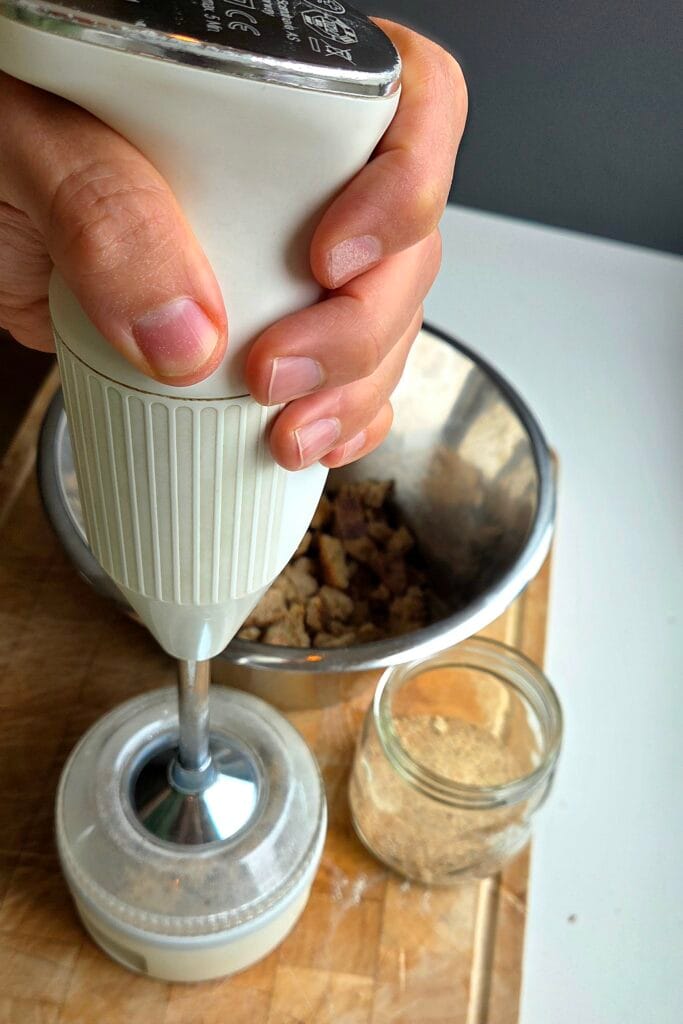
We made this batch with a small grinder cup on a stick blender, on purpose — to show that a big machine isn’t the barrier. Work in batches, use short pulses, and shake the cup between them so the crumbs at the bottom don’t turn to powder while the top stays chunky.
A rolling pin works too. Put the dried pieces in a bag, press rather than smash, and you get a coarser crumb that’s actually better for toppings.
Pulse length is your texture control: a few short bursts for coarse, longer for fine. We don’t sift ours. The uneven grind is a feature.
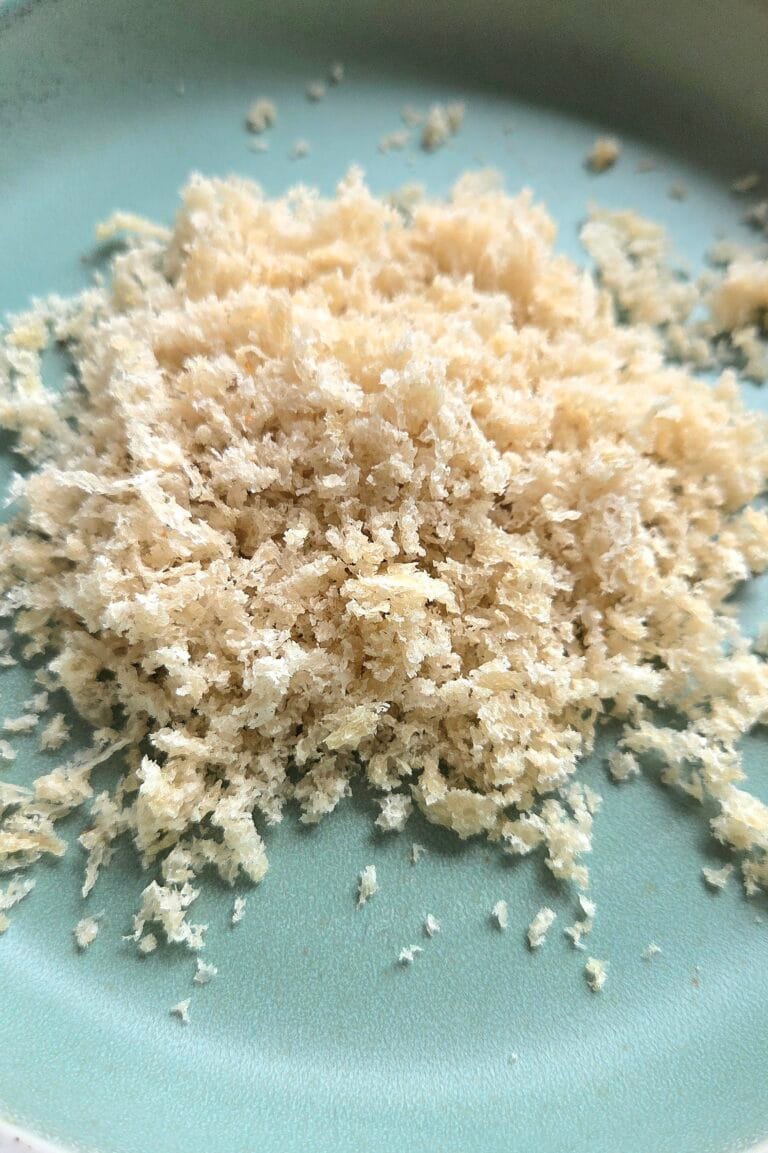
Breadcrumbs are not panko
Worth being clear about, because recipes treat them as interchangeable and they aren’t.
Breadcrumbs use older bread with the crust left on, blitzed to a sandy texture. They absorb liquid, so they bind — meatballs, stuffing, anything that needs to hold together.
Panko uses fresher bread with the crust removed, grated into light flakes rather than ground. The flakes stay separate and crisp up airy, which is why panko coats better but binds poorly. Our sourdough panko shows the method — it’s a different job for a different stage of the same loaf.
Different products, different jobs. If a recipe calls for panko and you reach for breadcrumbs, expect a denser, heavier result.
Three ways we actually use them
Buttered crumbs over vegetables. Melt butter in a pan, add a handful of crumbs, and stir over medium heat until they’re golden and smell toasted. Scatter over cauliflower, asparagus or boiled new potatoes. Salt at the end. This takes four minutes and turns a plain side dish into something people comment on.
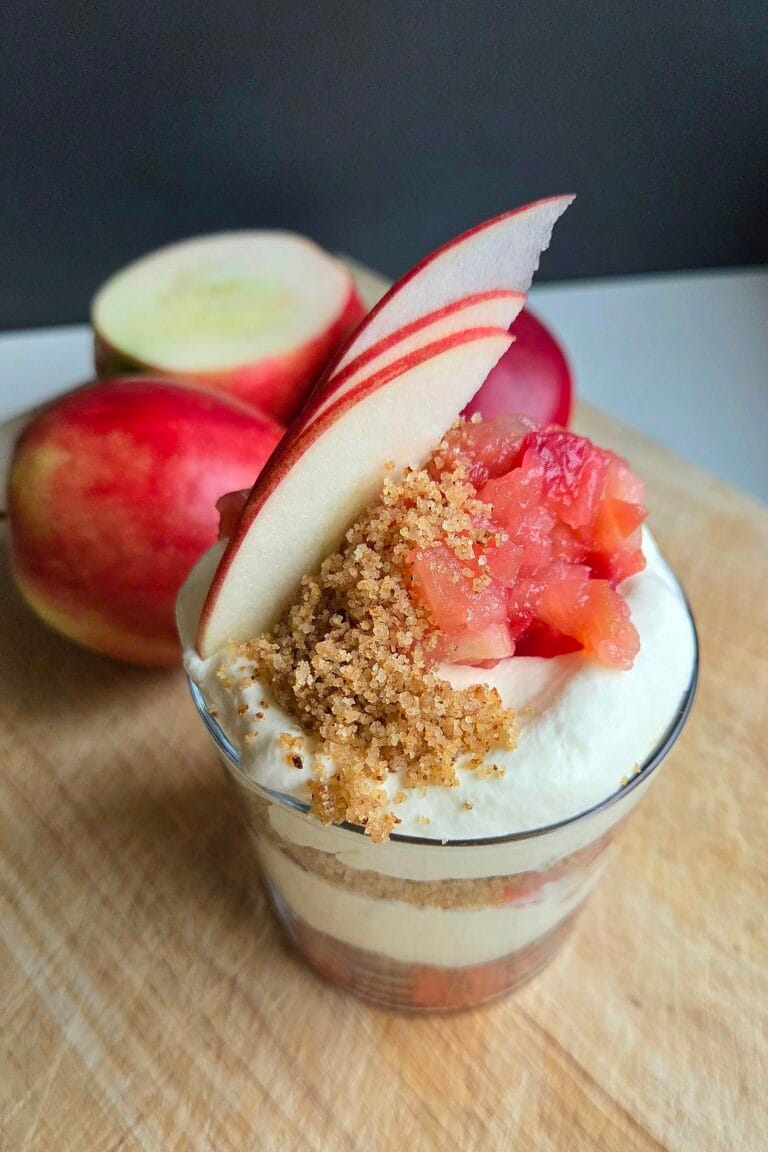
Tilslørte bondepiker. The Norwegian apple trifle where breadcrumbs are the whole point — fried in butter with sugar and cinnamon, then layered with apple compote and whipped cream. Not a binder, not a coating: the main texture in the dish.
Binding meatballs and fish cakes. A few tablespoons soaked in milk keeps the mix tender instead of tight. This is where the sandy grind earns its place.
Make it your own
Rye sourdough — the end of a loaf like our Danish rye bread — gives darker, earthier crumbs that suit savory dishes especially well. A light white sourdough goes the other way — paler and milder, better for sweet uses.
Dried herbs, garlic powder or lemon zest can go in after blitzing, but season small batches as you use them rather than the whole jar. Plain crumbs keep longer and stay useful for everything.
More Nordic bakes you’ll love
- Sourdough Panko — Light, Crisp Flakes from Scratch — the fresher, crustless sister, for coating rather than binding
- Whole Grain Sourdough Bread — the loaf these crumbs come from
- Sourdough Bread Pudding with Blueberries — for bread a few days younger, before it’s gone too far