Sourdough Bread Salad with Tomato Water Dressing
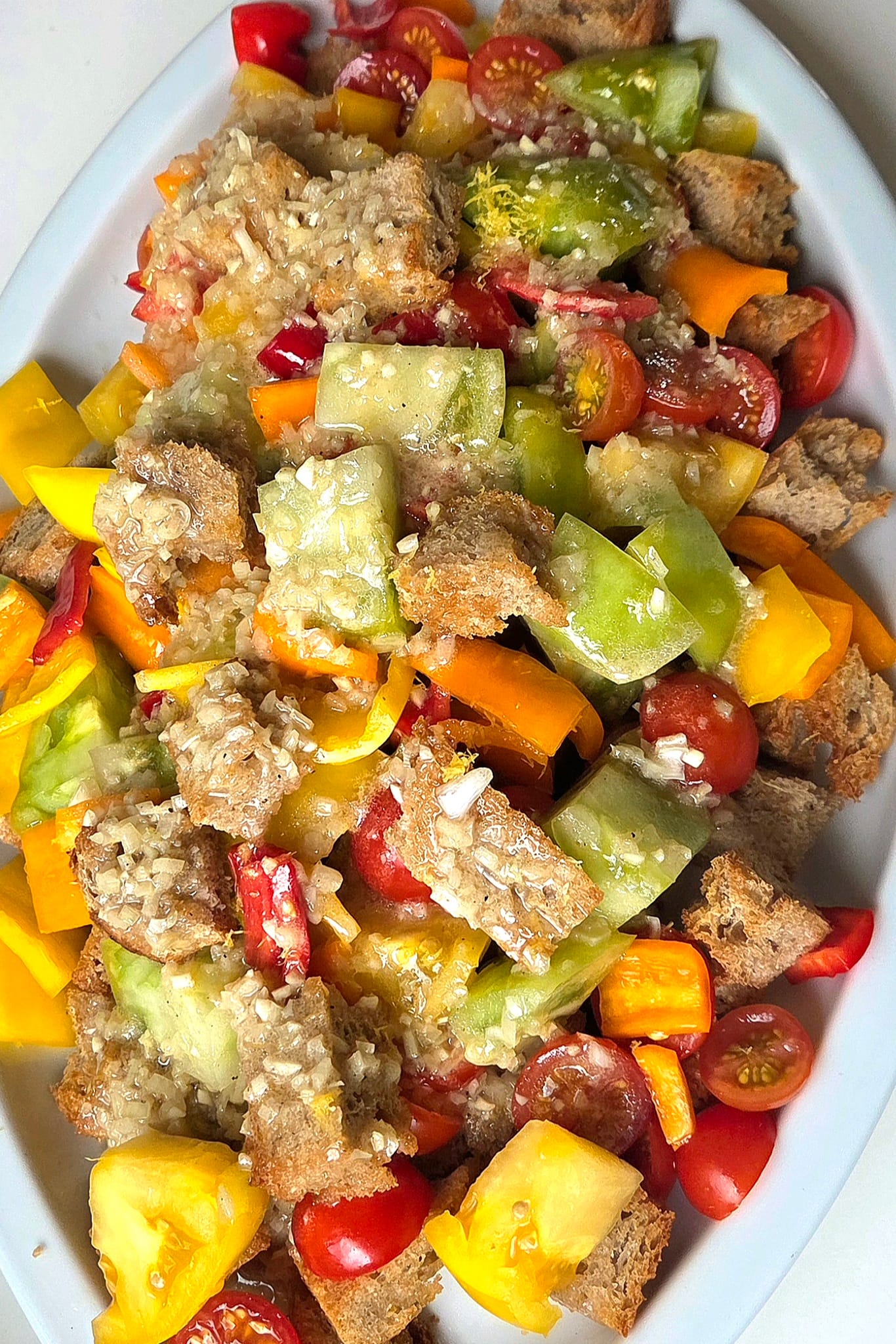
Sourdough bread salad is what we make when there’s half a loaf left and the tomatoes are at their best. The bread gets torn and toasted rather than soaked, and the dressing is built on the water the salted tomatoes release — salt, acid and savory depth in one, straight from the vegetables. It takes an hour, mostly unattended, and it’s the salad we bring out alongside anything off the grill.
Sourdough Bread Salad with Tomato Water Dressing
Ingredients
Equipment
Method
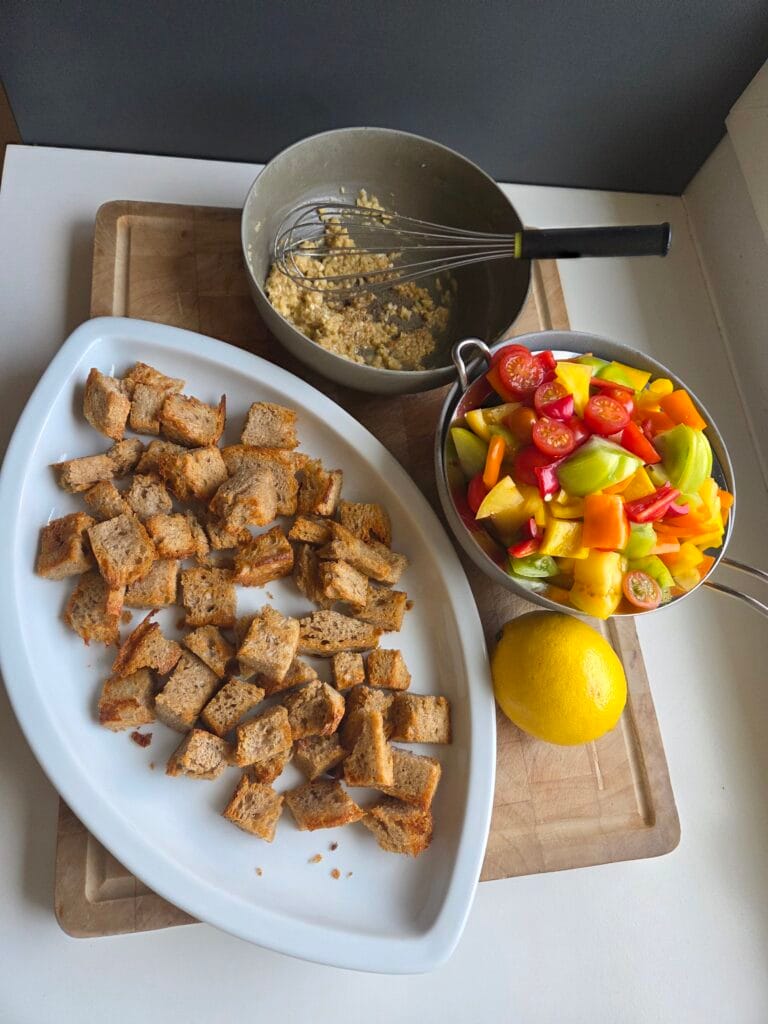
- Preheat and tear. Heat the oven to 350°F (180°C). Cut or tear the sourdough into rough 1¼-inch (3 cm) pieces — uneven edges catch the dressing better than neat cubes.
- Toast. Toss the bread with the oil until lightly coated and spread it on a baking sheet in a single layer. Bake for about 15 minutes, until golden and crisp outside but still with a little give in the middle. Leave to cool completely.
- Cut and salt. Cut the tomatoes and peppers into generous bite-sized pieces — this salad wants chunks, not dice. Season with the salt and toss.
- Drain. Tip everything into a sieve set over a bowl and leave for 30 minutes. The salt draws out a surprising amount of liquid, and that liquid is the whole point.
- Build the base. Measure the collected tomato and pepper water into a bowl. Whisk in the shallot, Dijon and vinegar.
- Emulsify. Whisking constantly, add the oil in a slow stream until the dressing thickens and holds together. Grate in the lemon zest and season with black pepper — but taste before adding any salt.
- Toss. Combine the drained vegetables and the cooled croutons in a wide serving dish. Pour over the dressing and toss gently.
- Rest briefly. Let the salad sit for 5 minutes before serving, so the bread takes on some dressing while keeping its crunch.
Notes
- The lemon zest is not optional. A quarter of a lemon sounds like nothing, but it’s what lifts the whole dish from pleasant to bright. Add it at the end, and never earlier.
- Green tomatoes: use ripe green varieties, such as Green Zebra — a green tomato that is fully ripe, not an unripe red one.
What makes this different from panzanella
Italian panzanella soaks stale bread in water and tomato juice until it’s soft, then dresses it. We do the opposite: the bread goes into a hot oven with a little oil until it’s properly crisp, and it stays crisp right through to the table. The dressing does the softening, and only just.
The other difference is the dressing itself. Salt the tomatoes and peppers, leave them in a sieve for half an hour, and you’re left with a bowl of intensely savory liquid that most people pour down the drain. Whisked with shallot, Dijon and vinegar, then emulsified with oil, it makes a dressing that tastes of the vegetables it came from — and needs no added salt at all.
Getting the Croutons Right for Sourdough Bread Salad
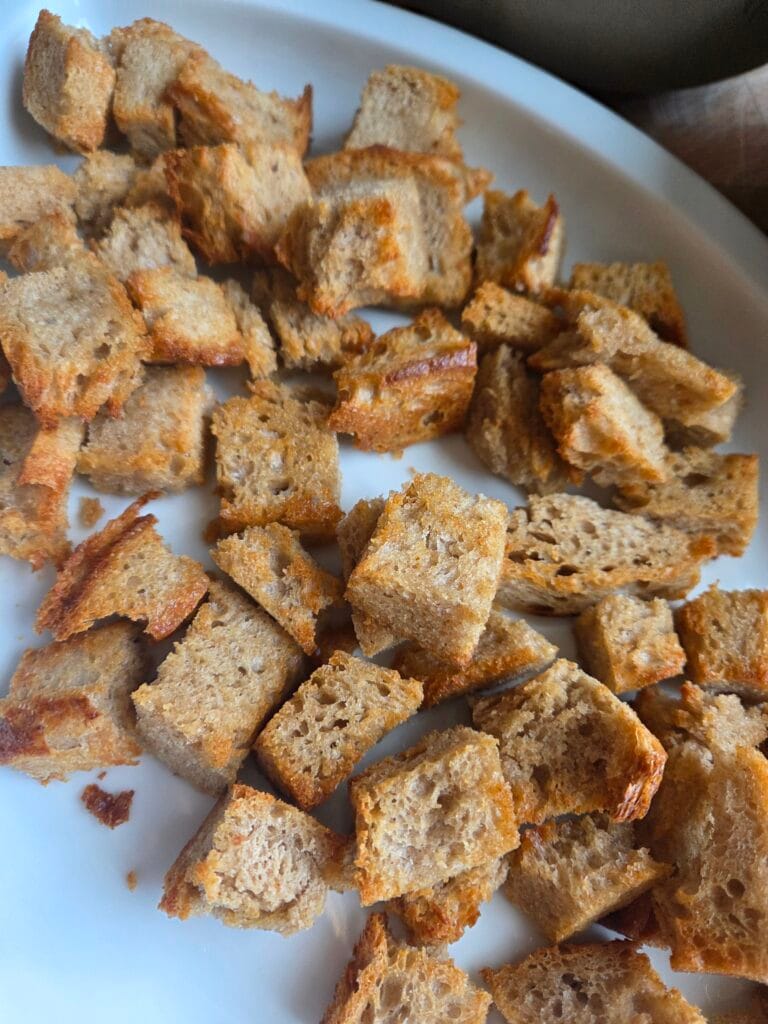
Tear rather than cut where you can. Ragged edges give you more surface to crisp and more places for the dressing to catch.
Fifteen minutes at 350°F (180°C) is enough. You want golden and crisp outside with a little chew left in the center — croutons dried all the way through turn to gravel once dressed. Let them cool completely before they meet the vegetables; warm bread goes soft immediately.
Any sourdough works, but firmer bread holds its crunch longest. We use our whole grain sourdough when it’s two or three days old — sturdy enough to hold up, open enough to soak.
Make it your own
- Herbs: dill or chives suit the Nordic side of this; basil pushes it back toward Italy.
- Cucumber in place of some of the tomato, salted the same way, for a lighter summer version.
- A soft-boiled egg or a few anchovies turn it from a side into lunch.
- Rye sourdough — the end of a loaf like our Danish rye bread — gives darker, denser croutons and a deeper flavor. Good with fish.
What we serve it with
This is a grill salad first and foremost. It sits well next to lamb, chicken or anything charred, and it’s very good with a piece of baked white fish. It also holds up better than a leafy salad on a table outdoors.
It’s also excellent with cured ham. At home we use Norwegian spekeskinke, cured for three to nine months rather than the year or more Italian prosciutto often gets — so it stays moister and less dry, and it’s usually sliced with less fat on it. Leaner and a little softer against the acidity of the dressing. Prosciutto or serrano work well too, but keep those sliced thin; they’re drier, and thicker slices turn chewy.
More ways to use leftover sourdough
This salad is part of our guide to what to do with leftover sourdough bread — reviving a stale loaf, bread chips, breadcrumbs and more. A few other savory ones:
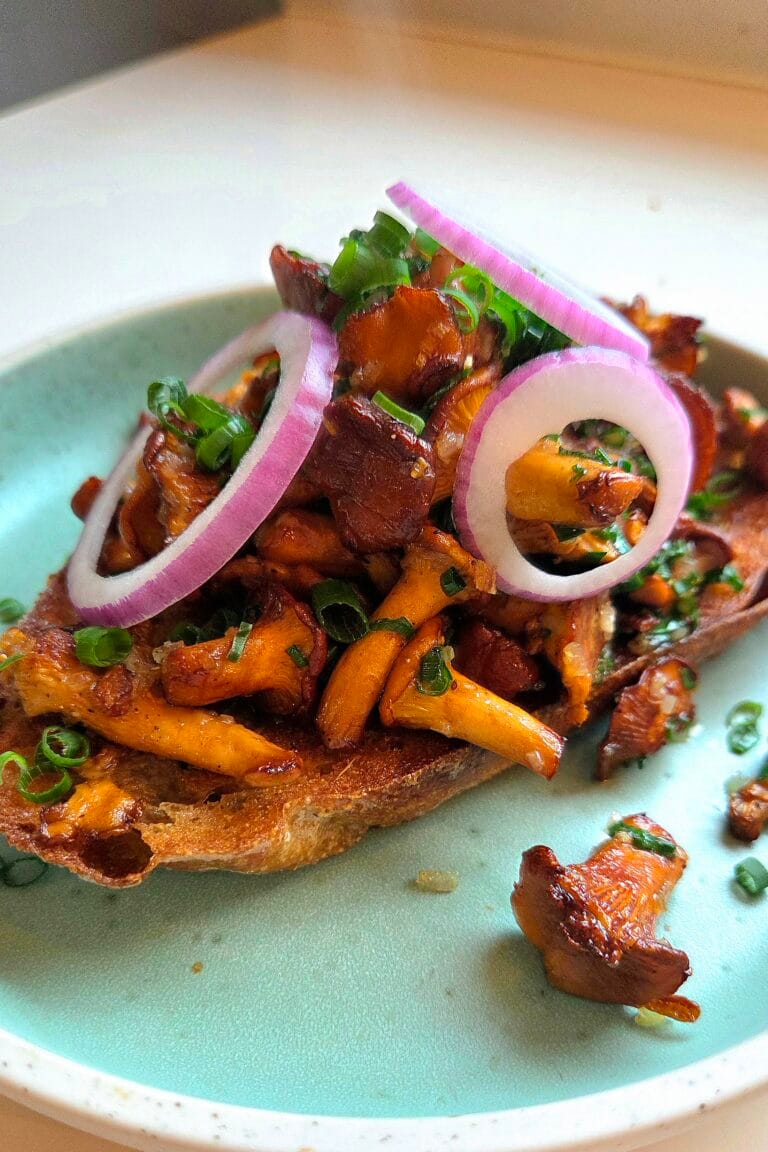
- Chanterelle Toast on Sourdough — a slice fried in butter under a pile of golden mushrooms
- Sourdough-Crusted Salmon — a paper-thin slice fried onto the fish until it shatters
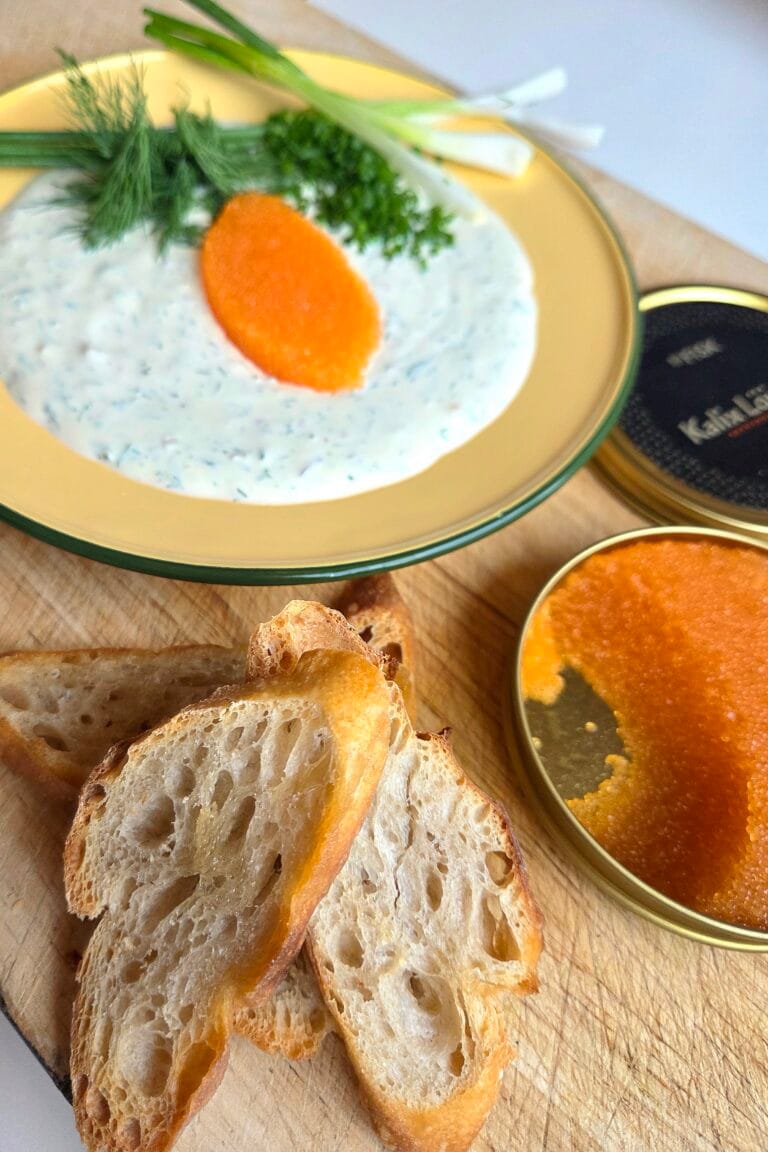
- Caviar Dip with Sourdough Chips — thin, crisp chips for scooping