Norwegian Heart Waffles with Cardamom
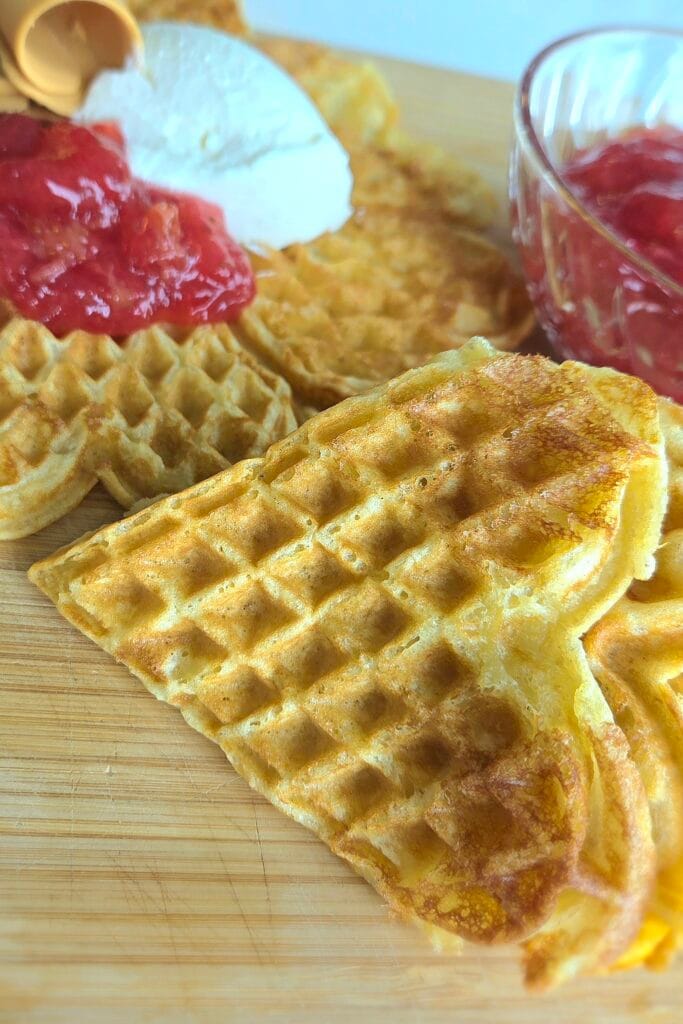
Norwegian heart waffles are a Nordic weekend staple — thin, soft and tender, and warm with cardamom. They come together in one bowl with no special skills, and the batter takes care of itself while it rests. Serve them warm with brown cheese, jam, or just a dusting of sugar and a cup of strong coffee.
Norwegian Heart Waffles with Cardamom
Ingredients
Equipment
Method
- Dry ingredients. In a large bowl, whisk together the flour, sugar, baking powder and cardamom.
- Add the milk. Pour in the milk a little at a time, whisking well after each addition, until the batter is completely smooth and lump-free.
- Eggs and butter. Whisk in the eggs, then stir in the melted butter.
- Rest. Cover and let the batter rest for 30 minutes at room temperature. It will thicken as the flour absorbs the liquid — loosen it with a splash of milk or water if it's too thick to pour.
- Bake. Heat your waffle iron and brush it with a little butter. Pour in about ½ cup (100 ml) of batter, close the lid and cook for 2–3 minutes, until golden. Brush the iron with a little more butter between each waffle.
- Serve. Stack the waffles under a clean kitchen towel to keep them soft, and serve warm.
Notes
- Too thick after resting? Loosen it with a splash of milk until it pours in a thick ribbon.
- The first one is a test. Like pancakes, the first waffle tells you how much batter your iron wants and how hot it runs.
What makes Norwegian heart waffles different
If you’ve only had Belgian or American waffles, these will surprise you. They’re not a thicker-is-better waffle.
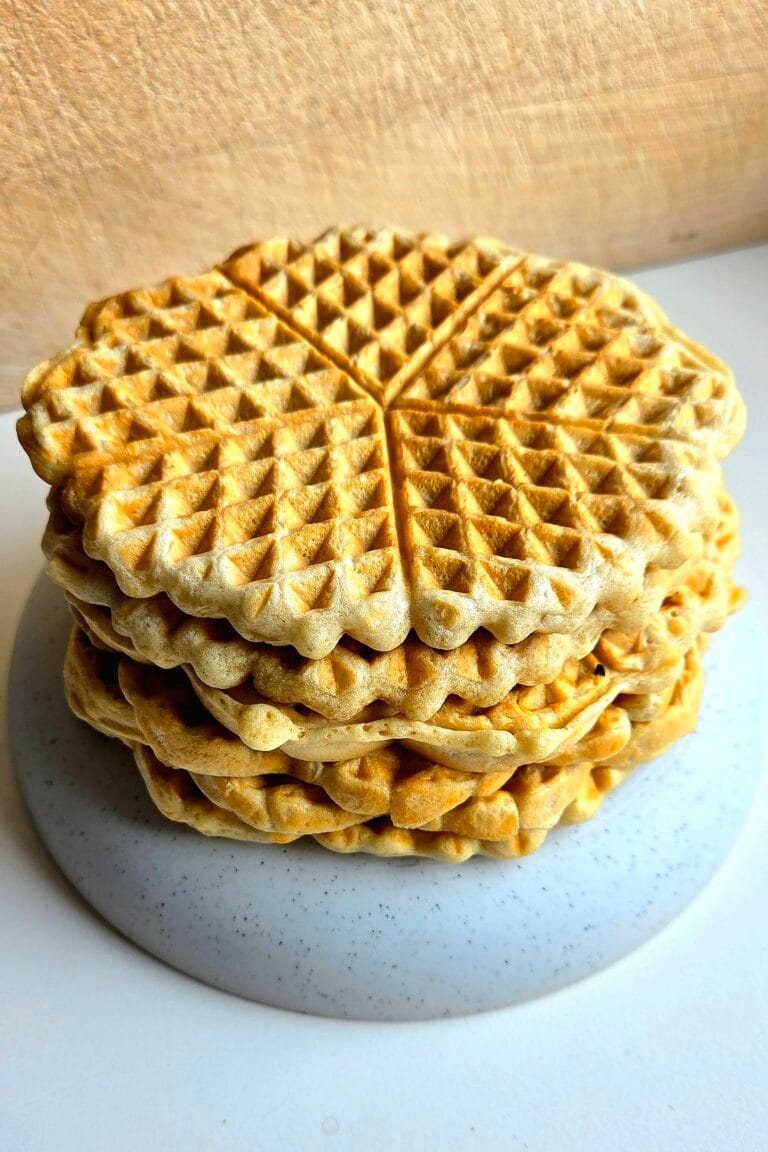
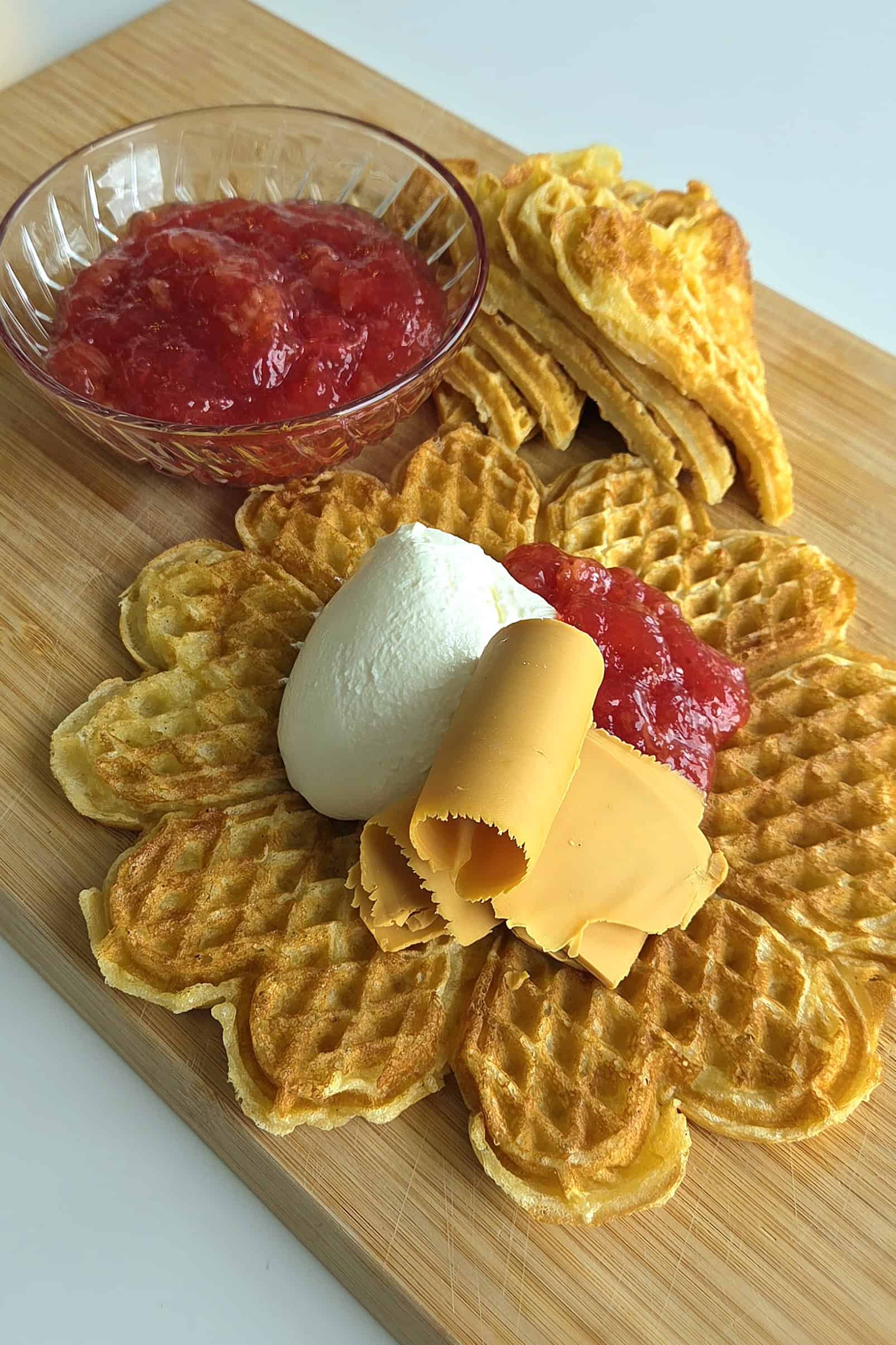
- Thin, not deep. No big square pockets. A Norwegian waffle is a few millimeters thick, with five hearts joined in a flower you break apart at the table.
- Soft, not crunchy. Tender all the way through and pliable enough to fold around a slice of cheese. If you’re chasing a shatteringly crisp waffle, that’s our crispy Norwegian waffles — this recipe isn’t meant to be.
- No yeast, no waiting overnight. Baking powder and a 30-minute rest do the work.
- Cardamom, not cinnamon. The warm, slightly citrusy spice is what makes them read as Nordic instantly.
- A snack, not a breakfast. In Norway these are afternoon food — with coffee, at a cabin, after a walk. Not a syrup-and-bacon plate.
How to serve them
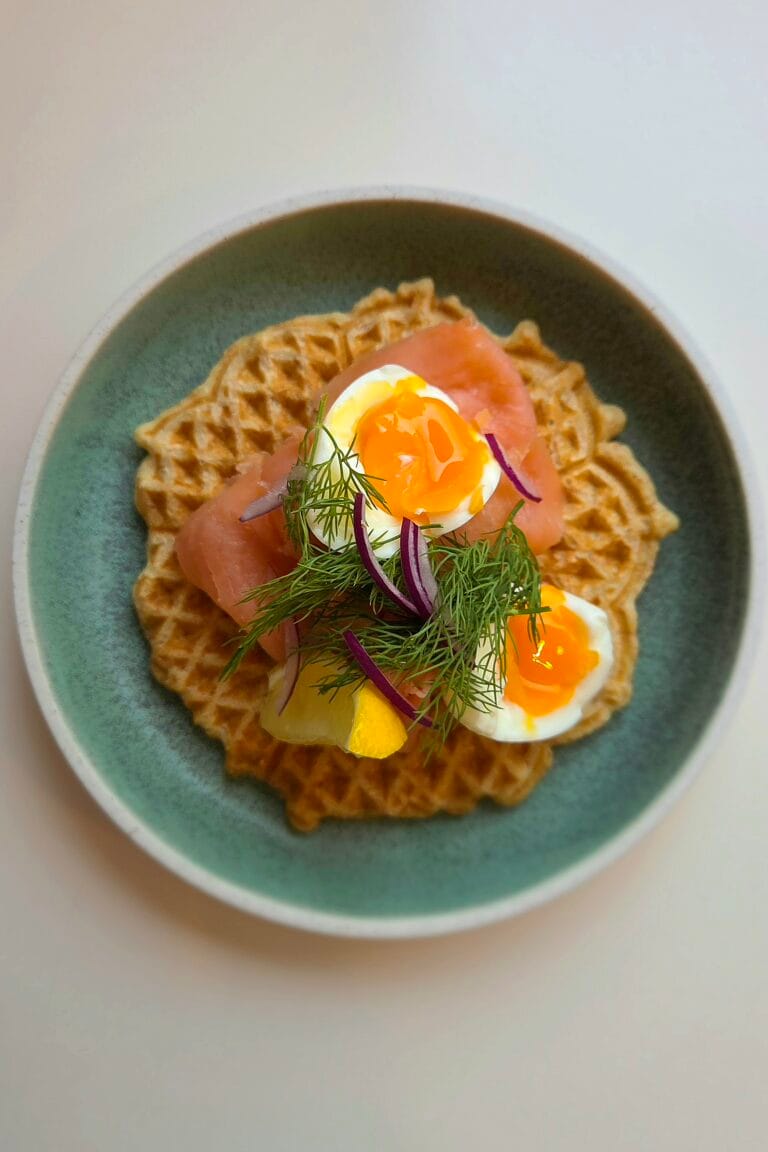
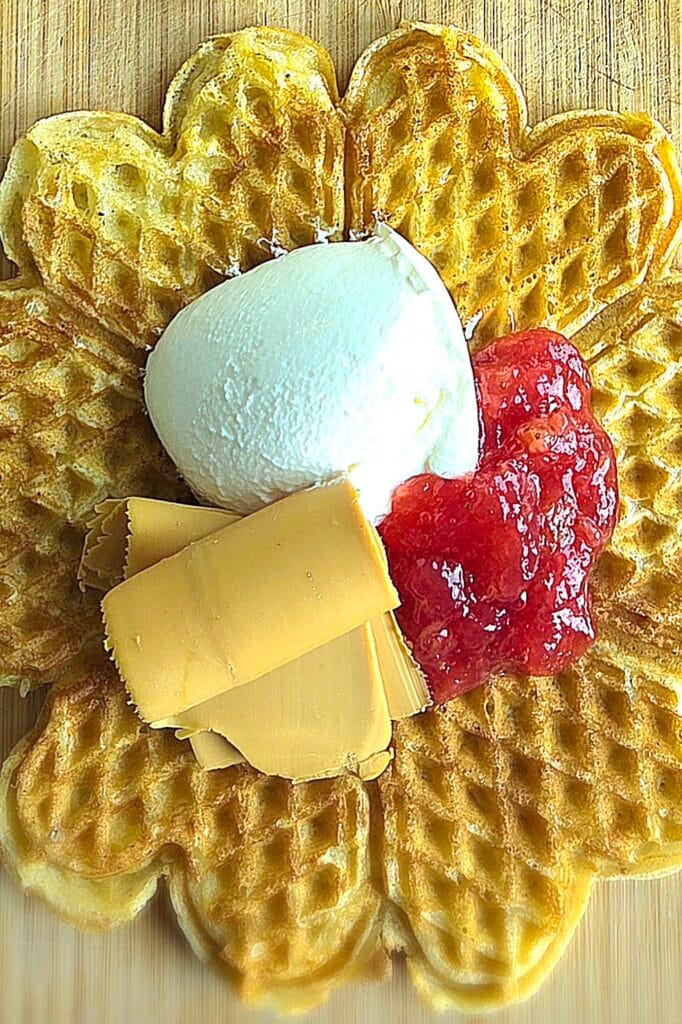
The classic Norwegian way is warm waffles with brunost (brown cheese), sliced thin so it softens into the heart shapes — the same cheese we put on our Norwegian rye buns. From there, take your pick: strawberry or raspberry jam, a spoon of sour cream, or simply a dusting of powdered sugar. However you top them, serve them warm with coffee — that’s the whole point of a Nordic waffle afternoon. For a lunch version, see our savory waffles with smoked salmon.
Storing and freezing
Waffles are at their best straight off the iron, but they keep better than you’d think.
- Same day: stack them and cover with a clean towel. They’ll stay soft for a few hours.
- Fridge: up to 2 days in an airtight container.
- Freezer: up to 2 months. Lay them flat with parchment between each one so they don’t fuse, then bag them.
- Reheating: a toaster on low, or 30 seconds per side in a dry pan. Skip the microwave — it turns them rubbery.
If you’re making a big batch for the freezer, don’t stack them warm. Let them cool completely on a rack first, or the steam will make them soggy. them warm. Let them cool completely on the rack first or the steam will make them soggy.
About the heart-shaped iron
Every other recipe you’ll read apologizes for this. We won’t: the iron is the point.
A Norwegian waffle iron makes five thin hearts joined in a flower, and you break them apart to share. The shape isn’t decoration — it changes how the waffle cooks and how you eat it. You can absolutely make this batter in a Belgian iron and it will taste good, but you’ll get a thick waffle, not a Norwegian one.
One practical note for US kitchens: most authentic Norwegian irons run on 230V and won’t work on American power, even with a plug adapter. Look for a 110V heart waffle maker sold for the US market — the Euro Cuisine WM520 is the one we’d point a friend to. Ours is a Norwegian iron, so we can’t honestly call it “the one we use,” but it makes the right shape, and the plates are only slightly deeper than a traditional Norwegian iron, so the waffles come out a touch thicker.
A short history of Norwegian heart waffles
Waffles didn’t start in Norway. Waffle irons first appeared in medieval Europe — evolving from the round communion-wafer irons of the 14th century — and reached the Nordic countries from Germany and the Low Countries.
The earliest known Norwegian waffle recipe comes from the Kielland family in Stavanger in the early 1700s — collected in Den Kiellandske Kogebog, a book of 243 recipes from Stavanger’s finest kitchens of the time. The batter was wheat flour, sugar, butter and eggs, spiced with cardamom alongside nutmeg, cloves, anise and ginger. Butter, sugar and eggs were expensive back then, so waffles were a treat for weddings and special occasions rather than an everyday bake. Of all those spices, cardamom is the one that stuck — it’s the same warm spice in this recipe.
The five-heart iron came later, cooked over an open fire long before electric irons became a kitchen staple. Those little hearts are still what make a Nordic waffle instantly recognizable.
More Nordic bakes you’ll love
- Sourdough Waffles — soft, savory waffles made with a full 200 g of starter
- Sveler — Norwegian Griddle Pancakes — the other great Norwegian afternoon bake
- Krumkake — Norwegian Waffle Cookies — the Christmas cousin, pressed thin and rolled while hot