Danish Rye Bread (Rugbrød)
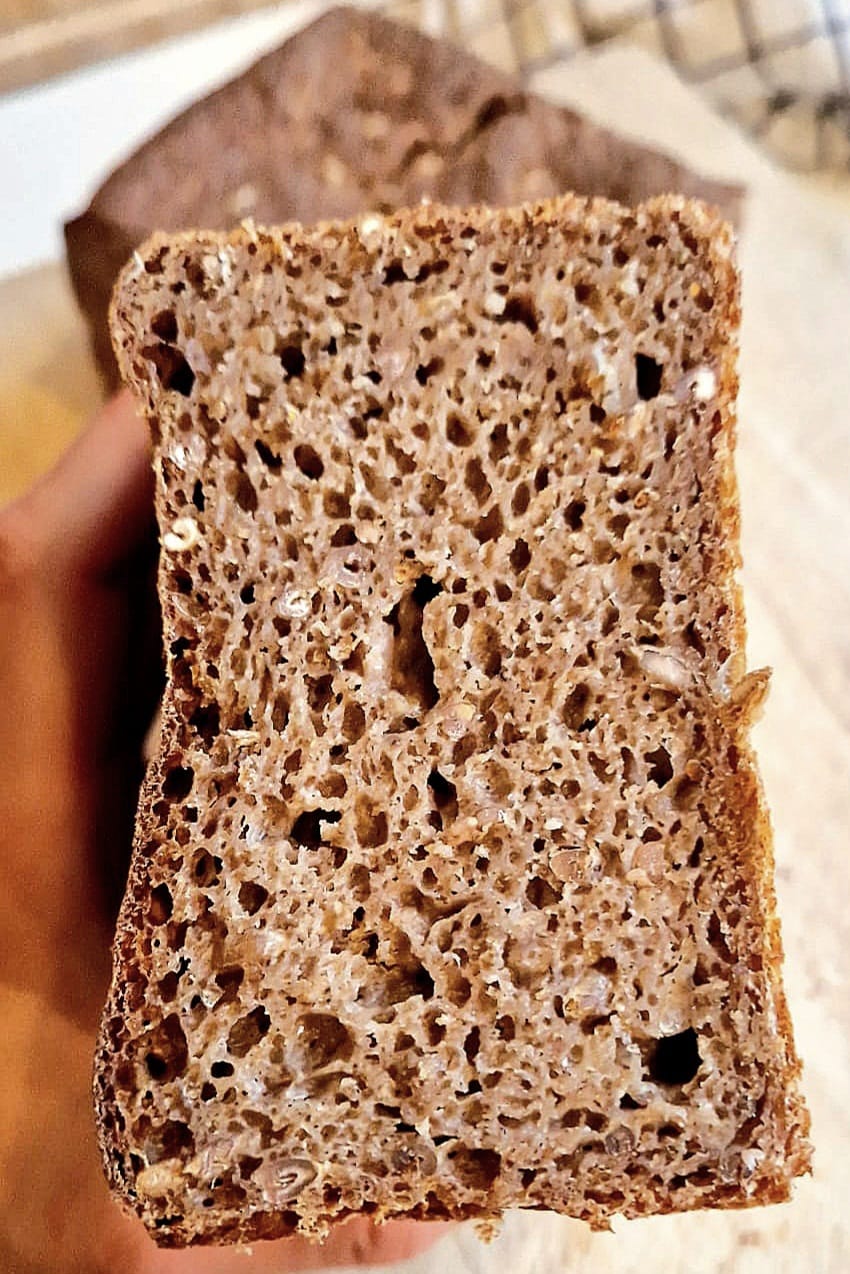
This Danish rye bread — rugbrød — is dense, dark and deeply flavored, naturally leavened with a rye sourdough and studded with whole rye berries. It’s the wholesome, high-fiber loaf behind classic Scandinavian smørrebrød, and it comes together in one bowl with no kneading. Here’s how we bake it at home.
Danish Rye Bread (Rugbrød)
Ingredients
Equipment
Method
- Soak the rye berries. The night before, cover the rye berries with cold water and soak overnight. In the morning, bring them to a boil — if they're still hard after that, let them simmer for 5–10 minutes until tender. Drain and cool before mixing.
- Mix the dough. In a stand mixer fitted with the paddle, combine the rye flour, water, sourdough starter, malt, salt and drained rye berries. Mix on low for a minute or two until evenly combined — this is a wet, sticky dough, closer to a thick batter than a kneadable one. That's exactly right for rye. (No mixer? A Danish dough whisk does the job by hand.) If you're adding seeds, stir them in during the last minute of mixing.
- Into the pan. Scrape the dough into a greased or lined loaf pan (a Pullman pan is ideal). Wet the back of a spoon or your hand and smooth the top. Cover with a damp towel or plastic wrap.
- Proof. Leave at room temperature for 4–8 hours, until roughly doubled and the surface looks domed and dotted with small holes. For a tangier crumb, proof in the fridge overnight instead.
- Preheat. About 30 minutes before the loaf is ready, heat the oven to 350°F (180°C).
- Bake. Bake for 1 hour 20 minutes. It's done when the internal temperature reaches about 208°F (98°C) and the loaf sounds hollow when tapped underneath.
- Cool and rest. Turn out onto a wire rack and cool completely — then wrap it and wait before slicing (see notes).
Notes
- Bake by weight. Rye dough is unforgiving of guesswork.
- Rye is thirsty. The dough should be wet and scoopable, not stiff. If it feels stiff, add a splash more water.
- Malt extract: in the US, look for barley malt syrup — not diastatic malt powder. They are not interchangeable. Diastatic malt is enzymatically active, and rye dough is already enzyme-rich; adding more gives you a gummy, sticky crumb. Non-diastatic barley malt syrup is what you want here. If you can’t find it, dark molasses works, though the flavor is sharper and less malty.
What makes rye bread different from wheat
If you’ve only baked wheat bread, rye will surprise you. Rye flour has very little of the gluten that lets wheat dough stretch and trap air, so there’s no kneading and no windowpane test here — in fact, working it hard does nothing. Instead of a smooth, springy ball, you’re aiming for a wet, sticky dough closer to a thick batter. That’s not a mistake; it’s exactly what gives rugbrød its close, moist crumb. Once you stop expecting it to behave like wheat, rye becomes one of the easiest breads there is: mix, scoop, proof, bake. Our flour guide explains why rye plays by different rules.
The rye sourdough that does the work
This loaf rises on a rye sourdough starter — no commercial yeast. Rye ferments faster and more vigorously than wheat, so a healthy starter fed with rye flour will power the whole loaf. If you don’t have one yet, a rye starter is made exactly like our sourdough starter — just use rye flour instead of wheat. Already have a wheat starter? Feed it rye flour for two or three feeds and it will switch over. Feed yours a few hours ahead so it’s active and bubbly when you mix; our guide to feeding a sourdough starter covers the timing. The long, slow fermentation is what develops that signature tang and helps the bread keep for days. If you like a sharper, more sour flavor, this is the lever to pull: proof it cold overnight instead of at room temperature.
Why soak the rye berries
The whole rye berries are what give rugbrød its texture — those little chewy, nutty bites running through each slice. But they’re hard, so they need an overnight soak to soften before they go into the dough. If they still feel firm in the morning, a quick boil and drain finishes the job. Skip the soak and you’ll get hard grains in a finished loaf; do it and they turn tender and pleasantly chewy.
Seeds and kernels: what to add and how much
A Danish rugbrød can carry a lot of seeds, and most bakeries load them up. Sunflower and pumpkin give you crunch and a nutty sweetness. Flax adds a soft bite and helps hold moisture. Sesame is more subtle. Cracked rye or coarse rye chops behave like the whole rye berries already in the dough — chewy, and they give the crumb its texture.
Add them towards the end of mixing, not with the flour. Folding them in late keeps them from breaking down, and because they have less time to draw water out of the dough, they stay noticeably crunchier in the finished loaf. There’s no need to soak them first — this dough is wet enough as it is.
Don’t overload it. Around 100 g of seeds is generous and still bakes into a loaf that slices cleanly. Push much past 200 g and the crumb starts to crumble under a knife — rye has little gluten to spare, and at some point there isn’t enough structure left to hold everything together.
Toasting the sunflower and pumpkin seeds in a dry pan first deepens the flavor noticeably. Four minutes, and worth it.
The one rule for rye bread: don’t slice it warm
Rye isn’t like wheat bread. The crumb keeps setting as the loaf cools and rests — not while it bakes. Cut into it warm and it drags and turns gummy. Cool it completely, wrap it, and give it at least a day. It slices cleaner and tastes better on day two and three, which is exactly why rugbrød is a make-ahead bread in every Scandinavian kitchen.
How to serve Danish rye bread
Rugbrød is the foundation of smørrebrød, the Danish open-faced sandwich. Slice it thin — a sharp knife and a fully rested loaf make this easy — and pile it high: cured herring, cold cuts, a hard-boiled egg with a curl of mayonnaise, or simply good butter and a slice of cheese. It’s a bread built for toppings, and its dense, high-fiber crumb holds up to anything you put on it.
Storing your rugbrød
This is a loaf that rewards patience and keeps beautifully. Wrapped well at room temperature, it stays good for the best part of a week — and genuinely improves over the first few days as the flavor deepens. It also freezes well: slice it first, then you can pull out exactly what you need and toast it straight from frozen. And the last dry heel makes dark, earthy breadcrumbs — the rye version of our tilslørte bondepiker.
Make it your own
Swap some of the whole rye berries for cracked rye for a finer, more even texture. A splash of dark beer in place of some of the water gives an even maltier depth.
More Nordic bakes you’ll love
- Norwegian Rye Buns with Anise (Laup) — the Norwegian side of rye baking, soft and lightly spiced
- Whole Grain Sourdough Bread — our everyday wheat loaf, for when you want an open crumb
- Walnut Sourdough Bread — a hearty wheat loaf with a nutty depth that pairs well with rye