Norwegian Potato Flatbread (Lomper)
Norwegian potato flatbread needs three ingredients: cooked potatoes, a little flour and salt. It’s used much like a tortilla, but it’s made mostly from potato, and in Norway the round ones are called lomper. We roll ours a little rustic and cook them in a dry pan, so there’s nothing to buy beyond a rolling pin and a heavy skillet.
Norwegian Potato Flatbread (Lomper)
Ingredients
Equipment
Method
- Boil the potatoes. Boil the potatoes in their skins until a knife slides easily into the center, 20–30 minutes depending on size. Drain and peel while they're still warm.
- Cool. Spread the potatoes out and let them cool to room temperature, about 1 hour. They should feel cool to the touch but not fridge-cold.
- Mash. Mash the potatoes in the stand mixer with the flat beater or whisk on low, or pass them through a ricer. A few small pieces of potato are fine.
- Mix the dough. Add the salt and the first 115 g of flour and mix just until the dough comes together. If it's still wet, add more flour a tablespoon at a time until you can pick up a piece and shape it. It will stay a little sticky, which is why you roll it on a floured counter. Many batches need more than the starting amount. Don't knead it, and don't let it rest: roll it out right away.
- Divide. Divide the dough into 16 pieces, about 70 g (2½ oz) each.
- Roll out. On a well-floured counter, roll each piece about 1/16 inch (2 mm) thin and 6–8 inches (15–20 cm) across. Roll rounds for lomper and rectangles for lefser. For perfectly round lomper, cut around a plate or lid after rolling. Brush off excess flour.
- Heat the pan. Heat a dry cast-iron skillet or griddle over medium-high heat. Don't add butter or oil.
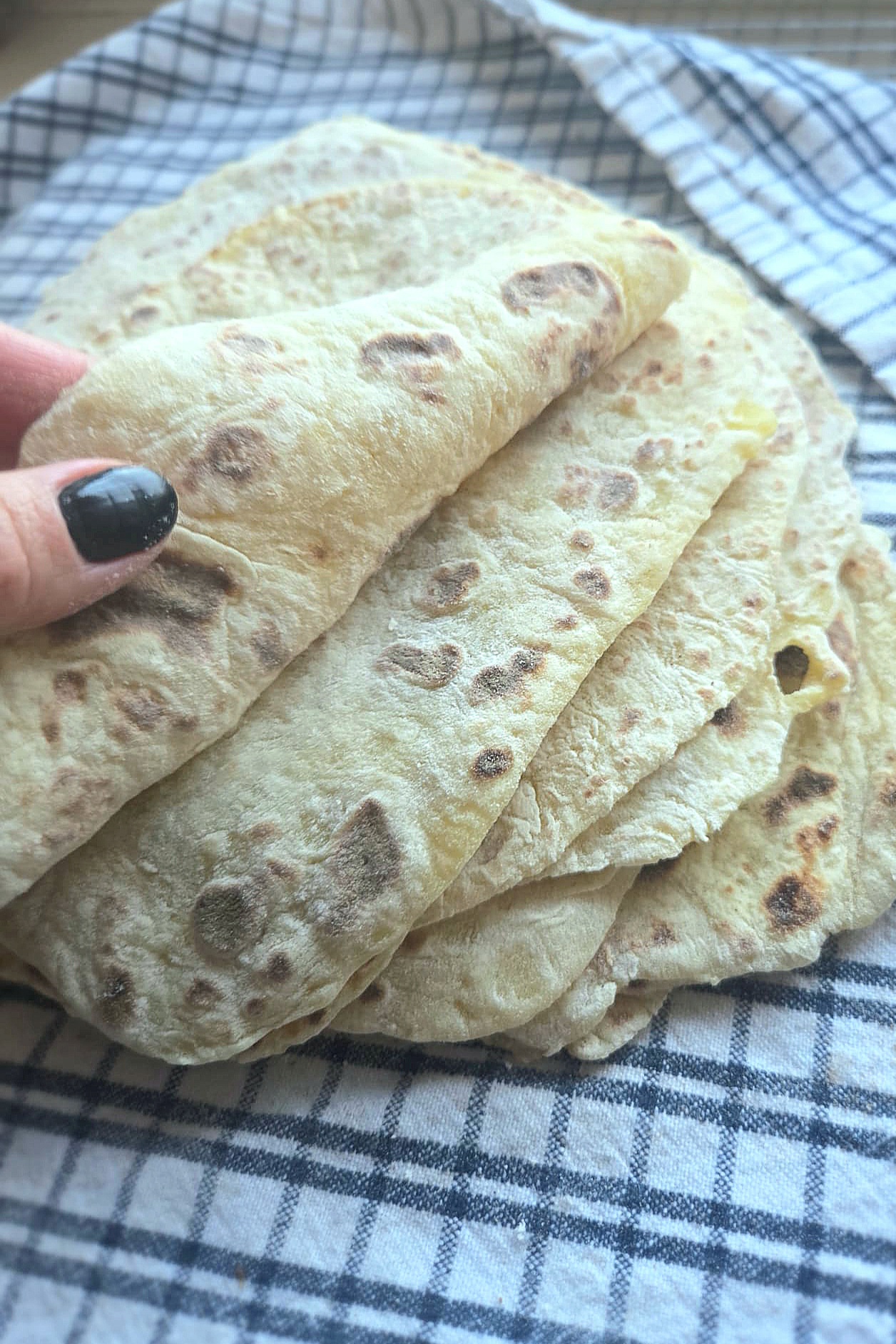
- Cook. Cook each lompe for about 2 minutes per side, until both sides have light brown spots and no raw, shiny patches remain. Thinner rounds and a hotter pan cook faster. Wipe loose flour from the pan with a dry paper towel between batches.
- Wrap. Stack the lomper straight into a clean kitchen towel as they come off the pan and fold the towel over. Let the bundle cool on a wire rack.
Notes
An old farmhouse bread that never left the table
Potato flatbreads go back to when Norwegian farms started growing potatoes. The crop gave bigger, steadier harvests than grain, so cooked potato went into the dough to make the flour go further, and flatbreads like potato lefse and lomper came out of that.
They never went out of use. Lomper wrap hot dogs at kiosks and gas stations, and in the week before May 17 commercial lompe bakeries run around the clock to keep up. Plenty of families still roll their own, and ours go into packed lunches as often as around a sausage. The same dough rolled into rectangles gives potato lefse, which comes out at Christmas.
Start with 115 g of flour and let the potatoes decide
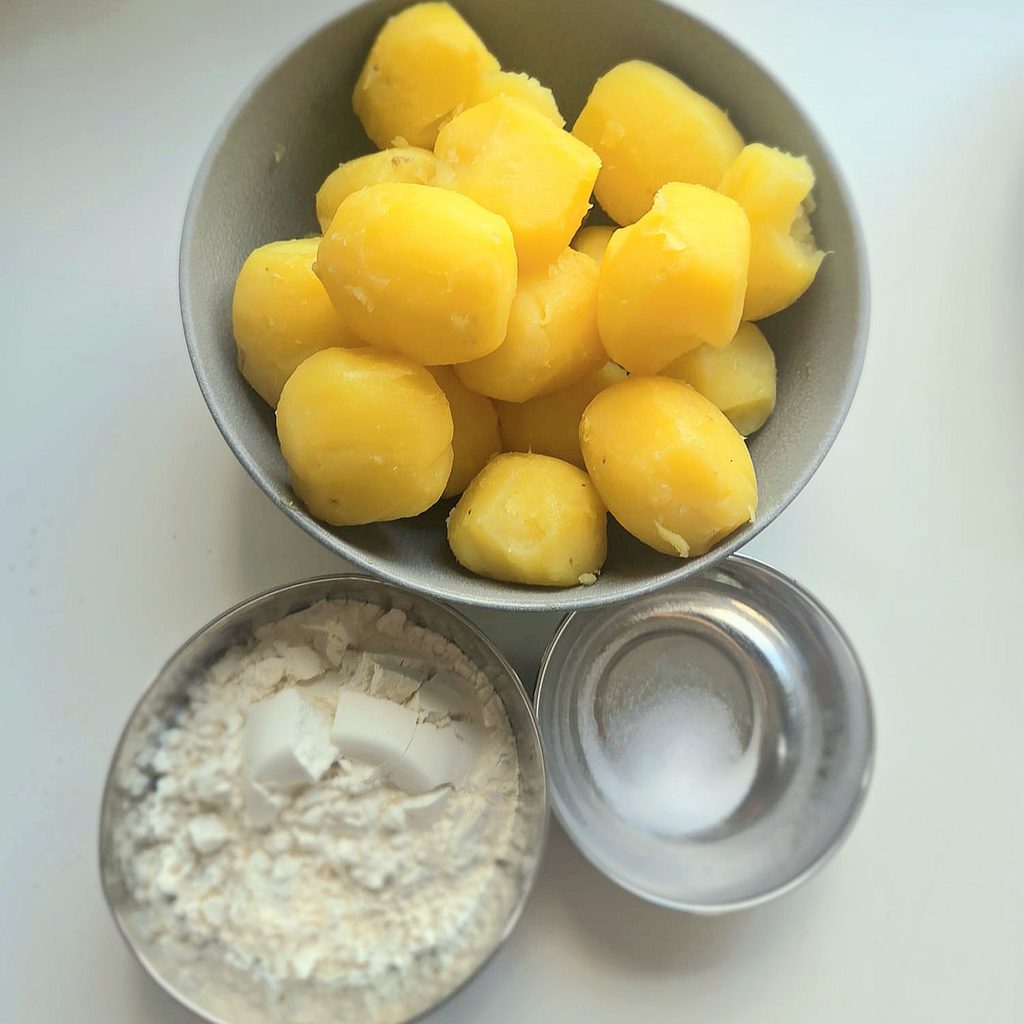
The flour binds the potato, and the potato decides how much it takes. For our last batch, 115 g was enough for a kilo of floury potatoes. That’s a starting point, though. Adding more is normal, and we do it often.
Potato type and season make the difference. Floury potatoes like russets hold less water and need the least flour. Early-season and waxier potatoes are wetter, so the same weight of potato can need noticeably more. Go by the feel of the dough rather than the number. What you’re looking for is the change from wet to workable: a dough you can pick up and shape, even though it still sticks a little. That stickiness is normal, and it’s why lomper are rolled on a well-floured counter. Flour added past that point only makes the flatbread drier.
Potato carries the softness here, much as it does in our potato focaccia. Weigh the potatoes after peeling. If you bake from cups, our baking weight converter handles the flour.
Cool potatoes, a few lumps and no kneading
Let the boiled potatoes cool until they feel cool to the touch but not cold. Warm potato is still giving off steam, and that moisture makes the dough sticky enough to seem like it needs more flour than it does. Straight from the fridge, the potatoes go the other way: firm and harder to mash smooth.
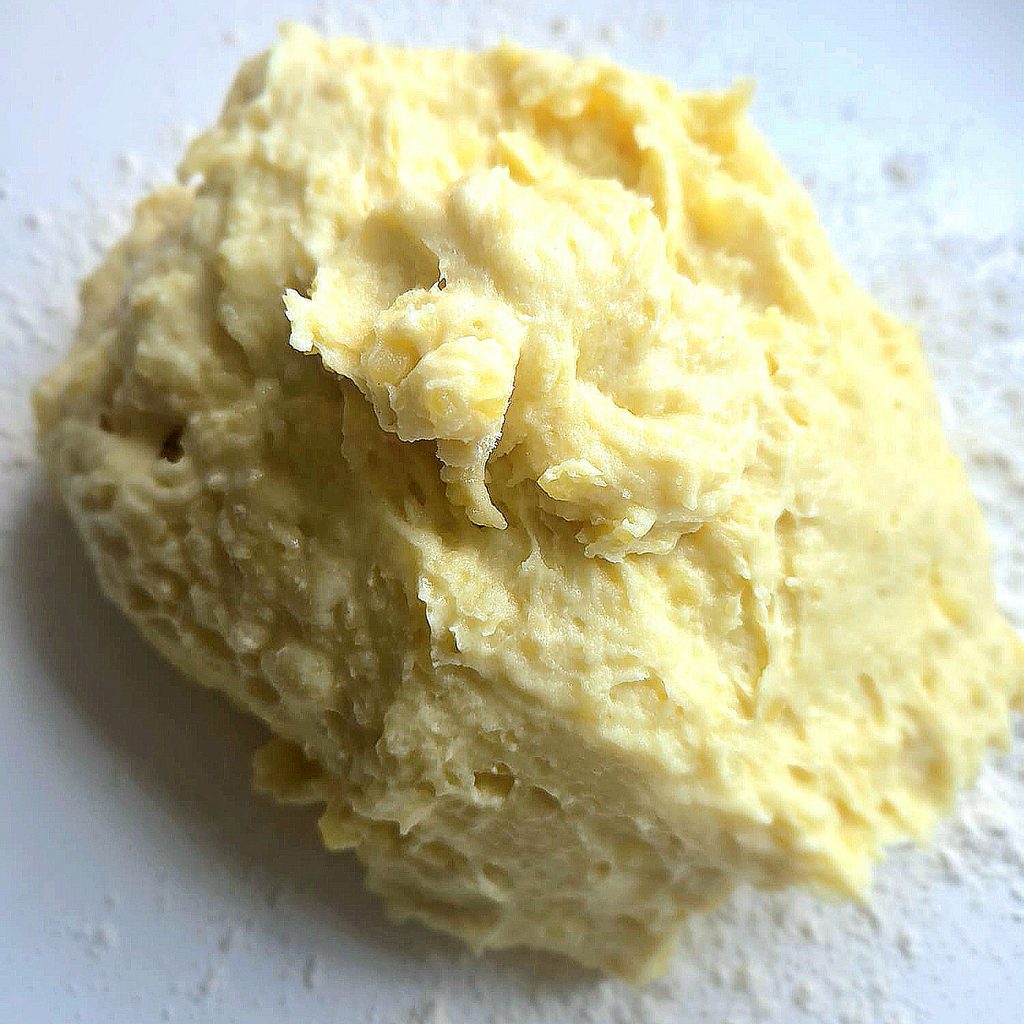
You don’t need a perfect purée. We mash ours in the stand mixer, and the small pieces of potato that survive show up as pale specks in the finished lompe. Mix in the flour only until the dough holds together. There’s no resting time either, so start rolling as soon as it’s mixed.
How to cook Norwegian potato flatbread in a dry pan
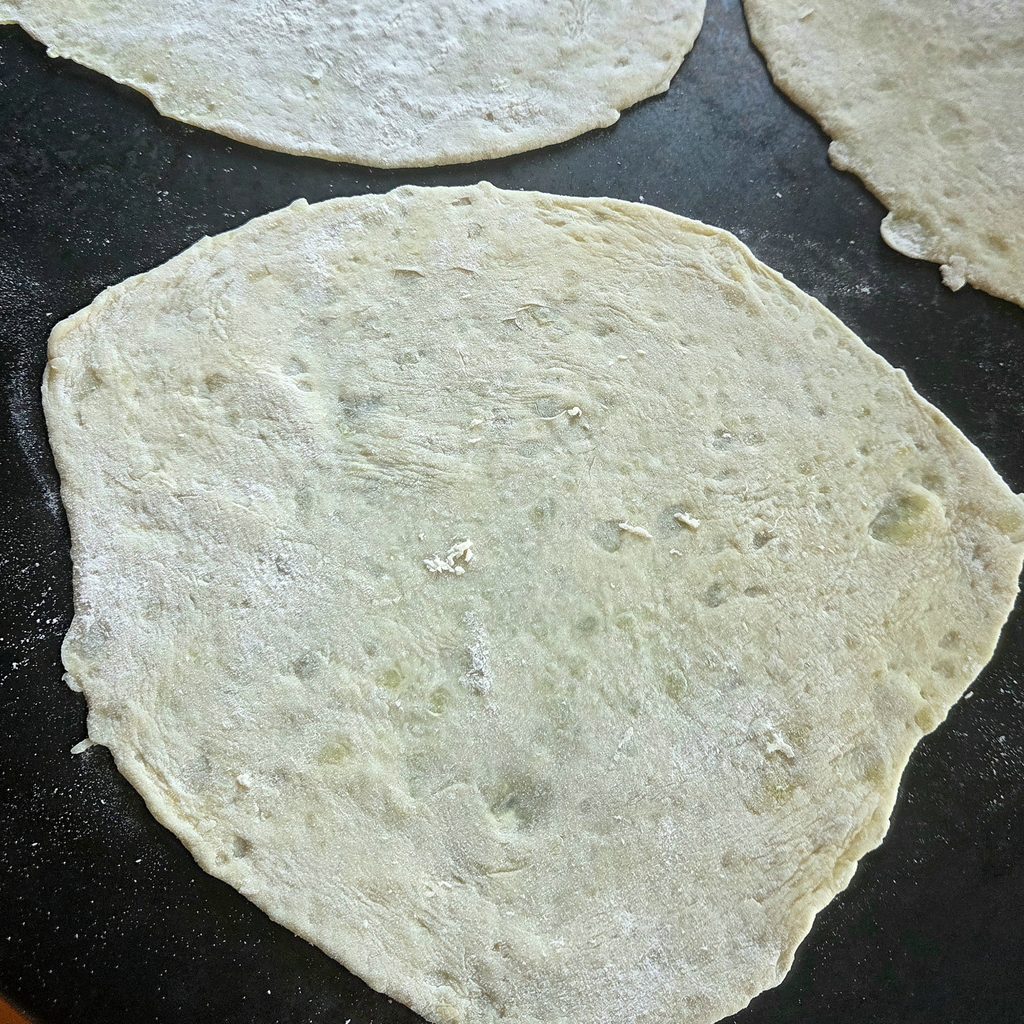
Cook them over medium-high heat with no butter or oil. About 2 minutes per side gives you the brown spots in the photos, but thinner rounds and a hotter pan go faster, so watch the spots rather than the clock. Wipe loose flour off the pan between batches, or it scorches and leaves dark flecks on the next one.
We use a takke, the flat cast-iron griddle Norwegians keep for flatbread and sveler, and it takes three lomper at a time. A heavy cast-iron skillet does the same job one at a time. Norwegian-American lefse often comes with its own kit of a lefse griddle, turning stick and grooved rolling pin. Lomper need none of it.
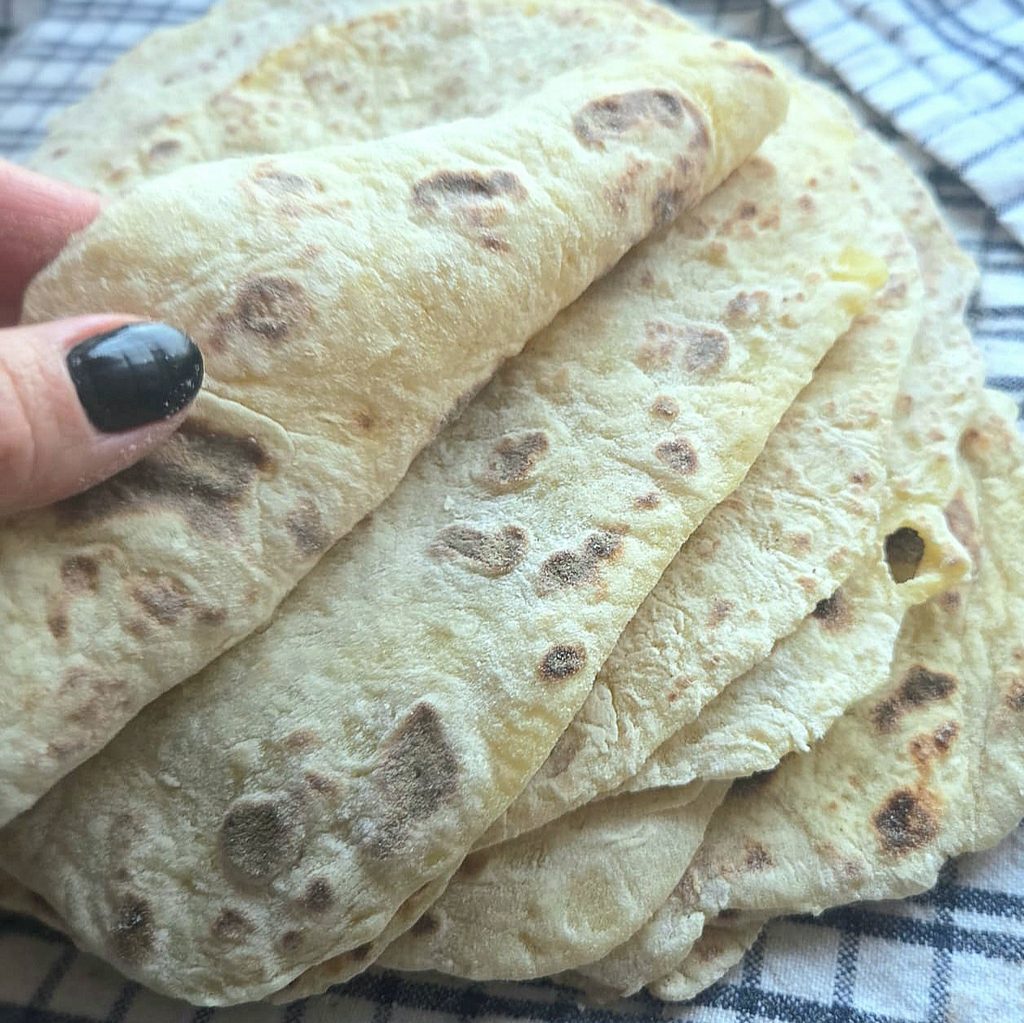
Stack each one straight into a clean kitchen towel and fold it over. The steam they give off while cooling stays inside the towel and keeps them soft and foldable.
Round lomper, rectangular lefser
We make both from the same batch. Lomper are round and lefser rectangular, at about the same size. Ours come out a little rustic, and we don’t mind.
The word lefse covers a whole family of Norwegian flatbreads, some of them sweet and rich, and many Norwegian-American recipes add butter and cream to the potato dough. This is the plain kind, and it goes with savory food as readily as with sugar.
In Norway, potato lefse turns up at Christmas next to pinnekjøtt (salted, dried lamb ribs), rakfisk (fermented trout) and lutefisk (dried cod treated with lye, then soaked and cooked), and wrapped around sylte (head cheese) with mustard. In the days after Christmas, leftover ribbe (roast pork belly) rolled up in a lefse has become common too. The rest of the year, both shapes work as a lunch wrap.
Pølse i lompe: the Norwegian hot dog
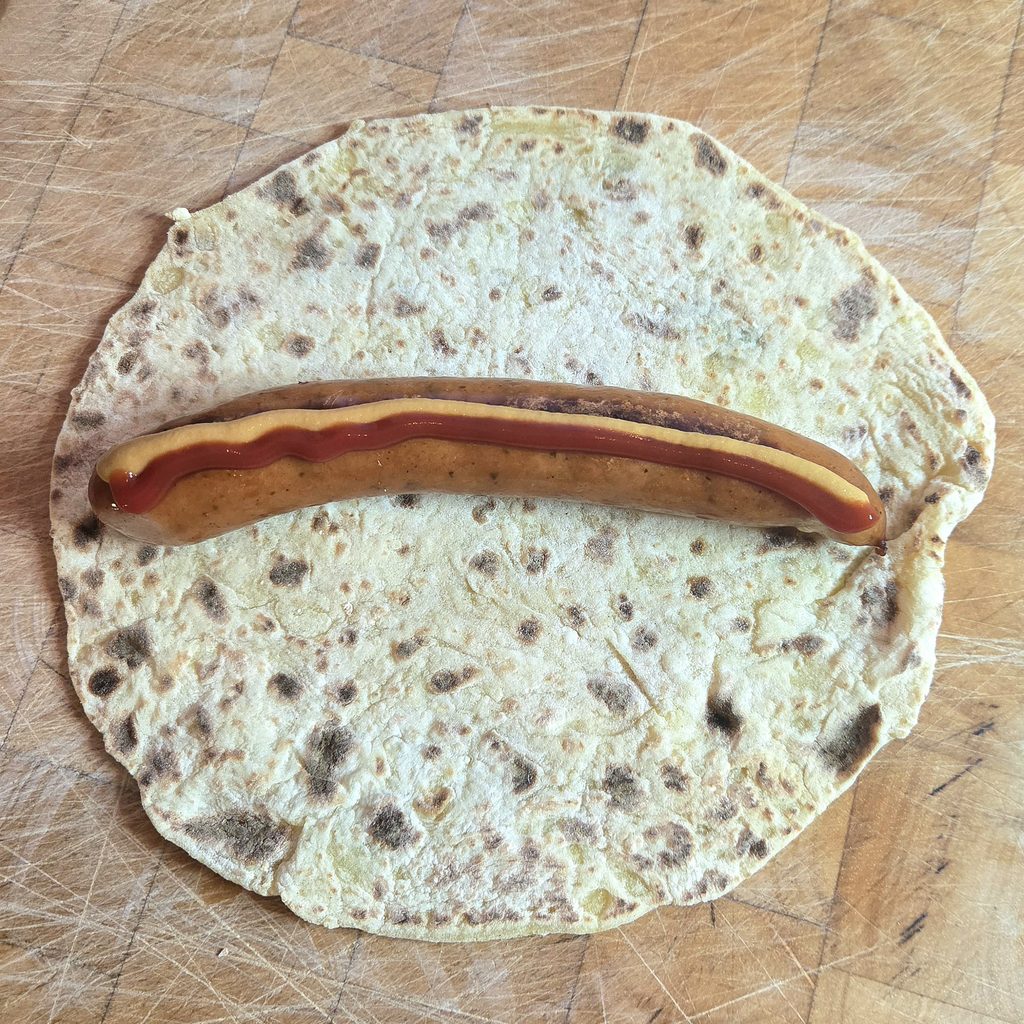
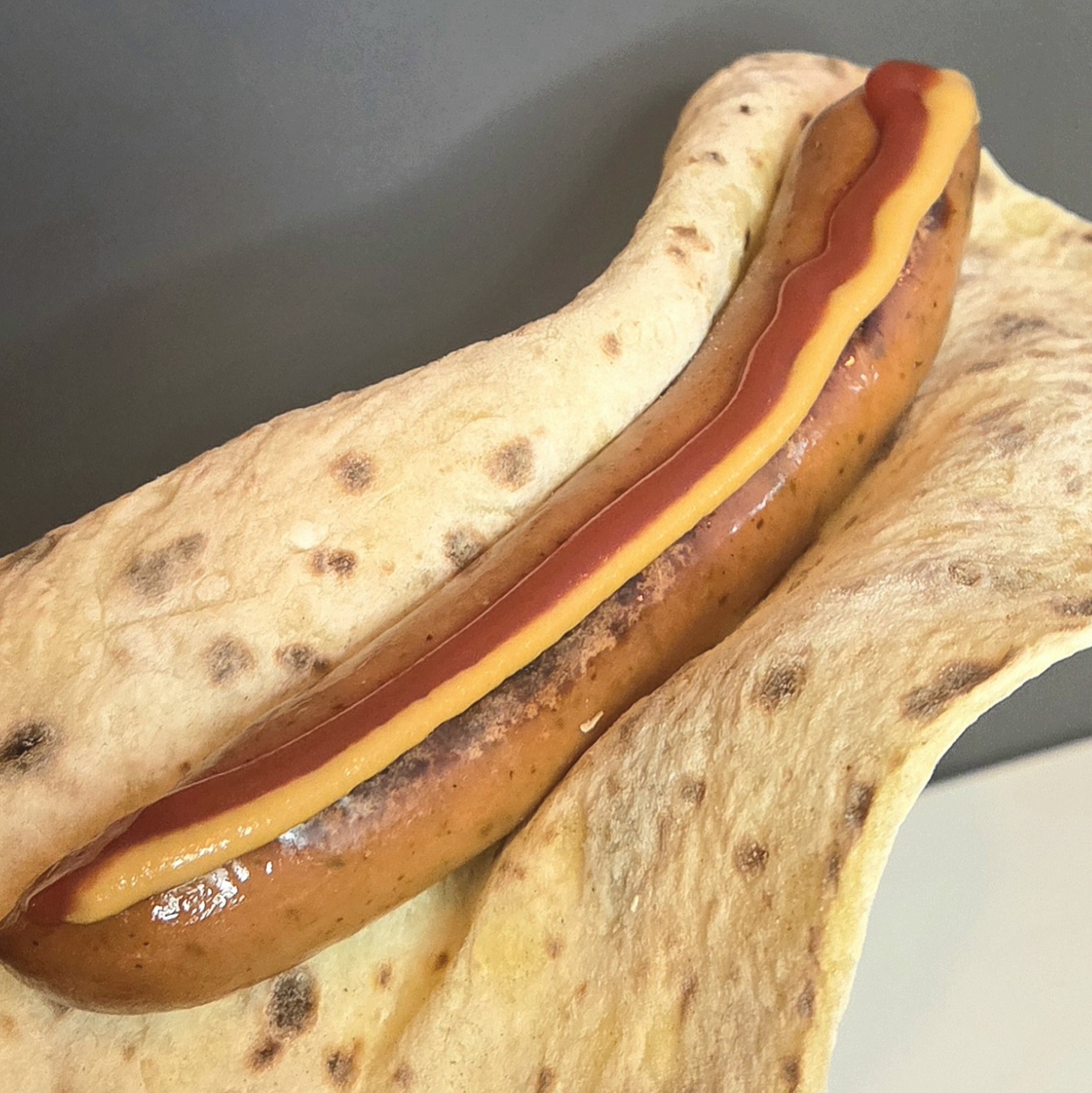
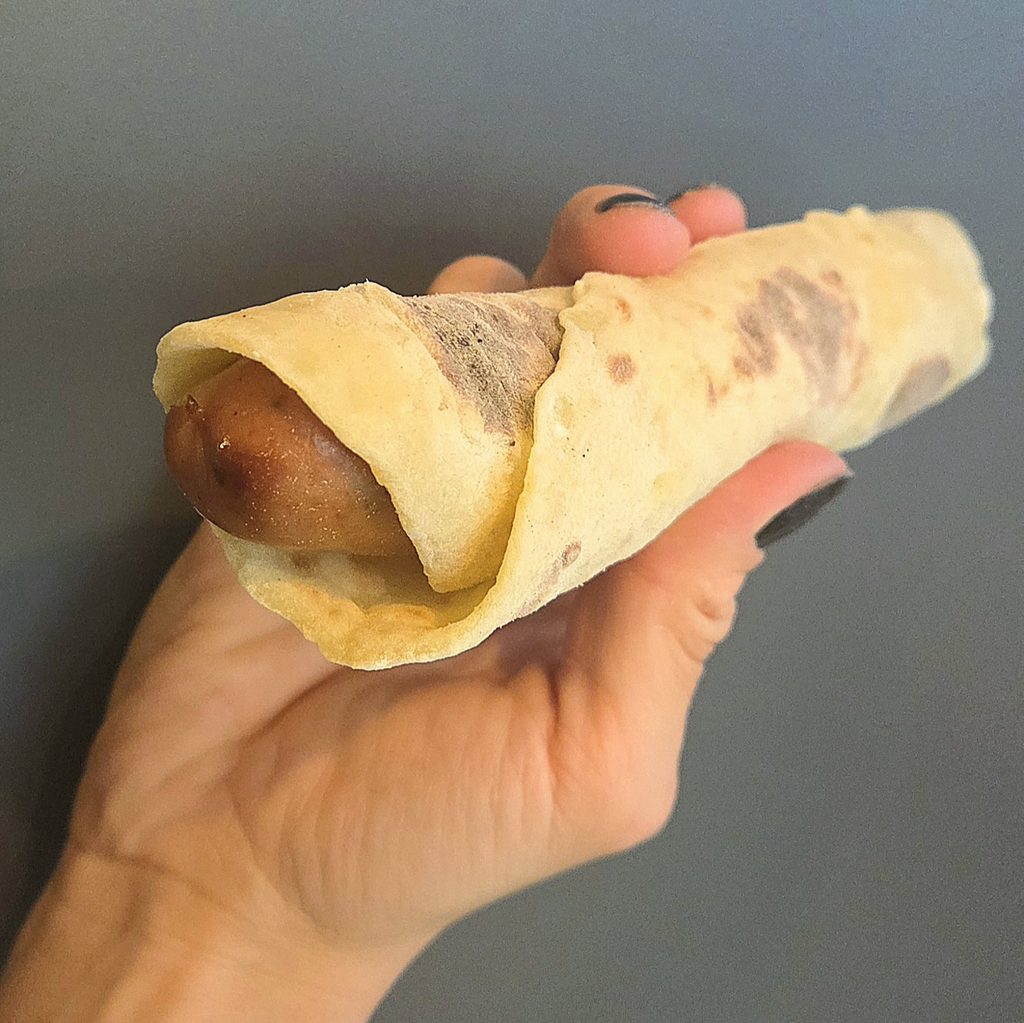
A hot dog wrapped in a lompe is standard fare at Norwegian kiosks and gas stations, and it’s the classic street food on May 17, Norway’s Constitution Day.
Grill or simmer the sausage, lay it across a lompe and add a stripe of mustard and a stripe of ketchup. Roll the lompe tight from one side so the end of the sausage peeks out, and hold it seam-down. Finely chopped raw red onion is just as common, and kiosks also offer crispy fried onions or shrimp salad. The ones pictured here have only mustard and ketchup.
Smoked salmon pinwheels for a buffet
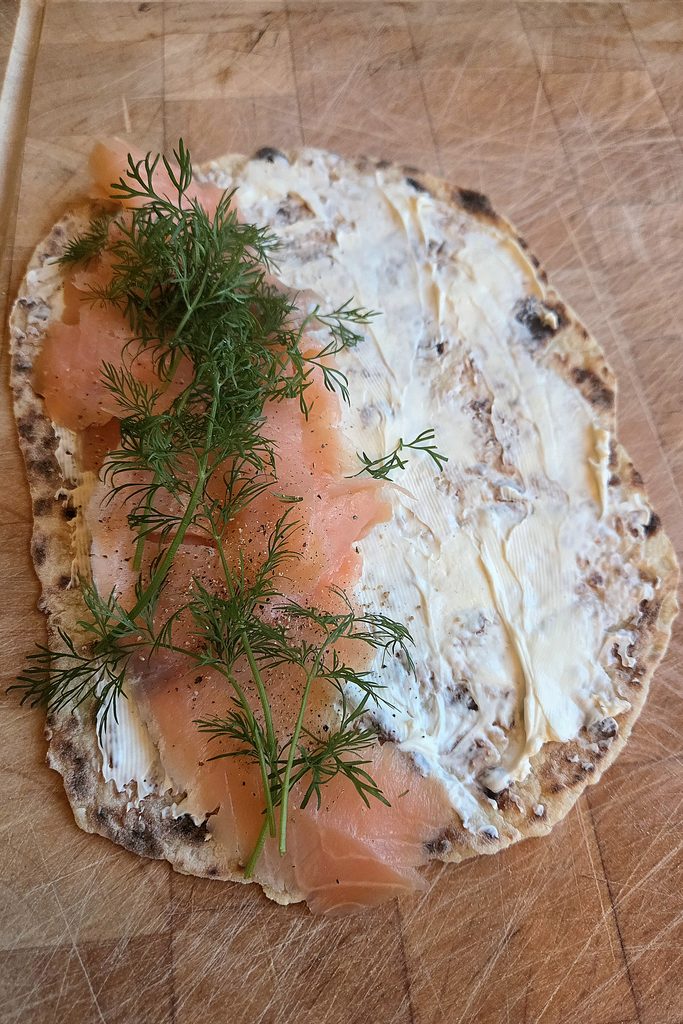
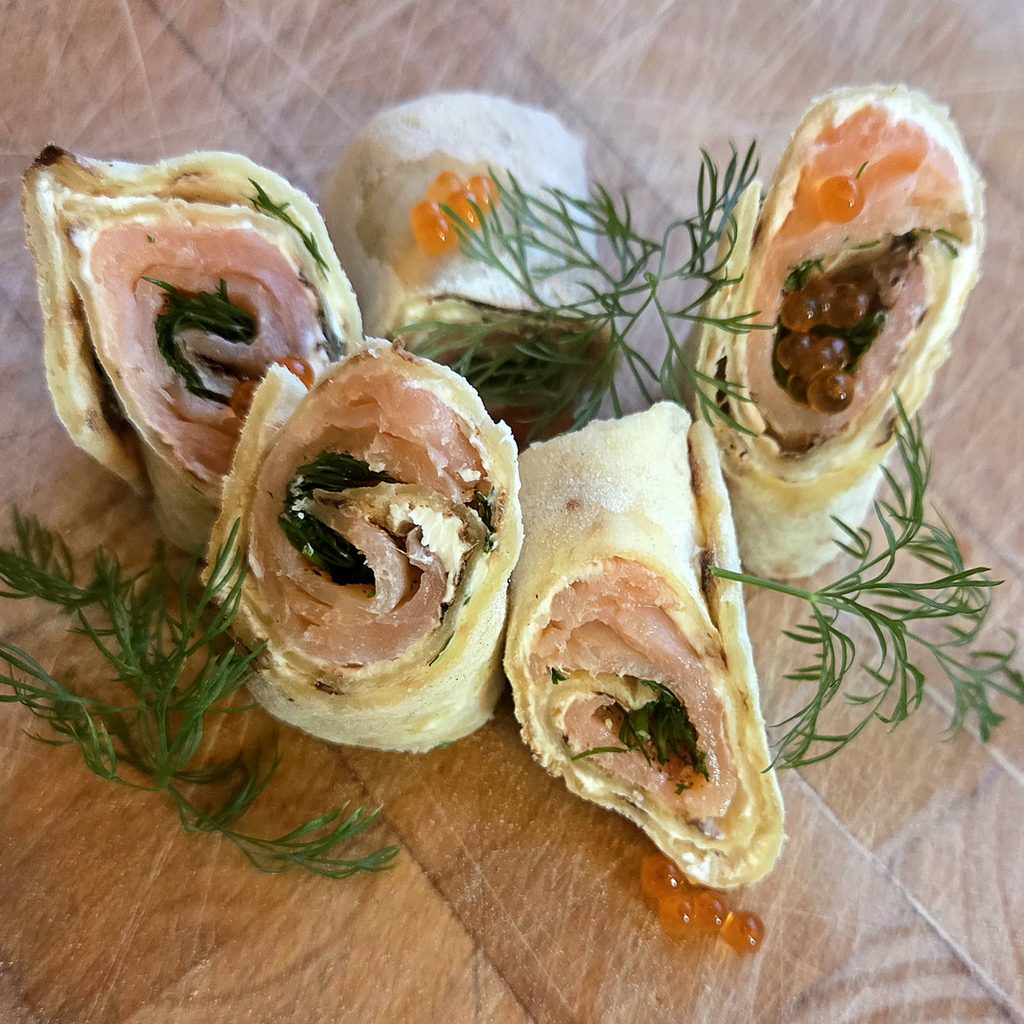
For a buffet or a starter, spread cream cheese all the way to the edge of a lompe, cover one half with cold-smoked salmon and add black pepper and a few sprigs of dill. Roll it up from the salmon side and slice into pieces about 1½ inches (4 cm) wide. A few beads of roe on top finish them.
Cover the whole surface with cream cheese, since it’s what holds the roll closed when you slice. The same salmon and dill pairing tops our savory waffles for brunch.
Butter, sugar and cinnamon
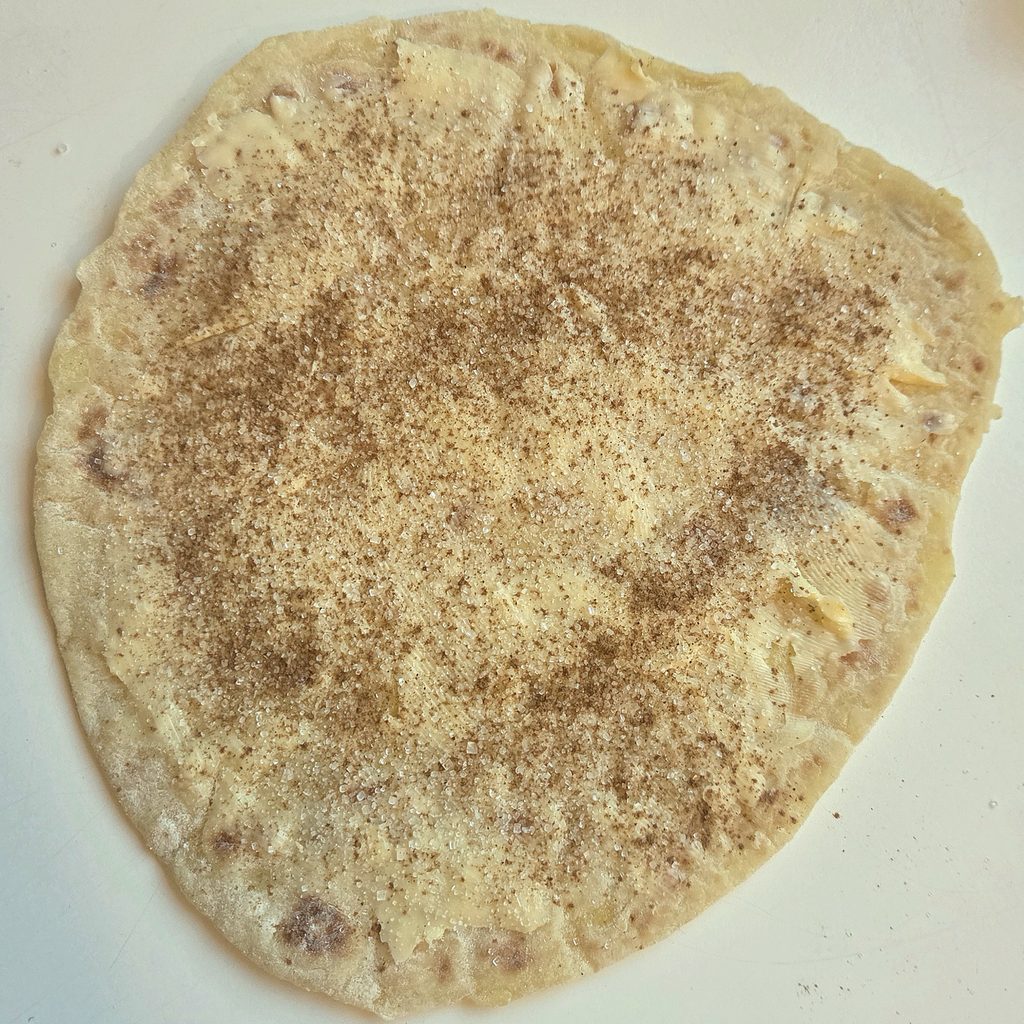
Plenty of Norwegians grew up eating lomper as an after-school snack: soft butter spread to the very edge so the sugar has something to stick to, a sprinkle of sugar and cinnamon, then rolled up tight. Slice the roll into spirals for a plate, or eat it whole from your hand.
More from the Nordic kitchen
- Danish Rye Bread (Rugbrød) — dense and dark, sliced thin for Danish open sandwiches
- Sourdough Discard Naan — another flatbread for the hot, dry griddle, made with sourdough discard
- Oat Scones: Soft Norwegian Tray Scones — baked as one slab and torn into squares