Moist Orange Cake with Sticky Orange Syrup
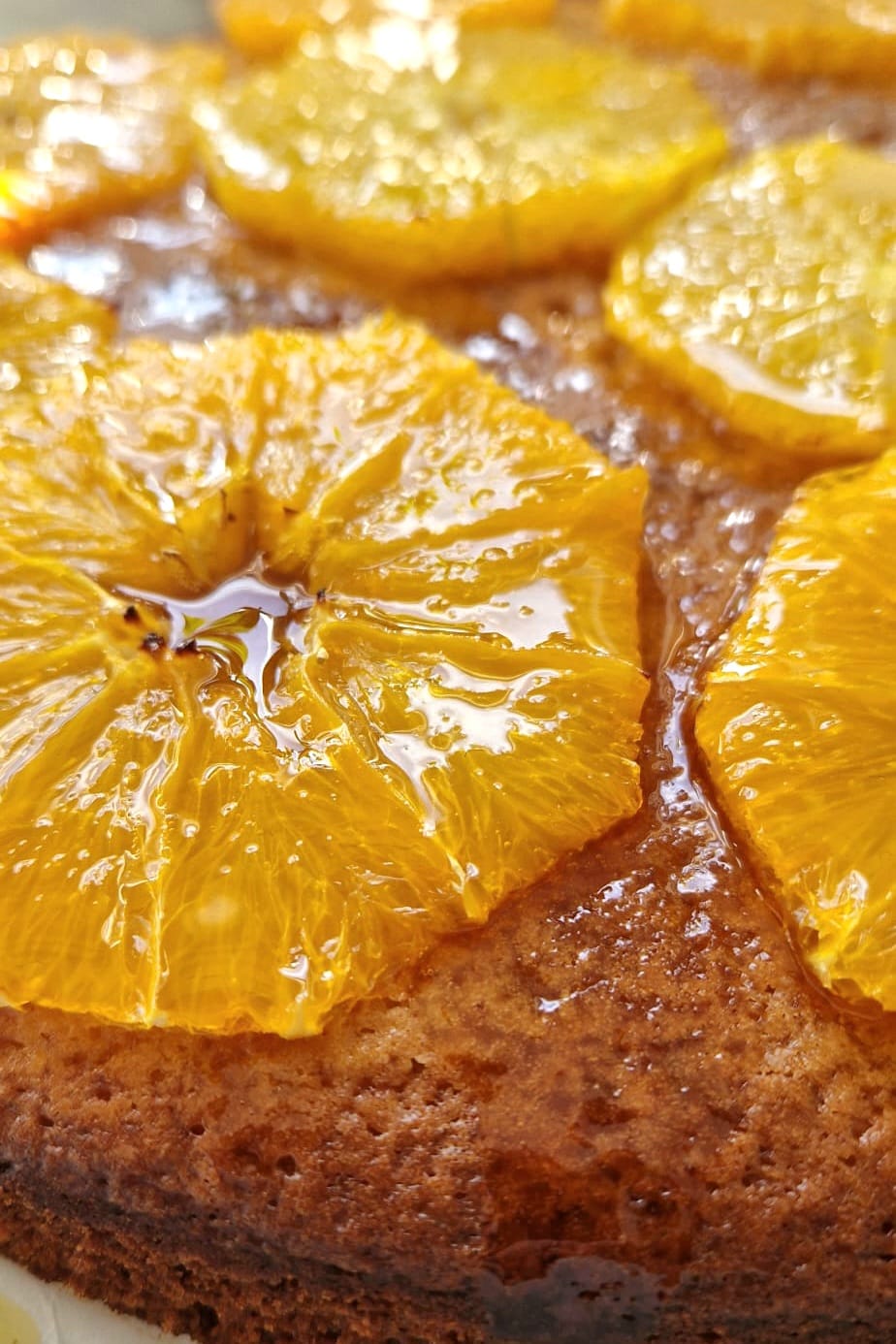
This moist orange cake is soaked in warm citrus syrup while it’s still fresh from the oven, which is exactly why it stays tender for days. It’s a simple Nordic coffee cake — no layers, no frosting, just butter, eggs, orange and a sticky syrup that sinks all the way through the crumb. The glossy orange slices on top do all the decorating for you.
Moist Orange Cake with Sticky Orange Syrup
Ingredients
Equipment
Method
- Heat the oven to 350°F (175°C). Butter a 9-inch (22 cm) springform pan and line the base with parchment.
- Beat the butter and sugar until pale, light and creamy — a full 4–5 minutes. This is where the cake gets its lift, so don’t cut it short.
- Add the eggs one at a time, beating well after each one before adding the next. The batter should stay smooth and glossy.
- Mix in the orange zest and 5 tbsp (75 ml) orange juice.
- Sift the flour and baking powder together and fold into the batter until just combined. Scrape the bowl once so nothing hides at the bottom.
- Spoon the batter into the pan and level the top. Bake on the lowest oven rack for about 45 minutes, until the top is set but not yet fully baked through. Lay the orange slices over the top in a single layer, then return the cake to the oven for another 15 minutes, until the slices have caramelized lightly at the center and a skewer comes out clean. If the top browns early, tent it loosely with foil.
- While the cake bakes, warm the orange juice and sugar in a small saucepan, stirring just until the sugar dissolves. Don't reduce it — you want a thin, pourable syrup that soaks in.
- Take the cake out of the oven, release the springform ring and set the cake — still on the springform base — on a wire rack over a tray.
- Prick the warm cake all over with a wooden skewer, between the orange slices and right down into the crumb.
- Slowly spoon the warm syrup over the top, letting it soak in between additions. The syrup gives the baked slices a glossy, sticky finish.
- Leave the cake on the rack until completely cool before slicing. It gets better on day two.
Notes
Why this moist orange cake actually stays moist
Most orange cakes taste of orange but bake out dry. The fix isn’t more juice in the batter — too much liquid and the crumb turns heavy. It’s soaking the cake after baking.
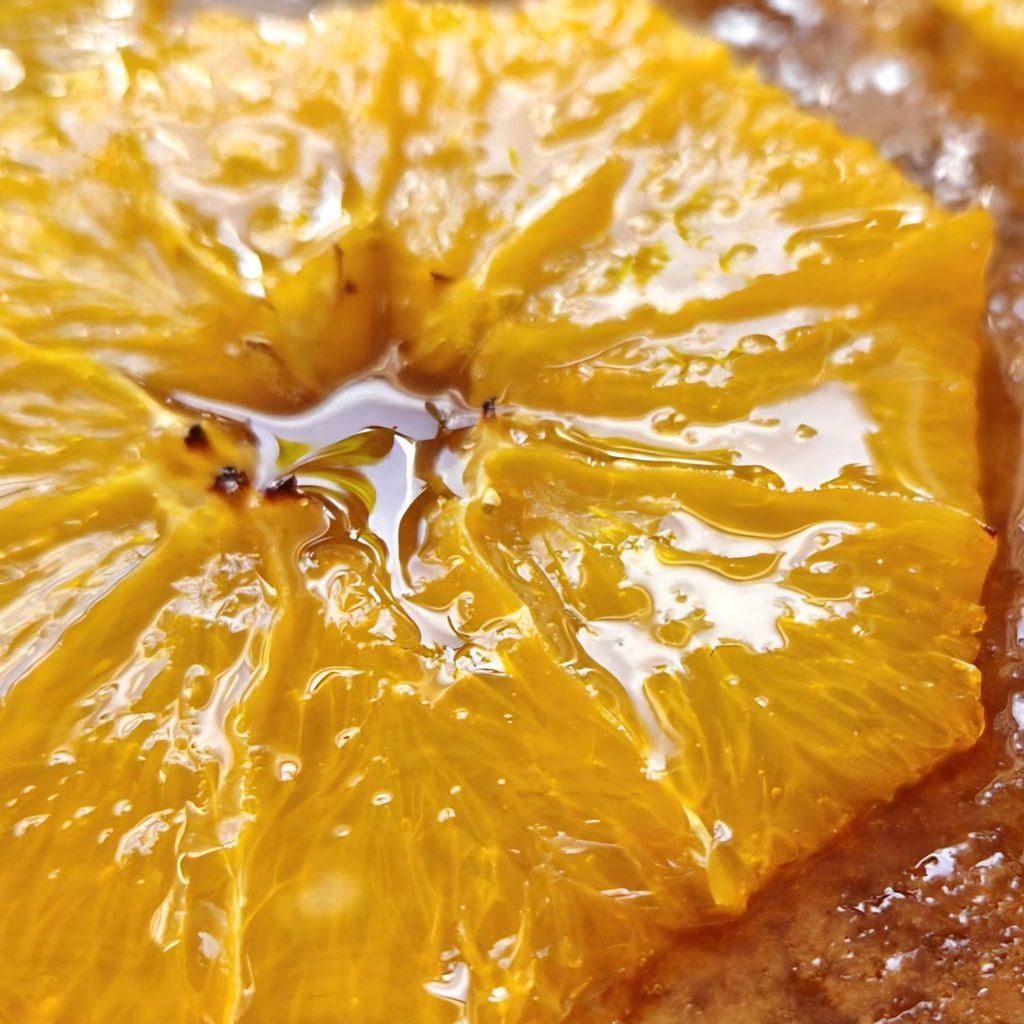
A warm cake is porous. Prick it with a skewer while it’s still hot from the oven and pour warm syrup over the top, and the crumb pulls the liquid in rather than shedding it. Do it cold and the syrup pools on the surface and runs off onto the tray. Same ingredients, completely different cake. It’s the same trick we use on our easy rhubarb cake, brushed with a warm rhubarb syrup straight out of the oven.
Tips for the best orange cake
Cream the butter properly. Four to five minutes, until it’s genuinely pale and light. With 300 g of butter this is the only aeration the cake gets besides the baking powder.
Room temperature everything. Cold eggs hitting warm creamed butter is how batters split. Take the butter and eggs out an hour ahead.
Zest before you juice. Obvious, but easy to forget once you’ve halved the oranges. Use a microplane and stop at the white pith — that’s where the bitterness lives.
Bake low and slow. Lowest rack, 350°F (175°C), a full hour. A deep, rich batter like this needs time for the centre to set before the top takes too much colour.
Give it the skewer test. Clean skewer, done cake. If there’s wet batter clinging to it, give it another 5–10 minutes and check again.
Make it your own
Swap the oranges for blood oranges when they’re in season — the slices on top turn a deep ruby and the cake looks like you tried much harder than you did. Mixed citrus works beautifully too: alternate orange, blood orange and thin slices of lemon for colour and a sharper edge.
A splash of Grand Marnier or Cointreau in the syrup turns it into an evening cake. A little cardamom in the batter pulls it toward the Nordic side — it’s the same spice behind our cinnamon knots. And if you want it plainer, skip the slices entirely and just pour the syrup — the cake stands on its own.
Serve it with lightly whipped cream or crème fraîche. It doesn’t need it, but it doesn’t hurt.
More Nordic bakes you’ll love
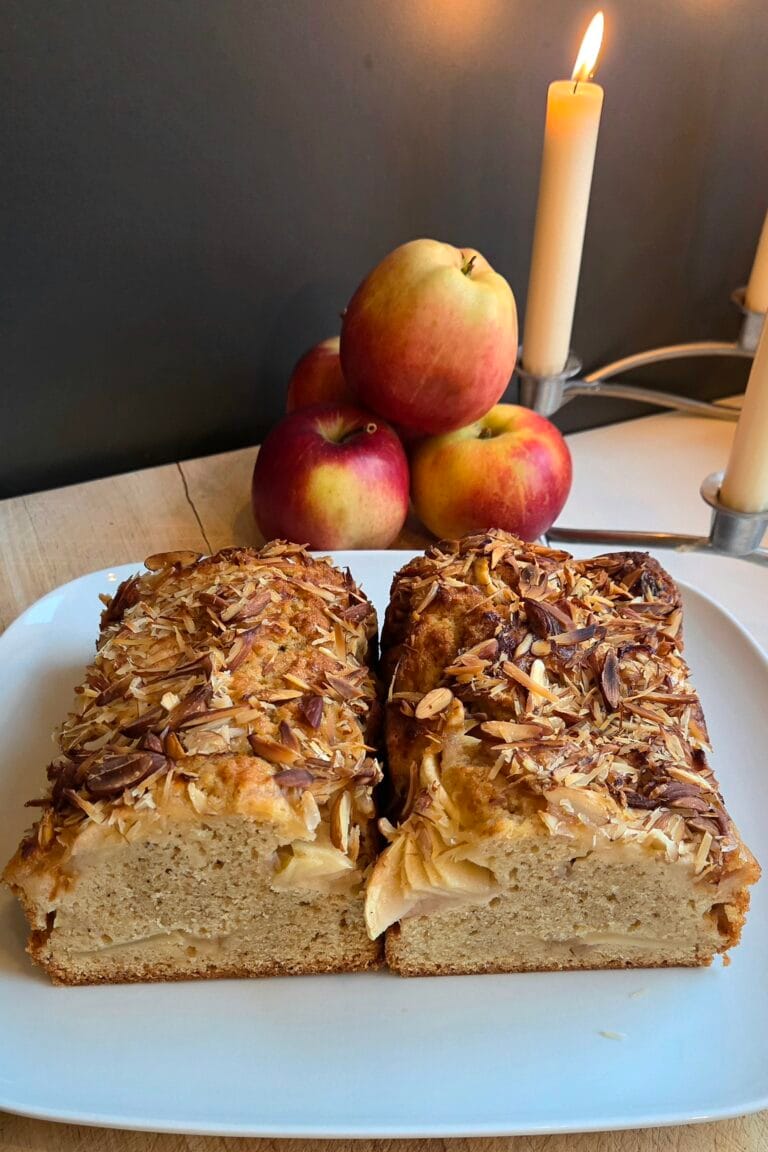
- Norwegian Apple Cake (Eplekake) — the classic Norwegian fruit coffee cake, with a toasted-almond top
- Norwegian Marble Cake (Marmorkake) — another rich, buttery everyday cake for afternoon coffee
- Sourdough Discard Blueberry Loaf with Lemon Glaze — citrus and berries in a single loaf, with no waste