Brunost Cinnamon Buns with Brown Cheese Caramel
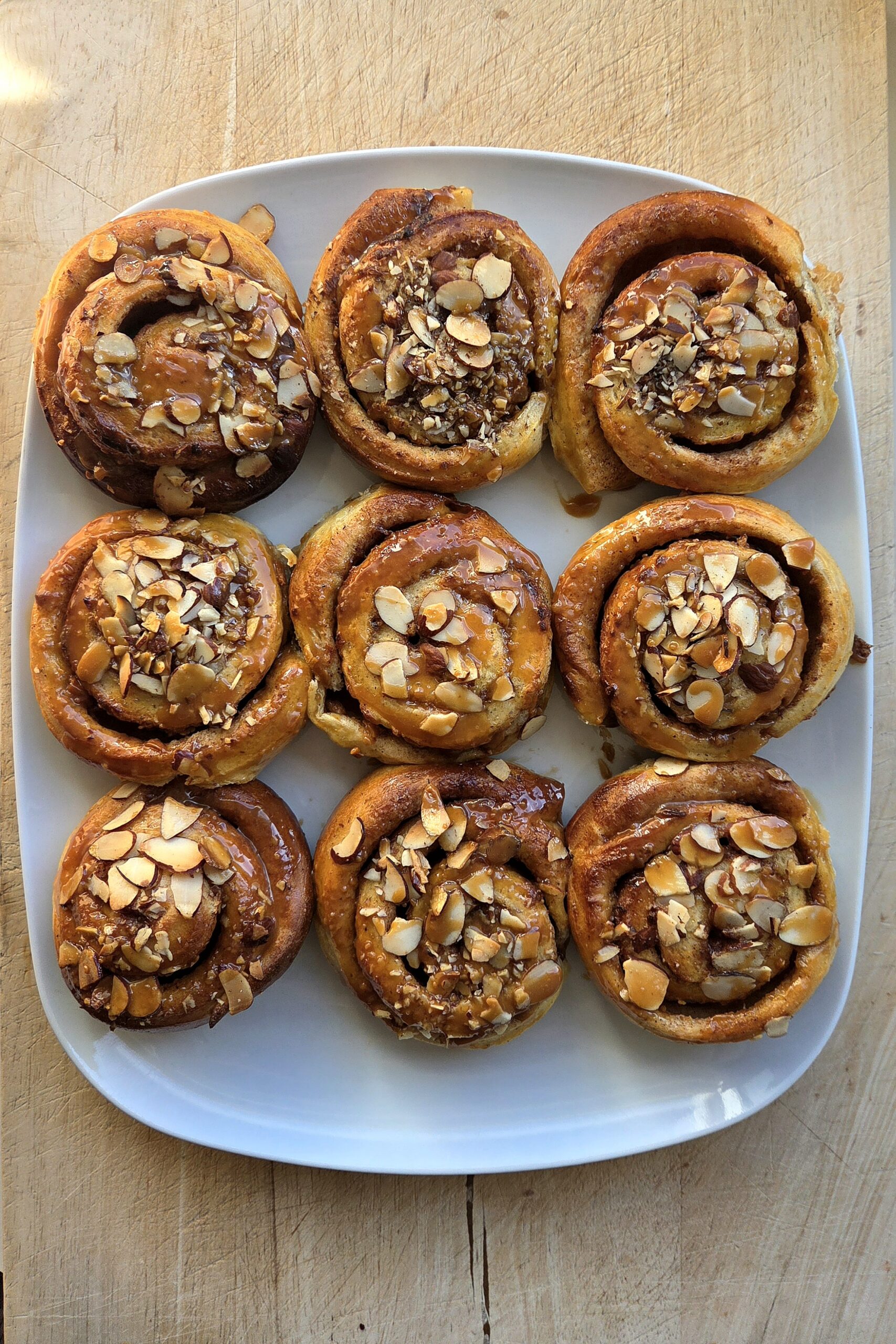
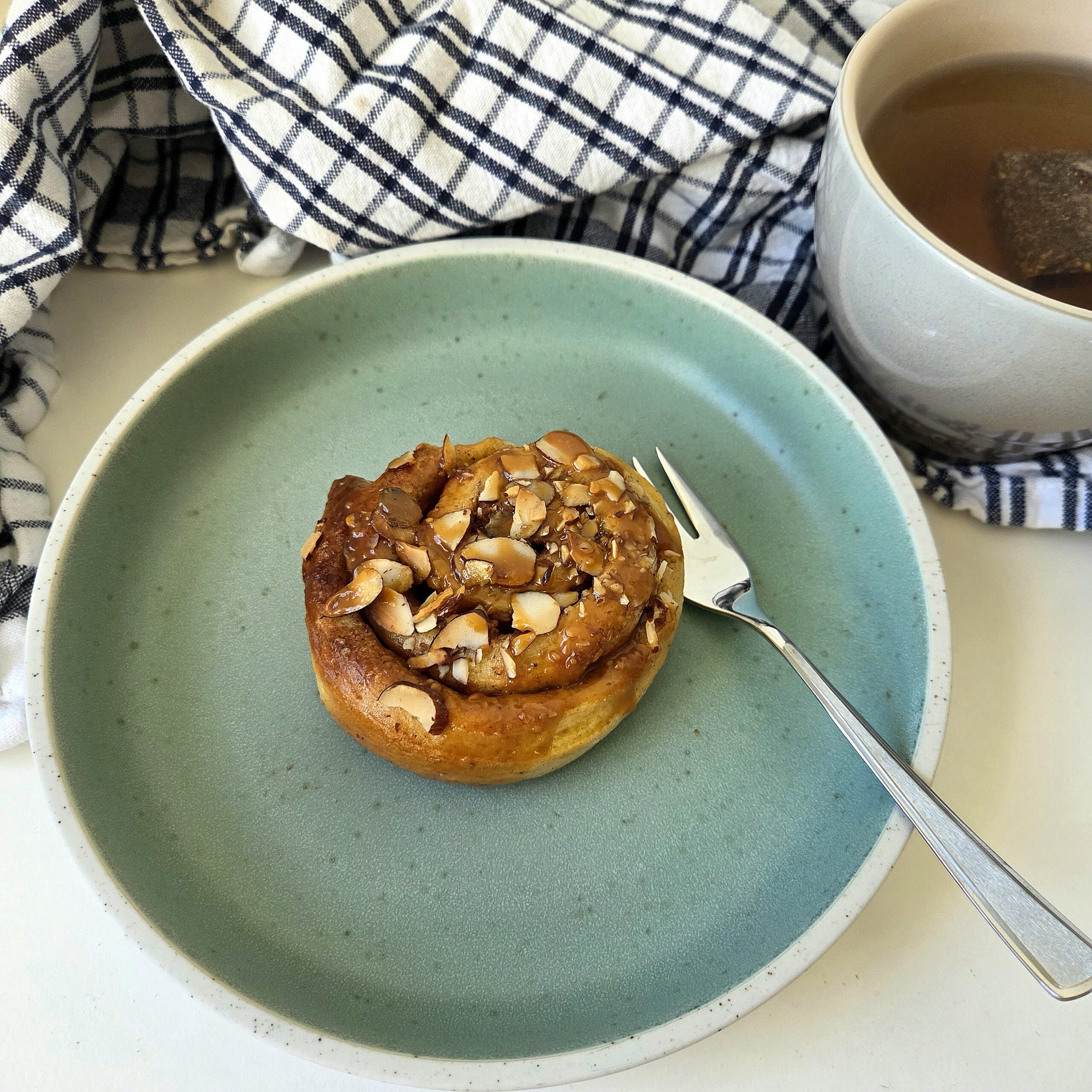
Brunost cinnamon buns use the same cardamom dough as our cardamom cinnamon rolls, with Norwegian brown cheese added twice: grated into the filling and melted into a light caramel. Sliced almonds go on with the egg wash and toast in the oven, and the caramel is spooned over the moment the buns come out.
Brunost Cinnamon Buns with Brown Cheese Caramel
Ingredients
Equipment
Method
- Mix the dry ingredients: Put the flour, sugar, salt, cardamom and cinnamon in the bowl of a stand mixer. If you're using instant yeast, add it here.
- Warm the milk: Heat the milk to 77–86°F (25–30°C), just under lukewarm, and whisk in the egg. Crumble in the fresh yeast and stir until it dissolves
- Knead before the butter: Pour the milk into the dry ingredients and knead on low speed for 8 minutes, until the dough comes away from the sides of the bowl.
- Work in the butter: Add the cubed butter a few pieces at a time on low speed. Keep kneading for another 10 minutes, until the dough is smooth, glossy and passes the windowpane test. If the mixer feels warm, let it rest for a few minutes.
- First rise: Cover the bowl with plastic wrap and let the dough rise until doubled, about 1 hour.
- Make the cinnamon butter: Stir the soft butter, sugar and cinnamon into a smooth paste. Leave it at room temperature so it stays spreadable. Grate the brunost for the filling on the coarse side of a box grater and keep it in the fridge until you need it.
- Roll out: Turn the dough onto a lightly floured counter and roll it into a rectangle of about 12 × 20 inches (30 × 50 cm), with a long side facing you.
- Fill: Spread the cinnamon butter all the way to the edges, then scatter the grated brunost evenly over it.
- Roll and cut: Roll the dough up tightly from the long side nearest you and turn the log seam side down. Cut it into 18 slices, about 1 inch (2.5–3 cm) thick.
- Second rise: Set the buns cut side up on the two lined baking sheets, 2 inches (5 cm) apart, and tuck the loose end of each spiral underneath. Cover and proof for 30–40 minutes, until puffy and a gentle press leaves a dent that springs back slowly. Preheat the oven to 425°F (220°C) during the proof.
- Cook the sugar: Put the sugar and water in a heavy-bottomed saucepan over medium heat. Swirl the pan instead of stirring and cook for 5–7 minutes, until the syrup turns light amber.
- Add cream and brunost: Take the pan off the heat and pour in the cream slowly, since it bubbles up hard. Whisk until smooth, then add the brunost and stir until it has melted into the caramel. Keep it warm.
- Egg wash and almonds: Brush the proofed buns with the beaten egg and scatter the sliced almonds over them while the egg is still wet.
- Bake: Bake one sheet at a time on the middle rack for about 10 minutes, until the buns are deep golden and the almonds lightly toasted. The center of a bun should read 190°F (88°C).
- Glaze while warm: Leave the buns on the parchment and spoon the warm caramel over them as soon as they come out of the oven. Then move them to a wire rack to cool.
Notes
What brown cheese brings to a cinnamon bun
Brunost is a whey cheese. Whey, milk and cream are cooked down until the milk sugars caramelize, which gives it the brown color and a sweet, faintly salty taste that sits somewhere near fudge. The one we use, G35, has goat milk alongside the cow milk: the G stands for geit (goat) and 35 for the percentage of fat in the dry matter. The goat milk is where the slight tang comes from, and next to cinnamon and cardamom it gives the filling an edge that sugar alone wouldn’t.
Grate it cold, straight from the fridge. At room temperature brunost turns soft and smears on the grater instead of shredding. Scattered over the cinnamon butter, the shreds stay visible as orange flecks in the swirl right up until the buns go in the oven.
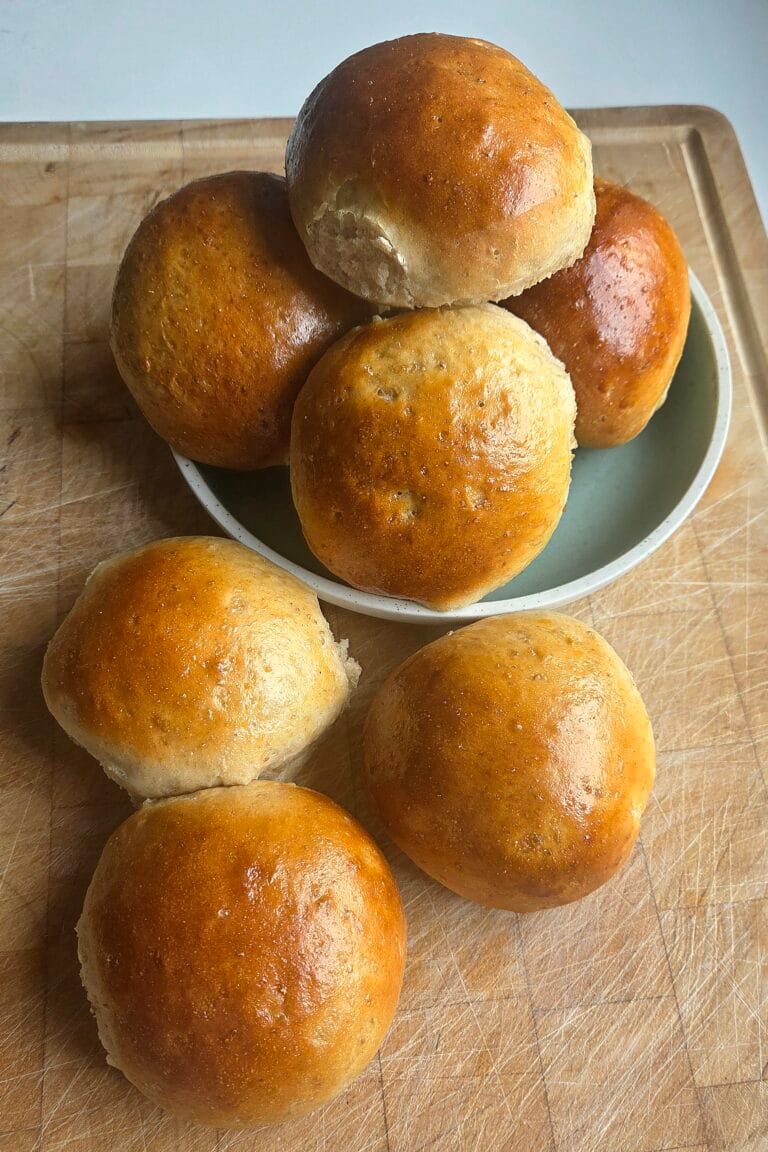
If brunost is new to you, the everyday Norwegian way to eat it is on bread, the way we serve our laup rye rolls: split, buttered and topped with a thin slice.
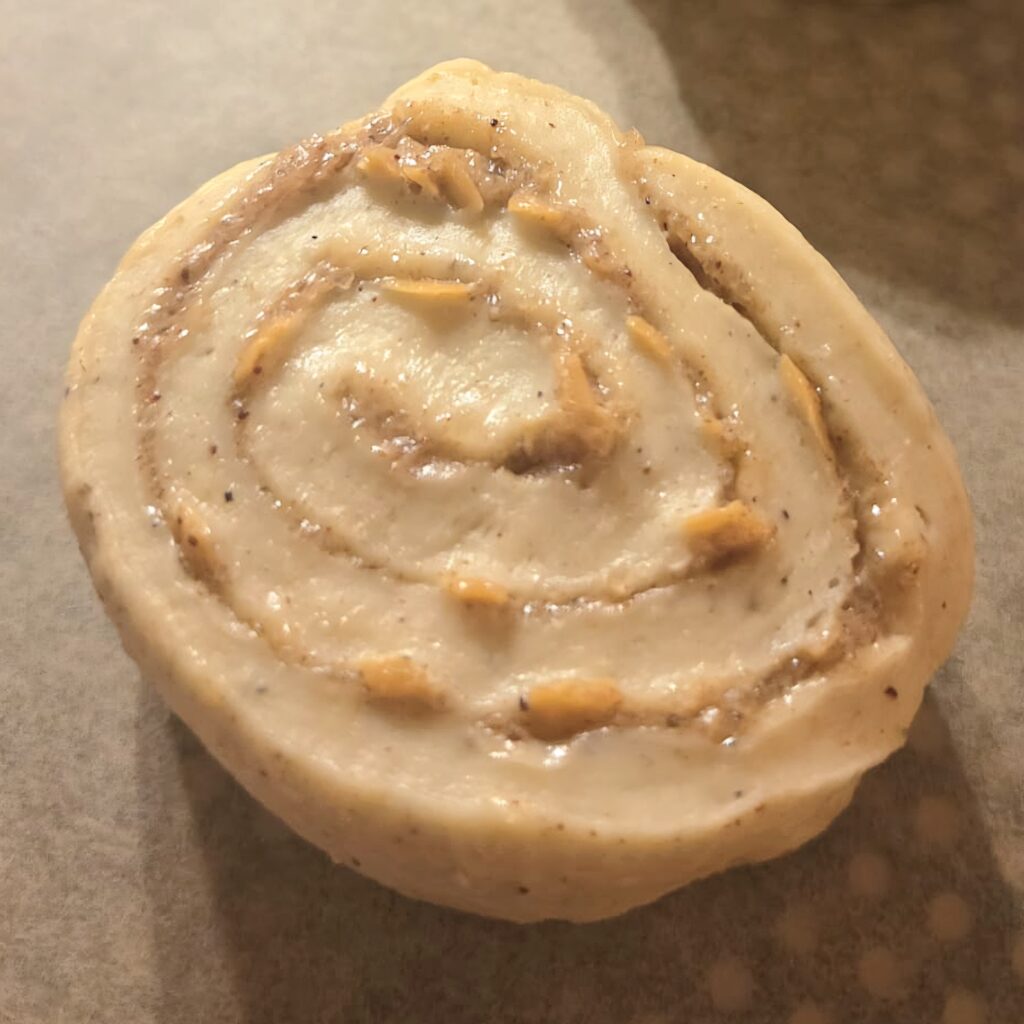
The dough behind these brunost cinnamon buns
The milk, egg and flour get eight minutes on their own before any butter goes in, so the gluten has a head start. Fat added at the beginning coats the flour and slows that down, which is why the full knead runs close to 20 minutes. When the dough stretches into a thin, see-through sheet without tearing, it’s ready.
Where the cardamom cinnamon rolls bake close together in a pan at 350°F, these are smaller and stand apart on a baking sheet. From this batch we cut 18 buns instead of 12, and they get a hotter, shorter bake: 425°F for about 10 minutes. The outside colors fast while the inside stays soft, and every bun gets its own browned edge for the caramel to cling to.
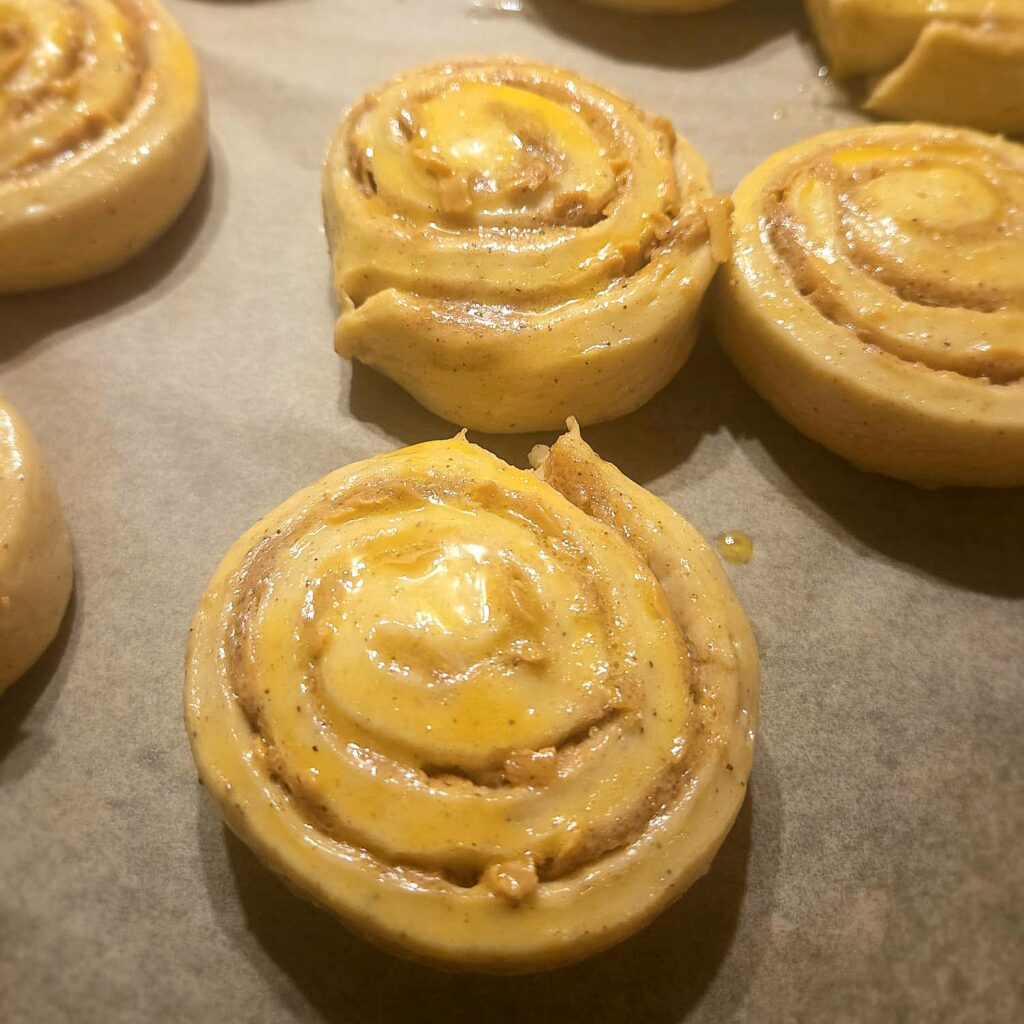
Why the brunost caramel stays light
We take the sugar only to light amber before the cream goes in. Brunost carries caramel flavor and color of its own, and the sauce darkens as the cheese melts into it. Start with a dark caramel and the glaze tips toward bitter, with the brunost lost underneath.
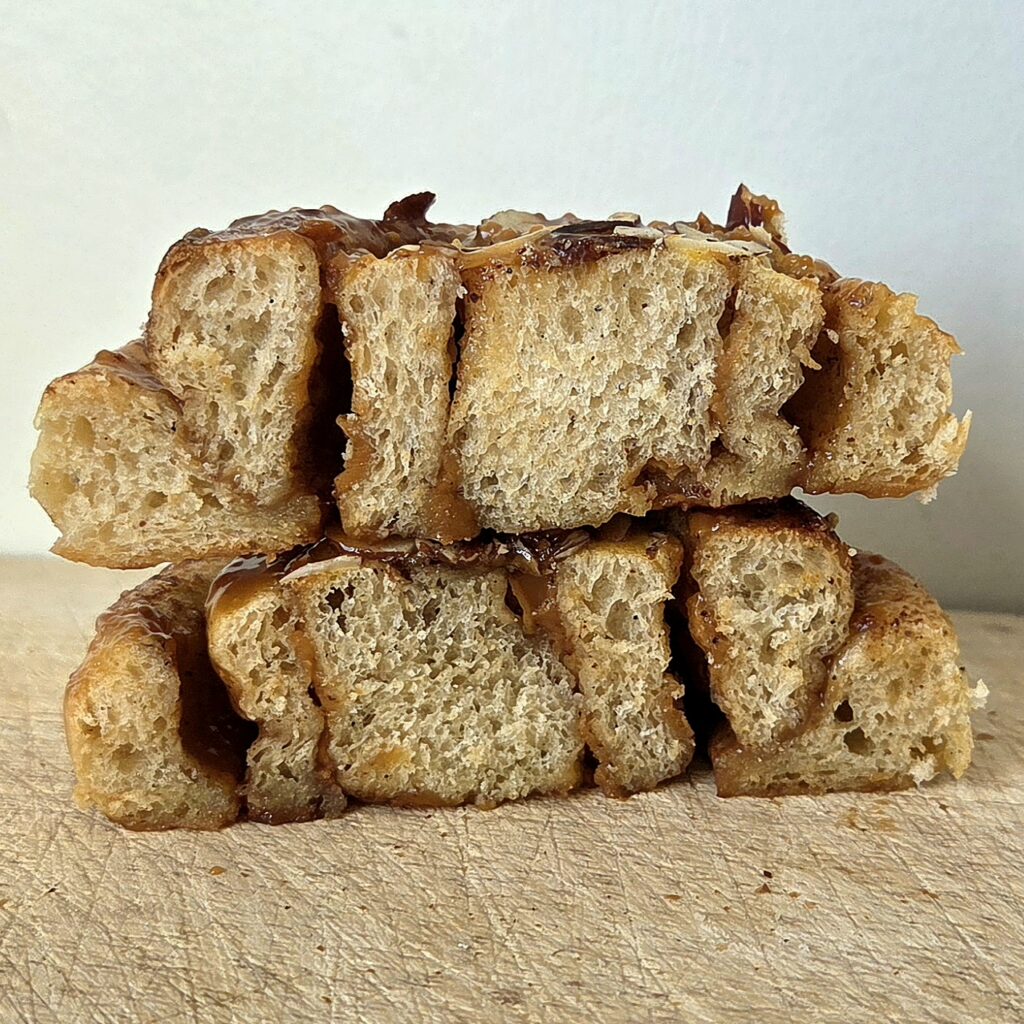
Timing matters as much as color. Spooned over buns straight from the oven, the caramel runs down into the seams of the spiral, and when you cut one in half you can see it between the layers. On cooled buns it stays on top as a thick coat. The almonds are already in place by then: they go onto the wet egg wash before baking, which holds them, and they toast during the 10 minutes in the oven, so there’s no separate toasting step.
More from the Nordic kitchen
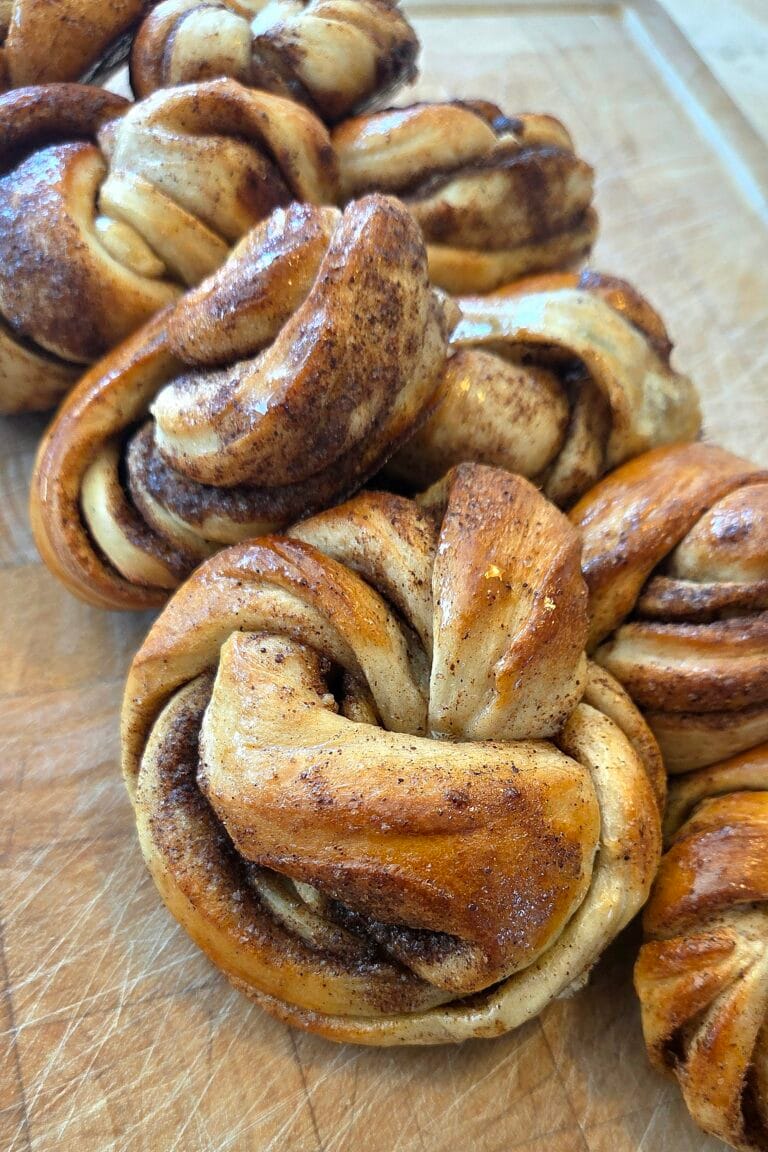
- Cinnamon Knots with Cardamom — twisted instead of rolled, brushed with sugar syrup
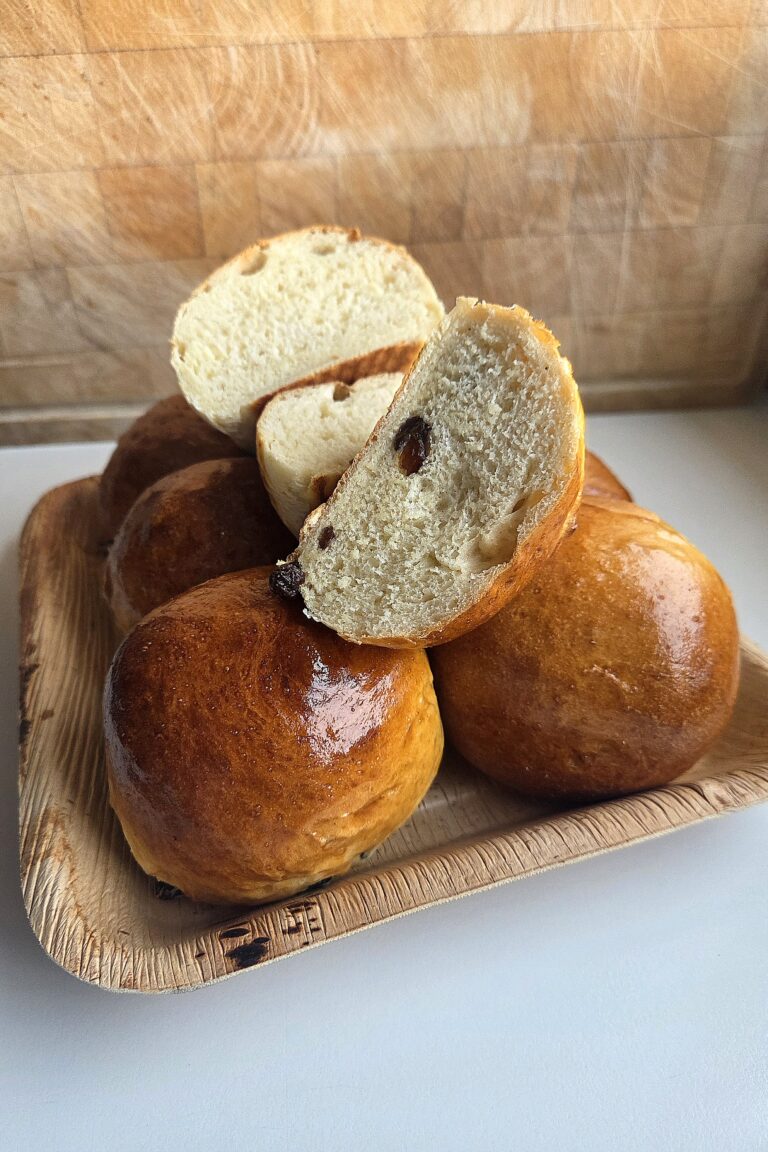
- Soft Scandinavian Cardamom Buns (Boller) — the plain cardamom bun, without filling
- Jam Filled Buns with Cardamom — a tangzhong dough with raspberry or apple jam