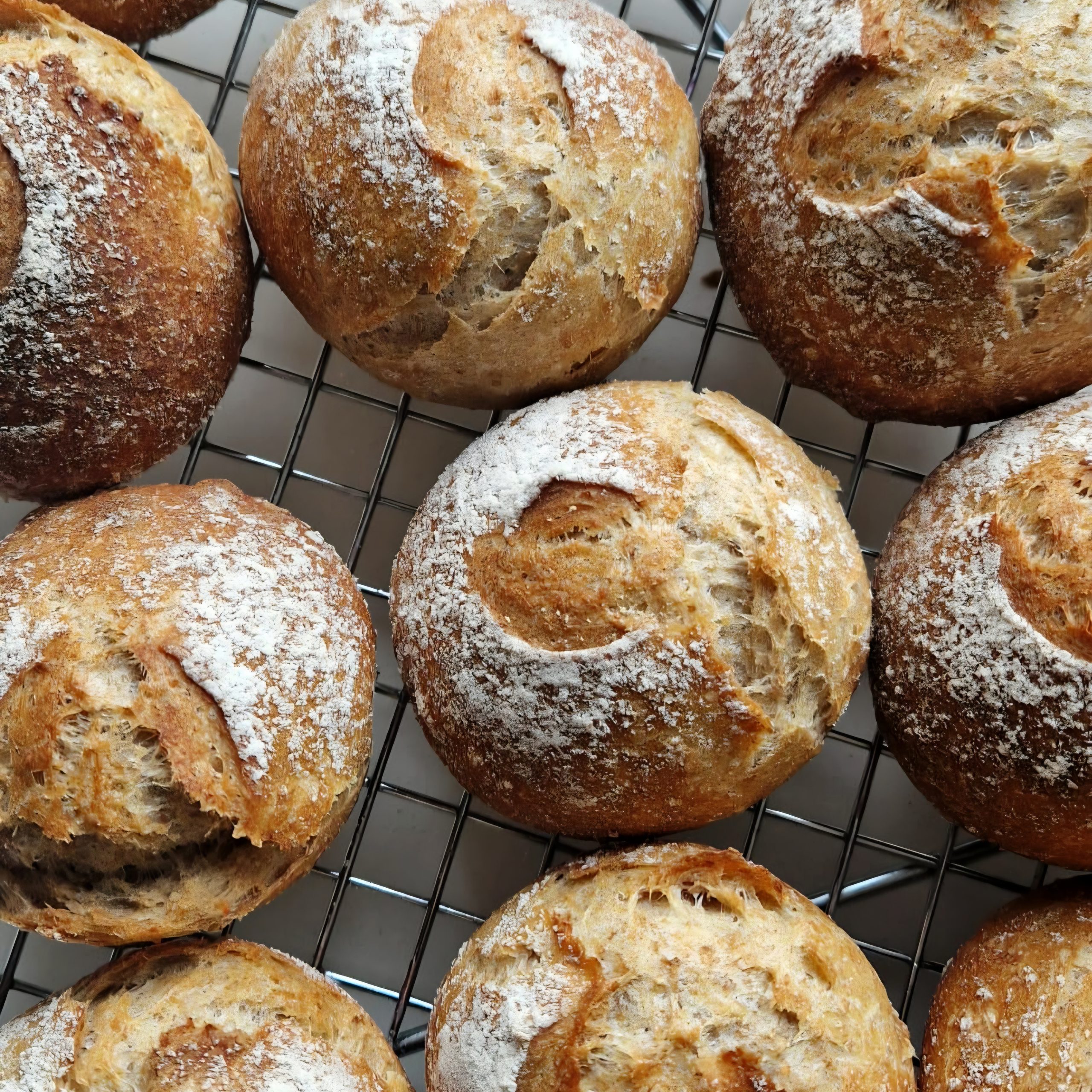
Sourdough for beginners looks intimidating from the outside — a jar of bubbling flour, talk of hydration percentages, and bread that takes three days. It isn’t complicated, it’s just unfamiliar. This guide walks you through it in order: build a starter, keep it alive, bake your first loaf, then learn the techniques that make every loaf after that better.
Everything here is tested in our own kitchen, written for a home oven — not a bakery.
The guide, step by step
- Make a sourdough starter
- Feed your starter
- Bake your first loaf
- Choose your flour
- Understand hydration
- Read bulk fermentation
- Shape and proof
- Score your loaf
- Bake with heat and steam
What Sourdough Actually Is
Sourdough is bread leavened with a culture of wild yeast and lactic acid bacteria instead of commercial yeast. You grow that culture yourself from nothing but flour and water — it takes about ten days — and then keep it going indefinitely by feeding it.
The wild yeast does the lifting. The bacteria do the flavor: that mild tang, the deeper aroma, the crust that smells like something. Fermentation also runs slower than with commercial yeast, which is why sourdough takes longer and why it keeps better on the counter.
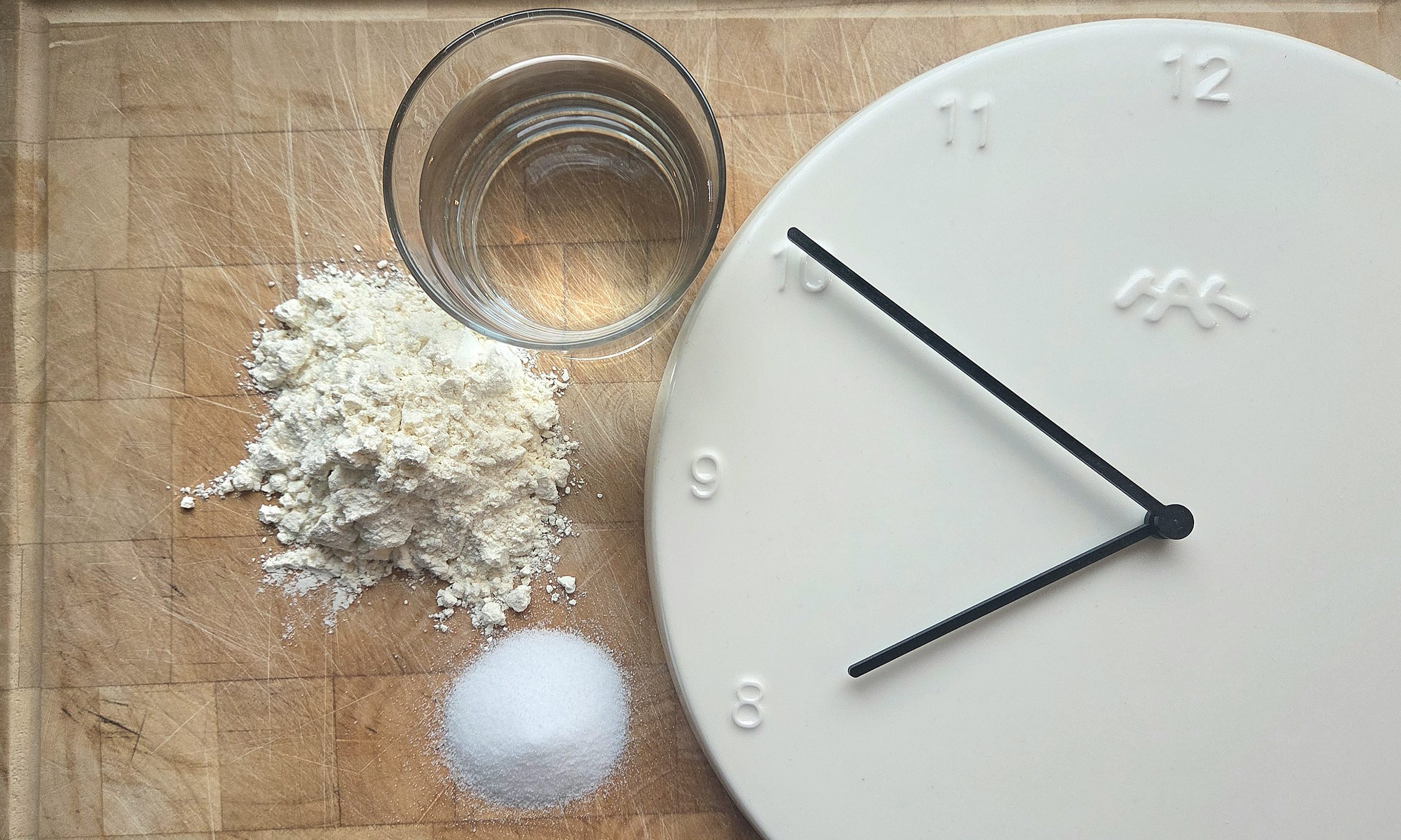
That’s the whole idea. Flour, water, salt, time. Everything else in this guide is about controlling those four things.
What the Four Ingredients Actually Do
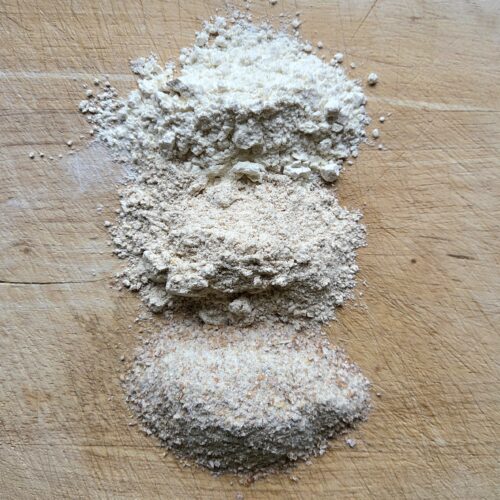
Flour brings the protein. Protein is what becomes gluten, and gluten is what traps the gas that lifts your bread.Bread flour sits around 12–14% protein and gives you a dough with real strength; all-purpose flour at 10–12% works, it just makes a softer, slacker loaf. Whole grain flour brings flavor and fibre, but the bran cuts through gluten strands as it hydrates — so it drinks more water and rises a little less. Best flour for sourdough →
Water does more than wet the flour. How much you use is the single biggest lever on how your dough feels and how open your crumb turns out, which is why bakers talk in percentages. Tap water is fine for almost everyone — heavily chlorinated water can slow a young starter down, but an established one shrugs it off. Temperature matters more than purity: lukewarm water gets fermentation moving, cold water stalls it. Sourdough hydration explained →
Salt is about 2.5% of the flour weight — 15 g in a loaf built on 600 g of flour. We add it an hour after mixing, not at the start, so the flour has time to absorb water and form gluten on its own. The moment the salt goes in you can feel the dough tighten and gain strength, and it slows the fermentation just enough that the bread develops flavor instead of racing ahead of it. Why the salt goes in an hour after mixing →
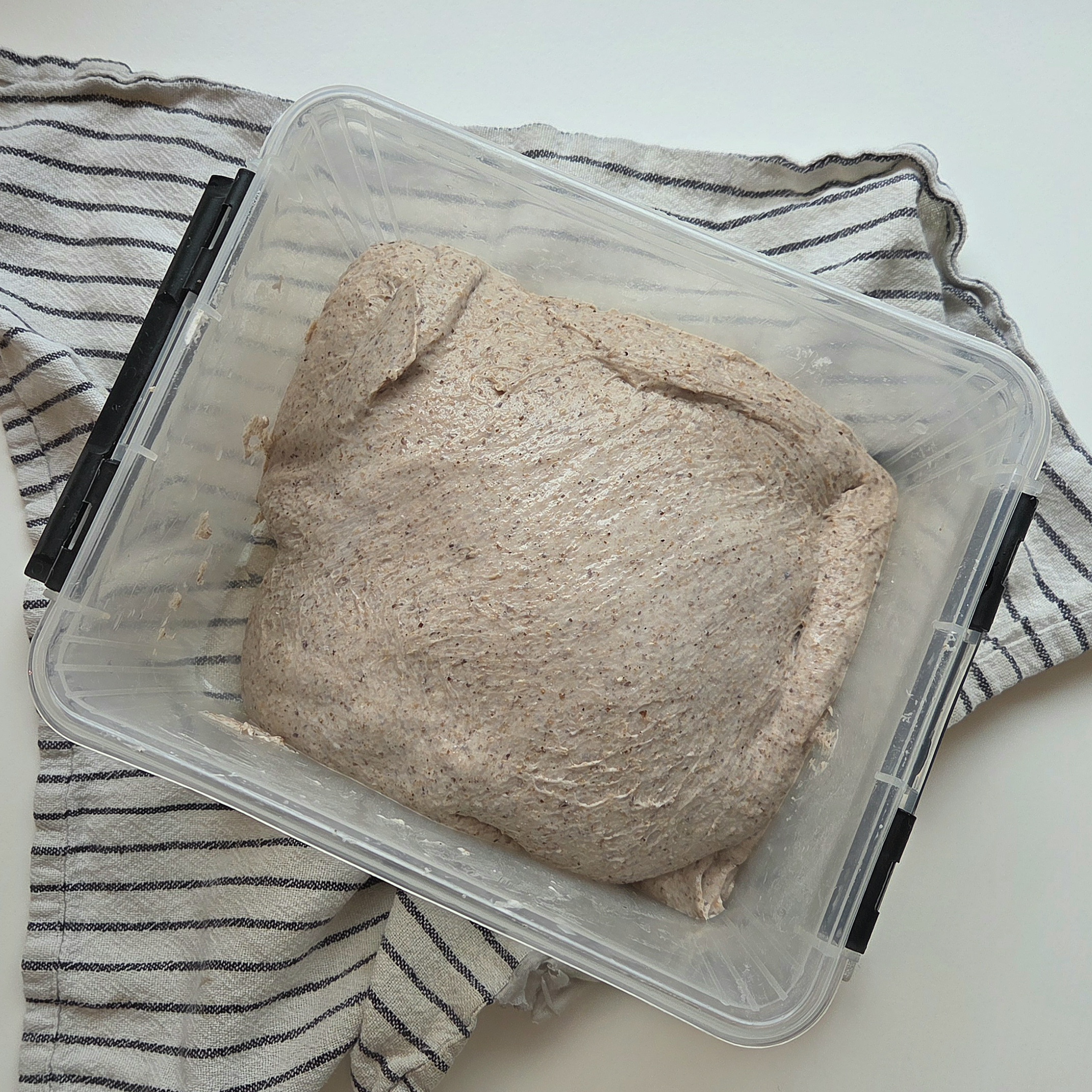
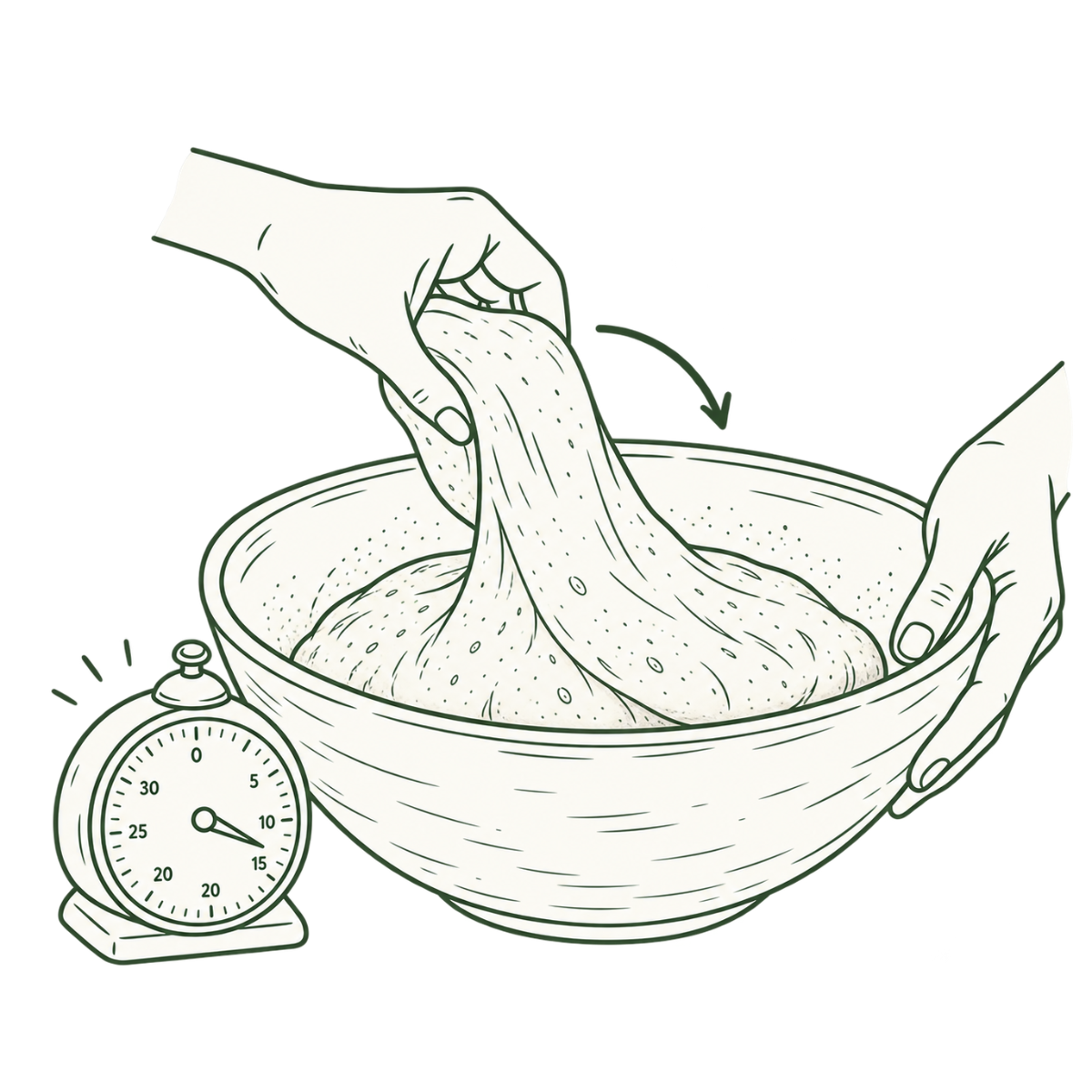
Time isn’t a passive ingredient — it’s the one doing most of the work. Fermentation runs on temperature, so every timing in every recipe, including ours, is an estimate made in someone else’s kitchen. A warm room can halve it; a cool one can double it. Learning to read the dough instead of the clock is the skill that separates a good loaf from a lucky one. Bulk fermentation explained →
What You Need to Get Started
Less than you’d think. You can bake a good loaf with a bowl, an oven and your hands.
Genuinely necessary: a digital scale. Sourdough is measured in grams and percentages, and cups won’t get you there. This is the one thing to buy before you start.
Makes life easier: a bench scraper for handling sticky dough, a banneton for shaping and proofing, and a lame for scoring. None of these are required for loaf number one.
Skip for now: proofing boxes, specialty flours, anything expensive. Bake five loaves first, then buy what you actually missed.
Start Here: Your First Three Steps
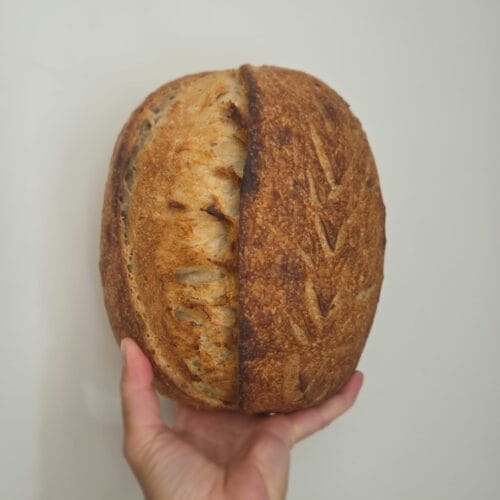
Learn the Basics
Once you’ve baked a loaf or two, the questions change from “how” to “why did that happen.” These guides cover the parts you can actually control.

How Long Does Sourdough Take?
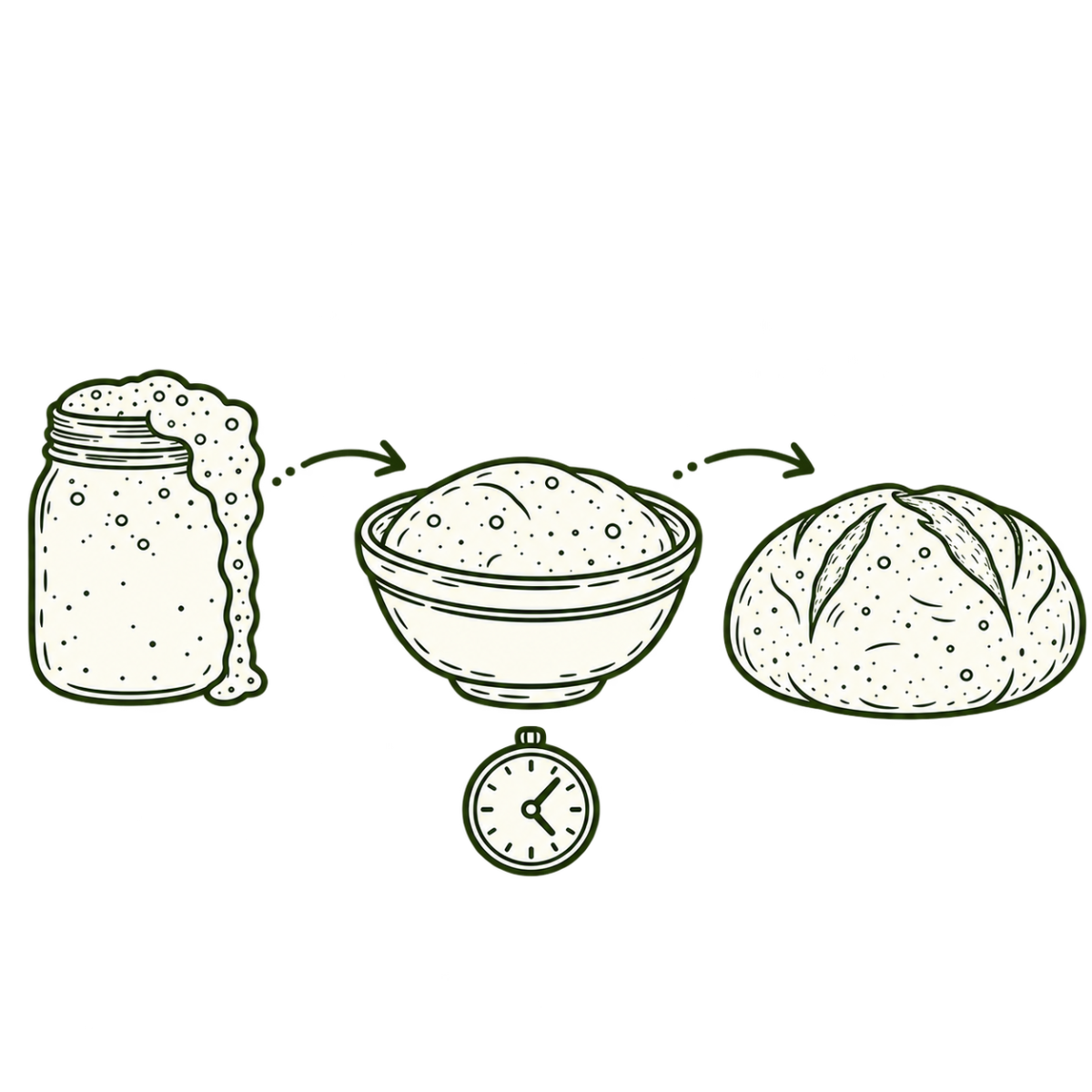
The honest answer: about 24 hours from mixing to eating, plus about ten days up front to build your starter. Most of it is waiting.
A typical bake looks like this:
- Feed your starter — 4 to 8 hours before mixing, until it doubles
- Mix, rest and fold — the first 2 hours
- Bulk fermentation — 4 to 6 hours from mixing.
- Shape and chill — 12 to 16 hours in the fridge, or about an hour on the counter
- Bake — 35 minutes
- Cool — 2 hours before cutting, and this one matters
Almost none of that is hands-on. The dough works while you do other things. Once you’ve done it twice, you’ll know how to slot it into an ordinary day — and the calculators below will do the timing for you.
Free Sourdough Tools
Sourdough for Beginners · Start here
Ready to Bake?
You’ve baked your first loaf. Here’s where to go next.