Cinnamon Knots with Cardamom: Norwegian Kanelknuter
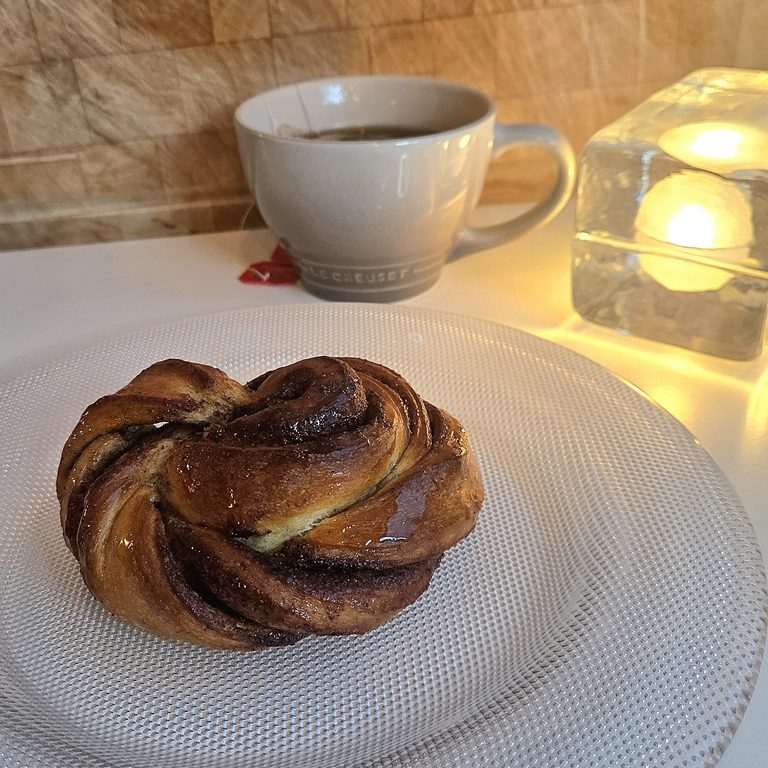
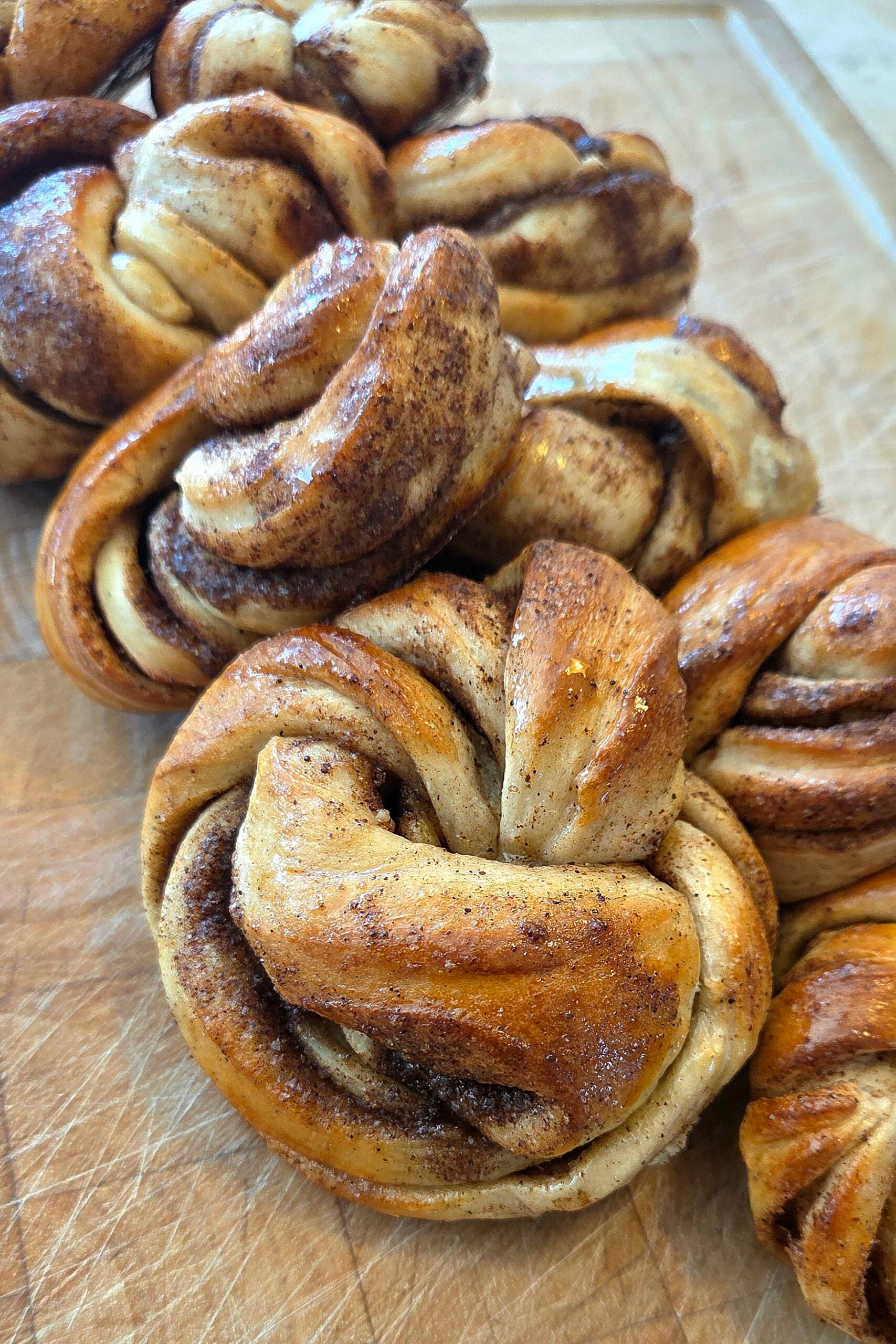
These cinnamon knots are the bun we bake most often in our kitchen: a cardamom-heavy dough, cold-proofed overnight, twisted into knots and brushed with hot sugar syrup straight out of the oven. The overnight rest does the real work. It gives you a dough that rolls thin, holds a sharp swirl and tastes far deeper than a same-day bun. One batch makes 17, and they disappear fast.
Cinnamon Knots with Cardamom: Norwegian Kanelknuter
Ingredients
Equipment
Method
- Start the dough. Combine the cold milk, yeast, cardamom and all but about ½ cup (60 g) of the flour in the bowl of a stand mixer. Mix on low until it comes together, then knead on medium-low for 10 minutes. The dough will look plain and stiff at this stage, which is what you want.
- Add the enrichments. Now add the salt, sugar, soft butter and egg. Keep kneading, adding the last of the flour a little at a time, until the dough is smooth, elastic and pulls cleanly away from the bowl. This takes another 8–10 minutes; the dough will loosen and look broken when the butter goes in, then come back together.
- Check the gluten. Stretch a piece of dough thin enough to see light through it without tearing (the windowpane test). If it tears, keep kneading.
- Chill overnight. Round the dough into a tight ball, cover, and refrigerate for 8–14 hours.
- Make the filling. Stir the melted butter, both sugars, cinnamon and cardamom into a spreadable paste.
- Roll and spread. Roll the cold dough on a lightly floured counter into a rectangle roughly 16 × 20 in (40 × 50 cm), about ¼ in (5 mm) thick. Spread the filling evenly over the whole surface.
- Fold and cut. Fold the dough in half so the filling is enclosed, then cut across into strips about ¾ in (2 cm) wide. A bench scraper gives the cleanest cut. You should get 17 strips.
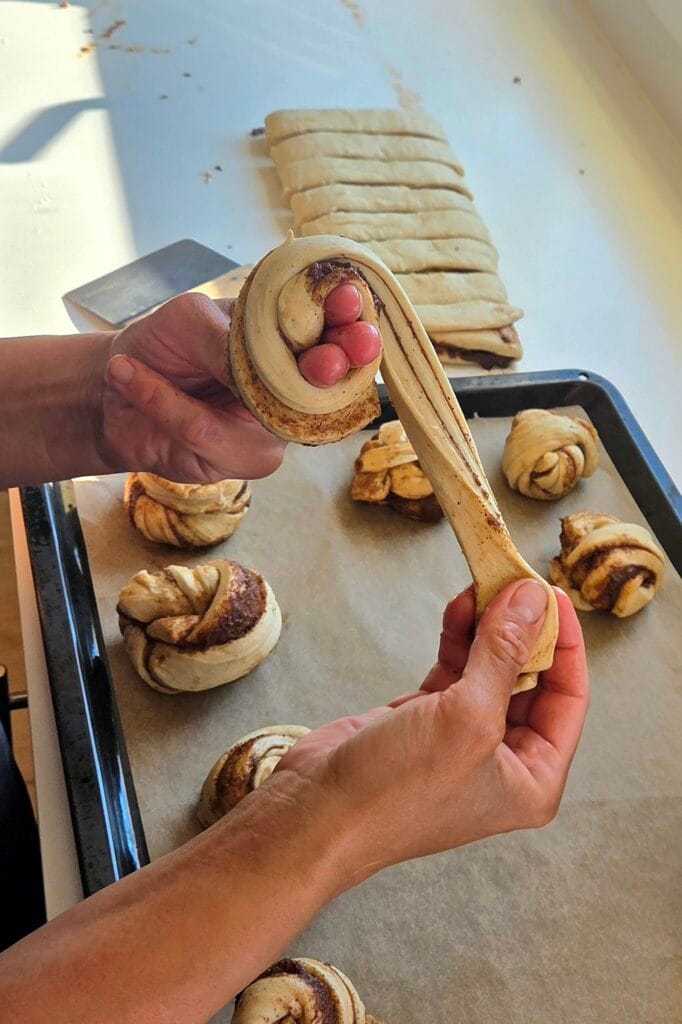
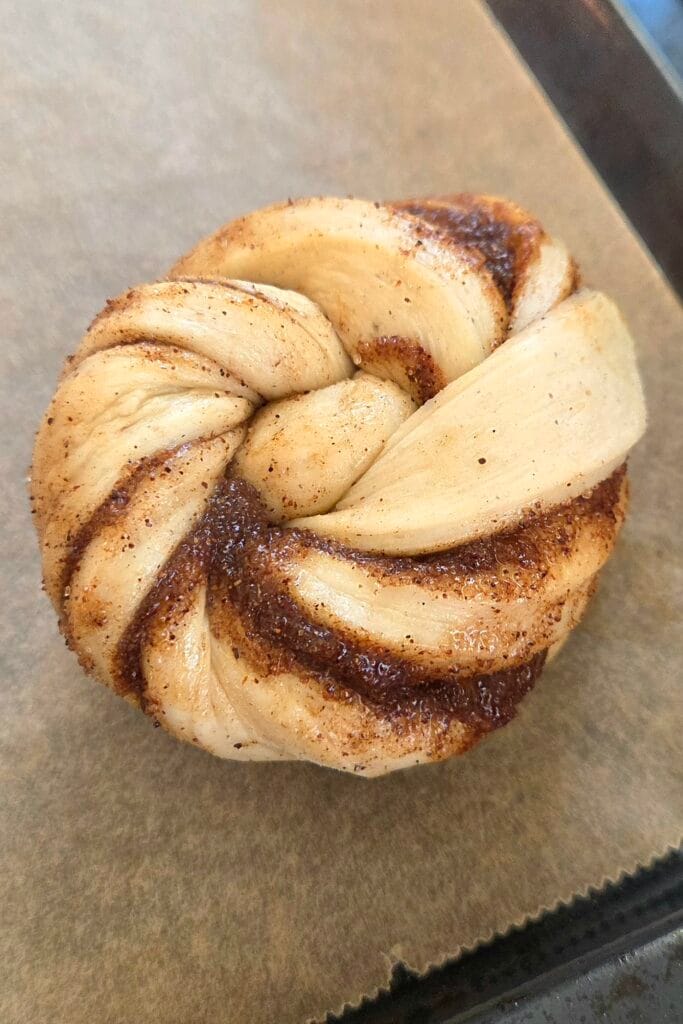
- Twist into knots. Take a strip, stretch it gently, twist it two or three times, then wrap it around two fingers and tuck the end underneath. Place on a parchment-lined sheet with room to expand.
- Proof. Cover and let the knots proof at room temperature for about 1½ hours, until visibly puffy and soft to the touch. Cold dough takes its time, so go by look rather than the clock.
- Egg wash. Heat the oven to 400°F (200°C). Brush the knots with beaten egg.
- Bake. Bake for 12–14 minutes, until deep golden.
- Make the syrup. While they bake, bring the sugar and water to a boil, stirring until clear.
- Glaze. Brush the hot syrup over the knots the moment they come out of the oven, then move them to a wire rack. The syrup soaks in and sets glossy as they cool.
Notes
Why the dough rests overnight
A cinnamon knot lives or dies on the swirl, and a warm, slack dough will not hold one. After a night in the fridge the dough is firm, easy to roll thin and stays sharp through folding, cutting and twisting — the layers you shape are the layers you get.
The knead order matters just as much. The flour, milk, yeast and cardamom go in first and knead for a full 10 minutes before any salt, sugar, butter or egg. Fat and sugar slow gluten down, so building the structure first and enriching it after gives you a dough that is both strong and soft.
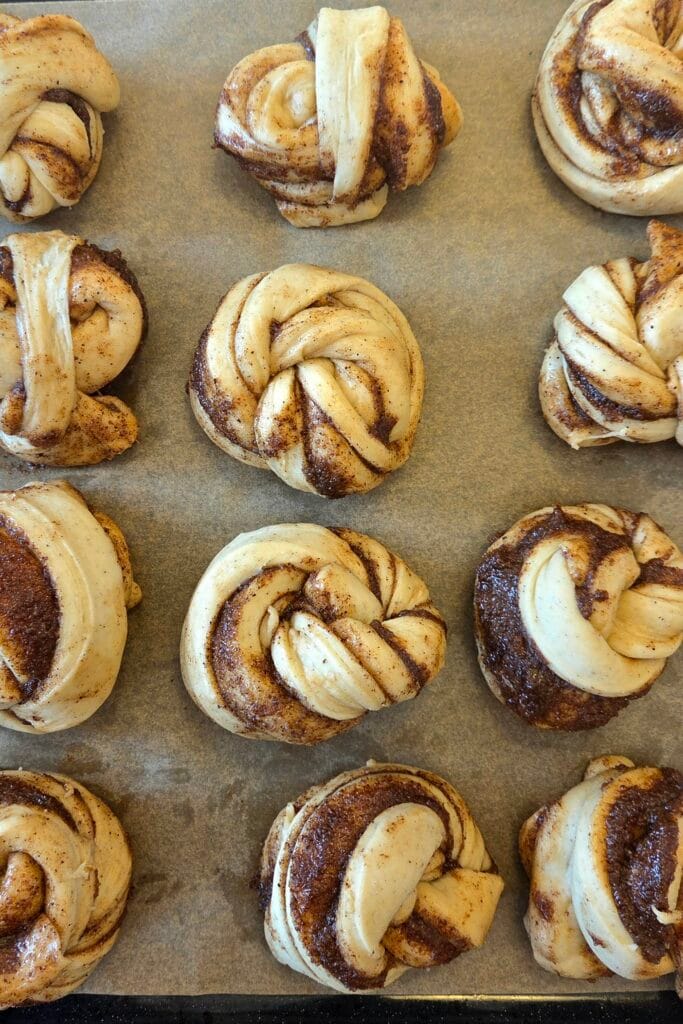
How to shape a cinnamon knot
Roll, fill, fold in half, cut into strips — then:
- Stretch the strip gently so it lengthens a little.
- Twist it two or three turns. Not more; too many turns and the swirl closes up.
- Wrap it around two fingers, bring the end over the top and tuck it underneath.
- Set it on the tray tucked-side down, with space to grow.
The first two look clumsy and the rest look great. That is normal, and the oven forgives a lot.
Once you know the shape, it works with other fillings too. At Christmas we add ginger, cloves, cardamom and black pepper to the cinnamon filling for our gingerbread knots.
Don’t skip the sugar syrup
Boiled sugar and water brushed on while the knots are still hot from the oven is what gives that bakery shine, and it keeps the crumb moist for a day longer. Powdered sugar icing sets matte and chalky and hides the swirl you just worked for — syrup keeps it visible. It’s the same finish we use on our jam filled buns and lussekatter.
Make it your own
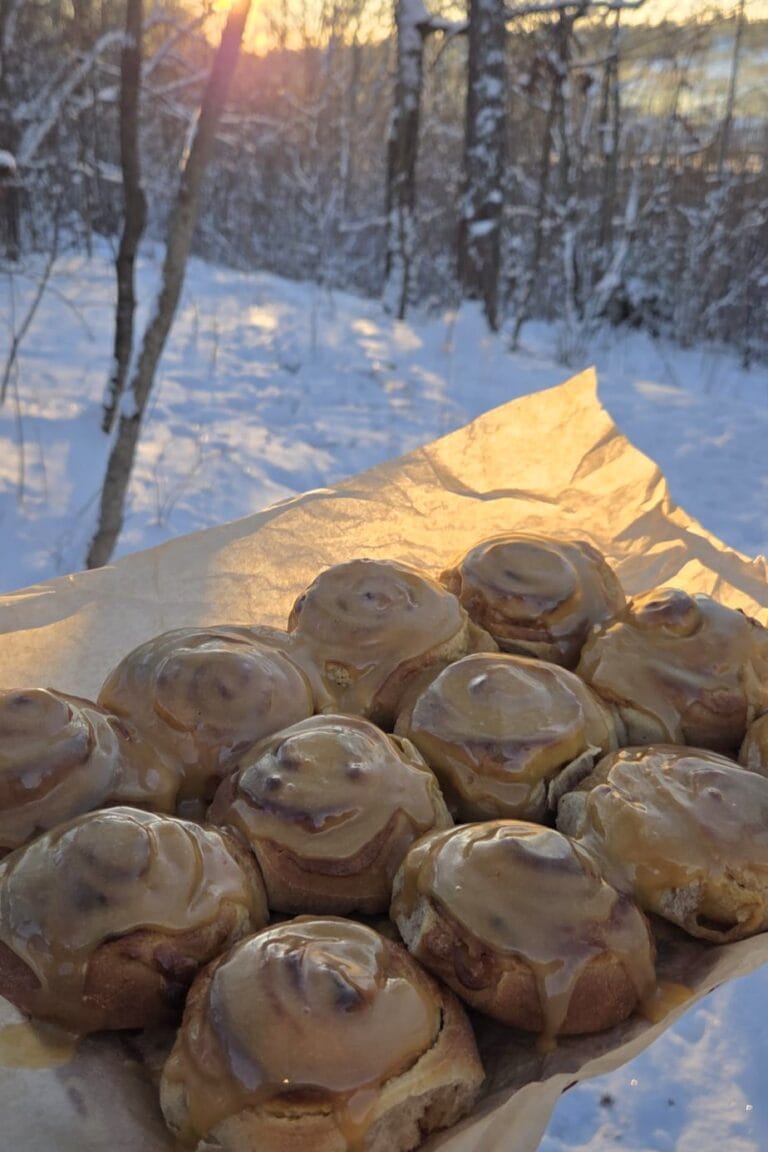
- Classic cinnamon rolls: roll the filled sheet into a log and slice it into rounds instead of folding and twisting. For the full version with cream cheese frosting, see our cardamom cinnamon rolls.
- Cardamom knots (kardemommeboller): leave the cinnamon out of the filling and double the cardamom. Sharper, more floral, very Norwegian.
- Brown butter filling: brown the 100 g of butter before mixing the filling and let it cool slightly. Nuttier and noticeably deeper.
- Pearl sugar tops: skip the syrup, brush with egg and press pearl sugar on before baking for crunch instead of shine — the finish our serinakaker are known for.
More from the Nordic kitchen
- Skolebrød — Norwegian School Buns with Custard and Coconut — the same kind of cardamom dough, filled with vanilla custard
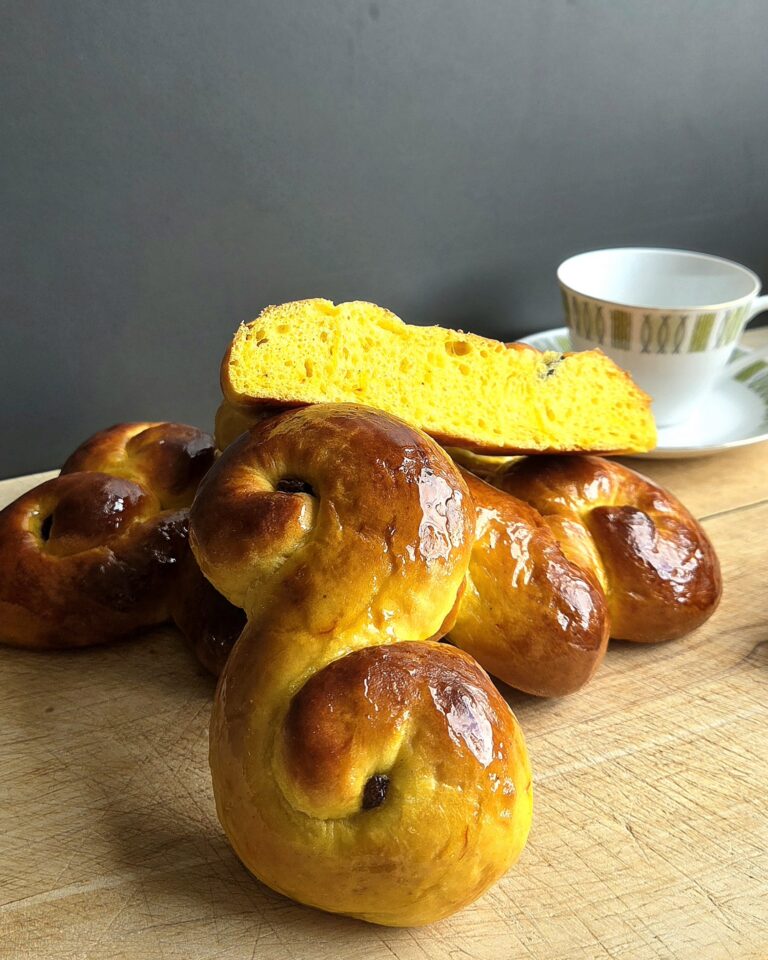
- Lussekatter — Swedish Saffron Buns — saffron instead of cardamom, shaped into S-curls
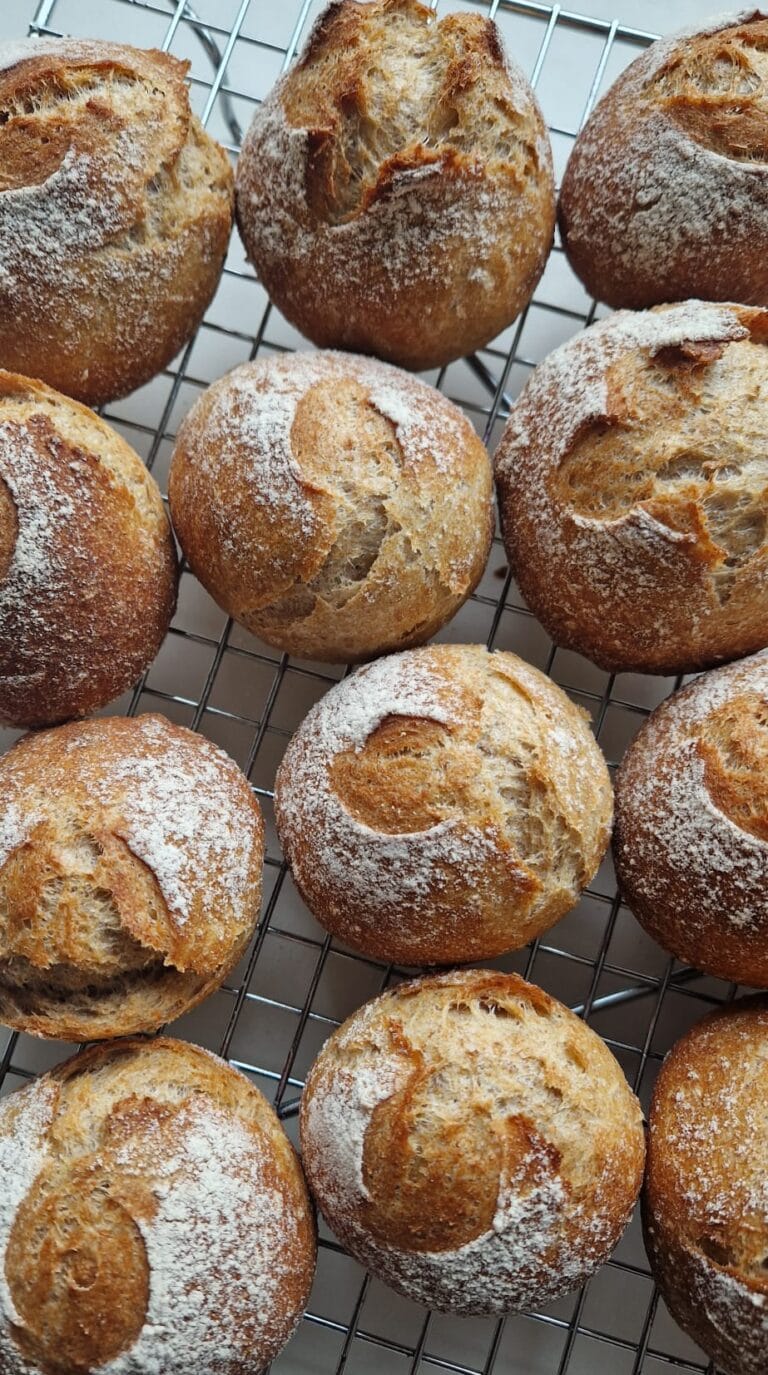
- Norwegian Rye Buns with Anise (Laup) — a lightly sweet everyday bun, with rye and anise
- Scandinavian Cardamom Buns — round, plain and unfilled, with cardamom in the dough