French Onion Soup Sourdough Bread with Jarlsberg
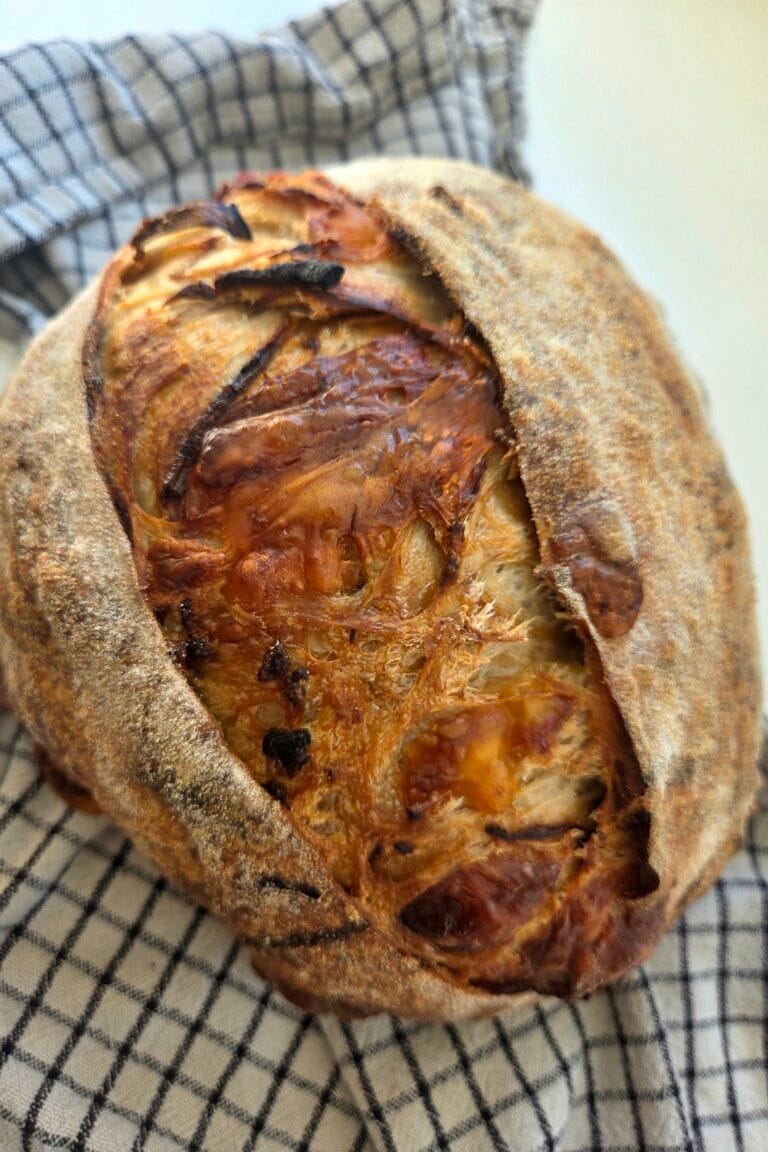
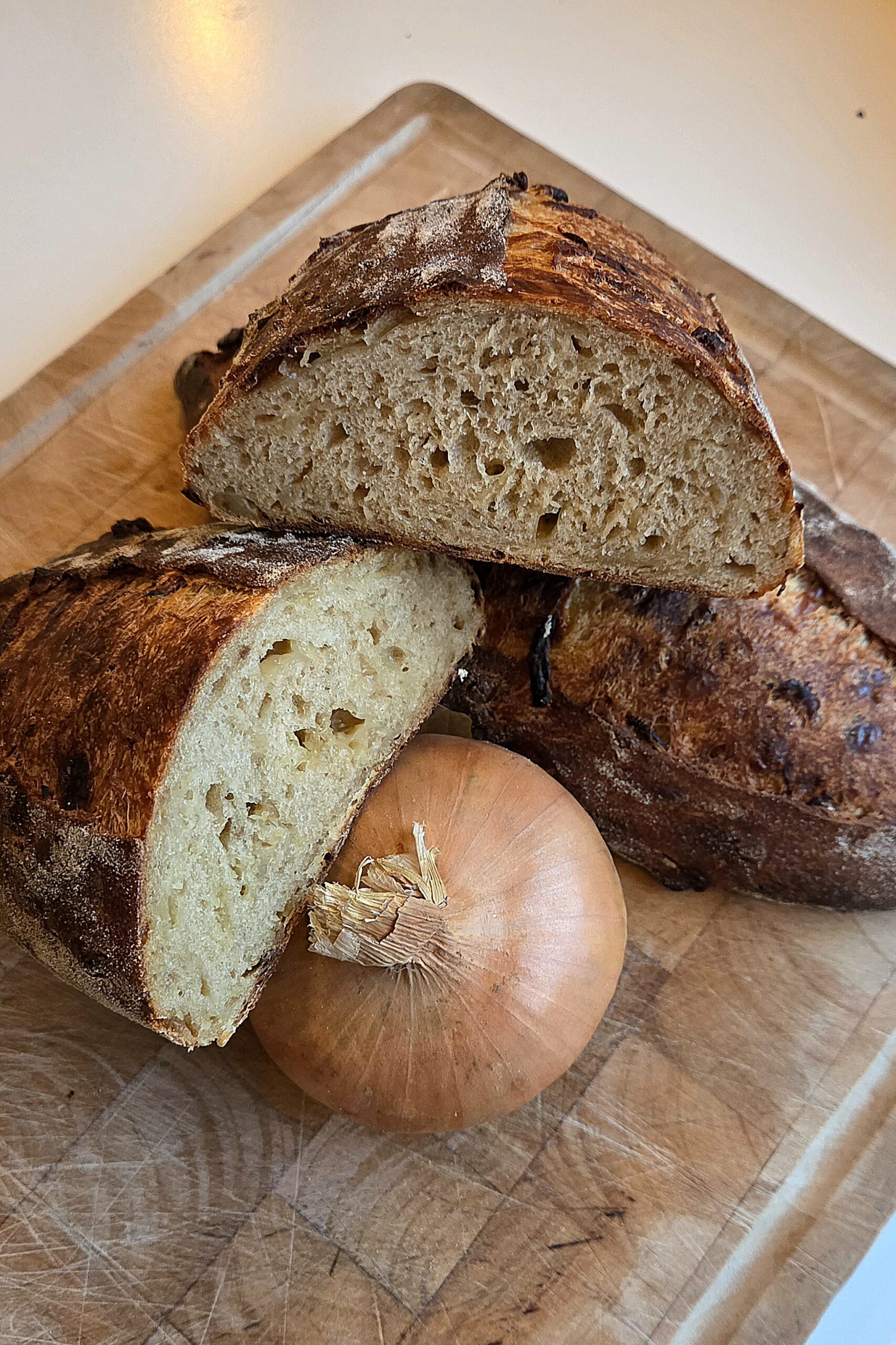
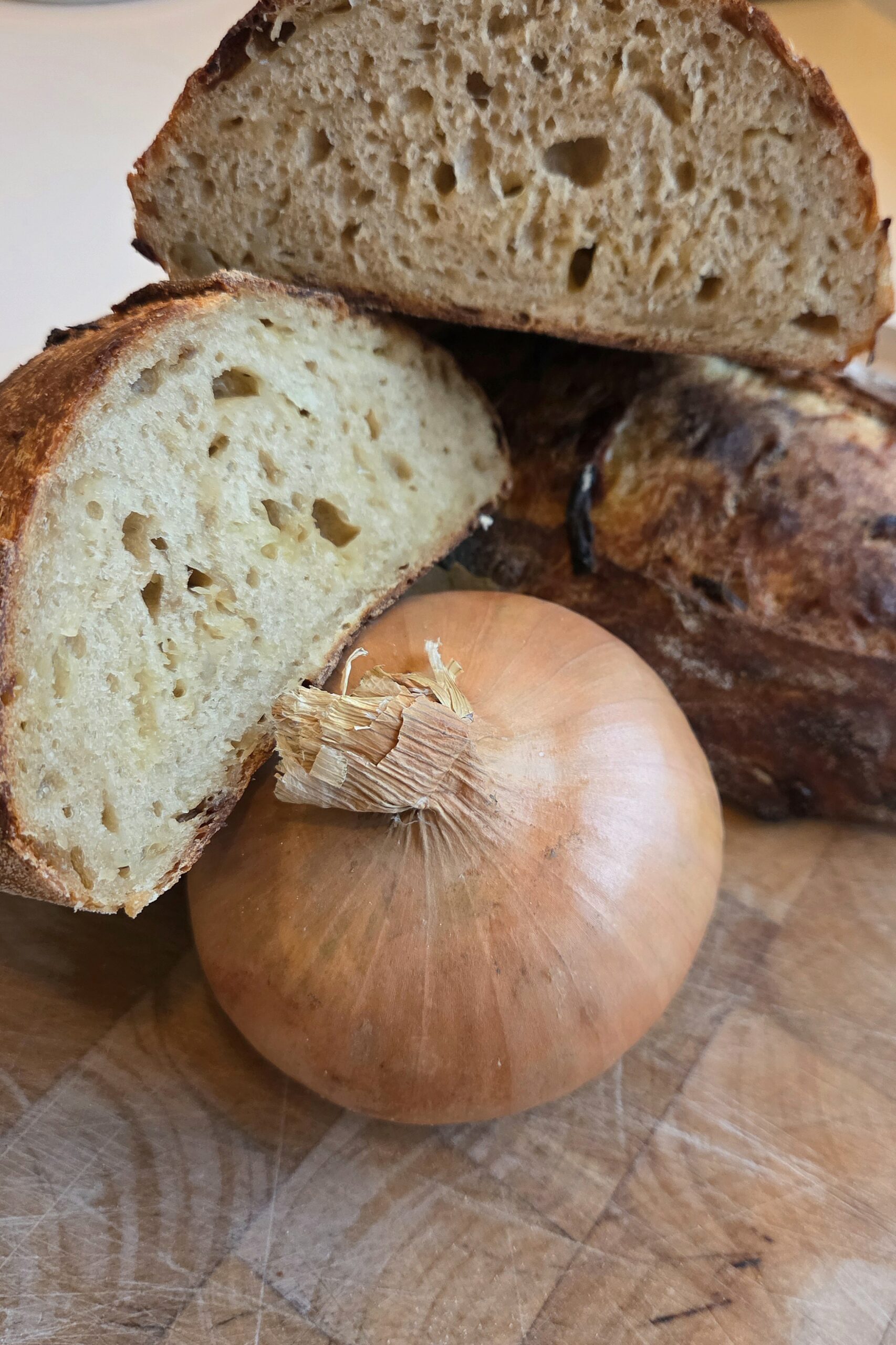
French onion soup sourdough is our caramelized onion sourdough with Jarlsberg with one change: all the water is replaced by beef stock. That swap gives a darker crust and a denser crumb, and the loaf ends up tasting much closer to the soup it’s named after.
French Onion Soup Sourdough Bread with Jarlsberg
Ingredients
Equipment
Method
- Brown the onions. Cook the sliced onions in the oil in a heavy skillet over medium-low heat for 45–60 minutes, stirring every few minutes, until deep amber and soft. They reduce to about 230 g. Leave them unsalted.
- Chill them. Spread the onions on a plate and let them cool completely, in the fridge if needed, before they go into the dough.
- Feed your starter the morning you mix. Use it when it has roughly doubled and looks domed and bubbly.
- Mix and rest. Whisk the starter into the stock, add both flours and mix until no dry flour remains. Hold back the salt. Cover and rest 1 hour. The dough already feels firmer than a water dough at this stage.
- Add the salt. Sprinkle the 11 g over the dough and squeeze it through until you can't feel any grains.
- Stretch and fold, 4 sets every 30 minutes. This dough stretches less than our water loaves, so stop each fold when it resists instead of forcing it. Our Stretch & Fold Timer counts the sets for you.
- Fold in the onions and cheese on the last set. Flatten the dough, scatter the cold onions and the diced Jarlsberg over it, and fold it over itself until they are evenly spread.
- Bulk ferment until risen about 30%. Expect it to take longer than our other loaves It is ready when the top is domed and slightly puffy with a few bubbles along the sides.
- Divide in two. Turn the dough out and cut it into two pieces of about 810 g. Round each one loosely.
- Bench rest 20–30 minutes, uncovered, until the dough has relaxed and spread slightly.
- Shape. Use the bench scraper to pull each piece into a taut round against the counter.
- Into the bannetons, seam side up, in linen cloths dusted with rice flour.
- Cold retard 12–16 hours in the fridge.
- Preheat 45–60 minutes. Perforated tray on the middle rack, metal roasting tray on the rack below, oven at 480°F (250°C).
- Score. Turn out the cold loaves, brush off excess flour and make one deep cut along each.
- Bake with steam, 20 minutes. Slide both loaves onto the hot tray, pour 240 ml (1 cup) boiling water into the roasting tray and close the door quickly.
- Finish dry, 15 minutes. Remove the steam tray, drop to 400°F (200°C) and bake until the center reads 205–210°F (96–99°C). The crust goes dark sooner than on a water dough, so trust the thermometer over the color.
- Cool at least 2 hours on a wire rack before slicing.
Notes
- Another stock: the salt in this recipe is set for ours, so recalculate it for yours (more on why below). A thinner, unreduced broth makes a softer dough that rises more like our water loaves.
- Swapping the cheese: keep it at 240 g and cut it in ¼ in (½ cm) dice. Shreds melt into the crumb and disappear.
- Storage: best within 2–3 days, cut side down on a board. Slices freeze well and go straight into the toaster.
What beef stock does to a French onion soup sourdough
We used a reduced beef stock, the kind sold for sauces and stews. It pours like water, but with 14.8 g of protein per 100 g it is only about 83 percent water. Our 400 ml brings roughly 333 g of water into the dough, which takes the effective hydration from 67 percent down to around 55. The gelatin in the stock holds on to part of that as well.
You notice it at the first mix. The dough is heavier and more compact than our water version, it stretches less on every fold, and it rises more slowly and not as high. We give it longer in bulk and take the tighter crumb as part of what this loaf is. Our guide to bulk fermentation shows the signs to read when the clock isn’t much help.
Taking salt out to make room for the stock
Stock comes salted. Ours has 0.9 g of salt per 100 g, so 400 ml puts 3.6 g into the dough before we weigh any salt at all. We cut the dough salt from 15 g to 11 g, which keeps the total at the same 2.5 percent of flour weight we use in our other loaves. The onions stay unsalted, and the Jarlsberg brings its own.
Labels differ between brands and countries, so do the sum with yours: multiply the salt per 100 g by four and take that off 15 g.
Darker crust, darker crumb
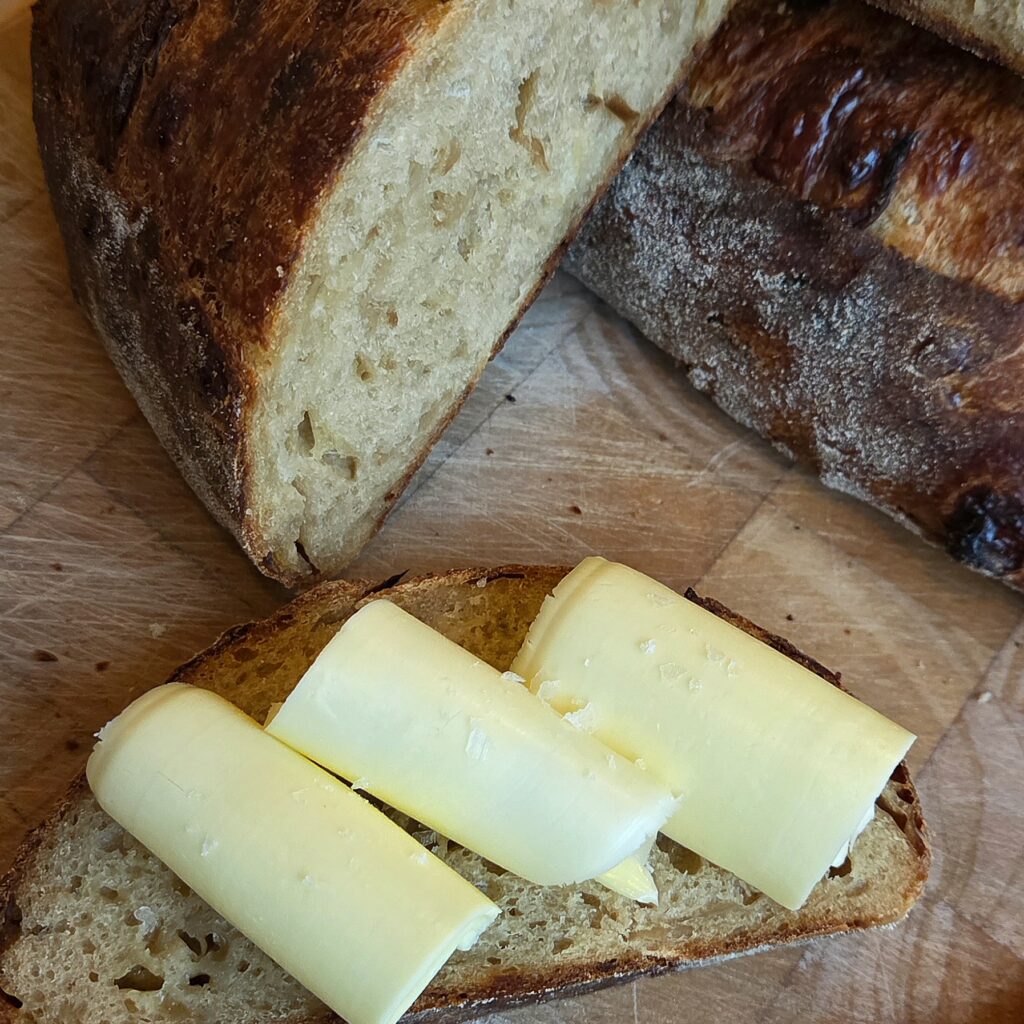
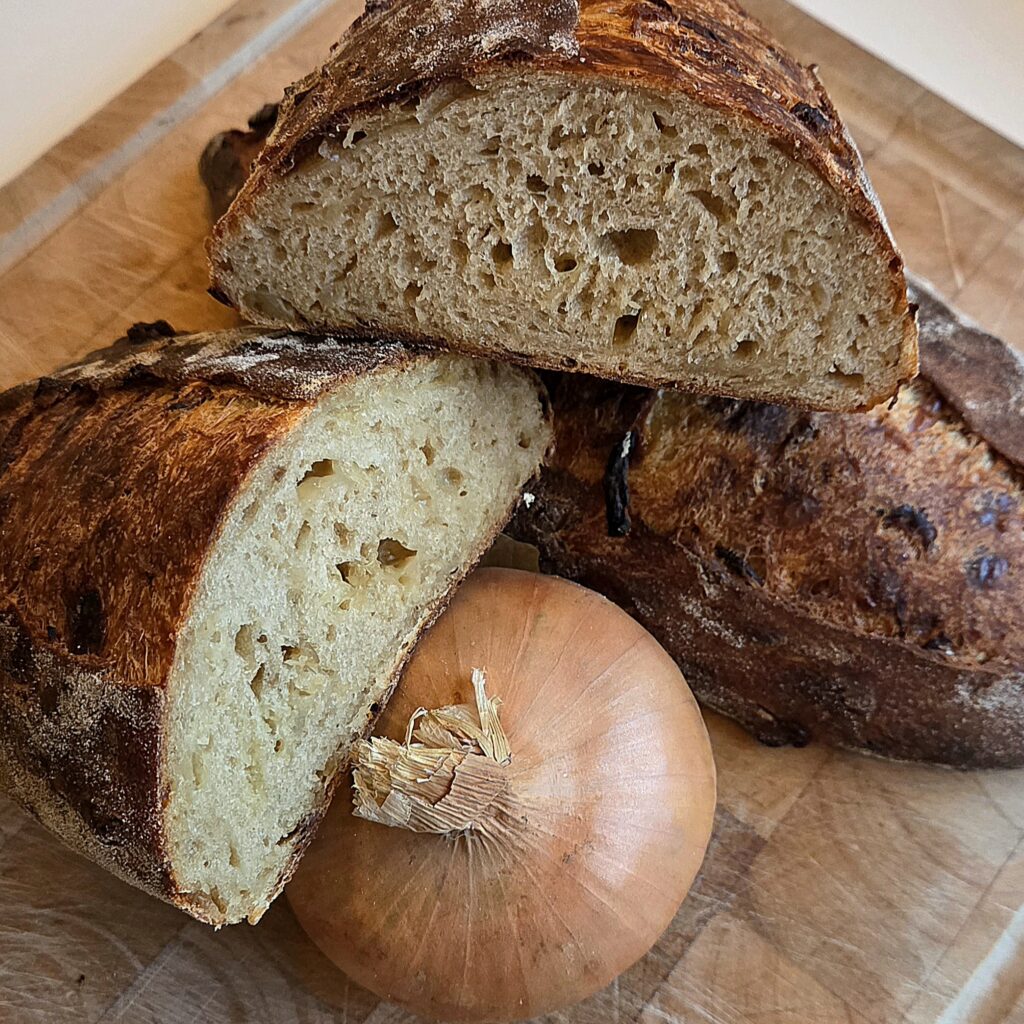
The stock colors the dough from the start, and the crumb bakes up a shade darker than the water version. The crust browns faster too, which makes color a poor guide to doneness here. We pull the loaves when the center reads 205–210°F (96–99°C). Onion pieces sitting on the surface catch the most heat and bake almost black in places, and they taste roasted rather than burnt.
Jarlsberg where the soup would have Gruyère
French onion soup is often finished under the broiler with Gruyère or Comté, and both work in this loaf at the same 240 g. We stay with Jarlsberg. It melts well, and its mild, nutty taste sits comfortably next to the beef stock.
Once you’ve baked it
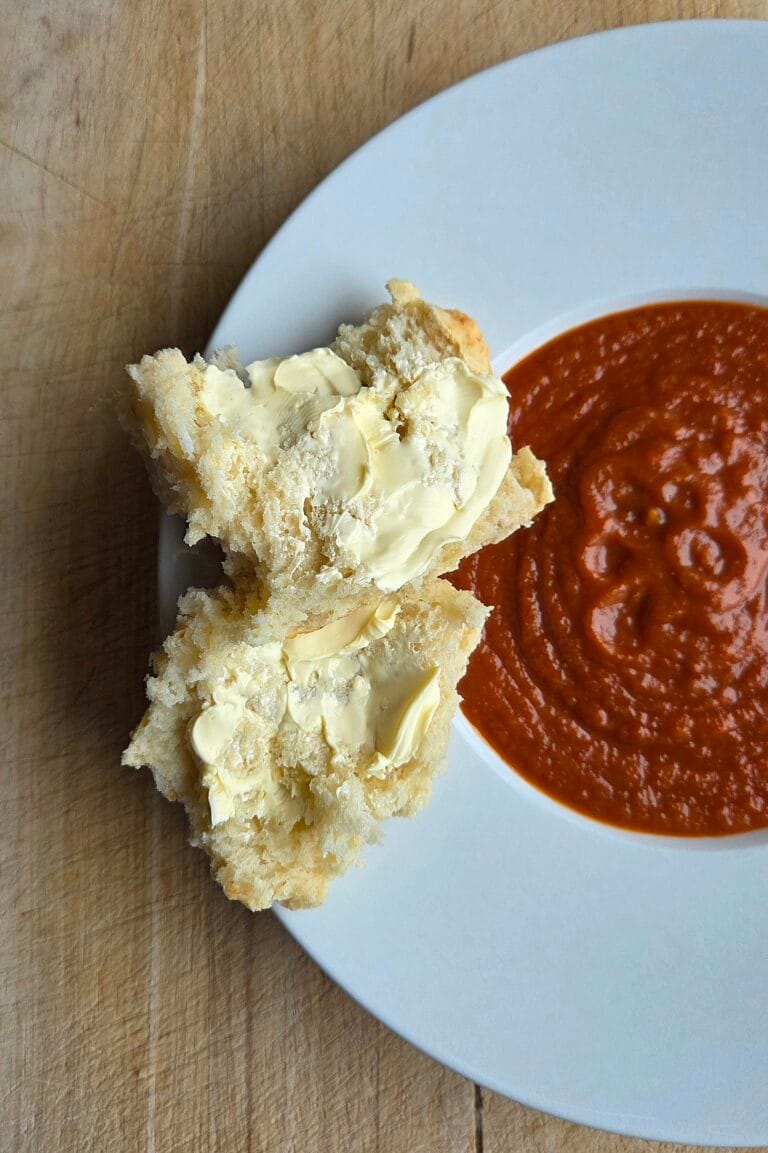
Thick slices with cold butter and a few flakes of salt are how we eat the first loaf. It also toasts well under the broiler with a little extra cheese, and a slice is sturdy enough to dip into a bowl of the soup itself.
More from the Nordic kitchen
- Walnut Sourdough Bread — blanched walnuts folded through a whole grain dough
- Sourdough Baguettes — the same base dough, shaped long and baked crisp
- Cheese Scones with Jarlsberg — Jarlsberg again, in a quick bake with no starter