Oat Scones: Soft Norwegian Tray Scones
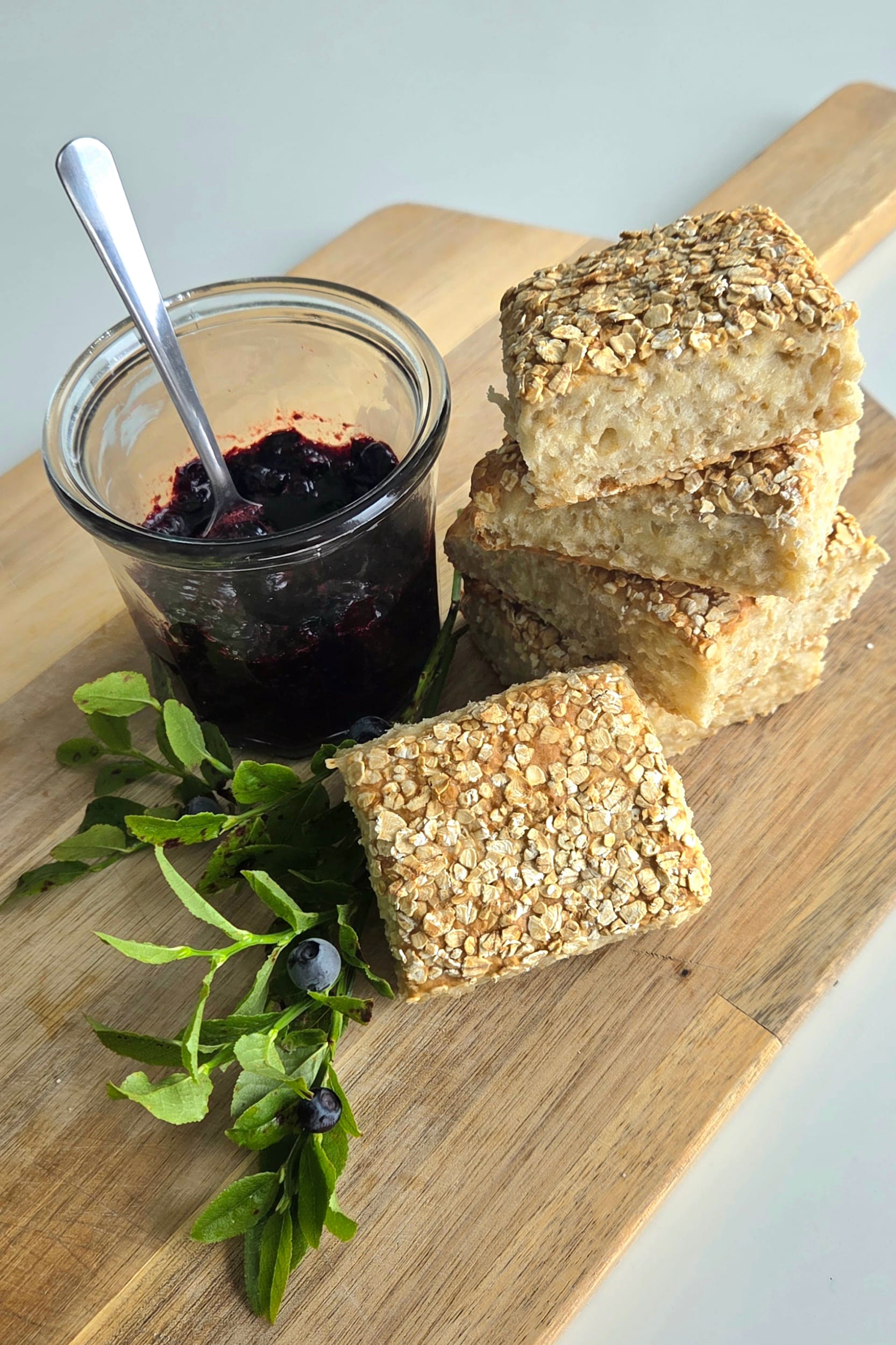
These oat scones are a Norwegian everyday bake — soft, lightly sweet and made in one bowl with no yeast, no butter and no waiting. The whole slab bakes as one piece and gets torn into squares at the table, which is exactly how they’re served in Norway: warm, at breakfast, or alongside a cold plate with cheese and cured meat. If you’ve only met the crumbly British kind, this is a different animal, and an easier one.
Oat Scones: Soft Norwegian Tray Scones
Ingredients
Equipment
Method
- Preheat. Heat the oven to 400°F (200°C). Line a sheet pan with parchment.
- Dry ingredients. Whisk the all-purpose flour, oat flour, baking powder, salt and sugar together in a large bowl until evenly combined.
- Mix. Pour in the oil and milk. Stir with a spoon or your hand just until no dry flour is left — 20 to 30 seconds. The dough will be soft and sticky. That's correct. Stop mixing the moment it comes together.
- Pat out. Scrape the dough onto the middle of the lined pan. With wet hands, pat it into a rectangle roughly 10 × 6 inches (25 × 15 cm) and about 1 inch (2.5 cm) thick.
- Score. Score the slab into 8 squares — two across, four down — cutting about three-quarters of the way through. Do not cut all the way to the pan.
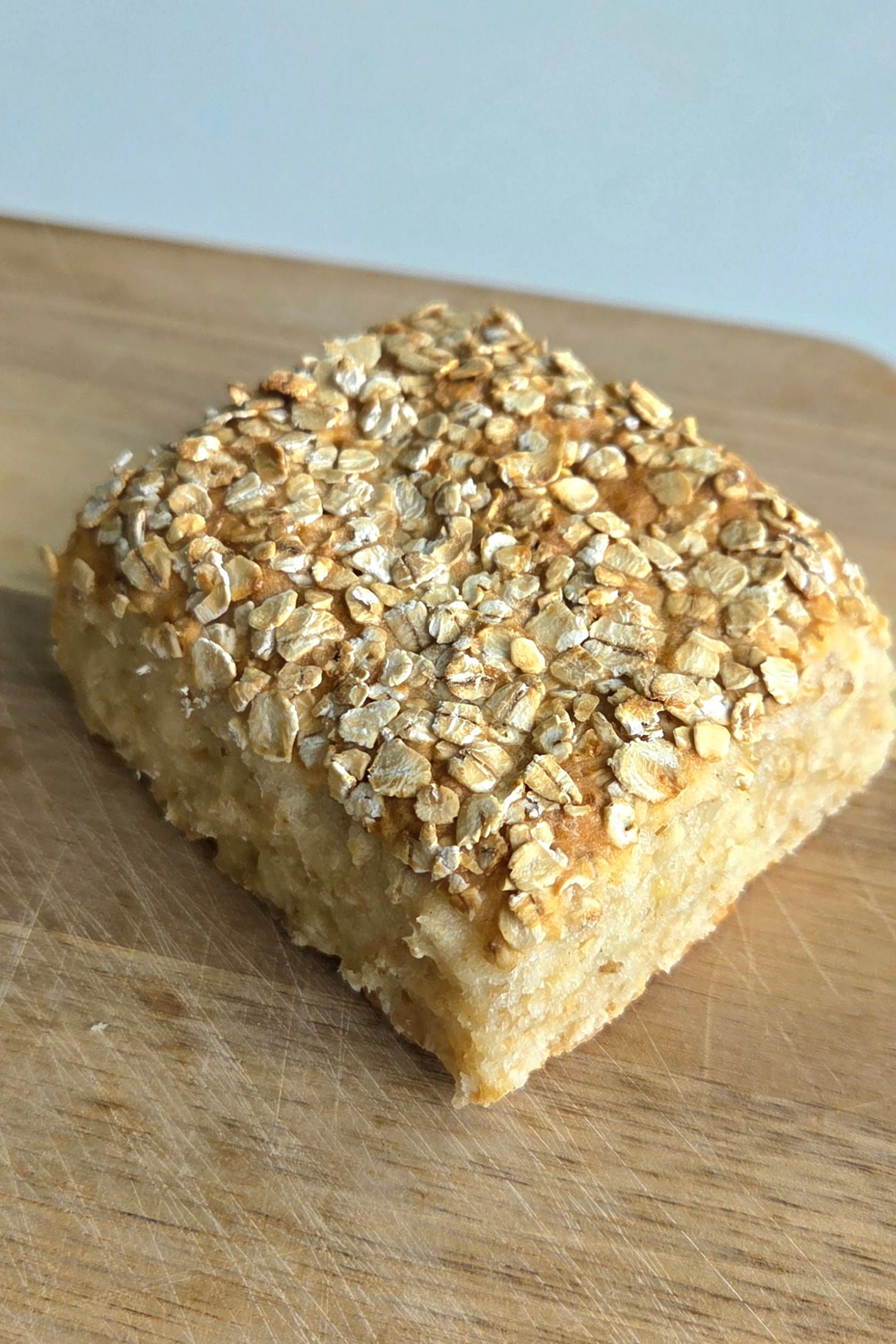
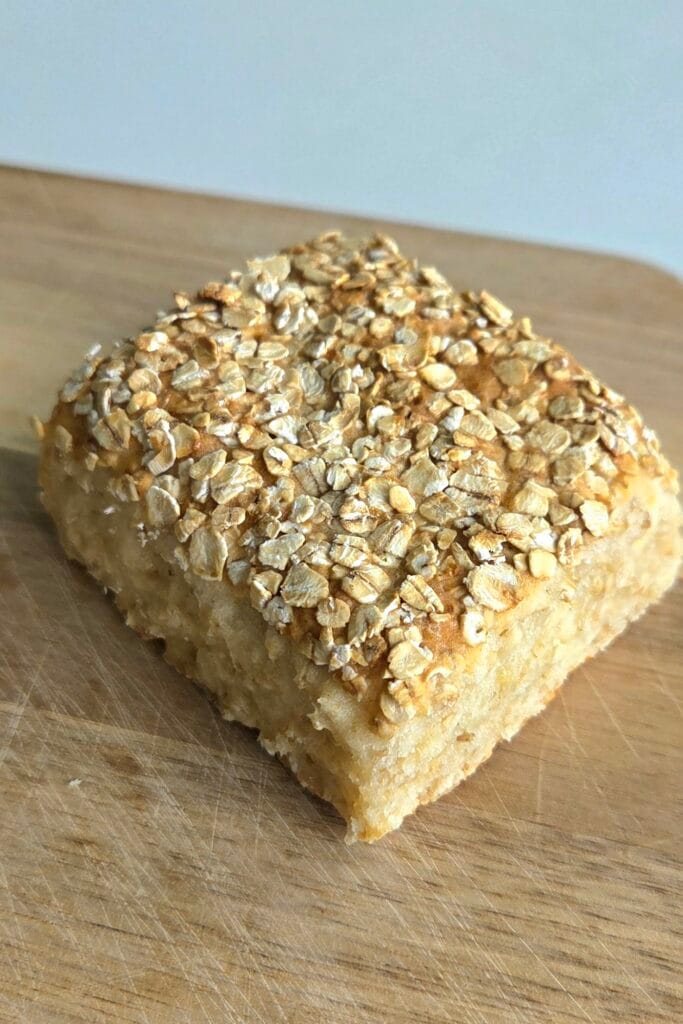
- Top. Brush the top with water and scatter the rolled oats over it.
- Bake. Bake in the middle of the oven for about 20 minutes, until the top is golden and the scores have opened. A skewer in the center should come out clean.
- Cool and break apart. Slide onto a wire rack and let cool for 10 minutes before breaking them apart along the scores. Best while still warm.
Notes
- No oat flour? Put rolled oats in a blender and run it until they’re powder-fine — about a minute. 1¼ cups of rolled oats gives you roughly the 100 g you need.
- Storing. Best on the day they’re baked. Keep in a paper bag at room temperature for up to 2 days, or freeze the squares individually and reheat from frozen at 350°F (175°C) for 8 minutes.
What makes these Norwegian oat scones different
The scones you’ll find in Norwegian home kitchens aren’t the British kind. They use oil instead of cold butter, milk instead of cream, and get baked as a single scored slab rather than stamped into rounds. The result is softer and breadier — closer to a quick roll than a pastry. The same tray method carries over to our cheese scones with Jarlsberg, made with melted butter for a savory version.
Oat flour is what carries the flavor. It brings a gentle sweetness and a slightly damp, tender crumb that plain wheat flour can’t do on its own. The rolled oats on top toast in the oven and give you a little crunch against a soft interior.
Tips for soft oat scones
Weigh the flour. Scone dough has almost no margin. A heavy scoop of flour can add 30 grams without you noticing, and 30 grams is the difference between soft and dry. Working in cups? Our Baking Weight Converter turns them into grams.
Mix as little as possible. Twenty seconds of stirring, then stop. Every extra turn develops gluten, and gluten in a scone means chew where you want tenderness.
Wet hands, not more flour. The dough will stick to you. Run your hands under the tap and it stops instantly — no extra flour, no tightening.
Get the thickness right. About an inch. Thinner and they bake into crackers; thicker and the center stays wet while the top browns.
Make it your own
- Cheese and herbs — work 3½ oz (100 g) of grated aged cheese and a handful of chopped chives into the dry mix.
- Seeded — swap 2 tablespoons of the oat topping for sunflower or pumpkin seeds.
- Sweeter, for breakfast — add ½ cup (75 g) raisins and 1 teaspoon of ground cardamom to the dry ingredients.
- Coarser — replace 100 g of the all-purpose flour with whole wheat and add an extra splash of milk.
How to serve them
Warm, split, with good butter and brown cheese is the standard Norwegian move. They also hold up as a dinner roll, and they’re the right thing on a cold table next to cured meats, pickles, a soft cheese and a few slices of Danish rye bread. Anything that would sit well on a piece of bread sits well on these.
More Nordic bakes you’ll love
- Sourdough Scones with Whole Wheat — the butter-and-starter version, flaky and tender
- Oat Sourdough Bread with Toasted Oats — oats again, in a slow-fermented everyday loaf
- Sveler — Norwegian Griddle Pancakes — more Norwegian kaffemat for the afternoon coffee table